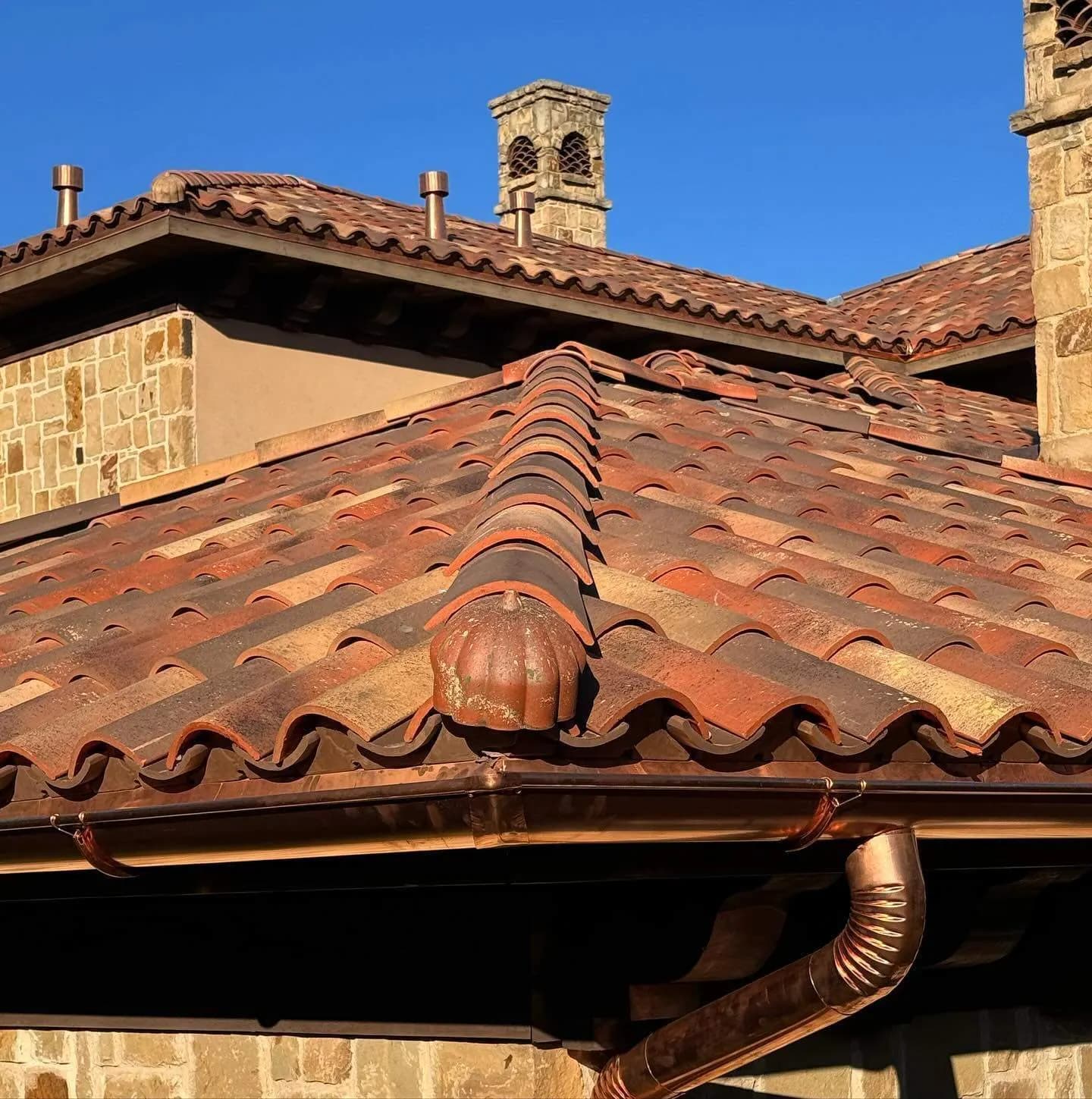
Ludowici Clay Tile Roofing in New Orleans
Restoring and Installing America's Premier Terra Cotta on the Gulf Coast
Ludowici terra cotta has been part of the New Orleans skyline for over a century, covering historic institutional buildings, university halls, and churches across the city. Lapeyre Roofing installs new Ludowici tile and repairs and restores existing Ludowici roofs, matching historic profiles from a manufacturer whose archives go back to 1888. Our slate and tile crews are led by a master craftsman whose portfolio includes hundreds of specialty slate and Ludowici roofs across the country, and our own New Orleans landmark work, including the Sylvain building slate and copper restoration in the French Quarter, sets the standard we bring to every terra cotta project.
Prefer to book online? Schedule your free New Orleans estimate
Schedule Your FREE
Roof Inspection & Estimate
Request a written estimate
Where is your property?
We serve Texas, Louisiana & Missouri
What do you need?
Almost done!
How can we reach you?
By submitting, you consent to follow-up messages. Reply STOP to opt out.
Sources we use
Check the scope against current guidance
Official sources reviewed September 7, 2026, plus a planning tool for comparing the decisions in your estimate.
Ludowici
Product-specific technical documentation
Reviewed September 7, 2026. Product data, installation manuals, and details for specifying the actual tile profile.
Read the official guidance →Ludowici
Historic matching and availability questions
Reviewed September 7, 2026. Describes sample-based matching assistance and variable lead times.
Read the official guidance →New Orleans HDLC
Historic exterior-work application process
Reviewed September 7, 2026. Identify the district and itemize existing and proposed exterior materials with photos before work.
Read the official guidance →Who works on Ludowici clay tile roofs in New Orleans?
Lapeyre Roofing installs, repairs, and restores Ludowici terra cotta roofs throughout New Orleans from our office at 421 Ninth St. Ludowici tile installation typically costs $25-$50+ per square foot installed in 2026, and the tile carries a 75-year non-prorated, transferable material warranty. Ludowici has a deep historic footprint in New Orleans on institutional, university, and church buildings, and because the company has manufactured continuously since 1888, historic profiles can often be matched from current or custom production. Our crews are led by a master craftsman with hundreds of specialty slate and Ludowici roofs in his portfolio, and we handle HDLC and VCC approvals and hurricane-rated fastening on every project.
- Ludowici installation: $25-$50+ per square foot installed (2026 ranges)
- 75-year non-prorated, transferable material warranty on Ludowici tile
- Ludowici has manufactured architectural terra cotta continuously since 1888
- Historic New Orleans Ludowici roofs can often be matched from factory archives and custom runs
- Crews led by a master craftsman with hundreds of specialty slate and Ludowici roofs nationwide
- HDLC and VCC approval experience; copper flashings and hurricane fastening standard
Ludowici Terra Cotta and the New Orleans Climate
A Century of Proof in the Hardest Test Market in America
New Orleans is arguably the toughest proving ground for a roof in the country: hurricanes, 60+ inches of annual rain, relentless humidity, and salt air. Ludowici terra cotta roofs on historic institutional buildings here have been running that gauntlet for around a century, which is more persuasive than any laboratory rating. The material thrives here; what fails is the supporting system, and that is where the craft lives.
Hurricane Wind Uplift
Impact: Orleans Parish design wind speeds of roughly 130-150 mph will find any tile that is not positively attached, especially at eaves, rakes, hips, and ridges.
Our Solution: Every Ludowici tile mechanically fastened with copper or stainless fasteners per high-wind attachment schedules, supplemental securement in edge and corner zones, and mechanically anchored ridge and hip assemblies. Interlocking Ludowici profiles add engagement that mortar-set imports never had.
Relentless Humidity
Impact: Moisture that never leaves the air rots battens, corrodes fasteners, and destroys underlayments hidden beneath tile that still looks perfect from the street.
Our Solution: Ludowici tile is kiln-fired at over 2,000 degrees F with very low water absorption, so the tile itself ignores humidity. We protect everything under it: high-temperature self-adhering underlayment, corrosion-proof fasteners, and battens detailed for drainage.
Salt Air Corrosion
Impact: Coastal air eats galvanized flashings and bargain fasteners decades before terra cotta wears out, which is how century-tile roofs end up leaking at year thirty.
Our Solution: Soldered 16oz-20oz copper flashings and copper or stainless fastening throughout. Copper is the only common flashing metal whose Gulf Coast service life belongs in the same sentence as Ludowici tile.
Torrential Rain and Complex Rooflines
Impact: The institutional and revival architecture that carries Ludowici in New Orleans (towers, dormers, cross gables, parapets) concentrates enormous water volume at valleys and transitions.
Our Solution: Copper valleys sized for real rainfall intensity, correct tile setbacks, and pan flashings at every wall. On restorations, redoing the water-handling details is usually the entire point of the project.
UV and Color Permanence
Impact: Gulf sun fades painted and coated roofing within 15-20 years, changing the look of buildings whose appearance is regulated or cherished.
Our Solution: Ludowici color is fired ceramic, not coating. The glazes and body colors on New Orleans buildings from the early 1900s are still true today, which is why historic commissions look favorably on in-kind Ludowici work.
Where Ludowici Lives in New Orleans
Ludowici's New Orleans footprint is heavily institutional: universities, churches, civic buildings, and grand residences. That history shapes where the work is and what it demands.
University Areas — Uptown and Audubon
The university district and surrounding Uptown blocks hold some of the city's densest concentrations of historic terra cotta, on institutional halls and the grand residences built around them.
Work here is usually restoration: relaying or repairing original tile over new underlayment and copper, with profile matching from Ludowici archives or salvage. Partial HDLC jurisdiction applies on many blocks.
Garden District and St. Charles Avenue
Revival-style mansions and church campuses, several carrying historic clay tile alongside the district's famous slate.
HDLC review for visible work, with in-kind matching strongly preferred. Ludowici's ability to reproduce historic profiles makes approvals cleaner than with generic substitutes.
Esplanade Ridge and Mid-City
Early 20th-century Mediterranean and Mission Revival homes, some with original Ludowici and similar-era terra cotta now at underlayment end-of-life.
Classic lift-and-relay candidates: the fired clay has decades left while the felt beneath died long ago. Breakage gets filled from matched new production or salvage.
French Quarter and Faubourg Marigny
The oldest fabric in the city, regulated by the Vieux Carre Commission, with clay tile among the historic roof materials.
VCC review governs everything visible. Our French Quarter landmark portfolio, led by the Sylvain building restoration, means we already know the commission's expectations for documentation, samples, and staging on tight Quarter blocks.
Lakefront and Old Metairie
Estate-scale homes outside the regulated districts, where owners choose Ludowici for its warranty and permanence rather than by mandate.
Full design freedom across Ludowici's profiles and custom colors. These projects emphasize hurricane engineering and FORTIFIED pairing, with structural verification for tile weight built into every proposal.
Ludowici Clay Tile Investment in New Orleans (2026)
Ludowici is the premium tier of clay tile, priced accordingly and backed by the strongest warranty in the industry. These are honest 2026 ranges for New Orleans work.
Ludowici Roof Repair (Broken or Displaced Tile)
$700 - $3,500
Matched replacement tile from current production, custom runs, or salvage, installed with correct fastening. Pricing driven by access, tile availability, and scope.
Standard Profiles, Stock Colors
$25 - $35 per sq ft installed
Spanish, barrel, and interlocking flat profiles in standard colors, with copper valleys and hurricane fastening included. Typical factory lead times of several weeks.
Custom Colors, Glazes, and Historic Matches
$35 - $45 per sq ft installed
Custom-matched colors and glazes, historic profile reproductions, and full copper flashing packages. Longer factory lead times, typically 8-12 weeks.
Complex and Landmark Work
$45 - $50+ per sq ft installed
Towers, dormers, parapet conditions, historic-district documentation, and specialty trim (ridge finials, hip starters, closed valleys).
Lift-and-Relay Restoration of Existing Ludowici
$14 - $25 per sq ft
Carefully salvaging your original tile, renewing underlayment, decking repairs, and copper, and relaying the historic tile with matched infill. Often the right call on century-old roofs with sound tile.
Factors Affecting Price
- 1Profile and color selection (stock versus custom and historic reproduction)
- 2Factory lead times for custom orders (plan 8-12 weeks for custom work)
- 3Structural capacity: most Ludowici profiles weigh roughly 800-1,200 lbs per square
- 4Copper flashing scope across valleys, parapets, and dormers
- 5HDLC or VCC approval requirements and documentation
- 6Access and staging, particularly on institutional buildings and Quarter blocks
These are typical 2026 ranges for New Orleans Ludowici work, not quotes. Custom tile orders and historic conditions introduce real variables, and exact pricing follows inspection and a written, itemized estimate.
How We Run a Ludowici Project in New Orleans
Ludowici projects reward planning: factory lead times, historic approvals, and structural verification all happen before the first tile moves. Here is the sequence.
Inspection and Roof History
We assess the existing roof, identify the tile (on historic roofs, often original Ludowici traceable by profile and markings), and determine whether the project is repair, lift-and-relay restoration, or new installation.
Local Note: On century-old New Orleans terra cotta, the tile is usually sound and the system beneath it is finished. That diagnosis changes the budget dramatically in your favor.
Profile Matching Through Ludowici
Because Ludowici has manufactured continuously since 1888, historic profiles can frequently be matched from current production or reproduced as custom runs from factory archives. We manage the identification, sampling, and ordering.
Local Note: This archive continuity is Ludowici's quiet superpower for New Orleans restorations: the company that made the roof in 1915 can often still make its exact tile.
HDLC or VCC Approval Where Required
For historic districts we prepare the Certificate of Appropriateness package: photographs, tile samples, and specifications. In-kind Ludowici matches typically review smoothly precisely because the material and profile are correct.
Structural Verification
Most Ludowici profiles weigh 800-1,200 lbs per square. Buildings already carrying tile have proven capacity; for new tile weight we verify framing and coordinate engineering before ordering material.
Material Ordering and Scheduling
Stock profiles ship in several weeks; custom colors and reproductions take 8-12 weeks. Copper flashings are fabricated in parallel, and we schedule installation so material never sits exposed on site.
Local Note: In hurricane season, we sequence tear-off so the roof is never opened up ahead of weather we cannot beat.
Tear-Off or Careful Salvage, and Deck Repair
Restorations get careful tile removal and palletizing for reuse; replacements get full tear-off. Either way, decking is inspected and repaired before anything goes back on, including in-kind repairs to historic board decks.
Copper, Underlayment, and Hurricane-Fastened Tile
Soldered copper valleys, pans, and penetration flashings first; high-temperature self-adhering underlayment as the sealed water barrier; then tile fastened with copper or stainless fasteners to high-wind schedules with reinforced edge zones and mechanically anchored ridges.
Warranty Registration and Documentation
We register your Ludowici material warranty, document the completed roof for insurance and historic-review closeout, and leave you attic stock of matched tile for future repairs.
Local Note: The 75-year warranty is transferable, and the documentation package genuinely matters at resale on properties of this caliber.
Ludowici Profiles and System Components for New Orleans
Ludowici offers the deepest profile and color range in American terra cotta. These are the selections most relevant to New Orleans architecture, plus the system components we pair with them.
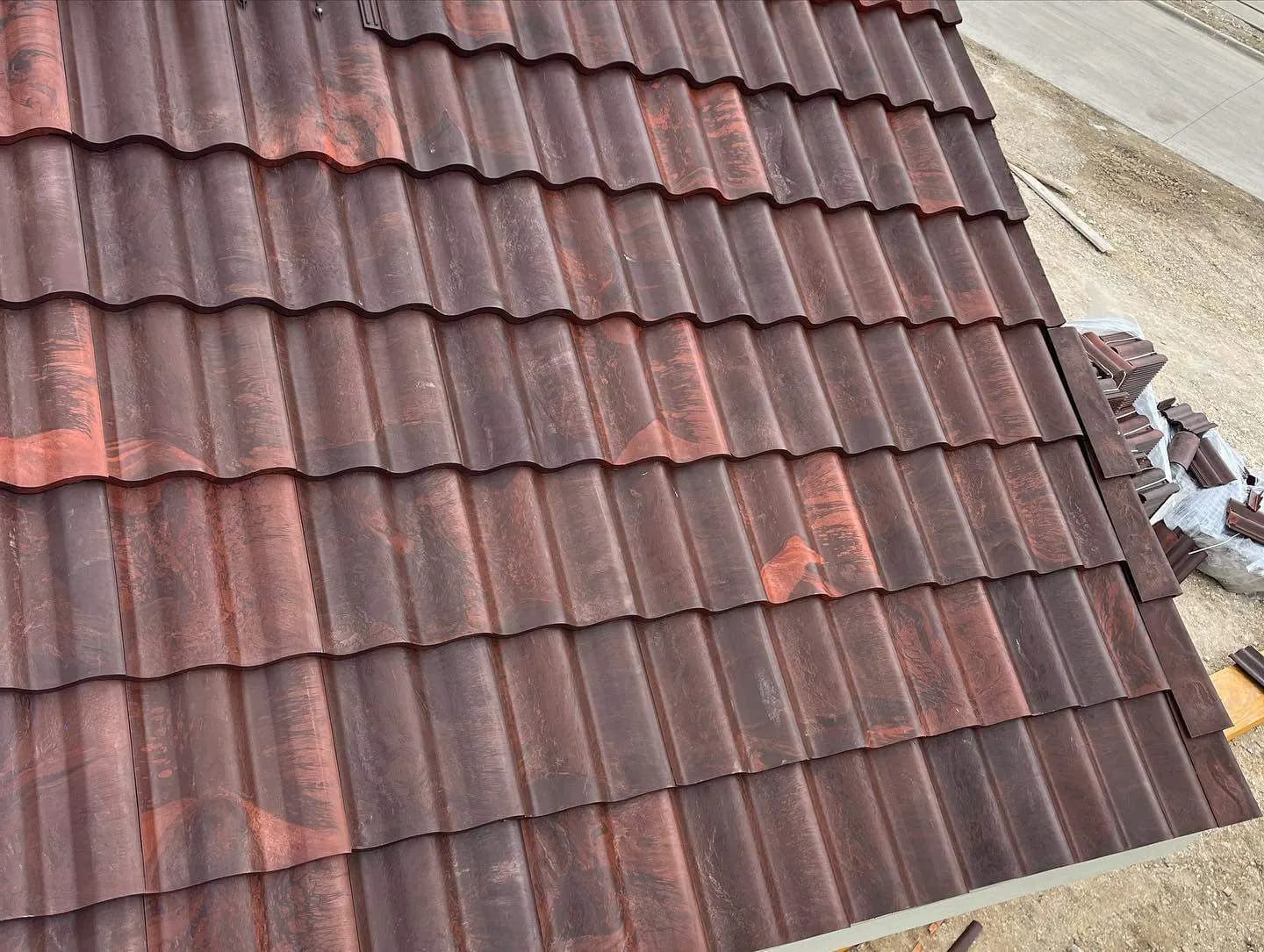
Spanish and Barrel Profiles
Why for New Orleans
The profiles most associated with Gulf Coast and Mediterranean Revival architecture, with deep channels for torrential rain and a ventilated profile that moderates attic heat through long summers.
Best For
Mission and Mediterranean Revival homes, church and institutional work, and estate-scale new installations.
Considerations
High-profile tile demands disciplined edge-zone fastening in this wind region. Two-piece barrel costs more to install than one-piece Spanish.
Interlocking Flat Tile
Why for New Orleans
The workhorse of Ludowici's historic institutional roofs, with mechanical interlock that adds real wind resistance and a flat coursing that suits collegiate and civic architecture.
Best For
University, church, and civic restorations; residences matching that institutional character.
Considerations
Historic interlocking patterns vary; exact profile identification matters before ordering. Archive reproductions carry custom lead times.
Custom Colors, Glazes, and Blends
Why for New Orleans
Fired ceramic color that never fades under Gulf sun, matchable to century-old originals or blended for new architecture. Historic commissions respond well to color evidence from actual fired samples.
Best For
Historic matches under HDLC and VCC review; signature new roofs where color is part of the architecture.
Considerations
Custom work runs 8-12 weeks and may carry minimums. Sample approval before ordering is non-negotiable and we build it into the schedule.
16oz-20oz Soldered Copper Flashings
Why for New Orleans
The only common flashing metal with Gulf Coast service life matching 75-year-warranty tile. Copper handles salt air and humidity by design and is the historically correct detail on the buildings that carry Ludowici here.
Best For
All valleys, pans, parapet and chimney flashings, and ridge details. 20oz where water concentrates.
Considerations
Copper runoff can stain light masonry; we detail drips accordingly and consider lead-coated copper against light stucco and limestone.
High-Temperature Self-Adhering Underlayment and Stainless Fastening
Why for New Orleans
The sealed water barrier under the tile is what actually stops hurricane rain, and stainless or copper fastening is what keeps tile attached for the decades the warranty contemplates.
Best For
Every Ludowici installation and restoration, without exception.
Considerations
These components are invisible at completion and decisive for the life of the roof. They are standard in our specification, not options.
Why Choose Lapeyre for Ludowici Work in New Orleans
Ludowici tile deserves installers who treat it as the century-scale system it is. Very few Gulf Coast contractors work at that level; it is the level our company was built around.
Crews Led by Deep Ludowici Experience
Our slate and tile crews are led by a master craftsman whose portfolio includes university landmarks like SMU and Tulane and hundreds of specialty slate and Ludowici roofs across the country. Ludowici work on our jobs is directed by someone who has spent a career on exactly this material.
Landmark Craft Proven in New Orleans
Lapeyre restored the historic slate and copper standing-seam roof on the Sylvain building, one of the oldest buildings in New Orleans, and has completed multiple additional French Quarter slate roofs. Terra cotta restoration draws on the same disciplines: matched materials, soldered copper, and details that pass landmark scrutiny.
Historic Matching, Managed End to End
We identify original profiles, work with Ludowici on archive matches and custom reproductions, source salvage where it is the better answer, and carry the samples through HDLC or VCC review ourselves.
Hurricane Engineering as Standard Specification
Mechanical fastening to high-wind schedules, sealed self-adhering underlayment, reinforced edge zones, and anchored ridges on every project, because a 75-year tile deserves an attachment system built for 75 years of storms.
Copper Done Properly
Soldered 16oz-20oz copper valleys, pans, and parapet details sized for Gulf rainfall. We do not pair century-scale tile with 20-year metals or caulked joints.
Honest Scoping
If your original Ludowici tile is sound, we will quote a lift-and-relay that saves the historic roof instead of selling you new tile. And if Ludowici pricing does not fit the project, we will say so and show you the clay and concrete alternatives.
Choose between tile repair, lift-and-relay, and replacement
Start by identifying the field tile and accessory pieces before choosing a scope. Photograph profile, dimensions, markings, color variation, ridge and hip pieces, and the location of failures. A compatible replacement must fit the installed roof, not merely resemble its color in a catalog. Ludowici provides product-specific technical documents and a process for matching historic material from samples; availability and lead times should be confirmed for the actual pieces needed.
Compare three proposals where inspection supports them. A localized repair replaces failed pieces or details while preserving the surrounding assembly. A lift-and-relay scope removes serviceable tile to address underlayment or flashing, then reinstalls it with an allowance for breakage and replacement pieces. Full replacement becomes a separate decision when condition, compatibility, structure, or the desired system makes salvage impractical. Ask each bid to state the expected salvage quantity, handling and storage method, replacement-piece allowance, and what happens if the recoverable yield is lower than expected.
In a New Orleans historic district, align the repair or replacement specification with the approval process before demolition. The HDLC asks applicants to identify existing and proposed materials and document items proposed for replacement. Include visible trim and metalwork, not just field tile. Confirm whether VCC or another authority applies to the address. The material selector can organize budget and maintenance priorities, but tile selection also requires product weight, slope, structural suitability, installation details, and a written sourcing plan. A generic price per square foot cannot answer those questions.
Craftsmanship You Can Inspect
Tile rewards close inspection. These photos show the hips, ridges, copper work, and finish detail our crews hold themselves to on every roof.
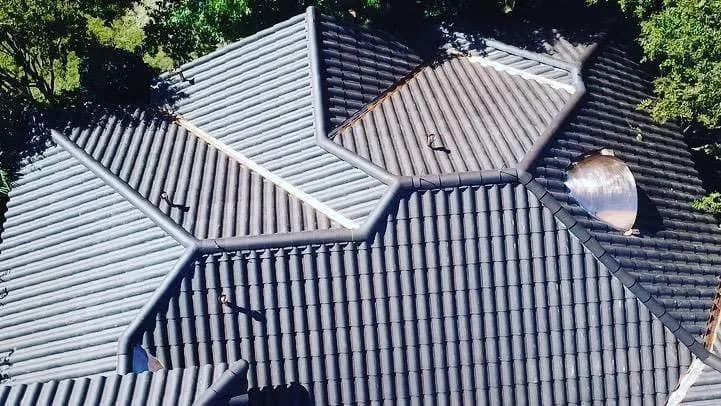
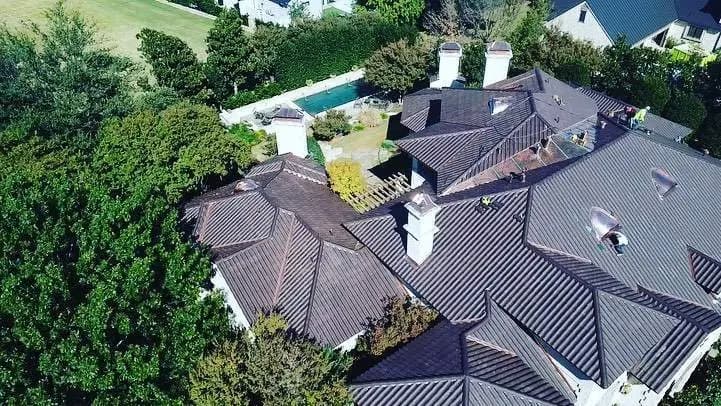
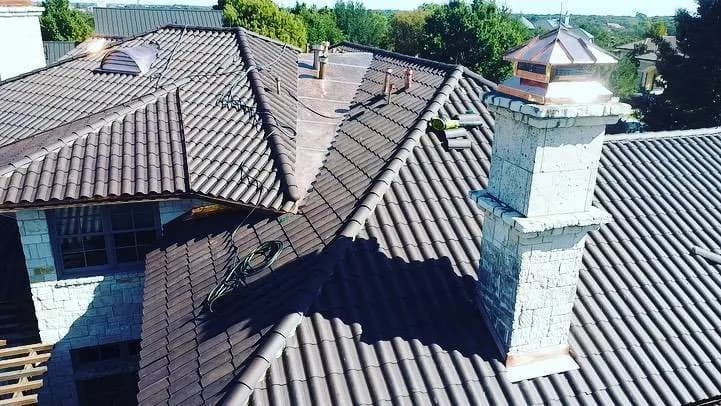
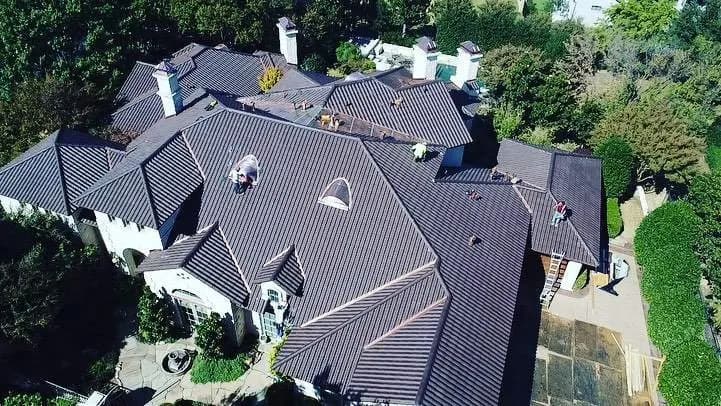
Gallery photography is from the portfolio of our slate and tile crew lead — a master craftsman with hundreds of specialty slate and tile roofs completed across the country.
Compare your options before signing
Compare roofing material priorities
Organize budget, maintenance, and material tradeoffs before a property-specific specification.
Read more about this roofing decision
Ludowici Tile Cost & Profile Guide 2026
Ludowici terra cotta tile costs $25-$50+ per sq ft installed. This guide covers every profile, how to identify Ludowici tile, and matching discontinued patterns.
Clay Tile Roof Cost 2026: Real Prices
Clay tile roofing costs $16-$50+ per sq ft installed. Compare Spanish tile, terracotta, and Ludowici prices, 75-100+ year lifespans, and real repair costs.
Slate Roofing Cost 2026: Real Prices
Slate roofing costs $20-$40+ per sq ft installed. Compare natural slate vs synthetic slate prices, lifespans of 100+ years, and repair costs for your home.
FAQ
Frequently Asked Questions
Can sound Ludowici tiles be reused when the roof leaks?
Sometimes. The leak may involve underlayment or flashing rather than all of the tile. Ask for a condition assessment and a priced lift-and-relay alternative with salvage, breakage, replacement sourcing, and concealed-work assumptions.
What makes a historic replacement tile a match?
Fit depends on dimensions, profile, exposure, attachment, and interaction with adjacent pieces as well as appearance. Submit a representative sample and photos to the manufacturer or qualified supplier before relying on a stock description.
How much does a Ludowici tile roof cost in New Orleans?
Ludowici installation in New Orleans typically costs $25-$50+ per square foot installed in 2026: standard profiles in stock colors run $25-$35, custom colors and historic reproductions $35-$45, and complex landmark work $45-$50+. Lift-and-relay restorations reusing sound original tile run roughly $14-$25 per square foot, and repairs typically cost $700-$3,500. The tile carries a 75-year non-prorated, transferable material warranty. Exact pricing follows inspection and a written estimate.
What makes Ludowici different from other clay tile?
Ludowici is the only American manufacturer of architectural terra cotta roof tile, in continuous production since 1888, fired at over 2,000 degrees F for exceptional density and very low water absorption. It carries the industry's strongest warranty: 75 years, non-prorated, and transferable. For New Orleans specifically, that 1888-to-present continuity means historic roofs here can often be matched from factory archives, something no import supplier can offer.
Does New Orleans really have historic Ludowici roofs?
Yes. Ludowici terra cotta appears across New Orleans on early 20th-century institutional buildings, university halls, churches, and grand residences, part of a national footprint that includes many of the country's landmark campuses and civic buildings. Those local roofs, some around a century old and still serving in hurricane country, are the most credible durability evidence a roofing material can have in this climate.
My historic Ludowici tile is discontinued. Can it be matched?
Usually, yes, and more reliably than with any other tile brand. Because Ludowici has manufactured continuously since 1888, many historic profiles remain in production or can be reproduced as custom runs from factory archives; salvaged tile from regional demolitions fills the gaps. We identify your profile from measurements and markings, obtain fired samples for approval (and for HDLC or VCC review where required), then order the match.
Can a Ludowici tile roof handle a hurricane?
Yes, with correct attachment. Ludowici roofs on New Orleans institutional buildings have endured roughly a century of hurricane seasons, and modern installations improve on that: every tile mechanically fastened with copper or stainless fasteners to high-wind schedules, supplemental securement at edges and corners, mechanically anchored ridges, and a sealed self-adhering underlayment beneath as a secondary water barrier. That specification is our standard for Orleans Parish wind speeds, not an upgrade.
Is my home strong enough for Ludowici tile?
That requires verification: most Ludowici profiles weigh roughly 800-1,200 lbs per square, several times shingle weight. Buildings already carrying tile have demonstrated capacity, and many older New Orleans structures were framed generously. For new tile weight, we screen framing during inspection and coordinate structural engineering before ordering material. If reinforcement is needed we price it explicitly; if the structure argues for lighter materials, we tell you.
Do I need HDLC or VCC approval for Ludowici roof work?
In regulated historic districts, visible roof work generally requires a Certificate of Appropriateness from the Vieux Carre Commission (French Quarter) or the HDLC (most other local historic districts, including the Garden District). In-kind Ludowici matches typically review favorably because the material, profile, and fired color are correct rather than imitative. We prepare and shepherd the application, including samples and specifications, as part of the project.
How long does a Ludowici project take in New Orleans?
Plan the timeline around material and approvals rather than installation. Stock profiles ship in several weeks; custom colors and historic reproductions run 8-12 weeks; historic-district review adds its own weeks where applicable. On-site installation for a typical residence takes two to four weeks once material arrives, longer for institutional-scale roofs. Repairs with available matching tile are much faster. We put the full realistic schedule in writing up front.
Should I restore my original Ludowici roof or replace it with new tile?
Restore it if the tile is sound, which is common even at 100 years old. A lift-and-relay renews the underlayment, decking, and copper (the parts that actually failed) and returns your original tile at roughly $14-$25 per square foot, well under new Ludowici pricing while preserving irreplaceable aged color. Replace when tile breakage is widespread or spalling indicates the fired body is failing. We sound-test and count during inspection, then show you the math both ways.
Contact information
Thank you for considering us for roofing needs. We will get back to you during normal business hours.


Send us a message