Roofing Questions
Architectural vs. Three-Tab Shingles: Compare More Than the Pattern
The visible pattern identifies a shingle category; the exact product establishes the specification and warranty.

5.0-STAR RATED BY 566+ CUSTOMERS
50-YEAR PRODUCT
WARRANTIES
Lapeyre Roofing inspects, repairs, and replaces roofs across the St. Louis metro. Our St. Louis Roof Decision & Contractor Accountability Report records the roof condition, repairability, hail evidence, written scope, payment milestones, permit questions, and the policy terms a homeowner should verify before choosing a path.
Schedule Your FREE
Roof Inspection & Estimate
Request a written estimate
Where is your property?
We serve Texas, Louisiana & Missouri
What do you need?
Almost done!
How can we reach you?
By submitting, you consent to follow-up messages. Reply STOP to opt out.
Quick Answer
A sound St. Louis roofing decision starts with the roof, not the sales pitch. We document whether an isolated repair is durable, why replacement may be justified, or what hail evidence is present. The written report separates construction facts from insurance coverage and gives the homeowner a scope and payment checkpoints they can compare.
Choose the right next step
The roof condition decides whether repair or replacement is defensible. The insurer interprets the policy, and the city or Cultural Resources Office decides property-specific approval requirements. Start with the path that matches the problem.
Trace the failure, test surrounding material, and document when a limited repair can remain durable.
Review this path →Compare complete system scopes, concealed-condition rules, payment milestones, and permit questions.
Review this path →Separate storm evidence from wear, protect the property, and review policy terms before authorizing permanent work.
Review this path →Policy language, permit needs, and historic-review requirements are property-specific. These public sources help homeowners ask better questions; they do not replace the roof inspection or the controlling documents.
Missouri Department of Commerce and Insurance
Explains ACV, RCV, functional replacement cost, deductibles, matching, cosmetic damage, and roof-age provisions homeowners should locate in their own policy.
City of St. Louis
Explains when exterior work in a City historic district can require permit review and why the district standards control the answer.
City of St. Louis
Current City guidance notes that ordinary roof-cover replacement generally does not require a permit unless structural work or historic-district review applies.
Missouri Attorney General
Recommends researching contractors, comparing bids, using a written contract, avoiding pressure, and not paying the full amount in advance or in cash.
Compare local roofers
Review five companies side by side using the evidence each company publishes. The guide also flags what you should verify in the written estimate.
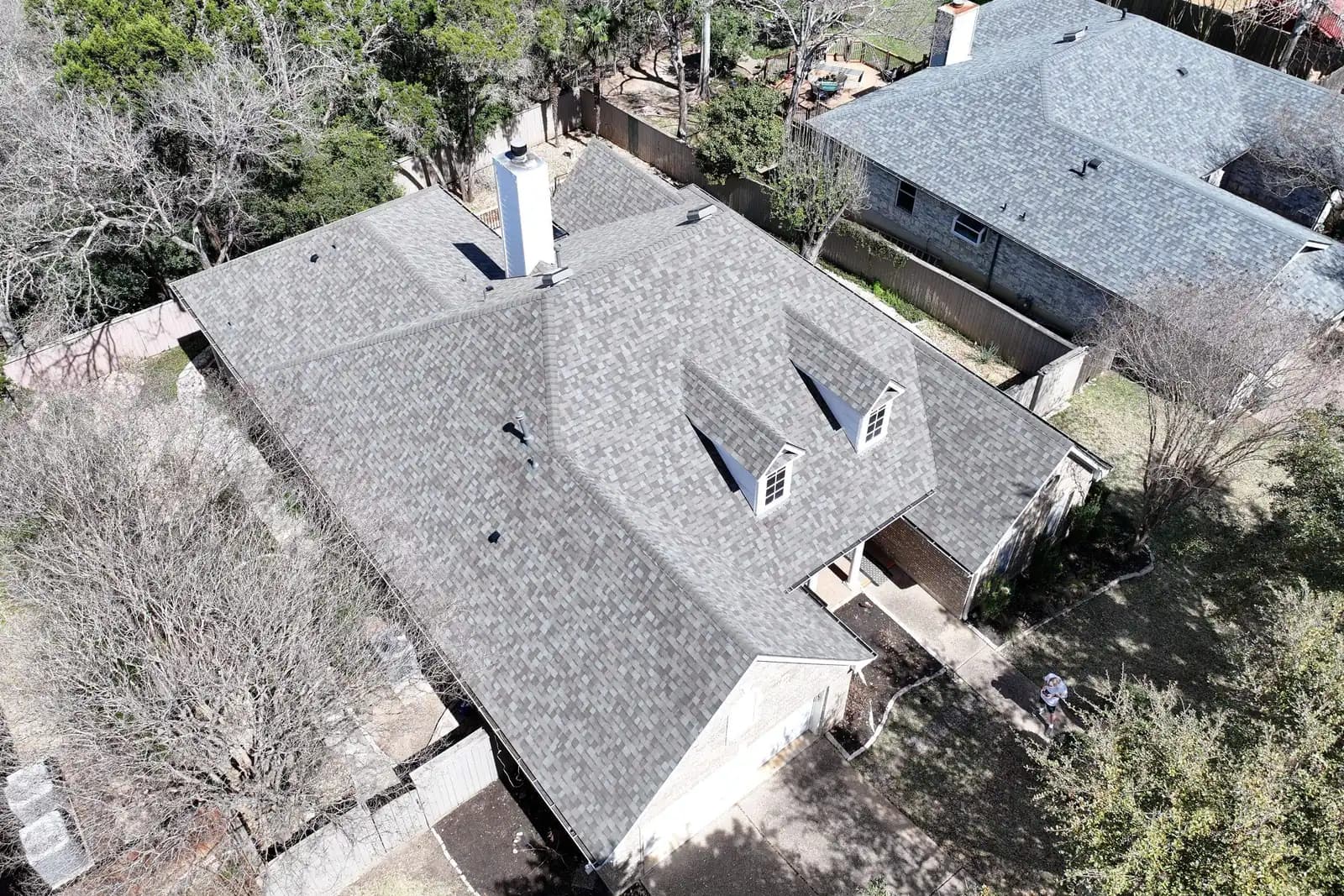
When a proposal includes roofing and other exterior work, separate the roof scope before comparing totals. Our St. Charles case included roof work alongside gutters, siding and windows. Its published photograph documents the roof surface, not completion of every trade. Ask for separate responsibilities, allowances and completion checks so the roofing price is not confused with the entire exterior project.
Next compare the actual roof geometry. Hips, valleys, projecting sections and penetrations need descriptions beyond a field-shingle quantity. Mark those details on the measurement report and ask which installation photographs will document the layers before they are covered. A simple roof-area comparison is less useful when one proposal omits valley, flashing or edge work included by another.
Check the selected system rather than the most impressive option shown in the proposal. Our St. Louis-area ArmorShield II case identifies field shingles, ridge shingles, starter, underlayment and water barrier from the signed selection. Use the same checklist when comparing your bids. A material package name or finished photograph does not prove an issued designation, warranty registration or future storm performance.
Use the St. Louis cost preset as a preliminary planning range for measured roof area, then list separate exterior work and allowances beside it. For permit questions, establish the property jurisdiction before relying on a City or County answer. Bring the roof diagram, selected product list and questions about missing items to the inspection.
Roofing Questions
The visible pattern identifies a shingle category; the exact product establishes the specification and warranty.
Roofing Questions
Shingle blistering describes raised bumps in the shingle surface. Have the material and surrounding conditions assessed before calling the marks hail damage or approving a whole-roof replacement.
Roofing Questions
In a vented attic, baffles or rafter vents preserve a channel between soffit intake and the attic when insulation is near the roof edge. They are not the same as the outside soffit vent, and they do not by themselves establish adequate ventilation.
Roofing Questions
A bathroom exhaust fan should discharge outdoors through a proper termination, not into the attic. A duct lying near an attic vent does not establish a sealed path outside.
Rankings
A publisher-disclosed St. Charles contractor comparison with source links and specific questions for evaluating written proposals.
Rankings
A publisher-disclosed St. Louis contractor comparison with source links and specific questions for evaluating written proposals.
See the scope, project photos, and roof details behind individual roofing jobs in this service area.

St. Charles, MO
A St. Charles roofing project with a signed insurance scope and a photographed shingle roof whose hips, valleys, and projecting sections call for separate planning details.

St. Louis area, MO
A St. Louis-area replacement with GAF ArmorShield II selected in the signed proposal and a construction photograph showing the installed shingle field and ridge.

Catawissa, MO
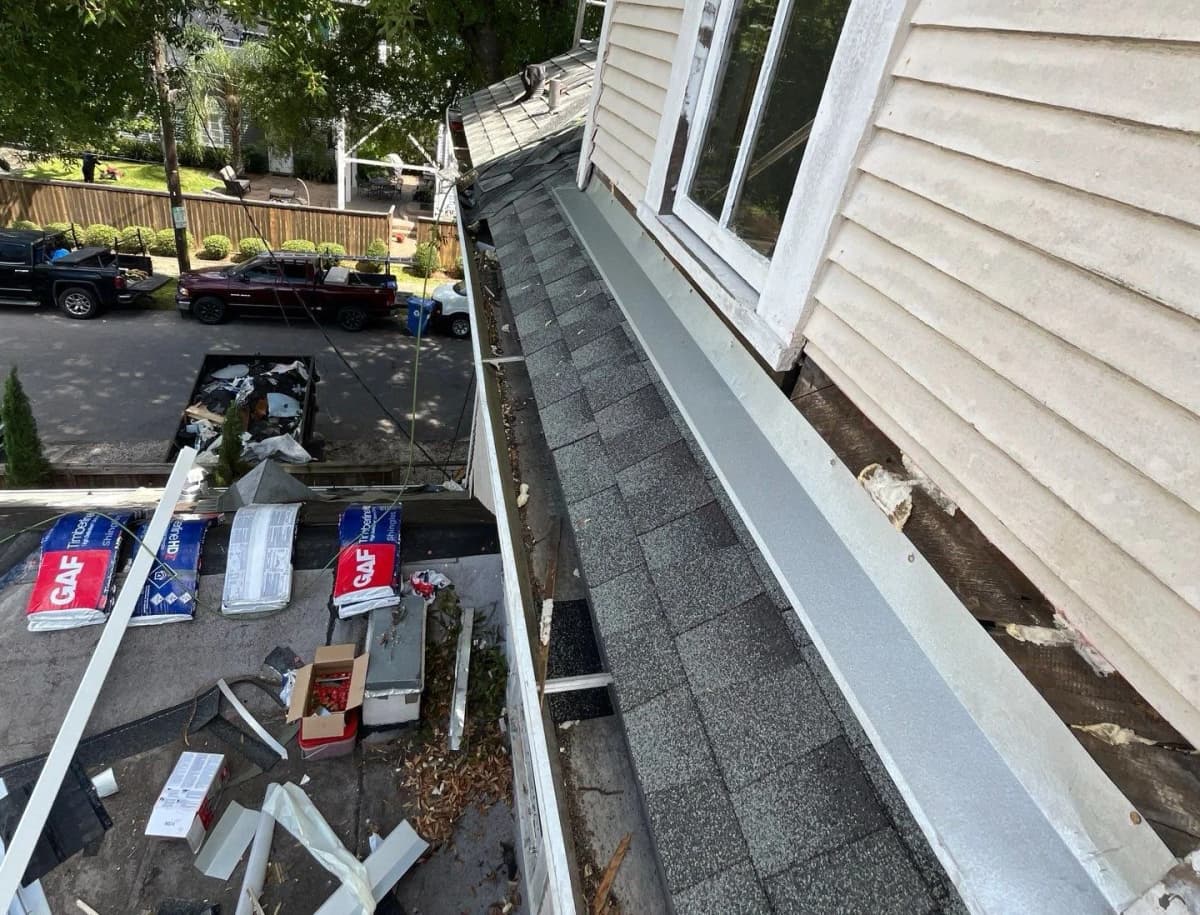
A Catawissa replacement with GAF Natural Shadow shingles selected in the signed proposal and a later photograph documenting the junction between two roof slopes.
Find the perfect balance of protection, longevity, and budget for your home.
Budget-friendly, traditional look
Longevity, energy efficiency
Premium aesthetics, durability
Maximum storm protection
Enhanced storm resistance for Midwest hail and high-wind events
Not sure which material is right for your home?
Get a Free ConsultationHow We Work
From first call to final cleanup, we make roofing simple and stress-free.
We inspect your roof and document any damage with photos and detailed notes.
You receive a transparent, itemized estimate with no hidden fees or surprises.
Choose from premium materials backed by industry-leading warranties.
Our trained crews install your roof to manufacturer specifications.
We clean up completely and walk through the finished project with you.
Storm Damage? We Can Help.
After a hailstorm hits St. Louis, you need a roofing company you can trust - not out-of-state "storm chasers" who disappear after cashing your check. As a locally owned company, we're here for the long haul.

St. Louis Roofing Guide
St. Louis roofs can encounter hail, straight-line wind, heavy rain, heat, and winter temperature swings. Those conditions can expose weak flashing, attachment, sealant, drainage, and ventilation details, but the property inspection—not a regional weather slogan—should determine the scope.
A roof built for St. Louis needs materials and installation details designed for impact resistance, thermal movement, and proper ventilation to manage moisture in a humid continental climate. Most roof failures we see in the Midwest trace back to the same handful of details: cheap shingles on a hail-prone roof, ice-and-water shield skipped at the eaves, or attic ventilation that was never calculated properly.
The complete scope should show how the deck, edges, flashings, penetrations, ventilation, and covering work together and how each checkpoint will be documented.
After a major hailstorm, St. Louis homeowners often face a wave of door-knocking contractors and conflicting advice. Our approach is simple: honest damage assessment backed by thorough photo documentation. We inspect every slope up close, map the damage pattern, and give you a clear recommendation of repair, monitor, or replace.
The report gives the homeowner dated roof observations and a repair, monitor, or replace recommendation. The homeowner and carrier then decide whether and how the policy applies; we do not promise coverage or classify a policy loss.
Missouri Department of Commerce and Insurance guidance shows that roof settlement basis, deductible, age schedule, matching, and cosmetic-damage language can vary. The controlling policy and carrier decision determine coverage, so homeowners should locate those terms before assuming a result.
Missouri Department of Commerce and Insurance storm guidance is practical: contact your insurance company quickly, make temporary repairs to prevent further damage, keep receipts, and do not make permanent repairs until the insurer has inspected the damage.
For a roof claim, that means tarping an active opening, photographing interior water damage, saving receipts for emergency materials, and keeping your inspection photos, estimate, and carrier communications in one place.
Architectural and impact-rated shingles are two possible St. Louis covering choices. Product impact ratings describe tested product performance; they do not make the complete assembly damage-proof or guarantee carrier treatment.
Standing-seam metal can be a long-hold option when panels, clips, substrate, transitions, finish, and repair access are specified together. Hail can also create cosmetic effects, so homeowners should review cosmetic-damage and matching language with their insurer rather than assuming a policy outcome.
Compare the covering together with deck condition, underlayment, edges, flashings, ventilation, installation requirements, maintenance, repairability, and the written warranty. Service life is property- and system-specific.
We work across St. Louis County and the near-metro suburbs. Each area has its own mix of home styles, HOA restrictions, and weather exposure, and we've learned what actually matters for roofing in each.
Clayton, Ladue, Kirkwood, Webster Groves, and nearby communities include a wide mix of complex rooflines, older materials, additions, and HOA or municipal questions. We verify the building and approval path rather than assigning a material or condition from the neighborhood name.
Chesterfield, Ballwin, Wildwood, St. Charles County, and other suburban areas include both production and custom homes with varied ages and prior storm histories. Roof condition, exposure, ventilation, repairs, and policy terms remain property-specific.
We know the skepticism. A new roofer enters your market, buys some Google ads, and promises the moon. We'd rather earn your trust than ask for it.
Lapeyre Roofing is GAF-certified and maintains a St. Louis office at 4 Sally Drive in Maryland Heights. Before signing any roofing agreement, homeowners should verify the contracting entity, insurance, manufacturer credential, written scope, references, payment milestones, change-order process, and warranty terms. We provide those details for direct comparison.
We source materials through SRS Distribution and QXO, two of the largest roofing supply networks in the country, both with established St. Louis-area operations. That means dependable product availability (critical during post-storm surges when local demand spikes), legitimate warranty channels, and the supply chain backing to handle projects at any scale.
If you want to verify our reputation before trusting us with your home, good. We'd encourage it. Search our reviews, ask for references, check our GAF certification, or call and ask direct questions. We'll give direct answers.
Why Choose Us

Get answers to common questions about roofing services in your area.
When you search for “roofing company near me” in the St. Louis area, you want a contractor who's truly local - not a storm chaser from out of state. Our centrally located St. Louis office puts us minutes away from neighborhoods across St. Louis County, St. Louis City, St. Louis County.