A bathroom exhaust fan should discharge outdoors through a proper termination, not into the attic. A duct lying near an attic vent does not establish a sealed path outside.
A bathroom exhaust fan should discharge outdoors through a proper termination, not into the attic. A duct lying near an attic vent does not establish a sealed path outside.
Follow the actual duct
PNNL's bathroom-exhaust guidance calls for outdoor discharge. Its exhaust inspection examples show why a disconnected duct near a roof vent can still release moisture into the attic.
Ask an appropriate contractor to identify the fan, duct route, connections, and exterior termination. A roof vent serving general attic ventilation is a different component from a dedicated bathroom exhaust outlet.
Coordinate the roofing work
If the correction requires a roof penetration, define who installs the duct and who installs and flashes the exterior termination. The roof covering and slope need a compatible detail. Do not assume a roofer's shingle replacement scope also includes duct repairs.
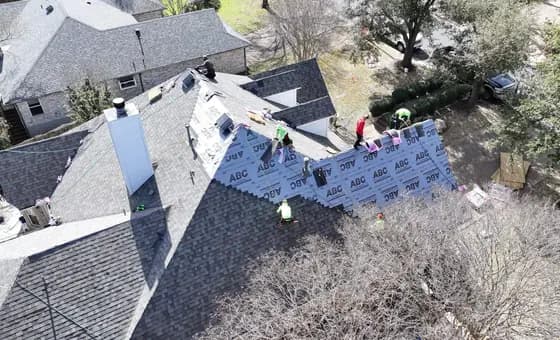
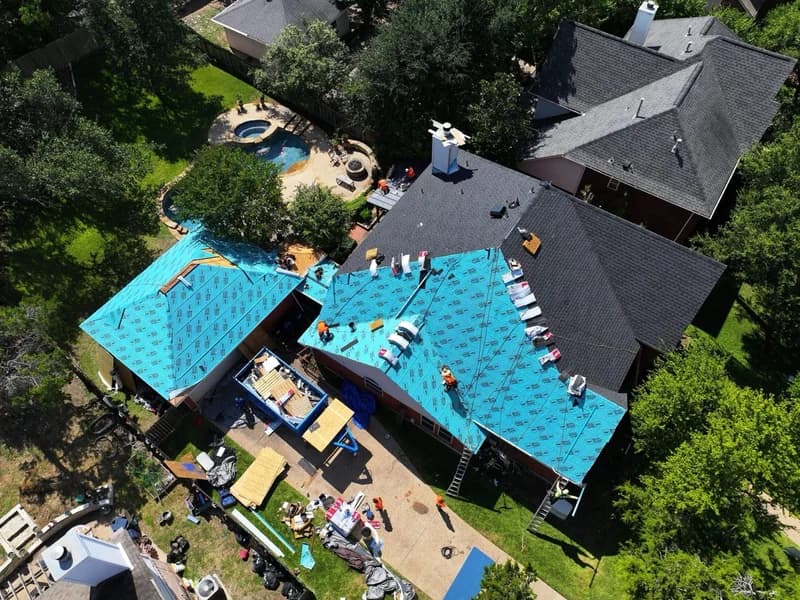
For example, a reroof may uncover an exhaust duct that ends below a general vent. The completion photographs should show the corrected connection and exterior outlet, not just new shingles around the opening.
Check the finished path
Retain the installed-product details and ask for verification that the system discharges outside. Have any moisture damage evaluated separately from fixing the duct. A fan that makes noise does not by itself prove the exhaust path works.
For broader moisture symptoms, see condensation versus roof leaks. If roof flashing is involved, request a repair scope that identifies the coordination with the exhaust installer.
Published by
Editorial team
Our editorial team publishes homeowner guides with sources linked in the article. For a recommendation about your roof, request an inspection of the property.
Found this helpful? Choose Lapeyre Roofing as a source you want to see on Google.
Add Lapeyre Roofing as a preferred source on Google (opens a Google window)