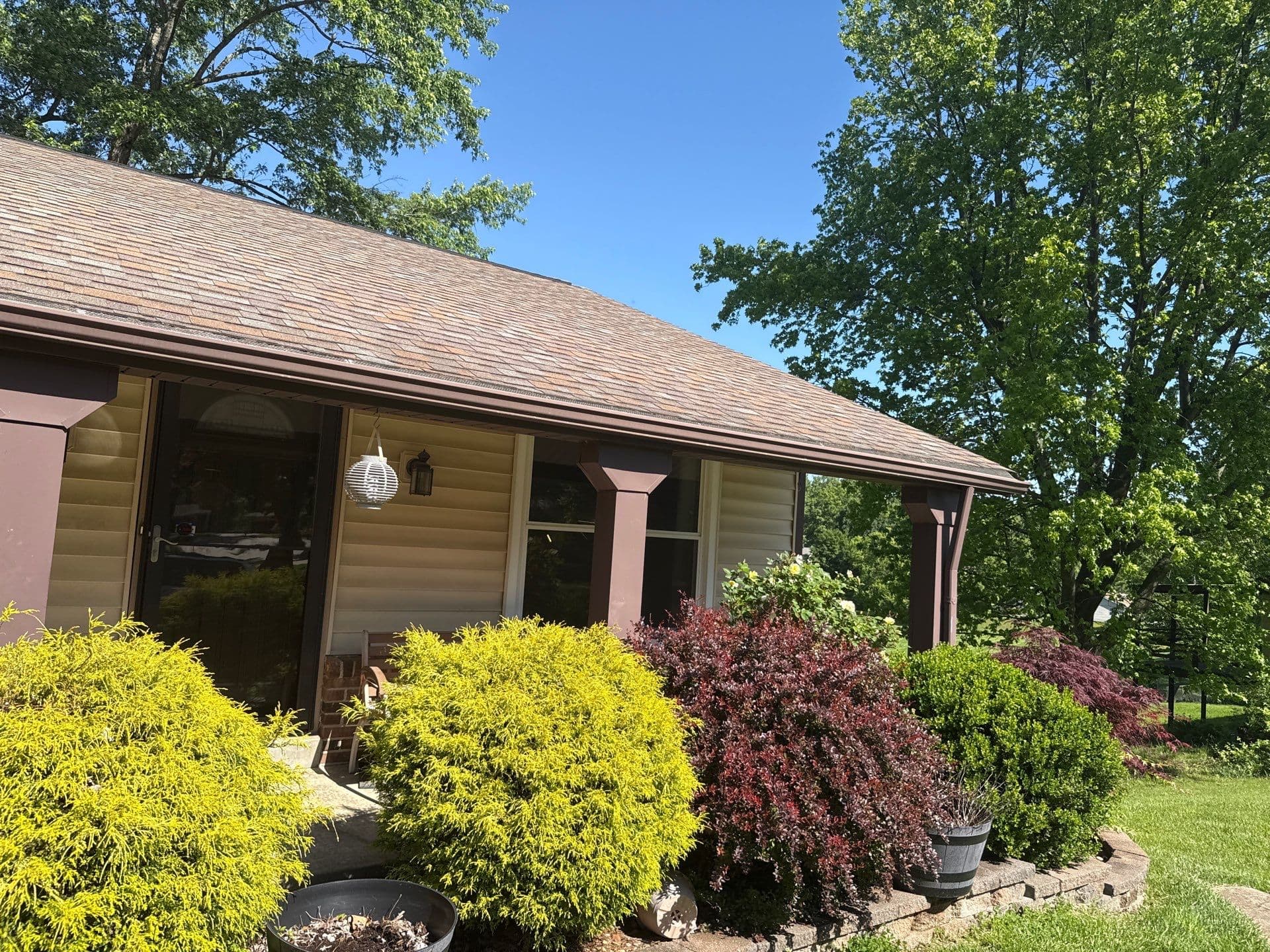
Shingle blistering describes raised bumps in the shingle surface. Have the material and surrounding conditions assessed before calling the marks hail damage or approving a whole-roof replacement.
Shingle blistering describes raised bumps in the shingle surface. Have the material and surrounding conditions assessed before calling the marks hail damage or approving a whole-roof replacement.
Appearance is a starting observation
GAF's steep-slope field guide discusses trapped moisture and excess roofing cement among possible blistering causes. IKO's contractor guidance also cautions that excessive cement can cause blistering. These are possibilities for inspection, not a diagnosis of your roof from a photograph.
Ask for a documented assessment
- Where are the affected shingles, and how widely is the condition distributed?
- What is the exact product and approximate installation date?
- What roof, deck, or attic conditions were checked?
- Are there active leaks or other independently documented defects?
- Is manufacturer review appropriate before disturbing material?
For example, bumps noticed during a post-storm inspection may have been present earlier. Compare prior photographs and ask the inspector to explain the evidence supporting the proposed cause. Timing alone does not resolve it.
Preserve information before repair
Keep product labels, installation records, and inspection photographs. If manufacturer evaluation is proposed, follow its requested documentation and sampling process through the contractor. Do not puncture the bumps or remove shingles yourself.
The repair decision should explain the affected area and why the proposed work addresses the findings. For other raised-roof conditions, see buckling and curling shingles, or request a condition assessment.
Published by
Editorial team
Our editorial team publishes homeowner guides with sources linked in the article. For a recommendation about your roof, request an inspection of the property.
Found this helpful? Choose Lapeyre Roofing as a source you want to see on Google.
Add Lapeyre Roofing as a preferred source on Google (opens a Google window)