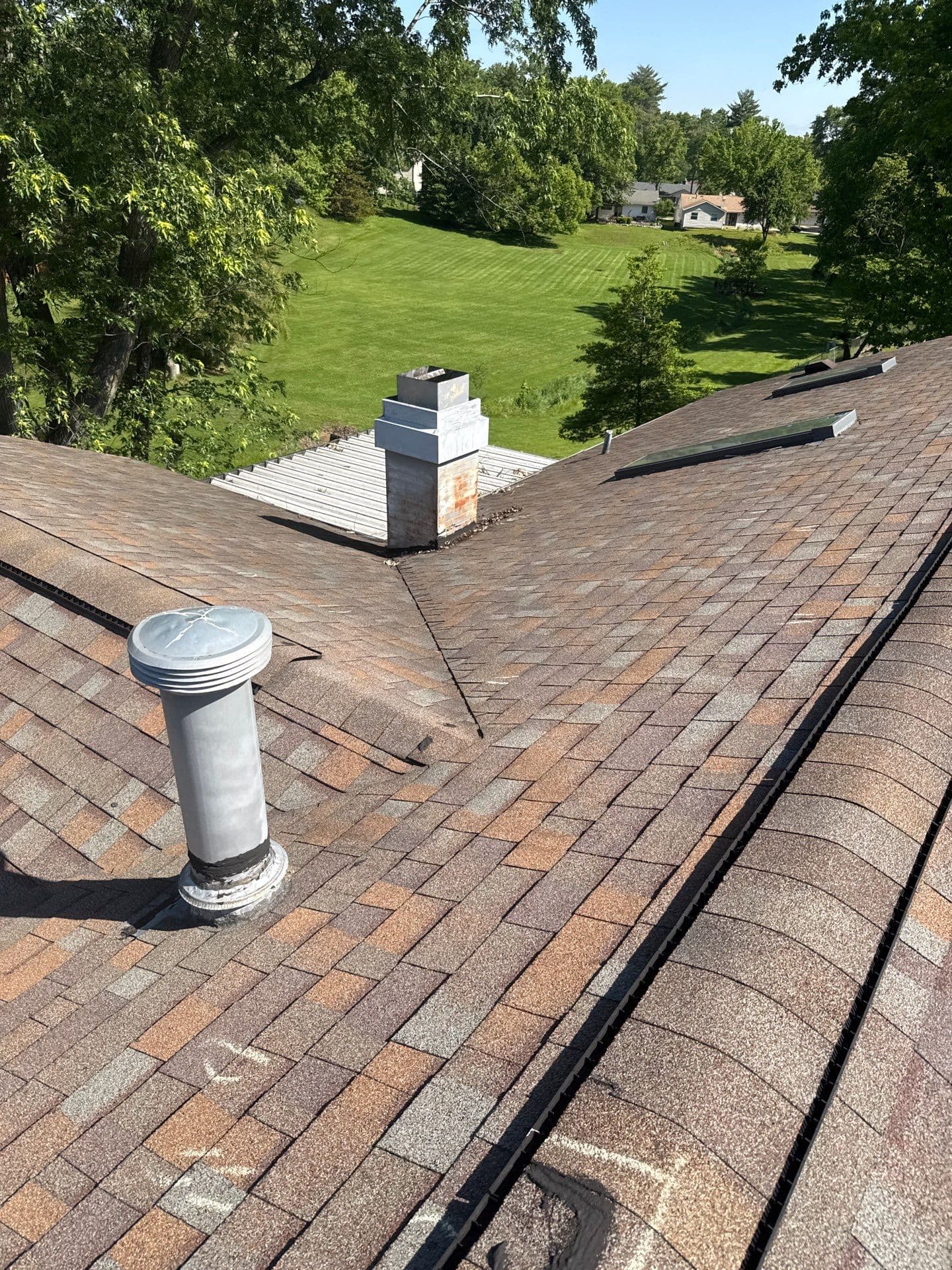
A homeowner's guide to understanding how roof-to-wall and attached-porch leaks develop in Maryland Heights homes, and why proper leak tracing matters before repairs begin.
Why Roof-to-Wall and Porch Junctions Leak More Than the Open Roof
Now, when water travels across a roof, it’s pretty simple. Water will go down the roof and off the edges. Simple pitch: Simple water movement. It’s when we complicate the situation, like adding another wall or another lower roof or changing the pitch that water movement becomes more interesting and typically where it starts to cause problems.
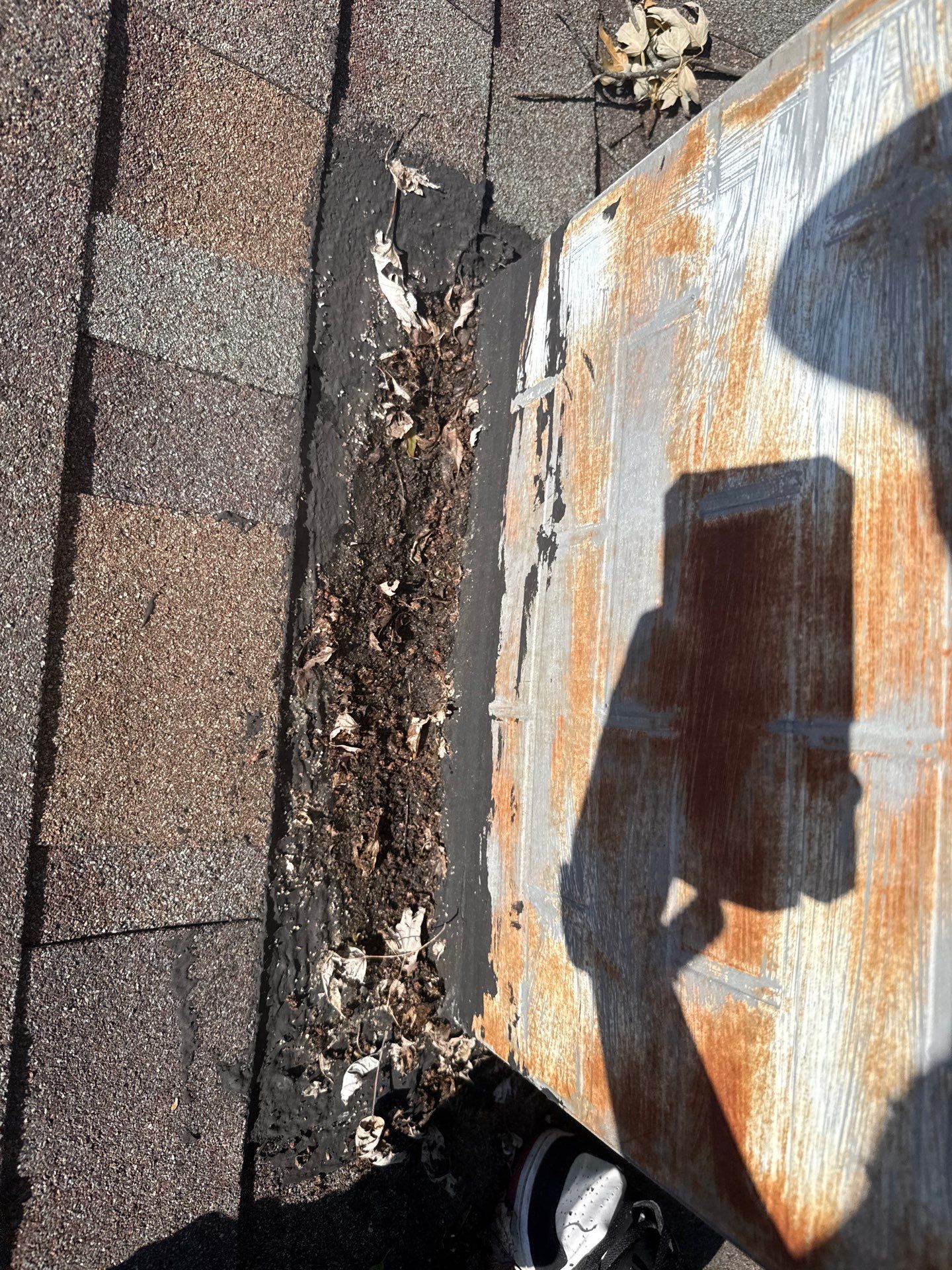
If the flashing is caulked on, not overlapping properly, or is cut too short or not bent properly, the water will get behind it. At the point where your shingles end and the brick or siding starts there is a joint that is not watertight by default. The flashing is a piece of metal that goes under the brick or siding and lays on top of the roof. If done correctly it will keep the water out.
In a good spring storm off the Missouri River bottoms I’ve seen rain pushed right back uphill and up under shingle edges. The problem is exacerbated on attached porches, which must have a much lower pitch than the roof of the house itself, and are tied into the house at their highest point. Low pitch means slow draining, slow draining means standing water.
Some of the things we typically find at these connections during inspections:
- What appears to be caulk in lieu of proper step flashing will crack after just a few seasons.
- Counterflashing was not cut into the brickwork or tucked under the siding.
- Missing kickout flashing at the bottom of the wall run which would result in water draining into the wall cavity.
- The pitch of the porch roof is less than what is allowed for shingles by the shingle maker without upgraded underlayment.
- Moisture being held against roof deck from tightly collected material in valley where porch roof meets main roof.
This is also seen quite a bit on houses where a porch or addition has been built onto the house after the roof was built. Most people wouldn’t know what a kickout is. Kickout flashing is an angled piece of metal (shown below) that is maybe three inches tall. Without the kickout the runoff from the roof will travel behind siding. This may not be noticeable for years but it can cause some very undesirable results.
Homeowner called us about a stain on the ceiling of a back bedroom. The area of the roof over the stain showed no damage. The leak turned out to be 14 feet away, where the top of an attached porch roof meets the wall. The water was leaking in at the porch/wall junction and traveling along the rafter to drip on the bedroom ceiling.
The stain is almost never directly below the hole.
Many homes in Maryland Heights were built between the 1950s and 1970s. Over the years, porches, carports and other additions were made to expand living space. All of these additions required new junctions in the home. Older flashing methods rely more on sealant rather than a good overlap. Sealant only lasts a certain amount of time and will begin to fail after several St. Louis County winters. As the sealant starts to fail the freeze-thaw cycle each winter can start to separate these junctions.
Different failures require different repair plans since field shingles can fail due to age, hail, whereas connections fail because of poor details and design, poor installation details and movement.
How Water Travels Before You Ever See a Stain
When planning for effective repairs, it’s important to keep one simple truth in mind: the stain is not over the leak. Water enters your home at the highest point it can and will work its way down and follow framing members, seams in the sheathing, any slopes, etc. A brown spot on your ceiling could be 10 or 15 feet from the original penetration on your roof.
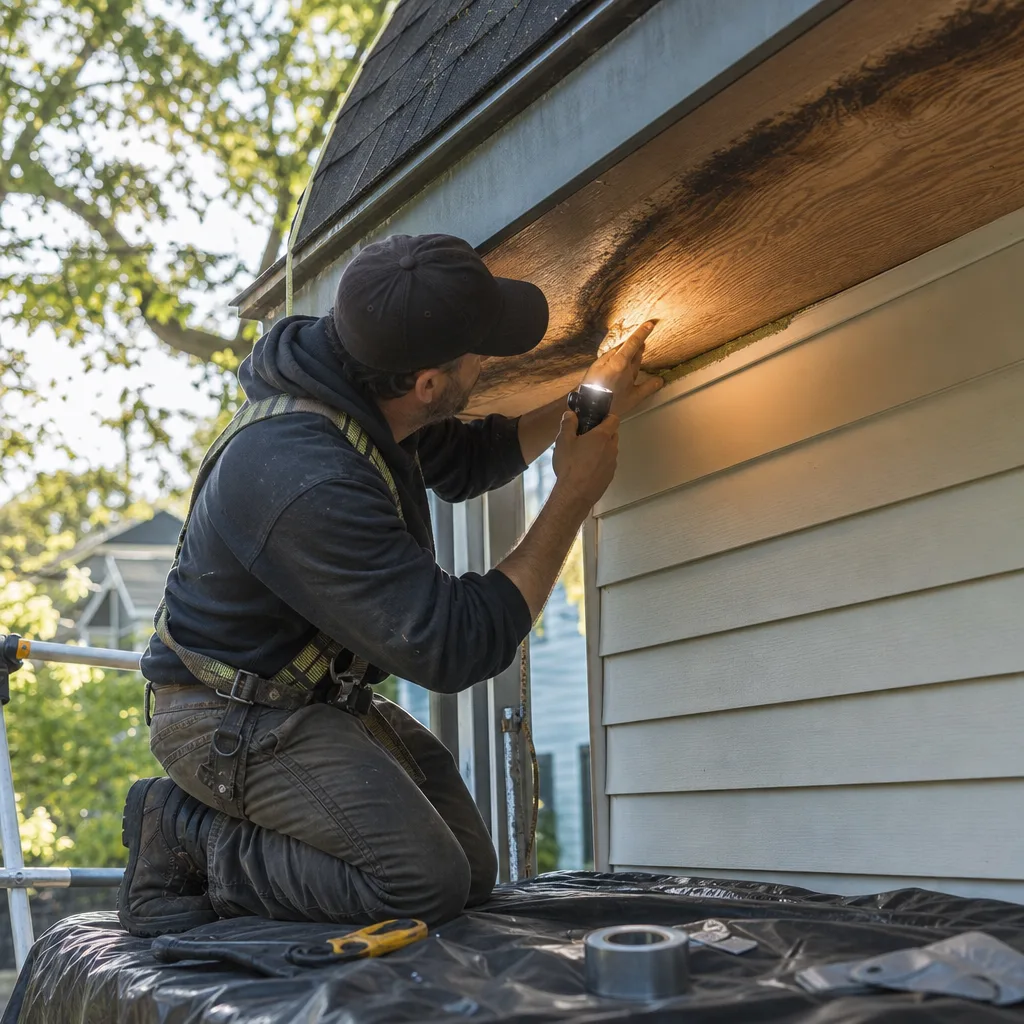
Probably the most common mistake we see is the homeowner pointing to the drywall saying this is where I think it’s leaking from... well not necessarily.
Usually it is not.
Roofs and walls meet each other at what are known as intersections. Common examples include a dormer on the main roof and the intersection of the porch roof with a sidewall of the house. In an intersection, the water running down an angled roof hits a vertical wall. It needs to go somewhere. If the water-resistant barrier and flashing are correct, it is directed out and over the shingles. If the flashing or moisture barrier is too short, backwards, or missing, it goes behind the wall.
Typically the water follows this path through these connections.
- Water can enter through openings in step flashing, kickout flashing, and at or through failed counterflashing joints.
- Note that moisture runs down the backside of the wall sheathing instead of draining over the roof.
- It will fall until it hits a top plate or other horizontal framing member and stop.
- This will often spread laterally several feet following framing.
- Water, or whatever is doing the penetrating, finds the hole, whether nail hole, wire, seam, etc., and drops.
- As the damage progresses and the moisture penetrates the drywall itself, insulation will become saturated and show as staining, bubbling or cracking of wall surfaces.
Have you ever wondered why some leaks occur during the first rainstorm, but not during the next three? Or, you might wonder why a stain on the ceiling or in the wall appears to get larger one day when it has not rained at all? Wall materials will absorb and release water at varying rates. Sometimes there is enough water in the walls to give unpredictable results.
Another common problem occurs where the porch roof comes into contact with the house, an intersection of siding, trim, and roofing. Porch roofs are often sloped quite a bit lower than main roofs, causing them to drain more slowly. Sometimes they were added to an original structure, which happens a lot in our Maryland Heights mid-century subdivisions, and are not always properly flashed behind the siding. Any water that manages to find its way behind the trim board will make its way down the porch ceiling framing, emerging on the other side of the porch and dripping off of the roof at the edge. The homeowner thinks it’s the porch that’s leaking, when in fact it’s higher up on the roof.
When the paint starts to peel on a porch column, most people are made aware.
What direction was the wind coming from during the storm? We always try to get this information because it helps us pinpoint the location of a leak much more quickly. Storms in Missouri can drive the rain almost horizontally and get it to run uphill under laps in siding or under courses of roofing shingles. We have seen roofs leak severely from a 40 mph gust from an undesireable direction that have no problem with calm rains.
Making a long-lasting repair takes more than patching the drywall underneath a stain, since that addresses the symptom, not the cause of the problem. To make a long-lasting repair you’ll have to identify where water enters, how it travels, and everything it wets along the way.
In the practical application this focus continues. roof repair guidance our team provides services to local families.
Signs That Point to a Roof-to-Wall or Porch Tie-In Leak
Leaks at these connections behave differently than leaks in the middle of the field of shingles, which will almost always drip in the same spot each time. Leaks at connections wander because the water is traveling behind the siding, usually on structural framing. Remember, the leak might be coming in at the connection, but coming out three feet away.
Another common mistake we see is homeowners focusing their repairs on the stain or water damage and not addressing the leak itself.
Next, look for signs of trouble, which may indicate a connection issue, rather than a drain field issue. Start by checking inside your home, then on a dry day, make your way around the exterior of your house.
- Note the water stains are running along what appears to be an exterior wall, NOT in the center of the room.
- Peeling paint and/or soft drywall on a wall underneath a porch or other lower roof can be a sign of a leak.
- Water is evident during rainy conditions with wind but NOT during steady, calm rain.
- Rust streaking, loose caulk or other evidence of gaps in the intersection of a roof slope with brick or siding.
- Porch ceiling boards near the house are discolored and feel soft.
- ☐ Dark staining on the rafter tails or top of porch beam when viewed from below.
Interestingly enough, the direction the wind is coming from during a storm is important. Some homes in Maryland Heights will not leak on a rainy day but will leak on a rainy, gusty day. For instance, many of our storms come from the west and southwest. On many homes, this means that the rain is driven into the porch or lower addition. It runs down the siding and leaks at the joint where the porch roof comes into the wall of the house.
Freeze-thaw cycles during the winter cause caulk to shrink, crack, and separate from siding. Thick beads of caulk or other types of sealant where the roof intersects with the wall are a clue that someone patched this joint instead of installing the necessary metal flashing. Caulk is a temporary fix that will not last long-term.
For example, the brown ring on the drywall of your living room ceiling, about two feet from the front wall, leads you to assume that the shingles directly above are letting water into your house. Upon further inspection, those shingles are fine. In reality, the water is leaking in through the step flashing at the junction of the porch roof and second-story wall. Then, it runs for about ten feet on the rafter, before it drips through your living room ceiling. We’ve seen this happen countless times.
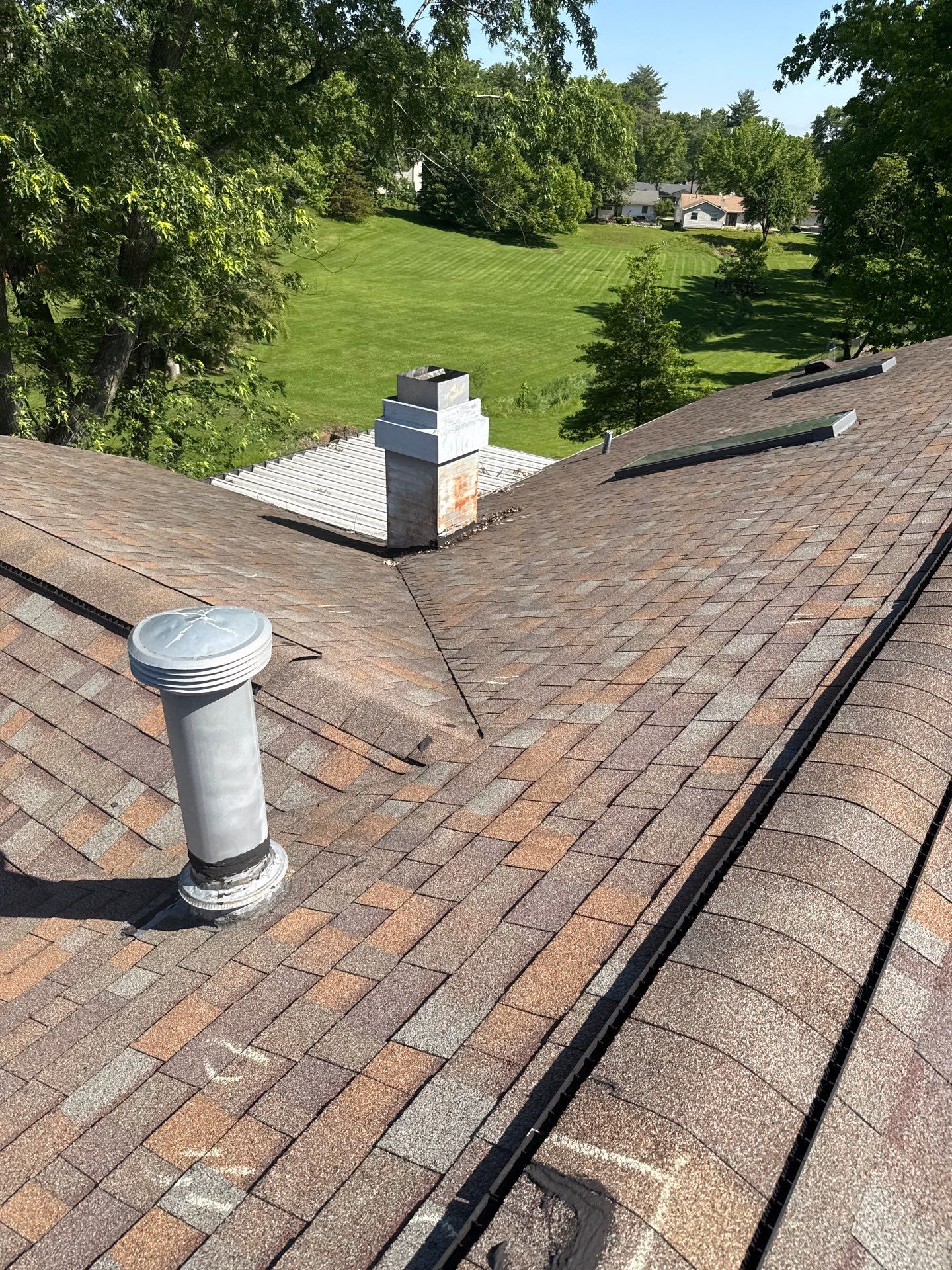
Having access to the attic will help the process. Shine a flashlight on the underside of the sheathing by the walls. If there has been water getting in for some time, you’ll see dark tannin streaks running down the framing, which would indicate that this isn’t just from last week’s storm.
Another reason is that a porch usually doesn’t have an attic. Leaks can be hidden by soaking into the decking and framing for a season or two before ever staining or destroying a finished ceiling beneath it.
If you see two or three of these signs, it’s time to take a closer, hands-on look at your flashing details instead of slathering on some more sealant.
Common questions
Frequently asked
Water travels before it drops, so the stain forms far from the actual leak. It enters at the highest point, like a roof-to-wall joint, then follows framing members until it hits something blocking its path. That is often 10 to 15 feet away. This is why homeowners are usually wrong when they point at drywall and guess the source. A proper trace-back looks at the whole roof line, not just the stain.
About the author
Lapeyre Roofing Team
Roofing Specialists