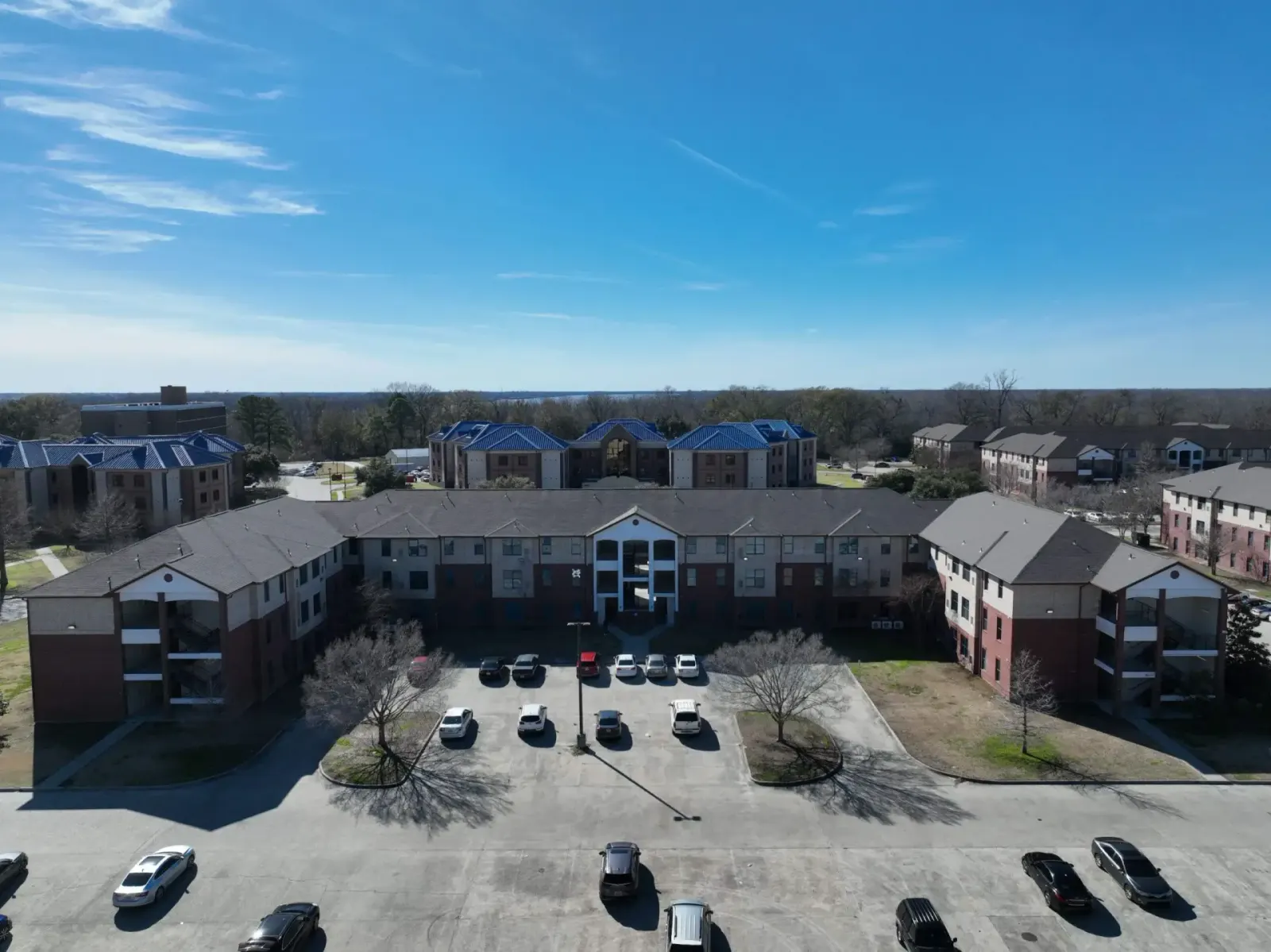
Commercial Roofing in St. Louis: Maryland Heights Property Owners' Guide
Clear roofing decisions for Maryland Heights homeowners
Here's the thing about a flat roof. It rarely tells you the truth about where it's hurt. Water gets past a seam, runs sideways across the deck, and drops through a joint in the ceiling tile somewhere completely different. So the stain above the break room may have nothing to do with the break room.
Prefer to book online? Schedule your free St. Louis estimate
Schedule Your FREE
Roof Inspection & Estimate
Request a written estimate
Where is your property?
We serve Texas, Louisiana & Missouri
What do you need?
Almost done!
How can we reach you?
By submitting, you consent to follow-up messages. Reply STOP to opt out.
Sources we use
Check the scope against current guidance
Official sources reviewed September 7, 2026, plus a planning tool for comparing the decisions in your estimate.
GAF
Coating or replacement: roof-condition decisions
Reviewed September 7, 2026. Explains why system condition and moisture determine whether restoration is appropriate.
Read the official guidance →GAF
Commercial roof recover guidance
Reviewed September 7, 2026. A recover retains suitable existing roof components; suitability must be established for the roof.
Read the official guidance →Repair or Replace: How the Decision Gets Made
Most people call us hoping for a repair. That's fair. Nobody budgets for a full tear-off in the middle of a fiscal year. And, a lot of the time repair is the right call. Here's what moves the decision. First, how much of the roof is wet. A single punctured seam over a dry deck is a repair. Saturated insulation across a third of the field is not, because you can patch the top all day and the water trapped underneath keeps eating the deck. Second, the age and condition of the membrane itself. When a single-ply has gone brittle and cracks when you walk it, new patches just create new edges to fail. Third, how many times this same roof has already been fixed. Nine times out of ten, when we find six or seven old patches clustered in one area, the problem isn't the patches, it's drainage or a design flaw nobody addressed.
- TPO/EPDM flat roof replacement: $7-$15/sq ft for typical St. Louis projects
- Modified bitumen: $9-$16/sq ft
- Standing seam metal: $12-$22/sq ft
- Flat roof repair: ~$500-$1,500 for isolated seam/flashing, more for storm or ponding damage
- Restoration coatings: ~$3-$7/sq ft to extend a sound membrane
- Emergency leak response, storm documentation, and maintenance programs
Commercial Roof Challenges in St. Louis
Why Midwest Commercial Flat Roofs Fail Early
Here's the thing about a flat roof. It rarely tells you the truth about where it's hurt. Water gets past a seam, runs sideways across the deck, and drops through a joint in the ceiling tile somewhere completely different. So the stain above the break room may have nothing to do with the break room.
Ponding Water After Midwest Downpours
Impact: Flat roofs need positive drainage, and St. Louis heavy rain events expose drainage problems fast. When two or three inches fall in an hour, undersized or clogged drains can't keep up and water ponds in low spots created by deck deflection or settled insulation. Standing water accelerates membrane aging, stresses seams, adds structural load, and in winter freezes into ice that compounds the damage. Ponding is one of the most common reasons a flat roof leaks or fails years before its warranty says it should.
Our Solution: We assess drainage on every inspection and address tapered insulation, drain and scupper cleaning, additional drains, or drainage redesign as part of the repair or replacement scope. We verify actual installed slope rather than trusting the drawings, since deck irregularities often reduce effective drainage. Code often requires positive drainage on replacements.
Hail Damage to Membrane Systems
Impact: Shingles are not the only thing hail damages. TPO and EPDM membranes can be punctured or have their reinforcement damaged, especially on older systems. Modified bitumen is more impact-resistant but not immune. Damage often isn't visible from ground level or even from rooftop walk-throughs without careful inspection.
Our Solution: We inspect after significant hail events with documented walk-throughs, seam testing, and core samples when necessary. For insurance claims, we provide scope documentation that adjusters and property managers can work from.
Wind Uplift and Fastening Failures
Impact: Severe thunderstorms and straight-line wind events test the fastening systems holding membrane roofs down. Inadequate fastening patterns or degraded adhesive can cause large sections of membrane to lift during storms.
Our Solution: We specify wind ratings appropriate for building height and exposure category. Mechanically fastened systems get appropriate fastener density; adhered systems get appropriate adhesive coverage. We also inspect existing installations for wind compliance issues.
Freeze-Thaw Membrane and Flashing Stress
Impact: St. Louis winters cycle between freezing and thawing dozens of times each season. Every cycle expands and contracts the membrane and works the seams, flashing details at penetrations, and termination bars at parapet walls. Aging TPO and EPDM get brittle and the seams fatigue; water that ponded or wicked into a seam during the day freezes and pries it open overnight. Many of the flat roof leaks we diagnose in St. Louis trace back to freeze-thaw at these details rather than the field of the membrane.
Our Solution: We rebuild flashing details properly (actually rebuilt, not re-caulked), specify flexible membranes and heat-welded seams that move with the membrane instead of fighting it, and address termination bars and parapet wall caps as part of any significant repair or replacement. On sound but weathered membranes, a restoration coating can re-waterproof seams and details and buy years before a full tear-off is needed.
HVAC and Penetration Leaks
Impact: Commercial roofs are penetrated repeatedly for HVAC, plumbing, electrical, skylights, and exhaust. Every penetration is a potential leak source, and many commercial leaks trace back to poorly flashed rooftop equipment.
Our Solution: We re-flash penetrations as part of replacement scope and can schedule spot repairs for existing buildings. Proper curb flashing and boot seals prevent the bulk of penetration-related leaks.
Commercial Roofing Across the St. Louis Metro
Commercial property types and roofing needs vary across the metro. Here are the situations we most commonly encounter:
Downtown St. Louis and Central Corridor
Mix of older buildings with legacy roof systems and newer Class A office buildings. Many properties have rooftop mechanical equipment and accessibility challenges.
Tenant and operations coordination is critical. We plan work around business hours, loading zones, and building access. Older buildings often have legacy systems (built-up roofs, older mod-bit) that benefit from modern replacements with better warranties.
Clayton and Central West End
Commercial office buildings, medical facilities, and mixed-use properties. Higher expectations for aesthetics and minimal tenant disruption.
We coordinate closely with property managers on scheduling, dumpster placement, and tenant communication. Projects often include screen walls and architectural details that affect scope.
West County Industrial (Earth City, Bridgeton, Hazelwood)
Large industrial and distribution buildings in the Earth City and Riverport corridors with substantial flat roof areas, often measured in acres, and long drainage runs prone to ponding.
Large flat TPO or EPDM systems with high-wind fastening patterns, tapered insulation for drainage, and a lot of rooftop penetrations to flash. Access and staging for big footprints requires coordinated planning. On sound existing membranes, a recover or restoration coating can be a lower-budget alternative to full tear-off, and phased flat roof repair keeps operations running while a capital replacement is planned.
Chesterfield, Ballwin, Wildwood Retail
Retail centers, strip malls, medical office, and mixed commercial in suburban areas with heavy hail exposure.
Insurance claim work after hail events is common here. Property managers often coordinate claims across multiple properties. Documentation matters, especially consistent photo records across buildings.
Multifamily (Apartment Communities, Condo Associations)
Residential-style pitched roofs on multifamily buildings, often with phased replacement programs across multiple buildings in a community.
Coordination with HOAs, property management companies, and resident communication. Phased work across multiple buildings requires consistent documentation and warranty registration per building.
St. Louis Commercial Roofing Costs (2026)
Two bids on the same building can look like they're for two different roofs. That's normal, and it's usually not because one contractor is cheating you. It's because commercial roofing is priced by square footage, by system type, and by how much work happens before the new membrane ever goes down.
TPO (Thermoplastic Polyolefin)
$7 - $15 per sq ft
Most common modern commercial membrane. White reflective surface reduces cooling costs. Strong warranty options (15-30 years). Good hail and wind performance.
EPDM (Rubber Membrane)
$7 - $14 per sq ft
Proven technology with 40+ year track record. Black or ballasted white options. Flexibility handles Midwest freeze-thaw well. Easier seam repairs than TPO.
Modified Bitumen (Mod-Bit)
$9 - $16 per sq ft
Multi-ply asphaltic system with excellent impact resistance. Good for high-traffic roofs or buildings with roof access requirements. SBS-modified versions handle thermal cycling well.
Standing Seam Metal
$12 - $22 per sq ft
40-70 year lifespan. Best-in-class storm performance. Premium price, premium durability. Good for steep-slope commercial and metal retrofits over existing roofs.
Restoration Coating (Over Sound Membrane)
$3 - $7 per sq ft
Silicone or acrylic coating over an existing membrane that is watertight but weathered. Re-waterproofs seams and details, handles ponding better than the aging membrane, and extends service life 10-15 years at a fraction of replacement cost. Only appropriate when the membrane is sound and the insulation is not saturated.
Roof Recover (Over Existing System)
$5 - $10 per sq ft
Installing a new membrane over the existing one if structure and code allow. Lower cost than tear-off but limits future options and shortens new warranty. Code restricts to one recover in most cases.
Flat Roof Repair
$500 - $8,000
Isolated seam, flashing, or penetration repairs commonly run $500-$1,500. Storm damage, ponding-related work, or multiple leak points typically run $3,000-$8,000. We tell you honestly when repeated repairs mean replacement is the better spend.
Emergency/Storm Restoration
$8,000 - $20,000+
Major storm damage or full restoration scope. Emergency leak response and temporary weatherproofing come first to protect the interior. Most storm damage is insurance-eligible.
Factors Affecting Price
- 1Roof size (economies of scale on larger projects)
- 2Existing system condition and tear-off requirements
- 3Insulation type and R-value requirements (code often requires upgrades)
- 4Drainage design (tapered insulation adds cost but prevents ponding)
- 5Rooftop equipment and penetrations
- 6Code-required upgrades (fire barriers, wind uplift, energy code)
- 7Building height and access (staging, equipment, safety)
- 8Warranty tier (10-year vs 20-year vs 30-year materially changes price)
These are typical ranges for St. Louis commercial roofing in 2026. We provide detailed written estimates after an on-site assessment. For insurance claim work, scope and pricing are typically based on carrier-approved estimates.
How We Handle St. Louis Commercial Projects
Signing a scope isn't the same as a crew showing up. There's a stretch of work in between, and it's the part most owners never see. We'd rather you see it.
On-Site Assessment
We meet with the property owner or manager for a comprehensive roof walk-through. Includes core samples when appropriate, drainage assessment, seam inspection, penetration review, and photo documentation.
Local Note: For St. Louis properties, we specifically assess freeze-thaw damage at flashings, hail damage on membranes, and drainage issues that compound during storms.
Written Proposal with Options
We present options appropriate for your building and budget. That typically includes tear-off vs recover (where allowed), system type choices (TPO/EPDM/Mod-Bit/Metal), and warranty tier options.
Coordination with Operations
We coordinate work schedule with property managers, tenants, and building operations. Work hours, loading zones, staging areas, and tenant communication are planned before work starts.
Permits, Code, and Insurance Compliance
We pull municipal permits, confirm code-required upgrades (energy, wind uplift, fire barriers), and coordinate with your insurance carrier for claim work. All paperwork is handled in-house.
Installation
Our commercial crews execute the replacement or repair. Includes tear-off (or prep for recover), insulation (when replaced), membrane installation, seam welding/bonding, flashing rebuild, and termination detailing.
Local Note: We install with Midwest conditions in mind: wind uplift fastening patterns appropriate for building exposure, freeze-thaw-ready flashing details, and proper drainage slope to prevent ponding.
Quality Check and Testing
Seam testing (for welded membranes), drainage verification, flashing inspection, and comprehensive photo documentation of completed work.
Warranty Registration and Documentation
Manufacturer warranty registration, complete project documentation for your building files, and maintenance schedule recommendations for preserving warranty coverage.
Ongoing Maintenance Program (Optional)
We offer scheduled inspection and maintenance programs to preserve warranty coverage and catch problems early. Annual and semi-annual programs available.
Commercial Roof System Selection
The best system depends on your building, budget, and risk tolerance. Here's how we think about it for St. Louis buildings:
TPO (Thermoplastic Polyolefin)
Why for St. Louis
White reflective surface reduces cooling load significantly in St. Louis summers. Strong hail performance and excellent wind uplift resistance. Best warranty options for new construction and replacement.
Best For
Most St. Louis commercial buildings including offices, retail, and warehouses
Considerations
Requires hot-air welded seams (not field-adhesive). Quality depends heavily on installation; experienced crews matter. White surfaces show dirt more than ballasted systems.
EPDM (Ethylene Propylene Diene Monomer)
Why for St. Louis
Proven 40+ year track record in all climates. Handles freeze-thaw exceptionally well due to natural flexibility. Easier seam repairs than TPO.
Best For
Buildings where proven reliability and ease of future repair are priorities
Considerations
Black surfaces absorb heat (increasing cooling costs). Available in white or ballasted white if reflectivity is priority. Adhesive application requires specific conditions.
Modified Bitumen (Mod-Bit)
Why for St. Louis
Multi-ply asphaltic system with exceptional impact resistance. Good for buildings with rooftop foot traffic or equipment service. SBS-modified handles St. Louis freeze-thaw cycling well.
Best For
Buildings with heavy rooftop equipment, regular access, or specific durability requirements
Considerations
Heavier than single-ply membranes. Installation requires torch or cold-applied methods. Longer lifespan in punishing conditions but higher upfront cost.
Standing Seam Metal
Why for St. Louis
Best-in-class storm performance. Handles St. Louis hail, wind, and freeze-thaw exceptionally well. 40-70+ year lifespan. Can be installed over existing systems with appropriate framing.
Best For
Long-term holds, higher-budget projects, steep-slope commercial, and buildings where durability justifies upfront cost
Considerations
Premium price. Requires proper thermal movement design. Not appropriate for low-slope commercial without specialized installation.
Restoration Coatings (Silicone / Acrylic)
Why for St. Louis
For a flat roof whose membrane is still watertight but weathered, a spray- or roller-applied coating re-waterproofs the field, seams, and flashings in one monolithic layer. Silicone in particular handles the ponding common on St. Louis flat roofs and resists the freeze-thaw seam stress that ends most membranes. It extends service life 10-15 years at 30-50% of replacement cost and keeps the old roof out of the landfill.
Best For
Sound-but-aging TPO, EPDM, mod-bit, or metal roofs where the owner wants to defer a capital replacement and improve ponding performance
Considerations
Not a fix for a roof with saturated insulation or widespread membrane failure; a coating over a wet roof just traps the moisture. We core-sample and assess honestly whether restoration is viable or whether replacement is the better long-term investment. Recoating is typically needed again in 10-15 years.
Roof Recover Systems
Why for St. Louis
Installing new system over existing (if code and structure allow) reduces tear-off cost and debris. Can be a good budget alternative when existing system is not leaking badly.
Best For
Buildings with sound existing systems that need surface renewal, not structural replacement
Considerations
Code limits to one recover in most cases. Shortens warranty of new system in some cases. Adds weight to structure. Not appropriate if existing system has widespread moisture contamination.
Why St. Louis Property Owners Choose Lapeyre Roofing
Commercial roofing works best as a long-term relationship. We approach every project with that in mind.
Documentation and Warranty Registration
Every commercial project gets comprehensive documentation: pre-existing conditions, installation process, completion photos, and manufacturer warranty registration. Your building files have everything needed for resale, refinancing, or future claims.
Operations-Aware Scheduling
We plan work around business operations, tenant needs, and loading zones. Property managers get clear communication up front and during the project. Emergency repairs are scheduled for minimum disruption.
Insurance Claim Support
We prepare storm damage documentation, photos, measurements, and scope notes property managers can share with their carrier. Multi-property portfolios get consistent documentation standards across locations.
Honest System Recommendations
We recommend what your building needs, not what has the highest margin. If a recover makes sense, we say so. If a repair is the right call instead of replacement, we say that too. Budget realism matters for commercial projects.
Maintenance Programs That Preserve Warranty
Manufacturer warranties on commercial systems require documented maintenance. Our scheduled inspection and maintenance programs keep your coverage intact and catch issues before they become expensive.
When a Roof Issue Can Wait (and When It Can't)
Not every problem on a flat roof is an emergency. Some are. Most aren't. The trick is knowing which bucket you're in before you spend money you didn't need to spend.
Here's how we sort it. If water is actively moving into the building, that's a call today. If the membrane is open and weather is coming, that's a call today. Everything else usually gets documented, photographed, and put on a schedule. We'd rather show you pictures of a seam and tell you it has another season in it than sell you a project you don't need yet.
Water coming through ceiling tiles or running down an interior wall during rain
Torn, split, or lifted membrane with insulation showing underneath
Standing water still sitting on the roof more than 48 hours after a storm
Sagging or soft decking you can feel underfoot near a drain or curb
A drain or scupper that's blocked with a full roof of water behind it
Now the other side. A few loose seam edges, some surface cracking in the coating, a couple of popped fasteners on a metal panel - those are real findings, but they're maintenance findings. We note them, photograph them, and give you a written scope so you can plan the repair around your budget cycle instead of a panic call.
Timing matters here more than people expect. Around Maryland Heights, freeze and thaw swings do a lot of the damage on flat roofs, water gets into a small opening in November and pries it wide open by February. So a minor split we find in early fall is worth closing before the cold hits. That same split found in April can often wait for a planned repair window.
One more thing we see every week. Ponding water by itself isn't always a failure, plenty of older low-slope roofs hold a little water and keep performing. It's ponding plus an open seam that gets expensive.
Ask whoever's on your roof to show you the photo. If the urgency is real, it'll be obvious in the picture.
Compare your options before signing
Compare a written roof estimate
Use measured roof area, installed prices, and separate allowances to compare scope. Planning output is not a project quote.
Read more about this roofing decision
St. Louis Hail Damage: A Homeowner's Guide for 2026
A St. Louis hail-damage guide focused on safe documentation, roof-specific inspection evidence, repair options, policy questions, and named-product comparisons.
Missouri Roof Insurance Claims: St. Louis Guide
A St. Louis roof-claim guide focused on policy endorsements, notice, documentation, depreciation, scope differences, and actual homeowner costs.
Roof Replacement Timeline: Day-by-Day
A detailed timeline of the roof replacement process, from pre-installation preparation to final cleanup. Know exactly what happens each day and hour of your project.
FAQ
Frequently Asked Questions
How do I know if my commercial roof needs a repair or a full replacement?
It depends on how much of the deck is wet, not just where you see the stain. A single damaged seam over a dry deck usually just needs a repair. But if insulation is soaked across a large section, patching the surface won't stop the wood underneath from rotting. We also check how many old patches are already clustered in one spot, since that often points to a drainage problem instead of a membrane problem.
Why does standing water on my roof matter so much in Maryland Heights?
Standing water matters here because St. Louis goes through dozens of freeze-thaw cycles every season. Water sits in a low spot, freezes overnight, expands, and pries the seam open a little more each time. A swing from 20 degrees to 45 and back in January can do more damage than a whole summer of sun. If water is still standing 48 hours after a storm, it's worth a closer look.
How fast can someone come look at a leak or ceiling stain?
If water is actively coming through your ceiling or the membrane is open with weather coming, that's a same-week call for us. Most other findings, like a loose seam edge or a few popped fasteners, get photographed and documented so you can plan the repair around your schedule instead of reacting to a panic call. Call our local team and describe what you're seeing so we can sort which bucket it falls into.
What should I expect when a roofer comes to inspect my building?
Expect a walk of the entire roof field, not just the spot above your ceiling stain, since water often travels sideways under the membrane before it drops through a joint. We check drains, seams, low spots, and soft decking, then photo-document everything we find. You get a written report of the actual condition, so you're deciding from evidence instead of a verbal guess in a parking lot.
Why are older buildings near the Page Avenue corridor more prone to roof problems?
Older warehouse and office buildings near the Page Avenue corridor in Maryland Heights were built with tight drainage margins. Once the deck sags even slightly, water sits after every storm instead of draining off. That standing water accelerates seam damage and membrane wear faster than on a roof with better slope. If your building is in this stretch, it's worth checking drains and low spots more often than you might on newer construction.
Is a little ponding water on a flat roof a problem?
Not always. Plenty of older low-slope roofs hold a little water after a storm and still perform fine. It becomes a real problem when that ponding shows up alongside an open seam, a soft spot underfoot, or a drain that's blocked and backing up. We look at the combination of findings, not just the water alone, before telling you whether it can wait or needs attention now.
How long does commercial roofing installation take?
Duration depends on roof size, system type, and scope. A 10,000 sq ft TPO replacement typically takes 5-10 days. Larger projects (50,000+ sq ft) may run 3-6 weeks depending on phasing and operational constraints. We provide a specific timeline in your proposal based on the project specifics.
Can you coordinate commercial roofing around business operations?
Yes. We plan work around business hours, tenant access, loading zones, and operational constraints. For buildings with 24/7 operations or limited shutdown windows, we often phase work across weekends or less-busy periods with temporary weatherproofing during operating hours.
Do you help with commercial hail damage insurance claims?
Yes. We document hail damage with slope-by-slope photo records, provide scope documentation for carrier review, and meet carrier adjusters on-site when needed. For property managers with multiple buildings, we maintain consistent documentation standards across the portfolio.
What warranties are available on commercial roofing?
Most manufacturers offer 10, 15, 20, or 30-year warranty tiers on commercial systems, with different terms for labor coverage. We walk you through tier options and help you select coverage appropriate for the building's expected hold period. Extended warranties typically require scheduled maintenance documentation.
How often should I inspect my commercial roof?
Most manufacturer warranties require documented annual or semi-annual inspections. In St. Louis, we recommend post-storm inspections after major hail events or severe thunderstorms as well. Regular inspection catches small problems before they become major leaks.
Can you repair my existing commercial roof instead of replacing it?
Often, yes. Isolated leaks, seam failures, flashing issues, and penetration problems can usually be repaired cost-effectively. We'll walk through the repair vs replace decision based on remaining service life, overall condition, and repair frequency. If repairs are repeatedly needed or replacement is due within 3-5 years, full replacement usually makes more financial sense.
Do you offer scheduled maintenance programs?
Yes. We offer annual and semi-annual maintenance programs that preserve manufacturer warranty coverage, catch problems early, and document roof condition over time. This is especially valuable for property managers responsible for multiple buildings.
Contact information
Thank you for considering us for roofing needs. We will get back to you during normal business hours.


Send us a message