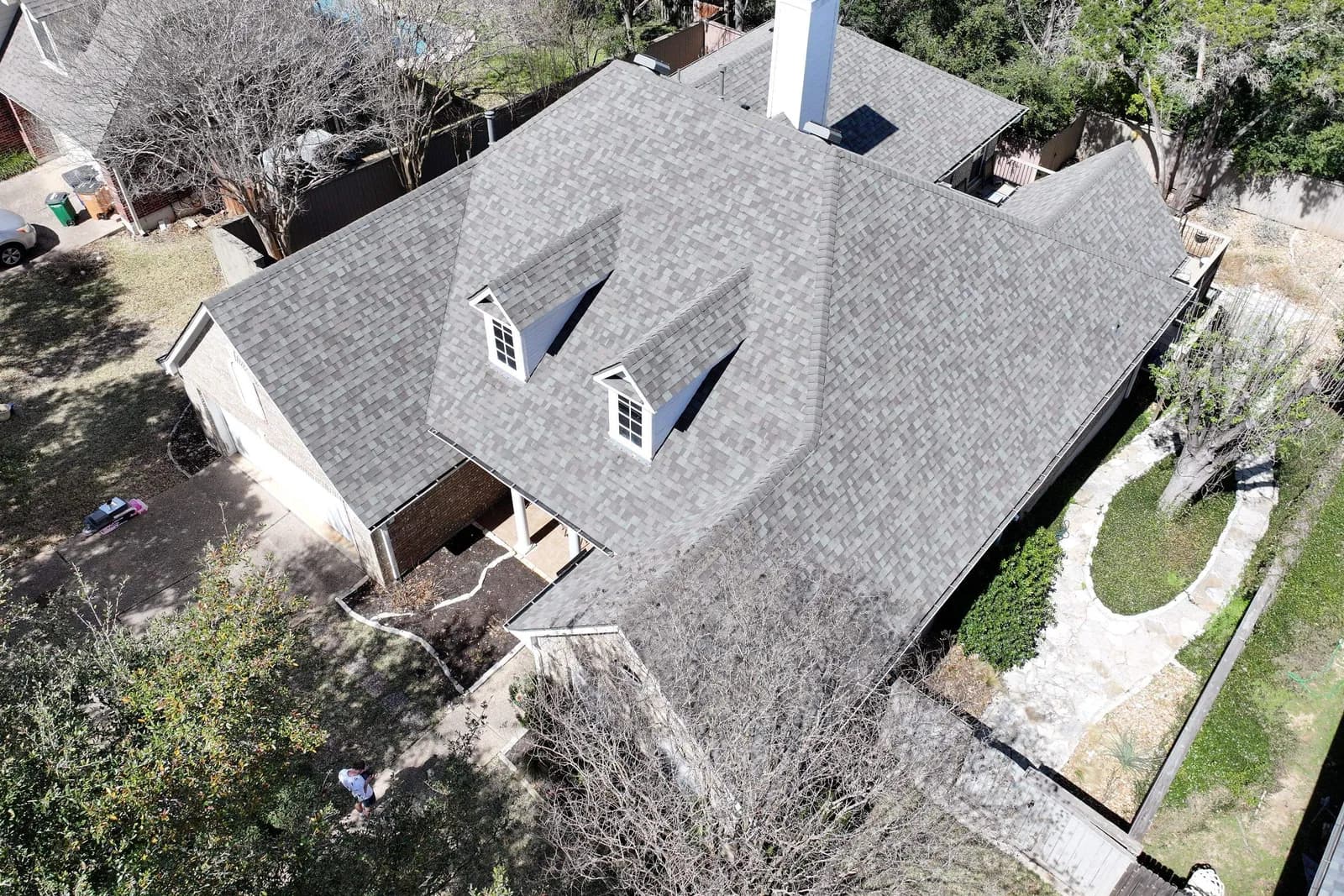
Best Roofing Materials: Complete Comparison Guide for 2026

A comprehensive comparison of roofing materials including asphalt shingles, metal roofing, tile, and flat roof membranes. Find the best option for your climate, budget, and home style.
Choosing the right roofing material is one of the most important decisions you'll make for your home. The material you select affects everything: how long your roof lasts, how it performs in storms, your insurance premiums, and your home's resale value.
This guide compares the most common roofing materials available in Texas and Louisiana, with specific recommendations based on your climate, budget, and priorities. We've installed thousands of roofs across both states and can tell you what actually performs—not just what looks good on paper.
Roofing Materials Comparison: Side-by-Side
Here's how the main roofing materials compare across the factors that matter most:
| Material | Cost (per sq ft) | Cost for 2,000 sq ft Home | Lifespan | Hail Resistance | Wind Rating | Best For |
|---|---|---|---|---|---|---|
| 3-Tab Shingles | $3.50-$5.50 | $7,000-$11,000 | 15-20 years | Poor | 60-70 mph | Budget projects, rentals |
| Architectural Shingles | $4.50-$7.00 | $9,000-$14,000 | 25-30 years | Good (Class 3-4) | 110-130 mph | Most residential homes |
| Luxury Shingles | $6.00-$9.00 | $12,000-$18,000 | 30-50 years | Excellent (Class 4) | 130+ mph | Premium homes, high-value areas |
| Standing Seam Metal | $10-$16 | $20,000-$32,000 | 40-70 years | Excellent | 140+ mph | Long-term value, modern aesthetics |
| Metal Shingles | $8-$12 | $16,000-$24,000 | 40-50 years | Good-Excellent | 120+ mph | Traditional look, metal benefits |
| Concrete Tile | $10-$18 | $20,000-$36,000 | 40-75 years | Good (Class 3-4 depending on profile) | 125+ mph | Affordable tile aesthetic, Texas heat, fire resistance |
| Clay Tile | $16-$30+ | $32,000-$60,000+ | 75-100+ years | Fair-Good (profile dependent) | 125+ mph | Historic homes, Mediterranean style, permanent color |
| Natural Slate | $20-$40+ | $40,000-$80,000+ | 100-150+ years | Excellent (varies by thickness) | 100+ mph (when properly installed) | Historic homes, luxury properties, maximum longevity |
| TPO/PVC (Flat) | $6-$12 | Varies | 20-30 years | Good | Varies by install | Commercial, flat residential |
Asphalt Shingles: The Most Popular Choice
Asphalt shingles cover approximately 80% of American homes, and for good reason. They offer the best balance of cost, performance, and aesthetic options. But not all shingles are created equal.
3-Tab Shingles
The most basic asphalt option. 3-tab shingles are flat, uniform, and inexpensive. However, we rarely recommend them for Texas or Louisiana homes because:
- Poor hail resistance—even small hail can crack them
- Lower wind ratings don't meet hurricane zone requirements
- Shorter lifespan means replacing sooner
- Many carriers may not recognize them for policy credits
Best for: Budget-conscious projects, rental properties, or homes in low-risk weather areas.
Architectural (Dimensional) Shingles
The standard for quality residential roofing. Architectural shingles are thicker, more durable, and available in a wide range of colors and styles. This is what we install on the majority of homes.
Key benefits:
- Better hail resistance — Many architectural shingles carry Class 3 or Class 4 impact ratings
- Higher wind ratings — Most are rated for 110-130 mph winds
- Longer warranties — Typically 25-30 year manufacturer warranties
- Carrier review — Impact-resistant versions qualify for carrier review
- Better curb appeal — Dimensional design creates shadow lines and depth
Luxury (Designer) Shingles
Premium shingles that mimic the look of slate or wood shake at a fraction of the cost. Examples include GAF Grand Canyon and Owens Corning Woodcrest.
- Thickest asphalt option with maximum durability
- Class 4 impact ratings standard
- 50-year limited warranties common
- Highest aesthetic value
Best for: High-value homes, homeowners planning to stay long-term, and anyone prioritizing curb appeal.
Impact Ratings Explained
The impact rating system (Class 1-4) measures how well shingles withstand hail:
- Class 1 — Withstands 1.25" steel ball drop (minimal protection)
- Class 2 — Withstands 1.5" steel ball drop
- Class 3 — Withstands 1.75" steel ball drop
- Class 4 — Withstands 2" steel ball drop (golf ball-sized hail)
In Texas, we strongly recommend Class 4 shingles. The carrier review (typically 10-28% on your premium) often pays for the upgrade within a few years.
Compare shingle performance with IBHS ratings →
See IBHS 2025 shingle performance ratings →
Metal Roofing: Long-Term Value
Metal roofing has grown significantly in popularity, especially in storm-prone areas. While the upfront cost is higher, the longevity and performance often make it the better long-term investment.
Standing Seam Metal
The premium metal option. Standing seam roofs have raised seams that lock panels together, creating a watertight barrier with no exposed fasteners.
Advantages:
- Exceptional longevity — 40-70 year lifespan with minimal maintenance
- Superior storm resistance — Wind ratings of 140+ mph; handles hail better than any shingle
- Energy efficiency — Reflects solar heat, reducing cooling costs 10-25%
- No exposed fasteners — Eliminates the most common failure point
- Modern aesthetics — Clean lines suit contemporary architecture
Considerations:
- Higher upfront cost ($10-16 per sq ft installed)
- Requires skilled installation—not all contractors do metal well
- Can dent from large hail (though rarely fails functionally)
- Noise during rain (mitigated with proper insulation)
Metal Shingles and Tiles
Metal shingles offer the durability of metal with a more traditional appearance. They're designed to look like asphalt shingles, wood shake, or tile.
- Lower cost than standing seam ($8-12 per sq ft)
- Traditional aesthetics for HOA-restricted neighborhoods
- Still offers 40-50 year lifespan
- Good storm performance
Metal vs shingles: Full Houston comparison →
Tile & Slate: Premium Options
Clay and Concrete Tile
Tile roofs are iconic in Mediterranean, Spanish, and Southwestern architecture. They're common in certain Texas neighborhoods and historic Louisiana districts.
Pros:
- Exceptional lifespan — 50-100+ years when properly maintained
- Fire resistant — Class A fire rating
- Distinctive aesthetics — Nothing else looks like tile
- Low maintenance — Doesn't rot, warp, or attract pests
Cons:
- Heavy — Requires reinforced roof structure (additional cost)
- Expensive — $12-25+ per sq ft installed
- Fragile — Individual tiles crack if walked on or hit by debris
- Complex repairs — Matching replacement tiles can be difficult
Best for: Historic homes, Spanish/Mediterranean architecture, homeowners who plan to stay 30+ years.
Natural Slate
The ultimate premium roofing material. Natural slate roofs can last 100+ years and are found on historic buildings, churches, and high-end estates.
- Unmatched beauty and prestige
- 100-150 year lifespan possible
- Extremely heavy—structural assessment required
- Very expensive ($20-40+ per sq ft)
- Requires specialized installation
Best for: Historic restoration, ultra-premium homes, architectural landmarks.
Flat Roof Membranes
Flat and low-slope roofs require different materials than pitched roofs. The main options are single-ply membranes (TPO, PVC, EPDM) and built-up roofing (BUR).
TPO (Thermoplastic Polyolefin)
The most popular commercial roofing material and increasingly common on flat residential sections.
- Energy efficient — White reflective surface reduces cooling costs
- Cost-effective — $6-10 per sq ft installed
- Durable — Resists punctures, chemicals, and UV
- 20-30 year lifespan
PVC (Polyvinyl Chloride)
Similar to TPO but with better chemical resistance. Often used where grease or chemical exposure is a concern (restaurants, industrial buildings).
- Superior chemical resistance
- Excellent fire rating
- Slightly higher cost than TPO ($7-12 per sq ft)
- 25-30 year lifespan
EPDM (Rubber Roofing)
A synthetic rubber membrane that's been used for decades. Less common now but still a solid option.
- Proven long-term performance
- Easy repairs
- Black color absorbs heat (can increase cooling costs)
- 20-25 year lifespan
Read our commercial roofing guide →
Best Materials for Your Climate
Best for Texas (Hail Priority)
Texas—especially the Austin-San Antonio-Dallas corridor—experiences more hail than almost anywhere in the country. Your material choice should prioritize impact resistance.
Top recommendations for Texas:
- Class 4 architectural shingles — Best balance of cost and hail protection; some carriers may review Class 4 documentation for credits or discounts
- Standing seam metal — May dent but won't fail functionally; longest lifespan
- Metal shingles — Good hail resistance with traditional appearance
Materials to avoid in Texas: 3-tab shingles (too fragile), clay tile in hail-prone areas (cracks easily).
Complete Texas materials guide →
Best for Louisiana (Hurricane Priority)
Louisiana's primary threats are high winds and driving rain from tropical systems. Materials need to stay attached and keep water out under extreme conditions.
Top recommendations for Louisiana:
- FORTIFIED-approved materials — Any material installed to FORTIFIED standards provides the best hurricane protection
- Standing seam metal — Highest wind ratings, no exposed fasteners to lift
- High-wind architectural shingles — 130+ mph rated shingles with enhanced nail patterns
Key considerations:
- Installation method matters as much as material—FORTIFIED certification ensures proper hurricane-zone installation
- Louisiana FORTIFIED roofs create evaluator documentation carriers and programs may review under current rules
- Sealed roof deck is critical for water intrusion prevention
Learn about FORTIFIED roofing →
Find Roofing Services Near You
We install all material types across Texas and Louisiana. Let us help you choose the right material for your home.
Texas Service Areas
Louisiana Service Areas
Common questions
Frequently asked
For most Texas homes, Class 4 impact-resistant architectural shingles offer a strong balance of cost, hail protection, and carrier documentation value. Any insurance credit depends on the carrier, policy, product label, and paperwork. For homeowners prioritizing longevity over initial cost, standing seam metal is an excellent choice that can last 40-70 years.

Hunter Lapeyre
Owner, Lapeyre Roofing
Found this helpful? Choose Lapeyre Roofing as a source you want to see on Google.
Add Lapeyre Roofing as a preferred source on Google (opens a Google window)