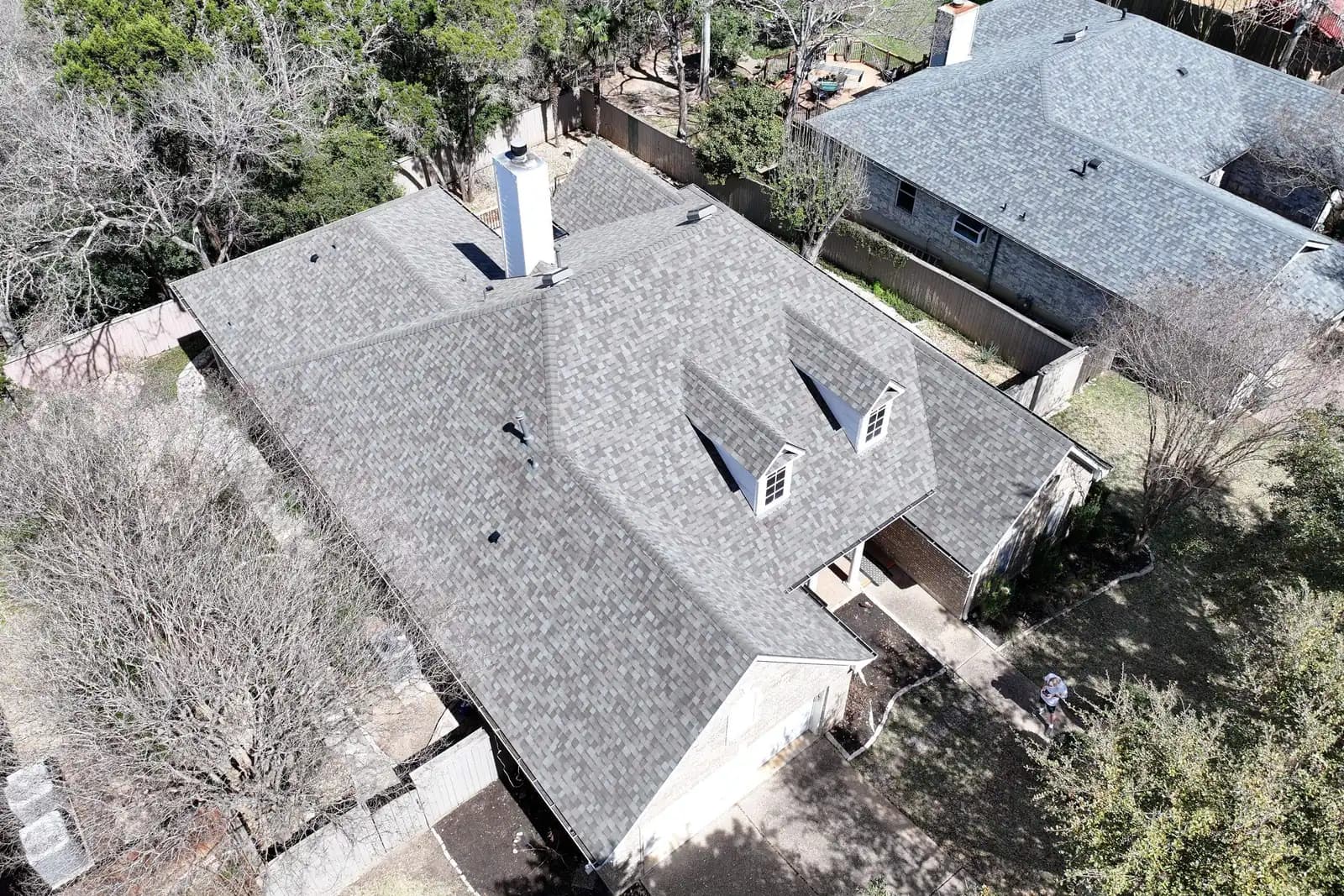
St. Louis Roof Replacement
Residential Roofing Built for Midwest Hail, Wind, and Freeze-Thaw
St. Louis sits in one of the most active hail corridors in the country, and Midwest freeze-thaw cycles punish roofs that weren't built for the conditions. As a residential roofing company, we replace roofs across the full range of St. Louis housing stock: Kirkwood and Webster Groves century homes, South City brick bungalows, Chesterfield and West County production builds, and University City gables. Every roof system is designed for the reality of St. Louis weather: impact-resistant materials, proper ice-and-water shield, 6-nail patterns, and ventilation calculated for our humid continental climate. The goal is a roof that survives the next hailstorm, not one that barely passes inspection.
Prefer to book online? Schedule your free St. Louis estimate
Schedule Your FREE
Roof Inspection & Estimate
Estimates within 24 hours
Where is your property?
We serve Texas, Louisiana & Missouri
What do you need?
Almost done!
How can we reach you?
By submitting, you consent to follow-up messages. Reply STOP to opt out.
How much does roof replacement cost in St. Louis, MO?
Most St. Louis roof replacements cost between $11,000 and $28,000, with the typical 2,000-square-foot home running $14,000-$20,000 for architectural shingles. Class 4 impact-resistant shingles, which we strongly recommend given St. Louis hail frequency, add 15-20% but may improve the long-term math through carrier-recognized material credits or discounts. Standing seam metal starts around $22,000 for smaller homes. Final pricing depends on roof pitch, decking condition, accessibility, and material choice.
- Average St. Louis roof replacement: $14,000-$20,000 for architectural shingles
- Class 4 impact-resistant shingles add 15-20% and provide carrier-review documentation
- Standing seam metal: $22,000+ for typical homes, 40-70 year lifespan
- Steep-slope century homes (Kirkwood, Webster Groves) and slate-to-shingle conversions cost more per square
- Most residential replacements completed in 1-2 days
- GAF 50-year material warranties available
- Hail insurance claim documentation provided at no extra cost
Why St. Louis Roofs Fail Faster Than the Warranty Suggests
The St. Louis Climate Problem
St. Louis combines severe hail frequency, straight-line wind events, extreme humidity, and freeze-thaw cycles into one of the most demanding climates for roofing in the country. Standard architectural shingles rated for 25-30 years often only deliver 15-20 years in Midwest conditions, unless they're installed with the climate in mind from day one.
Hail Frequency
Impact: The St. Louis metro sits squarely in the central U.S. hail corridor, with multiple significant hailstorms most years. Big regional hail seasons like April 2012 and the 2024-25 storm cycles are the reason so many West County and St. Charles homeowners are on their second or third roof in twenty years. Standard shingles bruise and crack under marble-to-golf-ball hail, and the damage is often invisible from the ground. The roof still ages years in a single storm.
Our Solution: Class 4 impact-resistant shingles (like GAF Armor Shield II) pass the UL 2218 Class 4 impact test, simulating 2-inch hail at terminal velocity. They cost more upfront, but they survive storms that destroy standard shingles, and they may be reviewed by some Missouri carriers for credits or discounts.
Freeze-Thaw Cycling
Impact: St. Louis winters cycle repeatedly between freezing and thawing. This daily expansion and contraction stresses flashing joints, breaks shingle seal strips, and can cause ice damming at eaves that pushes water back under the shingles and into the decking.
Our Solution: We install ice-and-water shield at every eave and valley, even where code does not require it. We use SBS-modified flexible shingles that handle thermal cycling without cracking, and calculate attic ventilation properly to prevent ice dam formation.
Straight-Line Winds and Severe Thunderstorms
Impact: Severe thunderstorms bring 60-80+ mph gusts multiple times per year in the St. Louis metro. Improperly installed shingles lift at edges, break their seal strips, and get torn off, usually starting at ridges, rakes, and valleys.
Our Solution: We use 6-nail installation patterns rather than the standard 4-nail, hand-seal all starter strips and hip/ridge caps, and run enhanced starter strips along rakes. It takes longer, but it holds.
Humidity and Attic Moisture
Impact: St. Louis humidity during the summer drives attic temperatures over 140°F and moisture levels high enough to cook shingles from below. A poorly ventilated attic can cut shingle lifespan nearly in half from the inside out.
Our Solution: We calculate ventilation requirements for each roof (intake and exhaust balance matters), upgrade ridge ventilation and soffit intake where needed, and verify the attic actually breathes after installation. Skipping this step is one of the most common reasons Midwest roofs fail early.
Roofing Considerations by St. Louis Area
St. Louis neighborhoods vary widely in architecture, HOA oversight, and weather exposure. Here's what we typically see across the metro:
Clayton, Ladue, Frontenac
Premium and historic homes with complex rooflines, slate or tile in some cases, and significant HOA or architectural review oversight. Homeowners expect craftsmanship that matches the investment in the home.
We use premium materials: standing seam metal, synthetic slate, or designer architectural shingles. HOA paperwork is included in the scope. Complex rooflines mean more flashing transitions and more opportunities for shortcuts, so we handle each detail properly.
Kirkwood, Webster Groves, Glendale
Mature neighborhoods anchored by early-1900s century homes: two-story frame and brick colonials, foursquares, and Tudors with steep pitches, dormers, and multiple valleys. Some still carry original or second-generation slate. Many homes are hitting the 15-25 year mark on their most recent asphalt roof, right when Midwest weather starts exposing install shortcuts.
Steep pitches mean more labor, staging, and safety equipment, so these run higher per square than a walkable ranch. Slate-to-shingle conversions require verifying the framing can carry (or, more often, loses) the load, matching sightlines on a historic street, and rebuilding valley and dormer flashing that was never right. Decking damage from old leaks is common once we tear off, so we budget for partial decking replacement and photograph everything we find. Ventilation upgrades are often the single biggest improvement we can make to extend the next roof's life.
South City & University City (Brick Bungalows, Gables, Foursquares)
St. Louis brick bungalows, gabled workers' cottages, and University City foursquares and gables. These homes typically pair a steeper front-facing gable or hip with a shallow, near-flat rear or porch roof, and many sit shoulder-to-shoulder on tight city lots.
The mixed-slope reality matters: the steep sections take architectural or Class 4 shingles, but the low-slope rear and porch roofs need a proper low-slope membrane (modified bitumen or a rolled system), not shingles laid below their minimum pitch. We flash the brick parapet and chimney transitions carefully, since that masonry-to-roof joint is where South City homes leak. Tight lots mean staging, dumpster placement, and debris protection get planned around neighbors and alleys.
Chesterfield, Ballwin, Wildwood
Master-planned subdivisions and larger custom homes, heavy on 1980s-1990s production builds with simple gable-and-hip rooflines and 25-30 square footprints. Heavy hail exposure in recent seasons has made Class 4 impact-resistant shingles the default conversation in these neighborhoods.
Many of these homes are on their original builder-grade three-tab or early architectural shingles that struggled in hail. HOA approval is usually required, and we handle the submission. Large homes often run 30+ squares, which we plan as 2-day installations with daily cleanup.
St. Charles, O'Fallon, Wentzville
Newer construction west of the river. Growing population, growing hail exposure. Many homeowners are going through their first insurance claim after a storm.
We walk homeowners through damage documentation carefully, covering photos, measurements, scope notes, and carrier-ready roof details. Class 4 upgrades during replacement often make sense here because these homes are likely to see more storms before the roof cycles again.
Florissant, Hazelwood, Bridgeton (North County)
Established residential neighborhoods with a mix of ranch, split-level, and two-story homes. Budget sensitivity is more common, and homeowners want honest advice on the repair vs replace question.
We're honest when a repair is the right call and honest when replacement is overdue. Standard architectural shingles still work here for budget-sensitive projects. We'll explain the tradeoffs and help you make an informed decision.
St. Louis Roof Replacement Costs in 2026
Roofing costs in St. Louis run close to the national average, but smart homeowners here tend to invest in impact-resistant materials that actually make sense for Midwest conditions. Here's what to budget:
3-Tab Shingles (Budget)
$8,000 - $13,000
Rarely recommended for St. Louis. Cheaper upfront, but won't survive significant hail, and insurance claims on 3-tab roofs often face depreciation that erodes most of the payout.
Architectural Shingles (Standard)
$11,000 - $20,000
The baseline for most St. Louis homes. GAF Timberline HDZ is our go-to for budget-conscious projects. Looks good, 130 mph wind rating, and covered by a 50-year material warranty.
Class 4 Impact-Resistant (Recommended for St. Louis)
$14,000 - $26,000
What we recommend for almost every St. Louis home. GAF Armor Shield II or equivalent. Survives hail that destroys standard shingles. Insurance premium savings often offset the cost difference within 3-5 years.
Standing Seam Metal
$22,000 - $45,000
40-70 year lifespan. Best-in-class hail resistance (dents are possible, structural failure is rare). Reflects heat. Higher upfront but frequently the last roof the house will ever need.
Premium (Synthetic Slate, Stone-Coated Steel)
$28,000 - $60,000+
For high-end homes where aesthetics and longevity justify the investment. Synthetic slate gives you the look of slate with hail performance and a fraction of the weight.
Factors Affecting Price
- 1Roof pitch (steeper roofs require more labor, safety equipment, and time)
- 2Number of existing layers (Missouri allows tear-off of up to 2 layers in most municipalities)
- 3Decking condition (we inspect every square foot and replace damaged sections)
- 4Accessibility (second stories, steep lots, landscaping, fence gates)
- 5Penetrations (skylights, chimneys, vents, and dormers add complexity)
- 6Permit fees (most St. Louis County municipalities require roofing permits)
- 7HOA requirements (some communities require specific materials, colors, or submission paperwork)
These ranges reflect 2026 pricing for typical St. Louis homes (1,800-2,500 sq ft). Material costs fluctuate with the steel and petroleum markets, so we honor quotes for 30 days from the estimate date.
How We Replace Roofs in St. Louis
We've refined our process across hundreds of roof installations. Every step is designed for Midwest conditions, from how we protect landscaping against tear-off debris to how we plan around severe weather in the forecast.
Inspection & Estimate
We conduct a full roof, attic, and exterior inspection. This includes measurements, documentation of existing damage, ventilation assessment, and identification of underlying issues. You receive a detailed written estimate within 24-48 hours.
Local Note: For St. Louis homes, we specifically check for prior hail damage (even cosmetic hits that may qualify for claim), evaluate attic ventilation adequacy, and look for freeze-thaw stress at flashings and eaves.
Material Selection
We walk you through material options with physical samples. We explain the pros and cons of each for your specific situation, rather than pushing the most expensive option.
Local Note: We always discuss Class 4 impact-resistant shingles for St. Louis given our hail frequency, and explain the carrier documentation questions to verify before you make an informed decision.
Permits & HOA
We pull all required municipal permits and handle HOA submissions if applicable. You sign off on the application, but we manage the paperwork and follow-through.
Local Note: St. Louis County municipalities vary in permit requirements and turnaround. Most are 3-7 business days. HOA turnaround varies from same-week to 2-3 weeks depending on the community.
Pre-Installation Prep
Day before installation, we deliver materials and position dumpsters. We protect landscaping with tarps and plywood, coordinate with you on vehicle parking and pet/child safety, and confirm the weather window.
Local Note: We protect driveways with plywood under dumpsters to prevent staining. In St. Louis winters, we plan around weather windows carefully. Starting a tear-off ahead of a storm front is unacceptable.
Tear-Off & Decking Inspection
Full removal of existing shingles and underlayment down to the deck. We inspect every square foot of decking for damage, rot, or soft spots, and replace what needs replacing before moving forward.
Local Note: In St. Louis, we commonly find hidden decking damage from past hail leaks or freeze-thaw-driven flashing failures that were never addressed. We photograph everything before covering it.
Installation
New synthetic underlayment, ice-and-water shield at eaves/valleys/penetrations, drip edge, starter strips, field shingles, and hip/ridge caps. Every component contributes to the whole system.
Local Note: We use GAF's complete system approach, which qualifies for the strongest warranty tiers. 6-nail patterns exceed Missouri wind requirements, and hand-sealed ridge caps resist the lift that breaks most cheap installs.
Quality Check & Cleanup
Project manager inspects every detail against our checklist. Multiple magnetic sweeps of the yard and driveway for fallen nails. Full debris removal and property restoration.
Local Note: We photograph the completed roof from multiple angles for your records, warranty registration, and future insurance documentation if needed.
Final Walkthrough & Warranty Registration
We walk you through the completed job, explain your warranty coverage, register your manufacturer warranty, and leave you with complete documentation.
Best Roofing Materials for St. Louis Homes
Not every material that works in Texas or the Southeast makes sense in St. Louis. After evaluating what actually holds up in Midwest conditions, here's what we recommend. The central decision for most St. Louis homeowners is architectural vs Class 4 impact-rated shingles. Standard architectural shingles cost less upfront but should be budgeted as a 15-20 year product in this hail belt, not the 25-30 years on the label. Class 4 impact-rated shingles run 15-20% more, use SBS-modified asphalt that stays flexible through freeze-thaw, and pass the UL 2218 Class 4 impact test. Some Missouri carriers may offer a premium credit or discount on a verified Class 4 installation, but the insurer decides whether it applies and by how much, so confirm it with your agent before you choose materials. We won't make an insurance determination for you; we document the roof and the product so you can. Here's how the materials compare:
GAF Timberline HDZ (Architectural Shingles)
Why for St. Louis
Reliable workhorse for St. Louis homes. StainGuard Plus protection handles Midwest humidity, LayerLock technology provides 130 mph wind rating, and they're designed for thermal cycling.
Best For
Budget-conscious St. Louis replacements where performance and aesthetics need to balance
Considerations
Standard HDZ shingles can still be damaged by larger hail (1.5"+). For most St. Louis homes, the upgrade to Armor Shield II is worth considering given our hail exposure.
GAF Armor Shield II (Class 4 Impact-Resistant)
Why for St. Louis
This is what we recommend for most St. Louis homes. SBS-modified asphalt stays flexible through freeze-thaw cycles instead of becoming brittle. Passes the UL 2218 Class 4 impact test and survives 2" hail at terminal velocity.
Best For
Almost every St. Louis home, especially in areas with recent hail history (Chesterfield, St. Charles, Ballwin, Wildwood)
Considerations
Costs 15-20% more than standard architectural shingles, but carrier-recognized material credits or discounts typically offset the difference within 3-5 years. Most Missouri carriers offer the discount on verified Class 4 installations.
Standing Seam Metal
Why for St. Louis
Reflects heat (reducing summer cooling costs), lasts 40-70+ years, and handles hail better than any shingle. Dents can happen with larger hail but structural failure is rare.
Best For
Homeowners planning to stay long-term, properties with steep pitches, or those prioritizing longevity, energy efficiency, and hail resistance
Considerations
Higher upfront cost ($16-22 per sq ft installed). Some homeowners find rain noise noticeable without proper insulation. A minority of HOAs restrict metal roofing, so check before planning.
Stone-Coated Steel
Why for St. Louis
Combines metal durability with traditional shingle aesthetics. Class 4 rated, handles hail and wind exceptionally well, and looks like a shingle roof from the curb.
Best For
HOA-restricted neighborhoods where metal performance matters but the metal look is not desired
Considerations
More expensive than asphalt, less than standing seam. Stone coating can show wear over decades. High-quality products maintain appearance for 30+ years.
Synthetic Slate
Why for St. Louis
Looks like real slate at a fraction of the weight and cost, with significantly better impact resistance than natural slate. Designed for severe weather climates.
Best For
High-end homes in Clayton, Ladue, and historic neighborhoods where aesthetics drive the decision
Considerations
Higher cost than asphalt. Real slate requires structural evaluation; synthetic avoids that concern while preserving the look.
Why St. Louis Homeowners Choose Lapeyre Roofing
We aren't the cheapest roofer in St. Louis, and we're okay with that. We build our reputation on roofs that don't come back: roofs that survive Midwest storms and still look clean a decade later. Here's what that means in practice.
We Install Class 4 Impact-Resistant Shingles as a Default Conversation
In St. Louis, Class 4 impact shingles are almost always the right answer. We'll always discuss them because the hail frequency here makes the math work for most homeowners, not because they cost more. If standard shingles are the right call for your situation, we'll say that too.
We Engineer Roofs Before We Install Them
Every roof we replace starts with a full assessment of attic ventilation, decking condition, and weatherproofing needs. We calculate ventilation requirements rather than guessing, identify problems before they're covered up, and build the system correctly from the deck up. This takes longer but it's the difference between a roof that lasts and one that doesn't.
In-House Crews Over Subcontractors
Our installation crews are our employees: trained, supervised, and accountable. When the same team installs every roof, quality stays consistent. When something needs attention after a storm, we don't have to track down a sub who's moved on.
Documentation That Protects You
Every roof gets photographed before, during, and after installation. Every material is documented. Every warranty is registered before we leave. If you ever need to file an insurance claim or sell your home, you have proof of exactly what was done.
Honest Insurance Claim Guidance
St. Louis homeowners face a lot of door-knocking contractors after storms, each with a different story about your roof. We tell the truth: sometimes there's no claim, sometimes a claim is overdue, and sometimes the right answer is to monitor for now. We give you the straight answer and help you make informed decisions.
Our Experience in the St. Louis Market
We recently opened our St. Louis office at 4 Sally Drive in Maryland Heights after five years of building roofs across Texas and Louisiana, two of the most storm-active markets in the country. We're a young crew in this market and we're honest about that, but the patterns we've learned transfer directly to the Midwest. Hail behaves the same way whether it falls on a Texas ranch home or a Kirkwood colonial. Wind lift still starts at the rake edge. Flashing still fails at the step, not the surface. And standard shingles still fail 5-7 years earlier than the label suggests when the climate punishes them. Big regional hail seasons like April 2012 and the 2024-25 storm cycles are exactly the kind of events our TX/LA storm experience was built around.
What's different in St. Louis is the freeze-thaw cycle. We've retrained our installers on ice-and-water shield placement and attic ventilation balance for humid continental winters, which behave differently from the Gulf Coast humid subtropical winters we started in. We've learned which St. Louis County municipalities require permits, which HOAs are quick and which are slow, and which carrier documentation questions homeowners should verify for Class 4 upgrades.
What hasn't changed: we still bring GAF-certified install crews who are employees rather than subcontractors. We still photograph every roof before, during, and after. We still register every manufacturer warranty. And we still answer the phone at (314) 333-7565 when you call. If you're considering us for a St. Louis roof replacement, we'd rather earn your trust with how we work than ask for it with a marketing pitch. Schedule a free inspection, ask direct questions, and decide for yourself.
Recent Projects
Chesterfield
Full roof replacement with Class 4 impact-resistant shingles after a significant hail event. Insurance-covered project with full claim documentation support.
Challenge: Original builder-grade shingles had widespread hail bruising invisible from the ground. Adjuster initially scoped partial repair only.
Solution: Photographed every slope with damage measurements, provided carrier-ready findings, and confirmed full replacement scope. Installed Class 4 shingles with documented carrier review for homeowner.
Kirkwood
Mid-century home with original-era roof reaching end of life. Premium architectural shingles with full ventilation upgrade.
Challenge: Decking damage discovered after tear-off from decades of inadequate attic ventilation. Original ridge ventilation was undersized.
Solution: Full decking inspection and partial replacement, new continuous ridge vent system, upgraded soffit intake to balance, and premium shingle installation. Ventilation math documented for homeowner records.
Ballwin
Two-story home in master-planned community with HOA approval required. Class 4 shingles with matching hip/ridge caps.
Challenge: HOA submission required approval for material change. Tight schedule window before winter weather.
Solution: Handled HOA paperwork, scheduled install during the weather window, and coordinated with the community architectural committee. Completed in a single day.
South City (Brick Bungalow)
Classic St. Louis brick bungalow with a steep front-facing gable and a shallow, near-flat rear addition. Architectural shingles on the main roof, low-slope membrane on the back.
Challenge: Prior roofer had run three-tab shingles across the low-slope rear roof, below their minimum pitch, and it leaked at the brick parapet where it tied into the neighbor-facing wall.
Solution: Installed architectural shingles on the steep sections and a modified-bitumen system on the low-slope rear, then rebuilt the parapet and chimney flashing rather than re-caulking it. Staged the dumpster in the alley to keep the tight lot clear.
Webster Groves (Century Home)
Early-1900s two-story frame home with a steep pitch, multiple dormers, and deteriorated original slate on a converted section. Full slate-to-architectural-shingle system with ventilation rebuild.
Challenge: Steep, cut-up roofline with multiple valleys and dormer sidewalls, matching the look of a historic street, and framing that had never been evaluated for the earlier slate load.
Solution: Confirmed the framing, converted to a lighter Class 4 architectural system, rebuilt every valley and dormer flashing, added balanced ridge-and-soffit ventilation, and photographed the framing and flashing details for the homeowner's records.
FAQ
Frequently Asked Questions
How long does a roof replacement take in St. Louis?
Most St. Louis residential roof replacements are completed in 1-2 days. A typical 2,000 sq ft home with a straightforward roof usually takes a single day. Larger homes (3,000+ sq ft), complex rooflines with multiple valleys and dormers, or projects requiring significant decking repair may take 2-3 days. We provide a specific timeline in your estimate based on your roof's characteristics and the weather forecast.
Do I need a permit for roof replacement in St. Louis?
Most St. Louis County municipalities require building permits for full roof replacements. We handle the entire permit process, including the application, fees, and inspection scheduling. Requirements vary by municipality (Clayton, Kirkwood, Ballwin, and Chesterfield each have their own processes), but turnaround is typically 3-7 business days. Permit costs vary, usually running $100-$300 depending on the municipality and project scope.
Will my Missouri insurance cover roof replacement after hail?
If your roof sustained hail damage, Missouri homeowner's insurance policies typically cover replacement costs minus your wind/hail deductible (commonly 1-2% of your insured value). We conduct a thorough inspection and document all damage with photos and measurements that support your claim. We don't recommend filing claims for minor cosmetic damage, but if your roof genuinely needs replacement, we'll help you through the process and provide carrier-ready documentation.
Should I get Class 4 impact-resistant shingles in St. Louis?
For St. Louis specifically, we strongly recommend Class 4 impact-resistant shingles (like GAF Armor Shield II) for almost every replacement. St. Louis sits in an active hail corridor, and the cost difference (typically 15-20% more than standard architectural shingles) is often offset within 3-5 years through carrier-recognized material credits or discounts. More importantly, they actually survive the next major hailstorm instead of needing replacement again.
What's the best roofing material for St. Louis's freeze-thaw cycles?
For freeze-thaw resilience, your best options are: (1) SBS-modified (rubberized) asphalt shingles, which stay flexible through thermal cycling instead of becoming brittle; (2) Standing seam metal, which handles thermal movement through designed expansion joints; (3) Proper ice-and-water shield at eaves and valleys. We install ice-and-water shield on every St. Louis job, even where code does not require it, because freeze-thaw damage is a primary failure mode here.
Do I need to be home during the roof replacement?
You don't need to be home during the installation itself, but we recommend being available for the pre-installation walkthrough and the final inspection. We need access to water and electricity, and you'll need to make arrangements for pets and remove vehicles from the driveway before work begins.
How do I know if my St. Louis home needs a new roof?
Warning signs include: shingles that are curling, cracking, or losing granules (check gutters for granule buildup after storms); visible light in your attic; water stains on ceilings or walls; roof age over 15-20 years; soft spots in the roof decking; and neighbors replacing their roofs (homes in the same area often age similarly and get hit by the same storms). We offer free inspections with an honest assessment of whether you need replacement, repair, or can wait.
What warranty do you offer on St. Louis roof replacements?
We offer multiple warranty tiers backed by GAF. Our standard installation includes GAF's System Plus Warranty (50-year limited material warranty plus workmanship coverage). As a GAF-certified contractor, we can offer premium warranty tiers with extended workmanship coverage and transferable terms that can enhance home resale value.
How do you protect my landscaping during roof replacement?
Before work begins, we lay tarps and plywood boards around the perimeter of your home to catch debris and protect plants. We position dumpsters on protective boards to prevent driveway staining. After installation, we do multiple magnetic sweeps of your yard and driveway to catch any fallen nails. If any damage occurs despite these precautions, we make it right.
What's the typical cost range for roof replacement in St. Louis in 2026?
Most St. Louis roof replacements fall between $11,000 and $28,000, depending on size, materials, and complexity. A typical 2,000 sq ft home with architectural shingles usually runs $14,000-$20,000. Class 4 impact-resistant shingles add 15-20%. Standing seam metal starts around $22,000 for smaller homes and can exceed $40,000 for larger properties. Steep-slope century homes in Kirkwood or Webster Groves and slate-to-shingle conversions run higher per square because of the labor, staging, and flashing rebuilds involved. We provide free, detailed estimates that break down all costs.
Are Class 4 shingles worth it in Missouri?
For most St. Louis homes, yes. Missouri sits in an active hail belt, and Class 4 impact-rated shingles use SBS-modified asphalt that stays flexible through freeze-thaw and passes the UL 2218 Class 4 impact test, so they survive hail that bruises and cracks standard architectural shingles. They cost about 15-20% more. Some Missouri carriers may offer a premium credit or discount on a verified Class 4 installation, but the insurer decides whether it applies and by how much. Confirm it with your agent before you choose materials; we'll provide the product documentation you need to have that conversation.
How fast can you replace my roof after a St. Louis hailstorm?
It depends on where you are in the process. If you already have an approved insurance scope, we can usually get a straightforward home on the schedule within a couple of weeks, and the install itself is typically 1-2 days. Right after a major hail season, demand across the metro spikes and material and crew availability tighten for everyone, so timelines stretch. If you have an active leak, we can provide same-day temporary tarping to protect the interior while the permanent replacement is scheduled. Sourcing through SRS Distribution and QXO helps us keep materials flowing during post-storm surges.
Can you match the roof on my brick-era or historic St. Louis home?
Yes. St. Louis brick bungalows, Webster Groves and Kirkwood century homes, and University City foursquares each have sightlines and proportions worth preserving. We select shingle profiles and colors that suit the era and the street, handle steep-slope and multi-dormer rooflines, and treat the low-slope rear and porch roofs common on brick homes with a proper low-slope membrane instead of shingling them below their minimum pitch. Where a home has original slate, we'll evaluate whether the framing can carry it and walk you through a slate-to-shingle conversion if that's the better long-term call. In historic districts or HOA neighborhoods, we handle the material-approval paperwork.
Do you handle full residential roofing, not just storm work?
Yes. We're a residential roofing company serving the St. Louis metro for full roof replacement, whether the trigger is hail and wind damage, an aging roof at the end of its life, a real-estate transaction, or a material upgrade like architectural to Class 4 or a move to standing seam metal. We cover the full range of local housing stock, from South City bungalows to West County production homes, and we back every job with GAF material warranties and workmanship coverage. We also handle repairs and honest repair-vs-replace guidance when a full replacement isn't warranted yet.
Want the complete picture?
Everything Texas and Louisiana homeowners need to know about roof replacement—costs, timelines, materials, and what to expect.
Read our Complete Roof Replacement GuideContact information
Thank you for considering us for roofing needs. We will get back to you during normal business hours.
Send us a message