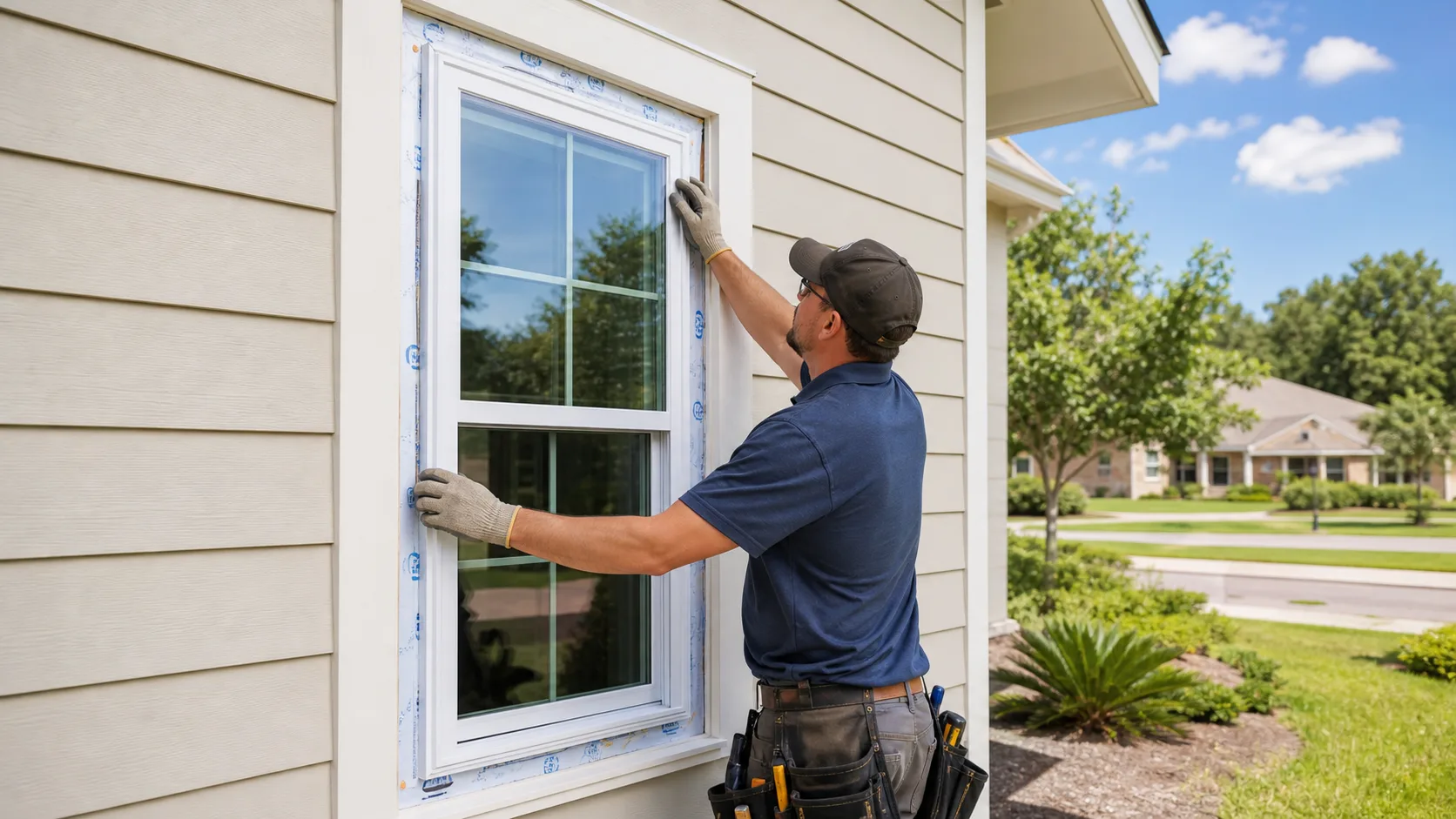
Houston Window Replacement
Impact-Rated Hurricane Windows + Energy Star v7.0 South-Central Spec
Houston windows have to do two jobs at once: meet Energy Star Version 7.0 South-Central spec for hot/humid cooling load (U-factor at or below 0.28, SHGC at or below 0.23) AND survive hurricane wind loads with impact-rated glazing in TDI windstorm-designated coastal ZIPs. We install Andersen, Pella, and Marvin coastal product lines with ASTM E1996 large-missile certification verified on the actual product label.
Schedule Your FREE
Roof Inspection & Estimate
Request a written estimate
Where is your property?
We serve Texas, Louisiana & Missouri
What do you need?
Almost done!
How can we reach you?
By submitting, you consent to follow-up messages. Reply STOP to opt out.
Do I need impact-rated windows in Houston?
It depends on your ZIP. Specific Harris County ZIPs in the Texas Department of Insurance windstorm program (TDI WPI-8) require windstorm-rated installations including impact glazing and certified anchoring. Outside those ZIPs, impact-rated is optional but worth considering for hurricane-exposed homes. The reference standard is ASTM E1996, which tests with a large missile (a nominal 9-pound 2x4 wood member) fired at velocities determined by wind speed region, height, and exposure. We confirm TDI status during the bid walk and verify ASTM E1996 certification on the product label, not just the marketing brochure.
- TDI windstorm program covers specific Harris County ZIPs
- ASTM E1996 = the reference impact-test spec
- Large missile = nominal 9-lb 2x4 fired at 34-80 ft/s
- Energy Star South-Central: U≤0.28, SHGC≤0.23
- Frame material: vinyl or fiberglass over aluminum (humidity)
How Houston Conditions Drive Window Selection
Hurricane Wind, Salt Air, Humidity, Cooling Load — All in One Spec
Houston window selection has to satisfy hurricane wind protection, gulf-coast salt corrosion (in coastal-adjacent ZIPs), 90%+ summer humidity, and South-Central Energy Star cooling-load reduction simultaneously.
Hurricane Wind Load and Impact
Impact: Hurricane wind delivers two separate loads on windows: the static pressure of the wind itself (measured by Design Pressure rating) and the impact of windborne debris during the storm. Failure of either at one window can pressurize the home interior and cause cascading roof failure.
Our Solution: For TDI windstorm-designated ZIPs, we install impact-rated assemblies certified to ASTM E1996 large-missile and small-missile testing. Outside those ZIPs, impact-rated assemblies are optional but available from major manufacturers (Andersen Stormwatch, Pella Hurricane Shield, Marvin Coastline, Milgard hurricane lines, Simonton storm-rated).
Salt Air Corrosion (Coastal-Adjacent)
Impact: Aluminum frames and standard galvanized fasteners corrode quickly in chronic salt exposure. Inner-loop Houston is far enough from the coast that this is a minor factor; Galveston-adjacent neighborhoods see real corrosion.
Our Solution: Vinyl and fiberglass frames over aluminum for coastal-adjacent installs. Stainless or hot-dip galvanized fasteners. Avoid aluminum sash hardware where chronic salt exposure is documented.
Driving Rain at Window Heads and Sills
Impact: Houston deluge events drive rain horizontally against the windward elevation. Pan flashing failures and missing head flashing let water bypass the window entirely, saturating wall framing.
Our Solution: Pan flashing at every sill (self-adhered membrane or formed pan), drip cap above every head, sealed transitions to the WRB. The window itself is only as good as the rough opening details around it.
IGU Seal Failure From Heat and Humidity
Impact: High-temperature surface exposure on south and west elevations stresses insulating glass unit seals. Combined with chronic 90%+ humidity, cheap aluminum-spacer IGUs can fog within 8-10 years.
Our Solution: Warm-edge spacer construction verified on the IGU spec sheet. The NFRC condensation resistance (CR) rating is a useful proxy for IGU quality.
Cooling-Dominant Climate Energy Spec
Impact: Houston is cooling-dominant. SHGC matters more than U-factor — solar heat gain through west and south windows drives summer AC load.
Our Solution: Low-solar low-E coatings on all elevations (especially west and south). Energy Star v7.0 South-Central: U≤0.28, SHGC≤0.23 verified on NFRC label.
Houston Window Replacement Considerations by Area
Hurricane exposure, salt air, and existing window vintage vary across the metro:
Inner Loop (Heights, Montrose, West U, Bellaire)
Older homes with original wood single-pane windows, recent vinyl replacements aging out, mature tree canopy.
Outside TDI windstorm program. Energy Star v7.0 South-Central spec is the priority. Hurricane wind a factor but not impact-rated by code. Pre-1960 homes often have architectural details worth preserving in matched profiles.
West Houston (Memorial, Energy Corridor, Katy)
Newer-build homes 1990s-2010s with original builder-grade windows aging out.
Outside TDI windstorm program for most ZIPs. Wholesale upgrade to v7.0 spec yields meaningful cooling-bill savings. Original builder windows often miss current Energy Star spec by a wide margin.
Coastal-Adjacent (Galveston, Clear Lake, Seabrook, La Porte)
TDI windstorm-designated parcels common. Salt air exposure. More aggressive hurricane wind history.
WPI-8 inspection requirements drive impact-rated spec and certified anchoring. Vinyl or fiberglass frames. Stainless fasteners. Andersen Stormwatch, Pella Hurricane Shield, or Marvin Coastline product lines verified for E1996 certification.
Southwest Houston (Sugar Land, Pearland, Missouri City)
Newer subdivisions, less salt exposure.
Energy Star v7.0 baseline spec adequate. Impact-rated optional. Hurricane wind a factor but typically not at coastal-adjacent levels.
Houston Window Replacement Cost Ranges
Houston window pricing depends heavily on whether impact-rated assemblies are required. Other variables: size, frame material, glass package, opening configuration:
Vinyl, double-pane low-E argon, double-hung
Baseline tier per opening
Standard inner-loop Houston replacement. Meets v7.0 South-Central. Not impact-rated.
Fiberglass, double-pane low-E argon
Mid-premium tier per opening
Better dimensional stability for humidity and heat cycling.
Impact-rated (ASTM E1996) double-pane
Significant premium per opening
Required for TDI windstorm-designated ZIPs. Andersen Stormwatch, Pella Hurricane Shield, Marvin Coastline, etc.
Wood-clad premium (Andersen 400, Pella Reserve, Marvin Elevate)
Premium tier per opening
Reserved for historic and high-end projects.
Factors Affecting Price
- 1TDI windstorm zone status (drives impact-rated requirement)
- 2Frame material (vinyl < fiberglass < wood-clad)
- 3Glass package (impact-rated significantly increases cost)
- 4Opening size and configuration
- 5Anchor density and detail (higher in TDI zones)
Ranges represent typical Houston contractor pricing for residential replacement windows as of mid-2026. TDI windstorm-designated parcels have meaningfully higher per-opening cost due to impact-rated glazing and certified anchoring.
Our Houston Window Replacement Process
Window replacement done right is mostly about the rough opening details. In hurricane country, those details matter even more.
Site Walk and TDI Status Check
Each opening measured. TDI windstorm zone status confirmed. NFRC spec confirmed for v7.0 South-Central qualification.
Local Note: For TDI windstorm-designated parcels, the spec changes to require impact-rated glazing and certified anchor patterns.
Order and Manufacturing Lead
Custom-sized windows ship from manufacturer in 4-8 weeks typical. Impact-rated coastal product lines often have longer lead times.
Existing Window Removal
Glazing taped to prevent shatter. Sash and frame components removed without damaging surrounding wall. Debris contained.
Rough Opening Prep
Old caulk and shims out. Sill checked for level and rot. Sheathing inspected for humidity and termite damage. Damaged framing repaired before set.
Pan Flashing at Sill
Self-adhered membrane or formed pan. Single most important detail in a long-lasting window install. Especially critical in deluge-rain country.
Window Set and Anchor
Window placed, shimmed plumb and square, anchored per manufacturer fastening pattern. For impact-rated assemblies, anchor density and embedment depth match the rated installation.
Local Note: TDI WPI-8 inspection verifies the install at this stage for designated parcels.
Insulation, Air Seal, Head Flashing
Low-expansion foam at perimeter (high-expansion can bow the frame). Drip cap above the head, tied into the WRB.
Punch-List, Walk, Documentation
Operation check on every sash. Glass cleaned, NFRC label left in place. Photo documentation, manufacturer warranty registration, TDI inspection paperwork filed where applicable.
Recommended Window Specs for Houston
Energy Star Version 7.0 South-Central baseline, with hurricane impact and frame upgrades for coastal-adjacent applications:
Impact-Rated Vinyl or Fiberglass Double-Hung (Coastal-Adjacent)
Why for Houston
Coastal Texas TDI windstorm-designated parcels require ASTM E1996 large-missile certification. Vinyl or fiberglass frames over aluminum for salt-air durability.
Best For
TDI windstorm-designated parcels, coastal-adjacent neighborhoods, hurricane-priority homeowners.
Considerations
Significant cost premium over standard glazing. Verify ASTM E1996 certification on actual product label, not marketing material.
Vinyl or Fiberglass Double-Hung (Inner Loop)
Why for Houston
Energy Star v7.0 South-Central spec at reasonable cost. Vinyl is the budget-friendly choice; fiberglass holds up better across decades of heat and humidity cycling.
Best For
Inner-loop Houston, west Houston, southwest Houston outside TDI windstorm program.
Considerations
Hurricane wind exposure still applies even outside TDI program — impact-rated remains an optional upgrade worth discussing.
Double-Pane Low-Solar Low-E Argon
Why for Houston
Right glass package for Houston cooling-dominant climate. Low-solar low-E blocks long-wave IR while passing visible light.
Best For
All Houston homes. SHGC ≤ 0.23 verified on NFRC label.
Considerations
Triple-pane is generally not cost-effective in Houston cooling-dominant climate. Argon fill standard; krypton not necessary.
Why Hire Lapeyre for Houston Windows
Houston windows are technically demanding: hurricane impact, TDI windstorm spec, salt corrosion, deluge-rated flashing. Coming from roofing, the integration details and code compliance fit naturally.
TDI Windstorm-Aware Install
For parcels in designated ZIPs, install matches WPI-8 inspection spec. Documentation kept clean.
ASTM E1996 Verification on Actual Label
We verify impact certification on the product's actual label or NFRC documentation, not the brochure. Marketing claims and certified spec do not always match.
NFRC Label Verification
U-factor and SHGC confirmed before installation. Energy Star v7.0 South-Central numbers are non-negotiable.
Pan Flashing on Every Sill
Single most important install detail in deluge-rain country. Skip it and the window will leak regardless of how good the assembly is.
Insurance-Claim Documentation
After hurricane and hail, we document each opening for storm scope. Failed seals, racked frames, and pre-loss DP rating frequently get under-scoped on initial adjuster visits.
How We Approach Windows in Houston
Houston window work has technical depth that most metros do not. The TDI windstorm program covers specific Harris County ZIPs and requires ASTM E1996 impact-rated assemblies installed with certified anchor patterns. Outside those ZIPs, hurricane wind still applies — just without the inspection layer. We verify impact certification on the actual product label rather than relying on the manufacturer marketing page, which sometimes overstates the rated configuration. For Energy Star compliance, the v7.0 South-Central spec (U≤0.28, SHGC≤0.23) is non-negotiable, and we confirm both numbers on the NFRC label before installation. The flashing details we bring from roofing — pan flashing at sills, drip caps above heads, sealed WRB transitions — matter more in Houston than almost anywhere else because deluge rain finds every gap. After hurricane and tropical storm events, the window claim work follows the same playbook as roof claims: document each opening, verify pre-loss DP rating where applicable, and supplement when initial estimates miss code-required like-for-like or better replacement scope.
Read more about this roofing decision
Best Windows for Texas Heat: 2026 Guide
For Texas, SHGC matters more than U-factor. The Energy Star South-Central spec reflects this with strict SHGC and a slightly relaxed U-factor. Here is which windows actually deliver in Texas heat.
FAQ
Frequently Asked Questions
Do I need impact-rated windows in Houston?
It depends on your ZIP. Specific Harris County ZIPs are in the Texas Department of Insurance windstorm program and require WPI-8 inspection of windstorm-rated construction including impact-rated glazing or shutters. Outside those ZIPs, impact-rated is optional but worth considering for hurricane-exposed homes. The reference standard is ASTM E1996, with testing under ASTM E1886. We confirm TDI status during the bid walk.
What does ASTM E1996 actually test?
ASTM E1996 is the standard for windborne debris impact protection in hurricane regions. It tests with two missile types: a large missile (a nominal 9-pound 2x4 wood member fired at velocities from approximately 34 to 80 feet per second depending on wind speed region, building height, and exposure) and small missile (steel balls representing gravel ballast from upwind flat roofs). An assembly that passes both is impact-rated. The test method itself is ASTM E1886, almost always used in conjunction with E1996.
What U-factor and SHGC do my Houston windows need?
Houston is in the Energy Star South-Central climate zone. For Version 7.0 (effective October 2023), windows must have U-factor at or below 0.28 and SHGC at or below 0.23 to qualify for the Energy Star label. Both numbers come straight from the NFRC label. SHGC is the more impactful number in Houston's cooling-dominant climate.
Are vinyl frames OK for hurricane country?
Premium vinyl frames in impact-rated assemblies are common and acceptable in Houston. Andersen, Pella, Marvin, Milgard, and Simonton all offer vinyl-framed impact-rated windows certified to ASTM E1996. The frame material itself is less important than the assembly's rated DP and impact certification. We avoid aluminum frames in coastal-adjacent ZIPs because of salt-air corrosion concerns.
How much do impact-rated windows cost vs standard?
Impact-rated assemblies typically run a meaningful premium over standard double-pane glazing — exact percentage depends on size, manufacturer, and configuration. The premium reflects laminated glass interlayers, reinforced frames, and certified anchor patterns. For TDI windstorm-designated parcels, this is a code-required cost rather than an upgrade decision. For homes outside designated ZIPs, we discuss the cost-benefit on a per-home basis.
Can I claim hurricane window damage on insurance?
Yes. Wind, hail, wind-driven debris, and hurricane wind are typically named perils. We document with high-resolution photos, verify pre-loss assembly type from any preserved NFRC label or remnant, and write a scope reflecting code-required like-for-like replacement. For TDI windstorm-designated parcels with original impact-rated windows, the replacement scope must reflect that rating — initial adjuster estimates frequently miss this.
Should I get triple-pane windows in Houston?
Generally no. Triple-pane delivers its biggest gains in heating-dominant climates. Houston is cooling-dominant, so the SHGC reduction available through good double-pane low-solar low-E argon already addresses the dominant energy load. Triple-pane is heavier, costs more, and reduces visible transmittance without delivering proportional cooling-bill savings.
How long does Houston window replacement take?
For 15-20 windows on a typical Houston home, 2-4 working days from start to punch-list, assuming all product is on site. The longer lead time is typically the manufacturer order — custom impact-rated coastal product lines can ship 6-10 weeks. Hurricane-season weather windows can add scheduling unpredictability.
What about humidity and IGU seal failure?
Houston's 90%+ summer humidity stresses insulating glass unit seals. Quality warm-edge spacer construction (verified on the IGU spec sheet) is essential for long-term seal integrity. We avoid older aluminum-spacer IGUs and confirm warm-edge construction before installation. The NFRC condensation resistance rating is a useful proxy for spacer quality.
Do you handle Heights and Montrose historic homes?
We coordinate with appropriate historic-restoration approaches on protected and architecturally significant homes. For homes outside protected districts, full replacement to v7.0 spec yields the biggest comfort and energy impact. For protected homes, we discuss restoration of original sashes, addition of interior storm panels, and matched-profile replacement strategies.
Contact information
Thank you for considering us for roofing needs. We will get back to you during normal business hours.


Send us a message