St. Louis Metal Roofing
Standing Seam Done Right—and an Honest Talk About Hail Country
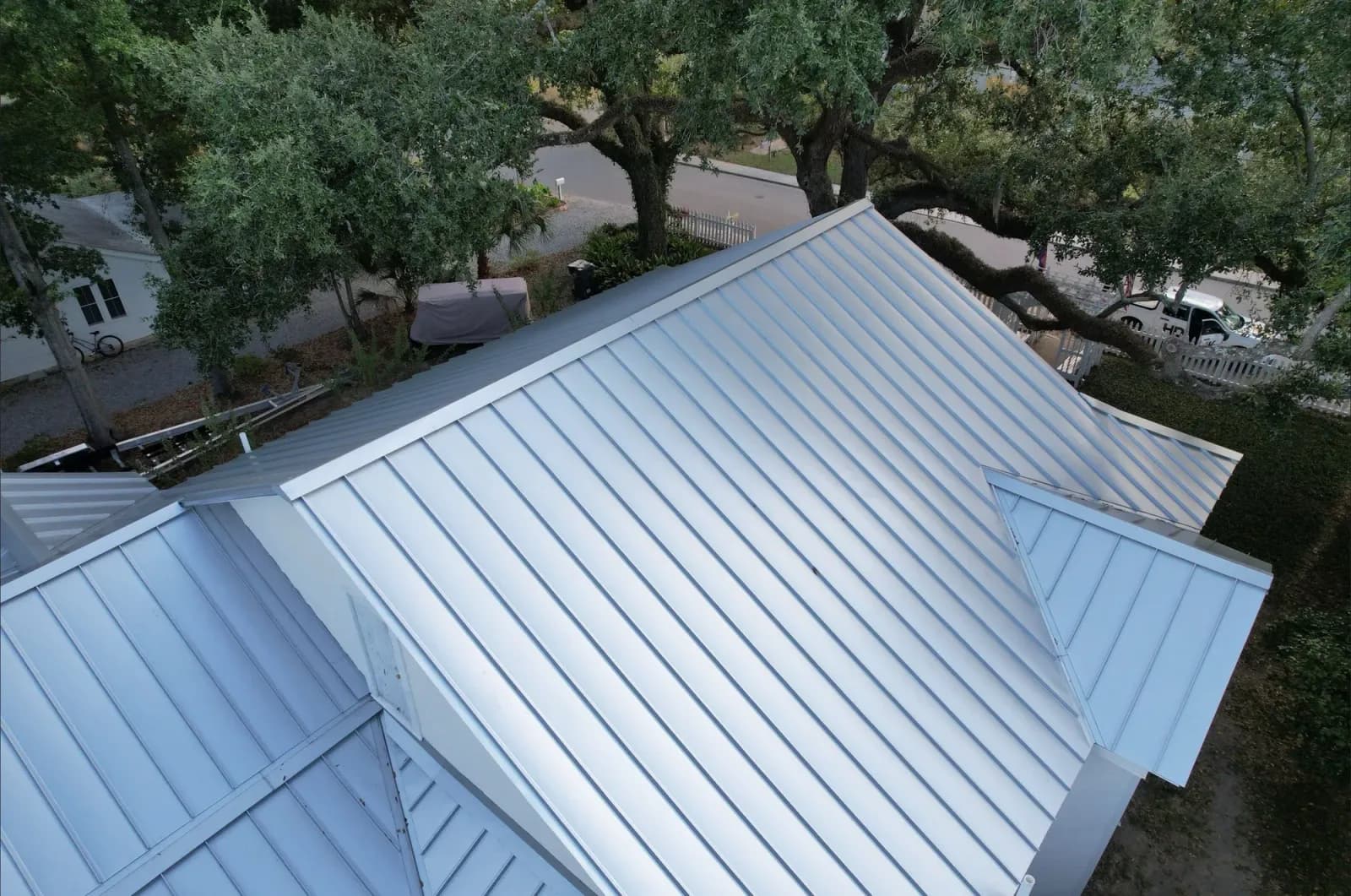
Metal roofing is a serious long-term upgrade for St. Louis homes: it sheds snow, reflects summer heat, and can last 50 years on brick foursquares and modern builds alike. But St. Louis is hail country, and there's an honest conversation most contractors skip—many insurers now attach cosmetic-damage exclusions to metal roofs. We install premium standing seam and exposed-fastener systems, and we'll tell you straight when metal is the right call and when a Class 4 shingle is the smarter buy for your situation.
Prefer to book online? Schedule your free St. Louis estimate
Schedule Your FREE
Roof Inspection & Estimate
Request a written estimate
Where is your property?
We serve Texas, Louisiana & Missouri
What do you need?
Almost done!
How can we reach you?
By submitting, you consent to follow-up messages. Reply STOP to opt out.
Sources we use
Check the scope against current guidance
Official sources reviewed September 7, 2026, plus a planning tool for comparing the decisions in your estimate.
City of St. Louis
City residential permit criteria
Reviewed September 7, 2026. Distinguishes like-material roof work and sheathing extent; historic properties require separate attention. City guidance does not establish suburban requirements.
Read the official guidance →Missouri Department of Insurance
Roof settlement options
Reviewed September 7, 2026. Explains actual cash value, replacement cost value, and functional replacement cost; the actual policy controls coverage.
Read the official guidance →Metal Construction Association via Metal Roofing Alliance
Metal roof installation manual
Reviewed September 7, 2026. Covers panel systems, fastening, and installation details; use the selected manufacturer specification for the actual project.
Read the official guidance →How much does metal roofing cost in St. Louis, MO?
Most St. Louis metal roofs cost between $18,000 and $33,000 installed for a typical 1,800-2,400 sq ft home. Standing seam runs about $10-$16 per square foot installed; exposed-fastener (screw-down) systems run about $6-$9 per square foot. That's roughly double the cost of architectural shingles, so metal makes the most sense for homeowners planning to stay long-term. In St. Louis hail country, always weigh metal against a Class 4 impact-resistant shingle and check your insurer's cosmetic-damage rules before deciding.
- Standing seam metal: about $10-$16 per sq ft installed
- Exposed-fastener systems: about $6-$9 per sq ft installed
- Typical St. Louis home total: $18,000-$33,000
- Metal sheds snow and reflects heat; lasts 40-70 years vs. 15-20 for shingles here
- Many Missouri insurers exclude cosmetic hail dents on metal roofs—verify before buying
- In hail country, a Class 4 shingle is sometimes the smarter value than metal
Metal Roofing in St. Louis: The Honest Picture
What St. Louis Weather Does to a Roof
St. Louis sits in one of the most active severe-weather corridors in the country: frequent hail, straight-line winds, heavy snow loads, and hard freeze-thaw cycles. Metal handles most of this well—but hail deserves a candid, unspun explanation. Here's the real breakdown.
Hail (The Honest Version)
Impact: St. Louis averages several significant hailstorms a year. Metal resists the punctures and granule loss that destroy shingles—but large hail can dent metal cosmetically. The catch: many Missouri insurers now attach cosmetic-damage exclusions to metal roofs, so those dents may not be a covered claim even though they don't cause leaks.
Our Solution: We walk you through the tradeoff before you buy. If ending leak-related claims and getting 50 years of life matters most, metal wins. If you want hail dents covered, a Class 4 impact-resistant shingle without a cosmetic exclusion may be the smarter buy. We help you check your policy language first.
Snow & Ice Load
Impact: St. Louis winters bring snow, ice storms, and ice-dam risk at the eaves. Snow sliding off a roof can pile dangerously over walkways, doors, and landscaping.
Our Solution: Metal sheds snow far better than shingles—it doesn't hold heavy loads or build ice dams the same way. We add snow guards over entries, walkways, and driveways so shedding snow releases safely instead of dumping all at once.
Freeze-Thaw Cycling
Impact: St. Louis swings above and below freezing repeatedly all winter, stressing flashing joints, fasteners, and seal strips. Water that freezes in gaps expands and works materials loose over time.
Our Solution: Standing seam is engineered to expand and contract on concealed clips, so freeze-thaw movement doesn't stress fasteners the way it does on screw-down metal or shingles. We install ice-and-water shield at eaves and valleys beyond code minimum.
Straight-Line & Derecho Winds
Impact: Severe Midwest thunderstorms and occasional derechos bring damaging straight-line winds that lift shingle edges and can peel poorly attached metal at the perimeter.
Our Solution: Standing seam locks to concealed clips with no exposed edges for wind to grab, and we reinforce edge and eave metal on every install. Proper attachment for our wind exposure is what keeps panels down in a derecho.
Summer Heat & UV
Impact: St. Louis summers are hot and humid, pushing attic temperatures high with dark shingles and accelerating aging from below.
Our Solution: Reflective Kynar 500 / PVDF finishes bounce solar heat, cooling the attic and easing summer cooling loads. Combined with good ventilation, metal runs a cooler, drier attic than dark asphalt.
Metal Roofing Across the St. Louis Metro
St. Louis housing stock ranges from century-old brick to new master-planned subdivisions, and the right metal decision shifts with architecture, HOA rules, and hail exposure. Here's what we see across the metro.
Central Corridor (Clayton, Ladue, Frontenac)
Premium homes with complex architectural rooflines, high design standards, and active HOA oversight.
Standing seam suits contemporary and transitional homes here and pairs well with premium architecture. HOA and architectural review govern visible changes—we handle submissions with profile and color documentation. Complex rooflines add custom flashing work.
Historic Brick Neighborhoods (South City, Soulard, Lafayette Square)
St. Louis's signature brick foursquares, gingerbreads, and rowhouses—many with historic character and some with historic-district review.
Standing seam complements brick beautifully and is often historically appropriate on these homes, including flat-lock metal on low-slope sections. In historic districts we match appropriate profiles and finishes and manage any review requirements.
Mid-County (Kirkwood, Webster Groves, Glendale)
Mature neighborhoods mixing mid-century homes and newer construction, many now at the 15-20 year mark on their original roofs.
Homeowners here often weigh metal against a Class 4 shingle re-roof. We give straight guidance based on how long they plan to stay and their insurer's hail rules. Both standing seam and premium shingles are common in these established areas.
West County (Chesterfield, Ballwin, Wildwood)
Master-planned subdivisions and larger custom homes hit hard by recent hail seasons, with strong HOA presence.
After repeated hail claims, some homeowners look to metal to end the cycle—but this is exactly where the cosmetic-exclusion conversation matters most. We help them compare metal against Class 4 shingles and check policy language. HOA approval is required.
St. Charles County (St. Charles, O'Fallon, Wentzville)
Newer construction in a growing hail corridor, much of it with simple, metal-friendly rooflines.
Simple rooflines make standing seam efficient to install, and the newer housing stock suits a modern metal look. Heavy hail exposure makes the insurance and gauge conversation especially important here.
St. Louis Metal Roofing Costs in 2026
Metal costs roughly double architectural shingles upfront, so the math favors homeowners staying long-term. Here's what metal systems run in the St. Louis metro, with an honest note on when a Class 4 shingle may serve you better:
Exposed-Fastener / Screw-Down (Steel)
$13,000 - $23,000
Budget screw-down panels, common on outbuildings, garages, and simple roofs. Requires periodic fastener maintenance. Not usually our first pick for a primary St. Louis residence.
Standing Seam (Galvalume Steel)
$20,000 - $32,000
Concealed-fastener standing seam in Galvalume steel with a Kynar 500 / PVDF finish. The mainstream premium choice—snow-shedding, low-maintenance, and a strong match for brick homes and modern builds.
Heavier-Gauge Standing Seam (24-Gauge)
$24,000 - $38,000
Heavier 24-gauge resists hail denting better than 26-gauge—worth it in the St. Louis hail corridor if surface appearance matters and your policy excludes cosmetic dents.
Class 4 Shingle Alternative (For Comparison)
$14,000 - $22,000
Not metal, but the honest comparison. In hail country, a Class 4 impact-resistant shingle costs less, may earn an insurance premium credit, and keeps cosmetic hail damage covered. Sometimes the smarter value than metal.
Factors Affecting Price
- 1Panel profile (screw-down costs less than standing seam)
- 2Metal gauge (24-gauge resists hail dents better than 26-gauge, at higher cost)
- 3Coating (Kynar 500 / PVDF finishes cost more but hold color and reflect heat)
- 4Snow guards (added over entries, walkways, and driveways for safe snow shedding)
- 5Roof pitch and complexity (multiple valleys and dormers add flashing labor)
- 6HOA or historic-district requirements
- 7Decking condition uncovered at tear-off
These ranges reflect 2026 pricing for typical St. Louis-area homes (1,800-2,400 sq ft). Metal prices track the commodities market—we honor written quotes for 30 days. We provide an exact price after inspecting your roof.
How We Install Metal Roofing in St. Louis
A metal roof lives or dies on its details—snow management, freeze-thaw movement, and flashing all matter here. Here's our process:
Inspection & Honest Consultation
We measure the roof, assess complexity, and talk through your goals and how long you plan to stay. Crucially, we help you weigh metal against a Class 4 shingle and understand your insurer's hail rules before you commit.
Local Note: In St. Louis we won't push metal on a homeowner it doesn't fit. If a Class 4 shingle is the smarter buy for your situation, we'll say so.
Insurance & Cosmetic-Exclusion Review
We walk you through the cosmetic-damage question—many Missouri policies exclude hail dents on metal—so you go in with eyes open about what is and isn't covered on a metal roof in hail country.
Local Note: This is the conversation most contractors skip. We think you deserve to know your policy language before spending on a premium roof.
Material & Finish Selection
We show you standing seam and screw-down profiles, gauges, and Kynar 500 / PVDF color options with real samples, including reflective finishes for summer heat.
Local Note: For brick South City and historic homes we focus on profiles and finishes that complement the architecture.
HOA / Historic Review & Permits
We prepare HOA or historic-district submissions where required and pull the applicable municipal roofing permit across St. Louis County and St. Charles County jurisdictions.
Local Note: West County HOAs and South City historic districts each have their own review—we package documentation to move approval along.
Tear-Off & Deck Inspection
We remove the existing roof to the deck and inspect for damage. Metal needs a flat, sound substrate—we replace any compromised decking before panels go on.
Local Note: On older brick homes we often find aged or previously patched decking that needs attention before metal can go down flat.
Ice-and-Water Shield & Underlayment
We install ice-and-water shield at eaves and valleys beyond code minimum for freeze-thaw and ice-dam protection, plus a high-temperature underlayment suited to metal.
Local Note: Ice-dam protection at the eaves is non-negotiable in St. Louis winters. We extend coverage past the minimum on every job.
Edge Metal & Flashing
We fabricate and install reinforced edge, rake, and drip-edge metal and detail valleys, wall transitions, chimneys, and penetrations for wind and water tightness.
Local Note: Reinforced edges resist the straight-line and derecho winds that peel poorly attached metal at the perimeter.
Panel & Snow-Guard Installation
Standing seam panels set on concealed clips that allow thermal movement; screw-down panels fastened in the correct gasketed pattern. We add snow guards over entries, walkways, and driveways.
Local Note: Snow guards are a St. Louis essential on metal—they let snow release safely instead of dumping a load over your front door.
Trim, Ridge, Ventilation & Cleanup
We finish with matching ridge caps, hip and rake trim, and ventilated ridge where possible, then run multiple magnetic sweeps and hand you a full documentation package.
Local Note: You get panel specs, gauge and finish documentation, warranty registration, and phase photos for your records and any insurance needs.
Metal Roofing Materials for St. Louis Homes
For St. Louis, snow-shedding, freeze-thaw stability, and hail-gauge decisions drive the material choice. Here's what we recommend and why:
Galvalume Standing Seam (24-Gauge)
Why for St. Louis
Heavier 24-gauge Galvalume with a Kynar 500 / PVDF finish resists hail denting better than lighter panels and handles freeze-thaw movement on concealed clips—the strongest standing seam choice for St. Louis hail country.
Best For
Homeowners staying long-term who want maximum hail-dent resistance and snow-shedding performance
Considerations
Highest steel option cost. Even 24-gauge can dent in extreme hail—and if your policy excludes cosmetic damage, that dent is on you. We make sure you understand that before you buy.
Galvalume Standing Seam (26-Gauge)
Why for St. Louis
Galvalume standing seam at 26-gauge balances cost and performance—clean lines on brick and modern homes, strong snow-shedding, and long life at a lower price than 24-gauge.
Best For
Homeowners wanting premium standing seam at a moderate budget on protected or lower-hail-exposure roofs
Considerations
Lighter gauge dents more easily than 24-gauge in severe hail. Still vastly more durable and longer-lived than shingles.
Kynar 500 / PVDF Finish
Why for St. Louis
A quality PVDF finish resists UV fade and chalk through hot St. Louis summers and hard winters, and reflective colors reduce summer attic heat.
Best For
Every St. Louis metal roof where color longevity and summer heat reflection matter
Considerations
Costs more than economy polyester finishes, but the color and reflectivity hold for decades. Worth it on a roof meant to last 50 years.
Snow Guards
Why for St. Louis
Metal sheds snow efficiently—so efficiently it can dump a dangerous load over doors and walkways. Snow guards hold snow in place so it melts and releases gradually.
Best For
Any St. Louis metal roof with entries, walkways, driveways, or landscaping below a shedding slope
Considerations
A small add-on cost that prevents injury, property damage, and gutter damage from sliding snow. We include them wherever the roof geometry calls for it.
Class 4 Impact-Resistant Shingle (Honest Alternative)
Why for St. Louis
Not metal, but the fair comparison in hail country. A Class 4 shingle costs less, may earn an insurance premium credit, and keeps cosmetic hail damage covered under most policies.
Best For
Homeowners who want hail damage covered, plan to move within 15 years, or want the lowest cost path to strong impact resistance
Considerations
Shorter lifespan than metal (roughly 15-25 years here) and doesn't shed snow like metal. We install both and will tell you honestly which fits your situation.
Why St. Louis Homeowners Choose Lapeyre for Metal
In a market full of post-hail door-knockers, we lead with honesty—including telling you when metal isn't the right buy. Here's why St. Louis homeowners trust us:
We Tell You the Cosmetic-Exclusion Truth
Most contractors selling metal in hail country never mention that many insurers exclude cosmetic hail dents on metal roofs. We put that on the table upfront and help you read your policy, because you deserve to make this decision with full information.
We'll Steer You to a Shingle If It Fits Better
We install both metal and Class 4 shingles, so we have no reason to oversell. If you're moving in a few years, or you want hail damage covered, we'll tell you a Class 4 shingle is the smarter buy—even though metal is the bigger ticket.
We Design for Snow, Not Just Rain
Metal sheds snow hard. We add snow guards over entries, walkways, and driveways so a warm-up doesn't dump a snow load on your front step. It's a detail out-of-town installers routinely miss in the Midwest.
We Build for Freeze-Thaw
Standing seam that floats on clips, ice-and-water shield extended past the eaves, and flashing detailed for expansion—we spec for St. Louis winters, not a generic climate.
Established, Not a Storm Chaser
We're GAF-certified, licensed and insured in Missouri, and backed by 566+ five-star reviews from our Texas and Louisiana operations. Our St. Louis office is in Maryland Heights, and we're here for the long haul—including the warranty years down the road.
Compare metal-roof durability with repairability and ownership costs
Begin with the exact assembly and the building's roof shape. Ask the estimate to name the panel, finish, attachment, underlayment, and the details at chimneys, walls, valleys, and lower-slope transitions. Existing slate, tile, or shingles may involve different removal and substrate work. A material switch is not fully priced until those differences and the property's approval requirements are addressed.
Discuss how the selected system will be repaired if a panel is damaged and how future penetrations or equipment will be handled. Ask which components require periodic inspection and who can perform that maintenance. Distinguish the finish warranty, workmanship terms, and the homeowner's insurance policy. Missouri's insurance department explains different roof settlement bases; the contractor should not promise how an insurer will treat a future cosmetic or functional damage claim.
For a City of St. Louis property, confirm the implications of a change in roofing material and any historic review before ordering panels. A suburban or county address needs its own jurisdiction check. Compare alternatives over the scope you intend to own: installed work, planned maintenance, access, repair provisions, and financing costs. The material selector helps organize those priorities, while actual prices and lender terms must come from written proposals.
Compare your options before signing
Compare roofing material priorities
Organize budget, maintenance, and material tradeoffs before a property-specific specification.
FAQ
Frequently Asked Questions
What warranty questions matter when comparing metal roofs?
Ask what the finish warranty covers, what installation workmanship covers, required maintenance, transfer rules, and exclusions. Keep those documents separate from any insurance coverage assumptions.
Should a metal-roof estimate include future repair considerations?
Yes. Ask about panel replacement access, compatible detailing for later equipment, and maintenance of the chosen attachments and sealants. The cheapest installation may not have the same future service requirements.
Will my insurance cover hail dents on a metal roof in St. Louis?
Often, no—and this is the conversation most contractors skip. Many insurers writing policies in Missouri hail country now attach cosmetic-damage exclusions or endorsements to metal roofs. That means hail that dents your metal roof but doesn't cause a functional leak may not be a covered claim. Functional damage (actual leaks, penetrations) is typically still covered, but cosmetic dents may not be. Before you buy a metal roof, pull up your policy language or call your carrier—we'll help you understand what applies. If keeping cosmetic hail covered matters to you, a Class 4 shingle may be the better choice.
Is metal roofing worth it in St. Louis hail country?
It depends on your priorities. Metal resists the punctures and granule loss that destroy shingles and lasts 40-70 years, so for homeowners staying long-term it can be an excellent value. But large hail can dent metal cosmetically, and if your policy excludes those dents, you absorb that cost. In many St. Louis cases, a Class 4 impact-resistant shingle is the smarter value—lower cost, possible premium credit, and cosmetic hail stays covered. We install both and give you honest guidance for your specific situation.
Does a metal roof shed snow in St. Louis winters?
Yes, and that's mostly a benefit. Metal sheds snow far better than shingles—it doesn't hold heavy loads or form ice dams the same way, which reduces winter stress on the structure. The one catch is that shedding snow can slide off in a big load, so we install snow guards over entries, walkways, driveways, and landscaping to let snow release gradually and safely instead of all at once. It's an essential St. Louis detail that out-of-market installers often overlook.
Does metal roofing look right on a St. Louis brick home?
It can look excellent. Standing seam complements the brick foursquares, gingerbreads, and rowhouses that define South City, Soulard, and Lafayette Square, and flat-lock metal works on low-slope sections. In fact, metal is often historically appropriate on these older homes. In historic districts we match suitable profiles and finishes and handle any review requirements so the roof fits both the house and the neighborhood.
How much more does metal cost than shingles in St. Louis?
Roughly double. A typical St. Louis metal roof runs $18,000-$33,000 installed, versus about $14,000-$22,000 for architectural or Class 4 shingles on the same home. Because the upfront gap is significant, metal makes the most financial sense for homeowners planning to stay long-term and spread that cost over a 40-70 year lifespan. If you're likely to move within 15 years, a quality shingle usually pencils out better.
Standing seam or screw-down metal for a St. Louis home?
For a primary residence, standing seam. Its concealed clips let the metal expand and contract through St. Louis freeze-thaw cycles without stressing fasteners, and there are no exposed screws to loosen or leak. Exposed-fastener (screw-down) systems cost less and suit garages, outbuildings, and simple roofs, but the gasketed screws age and need periodic maintenance, and they handle freeze-thaw movement less gracefully. Standing seam is the premium, low-maintenance choice for the home itself.
How long does a metal roof last in St. Louis?
Properly installed, a metal roof lasts 40-70 years in St. Louis—versus roughly 15-20 years for asphalt shingles that get worn down by hail and freeze-thaw cycling. The keys are a quality Kynar 500 / PVDF finish, appropriate gauge, ice-and-water shield at the eaves and valleys, snow guards where needed, and correct flashing for thermal movement. Get those right and metal is very often the last roof you'll buy for that home.
Want the complete picture?
Compare metal, shingle, tile, and slate systems—lifespans, costs, and which material fits your home and climate.
Read our Roofing Materials GuideContact information
Thank you for considering us for roofing needs. We will get back to you during normal business hours.


Send us a message