A guide for Austin homeowners on when a single roof slope can be replaced alone, why transitions matter more than shingle color, and what a written scope should include.
Why Shingle Matching Isn't the Real Risk
"Will you be able to match it?" is a question we hear a lot here at our company when we're informing homeowners here in Austin that one of the slopes of their roof needs to be replaced.
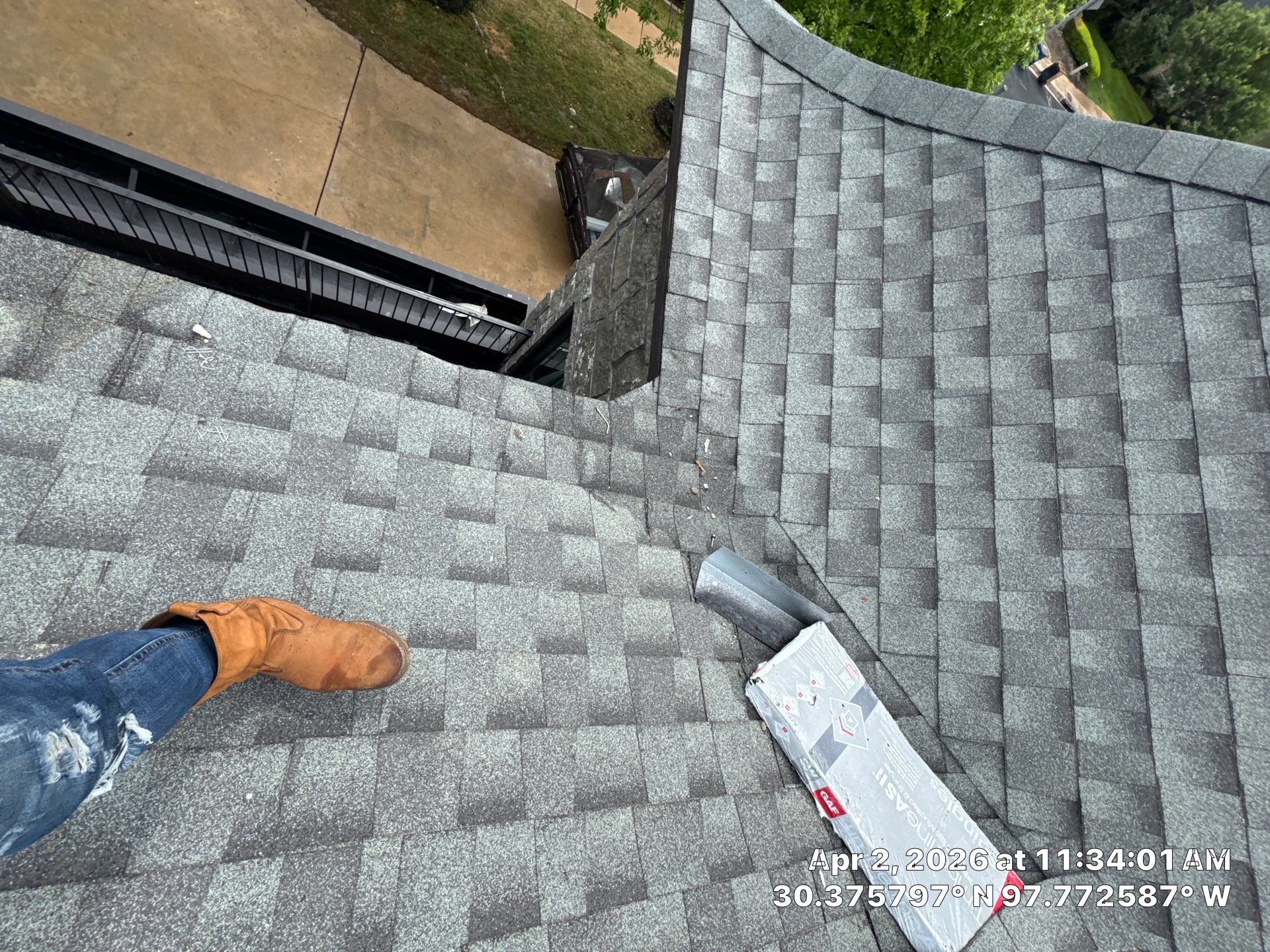
After a decade of basking in Central Texas’ glorious sunshine, the granules change color slightly. For this reason it is very unlikely that a brand-new slope will match the other slopes exactly, even with the same product. However, most people are surprised to learn that slight color differences have yet to make it into the realm of reasons that make their roof leak.
The interface is the danger, not the pieces.
Two storms later, that’s where they’ll be leaking if we didn’t do a good, unhurried job. Water doesn’t care if the colors of the shingles match, it cares about proper overlap, and the transition point between old and new is where most of our attention should be focused.
Problems that may arise while conducting single-slope work include the following.
- Water will have difficulty draining over tie-in because tie-in is butted instead of weaved, with new shingles on top of the old shingles instead of an adequate seam to allow for drainage.
- A reverse lap can occur when underlayment is cut at the ridge or hip instead of tucked under existing underlayment.
- With just half of the valley replaced, the area with the greatest amount of water is where old and new valley metal are joined mid slope.
- Another improper practice is reuse of the flashing at walls and chimneys that are past their useful lives.
- Another common mistake involves old, weathered shingles. In lifting and breaking these above the work line, they are replaced without any regard as to whether they have been unsealed.
Old asphalt in Austin becomes brittle with age. Sometimes, depending on the day, lifting one can bend it on a 98-degree afternoon; other times it may snap on a cool morning in January. Determining the behavior of the material requires an on-roof evaluation by our crew; we can’t tell from the driveway.
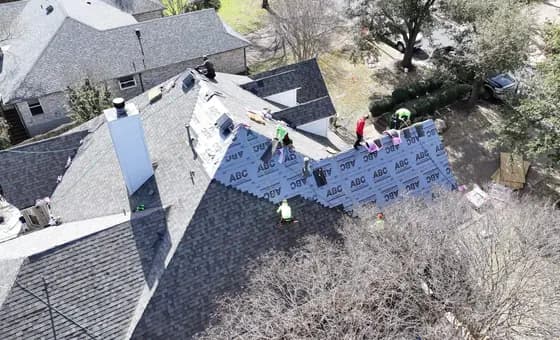
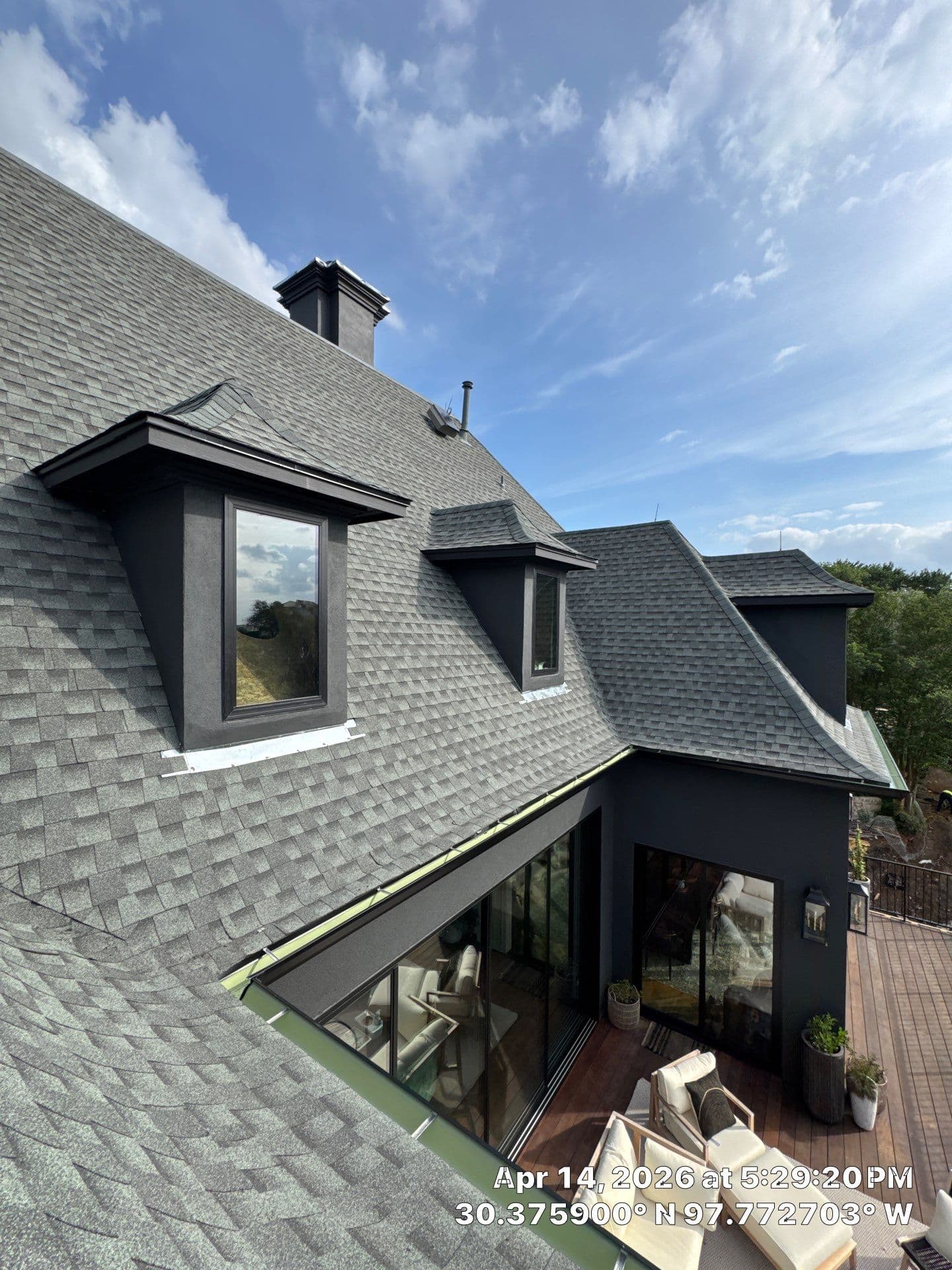
Another example of partial replacement done well. In this case, the back slope had obvious hail marks, the front didn't appear to be damaged at all. We rebuilt both hips and ran the shingles one course past the hips. Color mismatch lasted a season or so. Built tight, no leaks, no call-backs. Off of common alley. Hip roof.
Don't settle for questions like will the shingles match?. Ask, in writing, how they'll construct the transition, what slopes and valleys are involved, how far past the tie-in line will it extend and what will happen to the flashing?.
Without the specified items a scope is not really a scope, just an estimate with a number attached.
Where Roof Transitions Fail
Leaks and trouble happen at ridges, valleys, at junctions with walls, chimneys, low edges, places where old shingles meet the new. Rarely will a new slope fail in its midst. It will fail where it comes together with something else; that's the opportunity for water to get through.
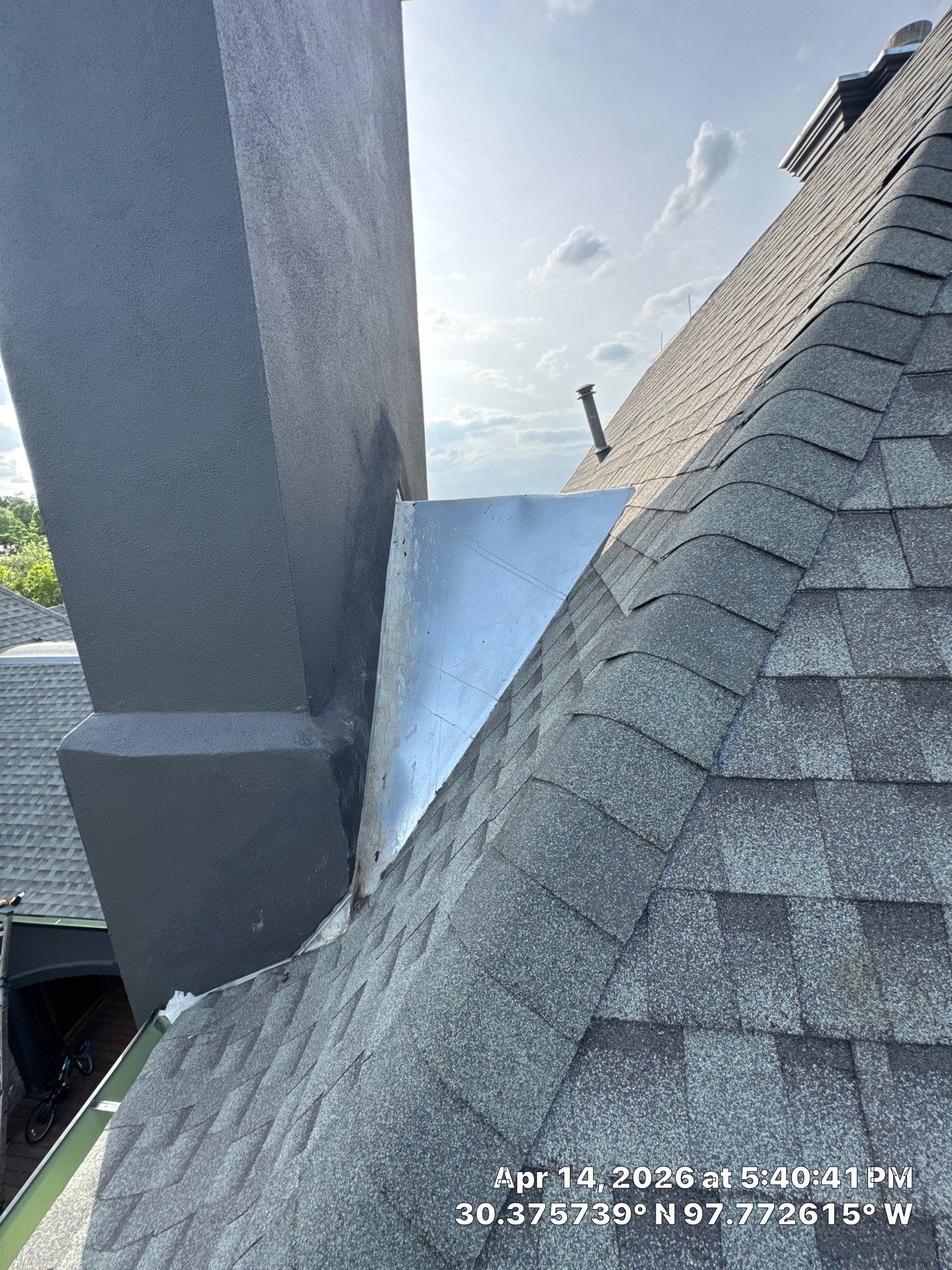
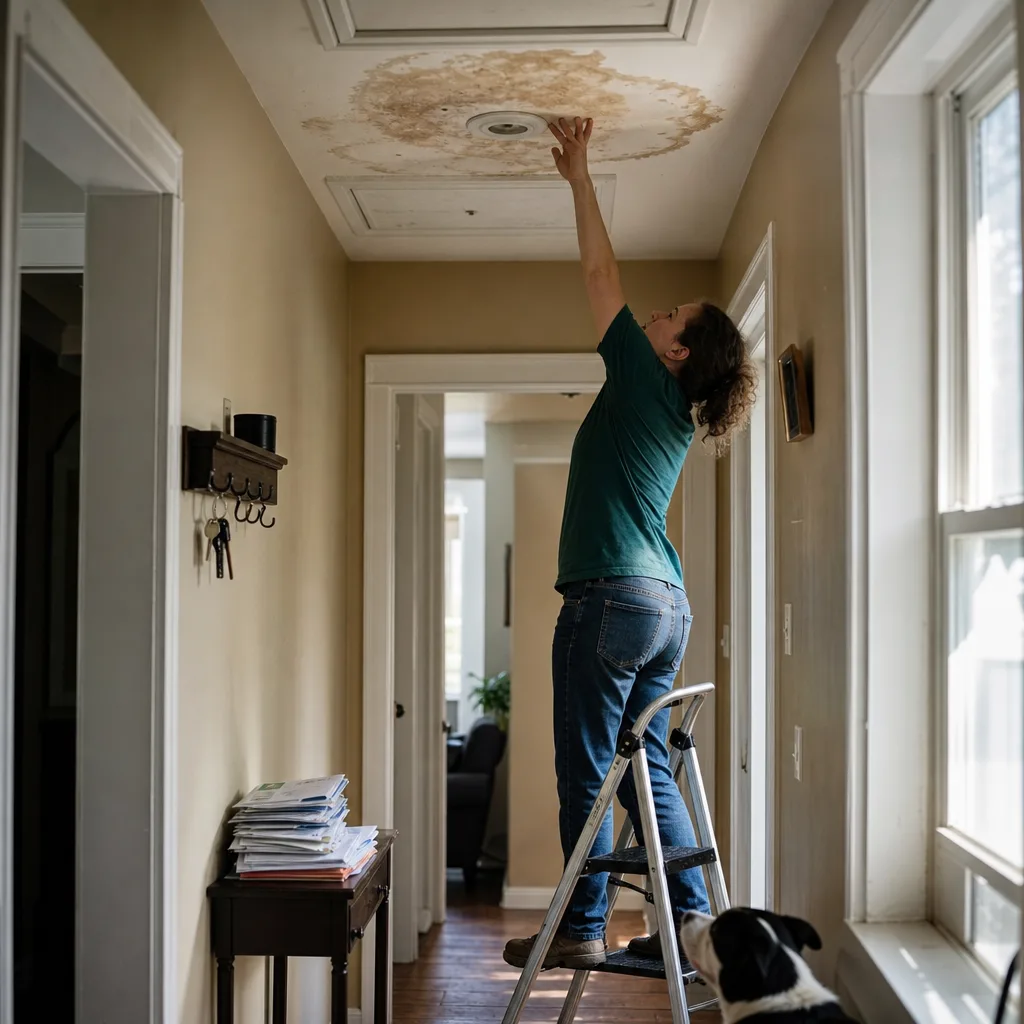
Partial replacements can be tricky to pull off well. We can do the neatest, sharpest tear-offs, install a great roof that looks fantastic. But six months later, there’s a water stain on the ceiling under the ridge. It’s because of how we handled the transition between old and new. The shingles aren’t the problem, the handoff is. Read on...
If we replace one slope, it will connect to an old slope. This may be a problem because adjoining roof slopes often share a ridge cap, a valley, or sometimes a leg of a flashing that goes behind both. So working on one will affect the other.
Similarly, although evaluations are commonly written to determine “which slope is damaged.” they should also determine “what has to be opened up to finish this slope correctly.
Before writing any partial scope we look very closely at the following areas.
- Often, to marry into the cap shingles already in place at the ridge line, it is necessary to tear off the last one or two courses of the other, untouched, slope, thus shortening the life of the other slope.
- Valleys, whether open or closed, belong to two different slopes at the same time. It's almost never a clean detail when replacing half of a valley. Our rule of thumb is to either replace the whole valley or explain why we're not.
- Callback waiting to happen? Don’t lay new shingles over old, brittle flashing. Replace it. Step flashing is incorporated between courses of shingles at the roof’s sidewalls and headwalls.
- People are often surprised to find that cutting and replacing counterflashing on chimneys and skylight curbs when it’s set into mortar joints is an extra cost.
- Another common problem is a drip edge on the rake or the eave of the new slope ending at an existing drip edge; this creates a small opening that causes water to run sideways.
Remember, make a critical decision about which underlayment should overlap on top of the other. The transition from traditional felt to modern-day synthetic underlayment could catch you off guard. Synthetics don’t always lap like felt. Plan accordingly rather than making the decision in the moment.
Recently in Central Austin we had a hail-damaged roof that was heavily concentrated on the west slope and barely touched the east side. Partial repair made sense on paper. However, once we scoped out the project we realized the chimney on the ridge went across both sides and resetting the counterflashing on the west slope included flashing shared by the east side. We added that portion of the project to the scope and informed the homeowner. When it came time for the final bill there were no surprises.
The tie-in where the two halves of the roof meet at the ridge should be especially strong. The ridge takes the brunt of the on-rushing wind, so you don’t want that joint to be the roof’s weakest link. Especially since Austin gets nasty straight-line winds with its spring storms.
Does a transition mean you have to replace your roof? No, as long as all of the details are worked out before the guys show up with the ladders and nail guns. Partial jobs can be good for years. Remember, roofs are not replaced in the field, they are replaced at the perimeter.
Nothing that isn’t in the scope isn’t in the project plan, ask for transition details in writing.
That same focus continues into the practical side. roof replacement guidance ... which our team provides to local families.
Partial Replacement or Full Roof: A Scenario Framework
Another common question we get is whether or not it’s possible to replace one slope of the roof. It makes sense from the homeowner’s perspective because one side of their home is worn while the other three appear to be in tact. Why would they want to spend the money to replace shingles that are not damaged? It’s a very valid question. There are times that replacing only one slope is ok.
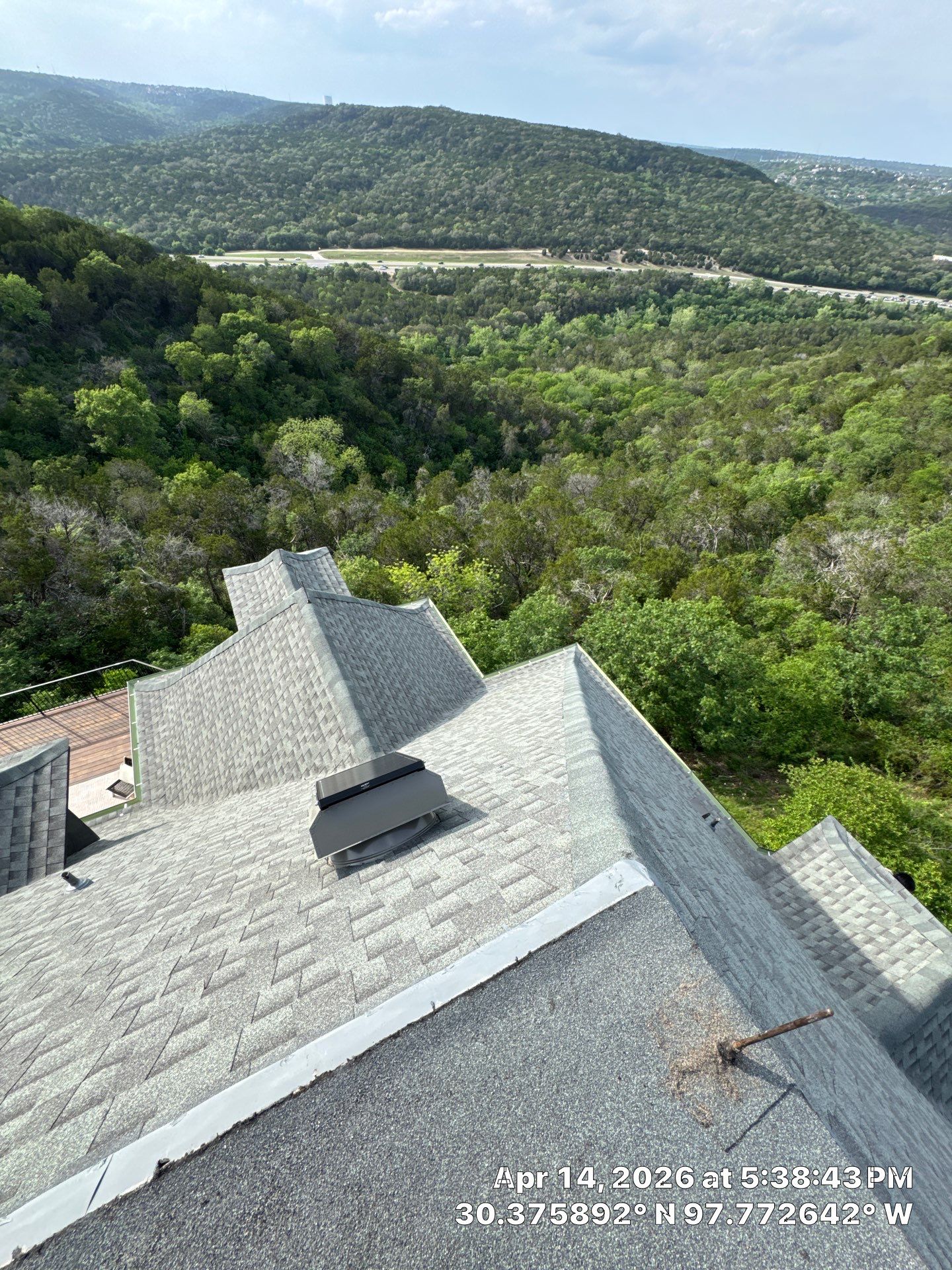
Roofs react to wind and water, not budget. Wind and water behave in particular ways as they interact with the geometries of structures, so we go through each part of the roof in the same order each time.
- Damage to one plane only. Confirm. Hail and wind are unlikely to affect just one slope only.
- Check the condition of the other slopes. Old shingles next to new shingles will age at a different rate.
- Determine what intersects with the edge of the damaged slope; a valley, hip, or sidewall has more bearing on repair considerations than the slope.
- Keep the condition of decking and underlayment in mind. Softness in the sheathing in one plane typically indicates moisture has traveled .
- Confirm that your shingle is still being made in a similar enough color and profile.
- Decide if you can make the transition without adding multiple layers and introducing an artificial seam.
- Write the scope of work in plain English before tearing-off anything so everyone is on the same page.
We find more issues during Step One than we do during the rest of the process combined. For example, an Austin home-owner, shaken by the recent Spring storm, assumes damage to the south facing roof slope, but We know from experience, when the wind wraps, the bruising often times is on the west face.
Here's how the common scenarios usually break down.
- Single slope replacement would be a good idea when a structure is an outbuilding such as a garage or simple shed, especially when there is separate drainage and no tie-in features into the house.
- Because there is a rear addition built at a later date to the structure, differing shingles are reasonable given there is a visual break already.
- Of the three, good pitches, the first plane is in workable shape, although the hip and adjacent common caps will need to be dealt with carefully.
- More difficult to roof: This slope, the gable end, intersects with the adjacent roof through a valley; the valley metal continues through both sides.
- Even if one side of the roof appears to be in worse shape that the other planes, if all sides/planes are 18 years old, a full replacement would normally be discussed.
Age is commonly overlooked. If three slopes have 4-5 more good seasons, re-covering a fourth slope will result in paying mobilization costs twice when it is soon re-covered along with the other slopes.
Another common scenario: We’re called into one of the older neighborhoods in Austin and inspect a roof on a typical 1960’s or 1970’s ranch house: long runs of roofs, wide eaves and a generally low pitch. It has taken quite a beating from Mother Nature on the side that’s exposed to the elements. The owner wants to have the damaged plane replaced. We climb up on the roof to inspect and find curling edges and granule loss in all areas. Nothing else is leaking, just because it hasn’t been pounded by hail and wind yet, but replacing one side is really just a glorified patch at best.
Unfortunately, there’s no blanket rule that applies to everything from ground-level. It’s entirely possible for two houses on the same street to warrant opposite decisions/solutions depending on framing and what the last roofer did.
Wondering about your roof’s condition? Visit our roof replacement page to see how we document its slope’s condition and provide an easy-to-understand written scope.
Common questions
Frequently asked
You likely need a full replacement if damage spans multiple slopes, or if shared features like valleys, ridges, or chimney flashing connect the damaged area to undamaged sections. A single hail-hit slope can often be replaced alone. But if that slope shares a valley or flashing run with another slope, opening one affects the other. A trusted crew will inspect the whole roof, not just the damaged spot, before recommending which approach is right for your home.
About the author
Lapeyre Roofing Team
Roofing Specialists