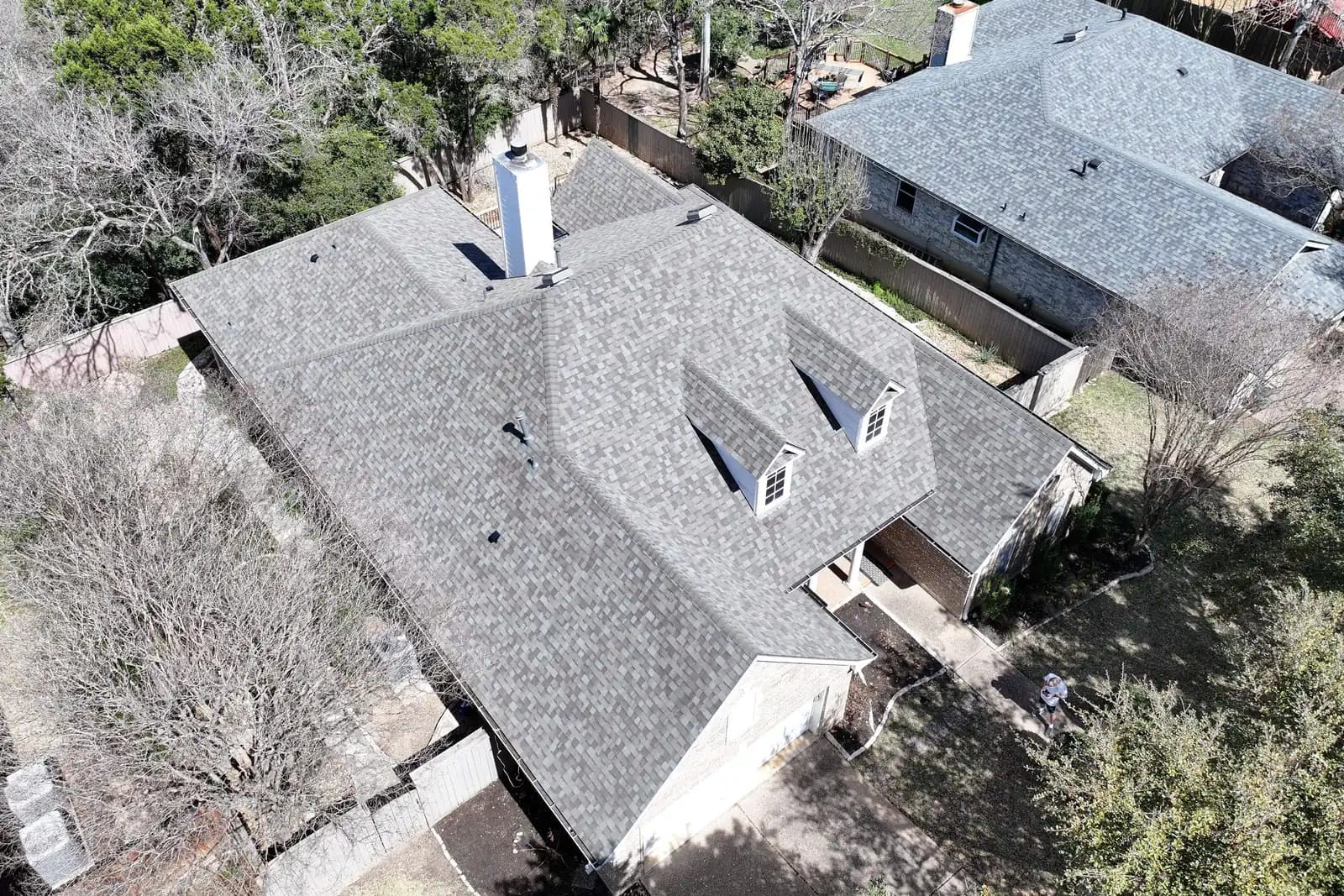
Roof Replacement in New Orleans: A Documented, Decision-Ready Process
Clear roofing decisions for New Orleans homeowners
Nine times out of ten, the homeowner already knows. They just want somebody to say it out loud. You've patched the same slope twice, the ceiling stain came back after the last big rain, and now there's a new one in a different room. That's the pattern that matters. When our New Orleans roofing team sees it, we read the deck as closely as the shingles.
Prefer to book online? Schedule your free New Orleans estimate
Schedule Your FREE
Roof Inspection & Estimate
Request a written estimate
Where is your property?
We serve Texas, Louisiana & Missouri
What do you need?
Almost done!
How can we reach you?
By submitting, you consent to follow-up messages. Reply STOP to opt out.
Sources we use
Current rules behind a New Orleans replacement scope
A roof proposal should connect the house, the city process, and any resilience program without promising eligibility or savings.
New Orleans HDLC
Historic exterior-work application process
Reviewed September 7, 2026. Identify the district and itemize existing and proposed exterior materials with photos before work.
Read the official guidance →City of New Orleans
Residential re-roofing permit
Covers the dedicated permit for qualifying single- and two-family re-roofing work, progress documentation, and possible HDLC or VCC review.
Read the official guidance →Louisiana Department of Insurance
Louisiana Fortify Homes Program
Provides the current program status and explains why selection and program steps must happen before grant-funded construction begins.
Read the official guidance →Insurance Institute for Business & Home Safety
FORTIFIED Roof
Explains the voluntary roof standard for shingles, metal, tile, composite, and low-slope roof covers.
Read the official guidance →Louisiana Department of Insurance
Storm mitigation incentives
Summarizes Louisiana mitigation incentives while leaving carrier-specific eligibility and value to the insurer and policy.
Read the official guidance →Signs Your Roof Has Moved From Repair to Replacement Territory
Nine times out of ten, the homeowner already knows. They just want somebody to say it out loud. You've patched the same slope twice, the ceiling stain came back after the last big rain, and now there's a new one in a different room. That's the pattern that matters. One leak is a repair. Leaks in three separate places usually mean the roof covering has given up as a system, not in one spot.
- The report states why a targeted repair is or is not durable
- The proposal separates required system work from optional upgrades
- A qualifying New Orleans re-roof requires permit and progress-photo planning
- FORTIFIED uses an independent evaluator and must be coordinated before work
- Grant, tax, and insurance treatment must be verified before budgeting around them
The decisions inside a New Orleans roof replacement
The covering, deck, edges, flashings, and approvals must agree
Plenty of the roofs we look at don't need replacing. Not yet. A homeowner sees a stain on the ceiling and assumes the whole thing is shot, and nine times out of ten the leak traces back to one spot. Flashing at a chimney. A cracked boot around a plumbing vent. A dozen shingles that lifted in a squall line and never sealed back down. That's a repair, and we'll say so in writing.
Deck and secondary water barrier
Impact: Wind-driven rain can enter after the exposed covering is damaged, and older homes may have mixed or spaced decking.
Our Solution: We document visible deck conditions, unit pricing for concealed repairs, and the standard or FORTIFIED sealed-deck path before final selection.
Perimeter and flashing details
Impact: Edges, walls, chimneys, valleys, roof-to-low-slope transitions, and penetrations can fail before the field material.
Our Solution: The proposal names the edge metal, flashing approach, transition details, and any components that cannot be priced until exposed.
Historic material and review
Impact: Slate, clay tile, standing-seam metal, and visible details may be regulated or worth preserving even when the underlying system needs work.
Our Solution: We assess salvage, material match, and review jurisdiction before treating demolition as the default.
Program and carrier timing
Impact: A grant, designation, endorsement, or insurance credit can have separate eligibility, evaluator, documentation, and timing rules.
Our Solution: We map the construction documents and checkpoints, while the program, evaluator, tax professional, or insurer decides eligibility and value.
Scope questions by New Orleans property type
These are inspection prompts, not assumptions based on a neighborhood label.
Historic and architecturally visible roofs
Slate, clay tile, metal, decorative flashings, and commission review may shape the exterior scope.
Confirm salvage, match, review jurisdiction, and lead time before ordering or removing material.
Postwar shingle homes
Simpler geometry can still hide aged decking, ventilation problems, and prior storm repairs.
Compare a complete code-compliant scope with the FORTIFIED Roof path and identify evaluator timing before tear-off.
Complex or mixed-slope buildings
Steep, low-slope, porch, addition, and parapet sections may drain and age differently.
Treat each assembly and transition explicitly instead of applying one covering specification to the entire building.
How the replacement decision becomes a buildable scope
Tear-off day is when a roof stops being a guess. Once the old shingles come off, the decking tells the truth. We photograph what's underneath before anything new goes down, because that's the only moment anyone can see it. Soft plywood, old patch jobs, rot around a chimney flashing, nail holes from a previous layer. You get pictures of all of it.
Document condition and repairability
The report records roof sections, active failures, material condition, accessible deck or attic observations, and the reasons a repair path is or is not durable.
Choose the documentation path
Before construction, decide whether this is a standard permitted replacement, a FORTIFIED designation project, or work tied to a verified program or carrier requirement.
Confirm permits and review
We identify the city re-roofing permit, progress-photo requirements, and any property-specific HDLC or VCC question that applies to the proposed exterior work.
Compare complete system options
The proposal separates covering, underlayment or sealed deck, decking allowances, flashings, edge details, ventilation, accessories, and optional upgrades.
Build and document checkpoints
Required progress photos, product records, change approvals, evaluator observations, and closeout documents are captured while the work is visible.
Deliver the closeout record
The owner receives the agreed construction documentation; any designation, grant, tax, or carrier submission remains subject to its official reviewer.
Materials and FORTIFIED Roofing for Storm-Prone Homes
Here's what we mean. A roof can fail three ways in high wind. The covering blows off, the deck lifts off the rafters, or water finds its way in through the seams once the covering is gone. Standard replacement handles the first one. FORTIFIED methods go after all three.
The big one is the sealed roof deck. When the old shingles come off, we can seal the seams in plywood or tight board decking with tape or a full underlayment layer; where old planks have wide gaps, new decking goes over them first. So if wind strips the covering mid-storm, you've still got a water barrier over your ceilings. We also re-nail the deck to a tighter pattern. Ring-shank nails, closer spacing, into every rafter.
- Deck condition. Older New Orleans homes often have board decking with gaps, and some boards need replacing before anything goes on top.
- Sealed deck method. Taped seams versus a full self-adhered layer changes labor and material.
- Fastening pattern. Ring-shank re-nailing of the deck, plus the nailing schedule on the covering itself.
- Edge details. Drip edge, starter strips, and how the eaves and rakes are locked down.
- Covering type. Architectural asphalt, metal, or slate each carry different weight and different attachment needs.
Slate and metal come up a lot on older homes, and weight matters there. A framing system built for wood shingles a century ago may not be sized for slate today. We look at that before anyone talks materials.
Whether your property qualifies for a FORTIFIED designation, and what that means for your insurance, has to be checked on your specific home and with your carrier. We can tell you what the roof needs. Your insurer tells you what it's worth to them. Ask both.
Compare systems, not slogans
Most folks start this conversation by asking about shingles. Fair question. But the shingle is the last layer we touch. What happens underneath it decides how your roof behaves when a storm parks over the city for six hours.
Architectural shingles
Why for New Orleans
A common value option that can be specified within either a standard or eligible FORTIFIED Roof assembly.
Best For
Homes where lifecycle, repairability, and initial budget favor shingles.
Considerations
Wind rating alone does not describe deck sealing, edge details, flashing, ventilation, or installer requirements.
Standing-seam metal
Why for New Orleans
Concealed-fastener systems can suit long-hold owners and historically compatible designs when the full assembly is specified correctly.
Best For
Owners prioritizing service life and properties where appearance and review support metal.
Considerations
Panel, clip, substrate, transition, dissimilar-metal, and coastal-corrosion details matter; price and approvals vary.
Slate or clay tile
Why for New Orleans
Existing historic material may have far more remaining life than the flashings or underlayment beneath it.
Best For
Historic and premium roofs where salvage, matching, and craft justify the investment.
Considerations
Structure, salvage yield, match availability, copper or metal details, access, and review must be assessed before demolition.
Low-slope membrane
Why for New Orleans
Porches, additions, and low-slope sections need a system suited to their drainage and geometry.
Best For
Sections that do not meet the slope requirements of the main roof covering.
Considerations
Transitions, terminations, drainage, and service access often determine performance more than the membrane brand.
A replacement proposal should survive hard questions
We show what is required, what is optional, what is unknown until tear-off, and which decisions belong to the city, evaluator, program, insurer, or homeowner.
Repair is considered first
Replacement is supported by documented system conditions, not merely age, storm activity, or sales preference.
Permits are part of the scope
The estimate identifies the city permit and documentation path instead of treating approvals as an afterthought.
FORTIFIED is planned before tear-off
When selected, the independent evaluator and construction checkpoints are coordinated while evidence remains visible.
Historic material is not disposable by default
We evaluate salvage, matching, and commission constraints before recommending wholesale removal.
How Roof Replacement Pricing Works
Two bids on the same house can look nothing alike. That's not always somebody padding the number. Most of the time it's scope. One bid assumes the decking is fine, the other one planned for rotten boards. Roofing is priced by the square, which is 100 square feet of roof surface, and then adjusted for everything that makes your particular roof harder than a plain rectangle.
So the material line is usually the part homeowners focus on, and it's rarely the part that moves the total.
Pitch and height. Steep roofs and second-story work slow the crew down and change how they tie off.
Layers coming off. Tear-off and haul-away cost more when there's an old roof buried under the current one.
Decking condition. Nobody can price hidden rot from the ground. It gets found once the old roof is gone.
Penetrations and details. Chimneys, dormers, skylights, valleys, and multiple planes all need flashing work.
Material system. Architectural shingle, metal, and slate are different jobs, not just different prices.
Code and program requirements. FORTIFIED work carries specific nailing, sealing, and documentation steps.
In New Orleans, that decking line matters more than folks expect. A lot of our housing stock is old, and plank decking with gaps behind it doesn't always accept modern fasteners the way plywood does. We photograph what's under there before anything new goes down, and the written scope reflects what we found - not a guess.
Ask any roofer three things. How is unexpected decking handled, and at what unit rate? What's included in the tear-off and disposal? And is this a firm scope or an allowance that can change later?
If it's an insurance claim, don't ask us whether you're covered. Ask your carrier directly. Write down your deductible, whether your policy pays replacement cost or actual cash value, and what documentation they want. We can supply photos and a written scope. Coverage decisions belong to the adjuster.
Recent Projects
A New Orleans replacement beneath solar panels
The published scope includes solar panel removal and resetting plus skylight work. Roofing completion does not establish electrical commissioning or an issued FORTIFIED designation.
Read the project detailsCompare your options before signing
Compare a written roof estimate
Use measured roof area, installed prices, and separate allowances to compare scope. Planning output is not a project quote.
Read more about this roofing decision
Roof Repair vs. Replacement: Compare Evidence and Scope
Repair is worth evaluating when the cause is localized and a sound repair can connect to the retained roof. Replacement becomes more compelling when broader deterioration or assembly problems make that repair unsuitable. Neither age alone nor a fixed percentage of damage settles the decision.
Roof Replacement Cost in New Orleans: Compare Quotes
Build a New Orleans roof budget from measured area, written rates, permit documentation, deck repairs and FORTIFIED options without assuming a grant.
FORTIFIED Roof Certification: Evidence, Designation, and Renewal
A FORTIFIED roof designation comes from IBHS after the required evaluation and documentation process. Installing products advertised as strong or impact-resistant does not by itself establish designation. Coordinate the evaluator and evidence requirements before construction conceals the work.
Choose the right next step
New Orleans roof decision center
Start with the New Orleans market overview, then compare repair, replacement, and FORTIFIED documentation paths without assuming the largest job is the right one.
FAQ
Frequently Asked Questions
How do I compare bids when one includes a porch roof and another does not?
Ask both contractors to list the same roof sections and their systems. Obtain a separate price for any omitted area or transition so the totals represent the same work.
What records should be included at replacement closeout?
List completion photos, approved change orders, applicable permit completion, product identification, warranty information, and any separately contracted FORTIFIED designation documentation. Ask who provides each item and when.
How do I know whether to repair or replace my New Orleans roof?
Look for a written comparison based on failure extent, surrounding material condition, deck and flashing concerns, repair compatibility, repeated repair history, and remaining service life. Age or a storm date alone is not a complete reason.
Does New Orleans require a permit for roof replacement?
The city requires a dedicated residential re-roofing permit for qualifying single- and two-family work when 50% or more of the roof is replaced. Progress documentation is part of the process, and HDLC or VCC review may also apply to a particular property.
Should I decide on FORTIFIED before work starts?
Yes. A FORTIFIED designation uses an independent evaluator and construction evidence that must be coordinated while components are visible. Grant or other program rules can add earlier eligibility and selection steps.
Does a FORTIFIED roof guarantee an insurance discount?
No. Louisiana has mitigation rules and programs, but the amount and eligibility depend on the carrier, policy, designation, location, and required documents. Verify the treatment in writing with your insurer before counting it in the budget.
Can an old slate or tile roof be reused?
Sometimes. Many units can outlast the flashings or underlayment. Salvage yield, matching, attachment, structure, and historic review should be evaluated before removal; the answer is property-specific.
Want the complete picture?
Everything Texas and Louisiana homeowners need to know about roof replacement—costs, timelines, materials, and what to expect.
Read our Complete Roof Replacement GuideContact information
Thank you for considering us for roofing needs. We will get back to you during normal business hours.


Send us a message