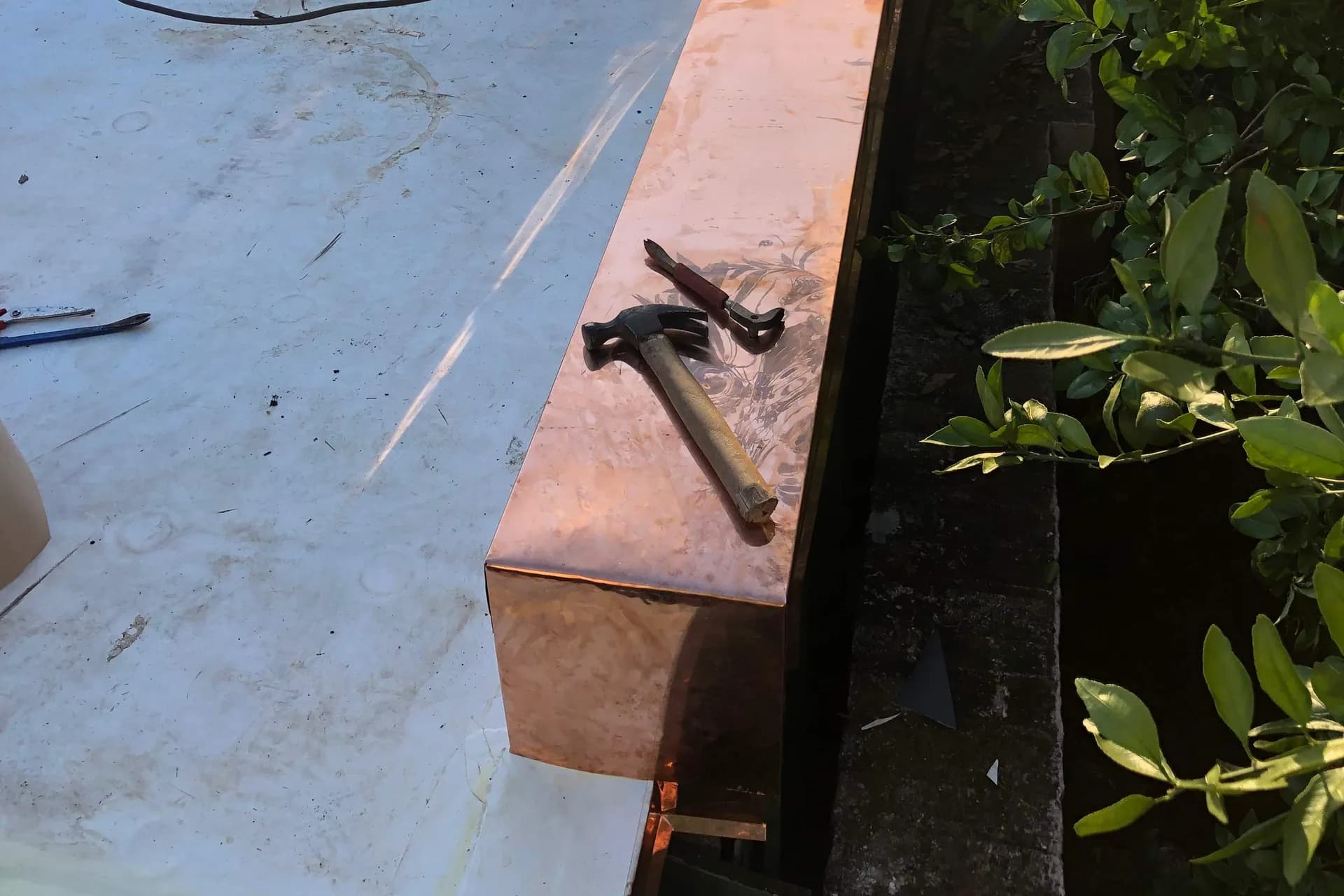
Roof Repair in Lakeway, TX
Diagnose the failed detail before choosing the scope.
Lakeway roofs can combine steep access, custom geometry, tile or metal transitions, tree debris, and exposed roof edges. We document the roof system and the failed detail, then explain whether a contained repair can integrate with what is already there.
Prefer to book online? Schedule your free Austin estimate
Schedule Your FREE
Roof Inspection & Estimate
Request a written estimate
Where is your property?
We serve Texas, Louisiana & Missouri
What do you need?
Almost done!
How can we reach you?
By submitting, you consent to follow-up messages. Reply STOP to opt out.
Sources we use
Lakeway guidance worth checking before repair
Property conditions and the proposed scope determine the right repair. These public sources help homeowners verify permitting and wildfire-hardening questions instead of relying on a blanket claim.
City of Lakeway
Building and Development Services
Reviewed September 7, 2026. Municipal portal and project contacts.
Read the official guidance →City of Lakeway
Building Permit Requirements
Explains that owners should contact Building and Development Services to determine whether a specific improvement or repair requires a permit.
Read the official guidance →City of Lakeway
Fire-Conscious Landscaping and Home Hardening
Describes roof coverings, vents, gutters, drip edges, and other details that can reduce ember vulnerability.
Read the official guidance →Texas Department of Insurance
Roofing and insurance: Know the law
Defines the boundary between a contractor’s construction documentation and a public adjuster’s policy and settlement role.
Read the official guidance →Can a Lakeway roof be repaired instead of replaced?
Yes, when the failure is contained and the surrounding roof can support a durable repair. Pipe boots, flashing, a small wind-damaged area, isolated tile damage, or a limited valley problem may be repairable. Replacement becomes more defensible when damage is widespread, decking needs broad correction, compatible materials are unavailable, or repeated repairs are poor value. The inspection should establish those facts before the proposal is written.
- A ceiling stain may be separated from the actual water-entry point
- Tile, metal, and shingle repairs require different integration details
- Pitch, height, landscaping, and equipment access affect the scope
- Lakeway advises owners to confirm permit needs for each repair or alteration
- The carrier decides policy coverage; the contractor documents construction
What changes a Lakeway roof-repair decision
The repair has to fit the existing assembly
The visible symptom is only the starting point. We check the adjacent material, water path, roof geometry, and access before defining the work.
Flashing, valleys, and penetrations
Impact: Walls, chimneys, skylights, pipe boots, and valleys can admit water even when the field covering remains serviceable.
Our Solution: We trace the water path and rebuild the failed detail rather than relying on surface sealant as the permanent repair.
Tile and metal transitions
Impact: Custom roof systems may use multiple materials whose fastening, underlayment, and drainage details are not interchangeable.
Our Solution: The scope identifies the existing material and the work needed to integrate the repair without damaging adjacent components.
Pitch and site access
Impact: Steep slopes, multiple stories, limited staging areas, and landscaping can change safety requirements and labor.
Our Solution: We document access before pricing so required protection or equipment is visible in the written scope.
Debris and ember exposure
Impact: Leaves and needles can obstruct drainage, while openings at vents or roof edges can matter during ember exposure.
Our Solution: We note visible maintenance and hardening questions and point owners to current City of Lakeway guidance; we do not label a roof code-compliant without verifying the applicable scope.
Lakeway property conditions we verify
A neighborhood name does not determine the repair. These are inspection prompts when the physical condition is present.
Hillside and lake-facing properties
Elevation, wind exposure, roof pitch, and equipment access can vary by lot.
Inspect edges, ridges, access, staging, and water-shedding details rather than applying a citywide assumption.
Custom tile or metal homes
Complex rooflines may include several materials, walls, crickets, and low-slope transitions.
Confirm material compatibility and the condition of the surrounding underlayment and flashing before promising a contained repair.
Tree-covered properties
Shade and debris can affect drainage paths, gutters, valleys, and roof-to-wall areas.
Separate maintenance needs from active failures and document both so the repair scope stays clear.
What determines a Lakeway repair price
An accurate price follows an on-roof diagnosis. Material, access, and integration details matter more than a neighborhood average.
Contained shingle or penetration repair
Scoped after inspection
The estimate depends on access, matching material, adjacent condition, and whether decking or underlayment is involved.
Flashing, valley, tile, or transition work
Property-specific
The surrounding assembly may need to be opened and rebuilt for a durable detail rather than patched at the surface.
Temporary stabilization
Separated from permanent repair
Emergency dry-in or tarping is listed separately so the owner can see what is temporary and what completes the repair.
Factors Affecting Price
- 1Roof pitch and story height
- 2Safe staging and equipment access
- 3Material availability and compatibility
- 4Decking and underlayment condition
- 5Number of transitions or failure points
No work begins from an online range. The written estimate follows the documented condition and states exclusions or unknowns.
From leak symptom to documented repair
The process is designed to make the recommendation understandable before work starts.
Triage the symptom
We record the leak location, timing, storm history, visible damage, and any prior repair so the inspection starts with useful context.
Inspect the roof system
We check the suspected source plus adjacent covering, flashing, penetrations, valleys, drainage, and visible deck conditions.
Confirm property requirements
When the scope may involve a material or structural change, the owner and contractor can verify current permit requirements with Lakeway Building and Development Services.
Compare repair and replacement
The report explains whether the existing system can support a durable repair and what observable facts would change the recommendation.
Document completed work
Photos of the repaired detail and any remaining maintenance items become part of the homeowner’s project record.
Materials must match the existing Lakeway roof
A product label cannot replace system compatibility. The repair must work with the covering, underlayment, deck, flashing, and drainage details already present.
Compatible shingles or tiles
Why for Lakeway
Matching the profile, exposure, fastening, and surrounding assembly is necessary for a durable localized repair.
Best For
Contained covering damage on a serviceable roof
Considerations
A perfect visual match may not exist for weathered or discontinued products.
Purpose-built metal flashing
Why for Lakeway
Properly integrated flashing moves water away from transitions more reliably than a surface coating alone.
Best For
Walls, chimneys, valleys, and penetrations
Considerations
Adjacent covering may need to be removed and replaced to rebuild the detail correctly.
Verified fire-rated assembly components
Why for Lakeway
Lakeway encourages home-hardening measures, and Class A is the highest roof-covering fire-resistance rating.
Best For
Scopes where the existing assembly and current requirements support the component
Considerations
The rating can depend on the complete tested assembly. We verify product documentation and applicable requirements rather than calling every repair a mandatory Class A upgrade.
Why documentation matters on a custom roof
A clear repair proposal identifies the failed detail, how the repair integrates, and what remains outside the scope.
Repair remains a real option
When a contained repair is defensible, we explain it instead of treating every inspection as a replacement lead.
Property assumptions are checked
Pitch, access, materials, permitting, and wildfire-hardening questions are verified for the actual roof and scope.
Insurance roles stay clear
We provide photos, measurements, technical information, and a construction estimate; the carrier interprets coverage.
The completed detail is recorded
Before-and-after photographs make the work easier for the homeowner to understand and maintain.
Define repair access, drainage, and approval responsibilities
Lakeway uses its Civic Self Service portal for permit applications and inspection requests, and its building-permit requirements include evidence of subdivision architectural review where applicable. Ask Building and Development Services which requirements apply to the proposed repair, then check any separate association restrictions before ordering a visible material change. Association approval and City authorization answer different questions.
For a tile roof, a broken tile is not a complete diagnosis of a leak. Request an assessment of the underlying water barrier and the adjoining valley or wall flashing. The repair scope should explain how tiles will be lifted without damaging retained pieces, whether a matching profile is available, and how the opened area will be protected from rain. Include safe access and any necessary staging in the written price.
On a roof that drains onto a lower roof or into a concealed gutter, follow the water beyond the visible stain. A repaired upper slope can still discharge onto a failing lower transition. Compare a local tile or flashing repair with a broader underlayment section only after mapping that path. Use the material selector for tradeoffs if a covering change is proposed, then verify weight, slope, approvals, and installation details for the actual building.
Compare your options before signing
Compare roofing material priorities
Organize budget, maintenance, and material tradeoffs before a property-specific specification.
Read more about this roofing decision
Roof Repair vs. Replacement: Compare Evidence and Scope
Repair is worth evaluating when the cause is localized and a sound repair can connect to the retained roof. Replacement becomes more compelling when broader deterioration or assembly problems make that repair unsuitable. Neither age alone nor a fixed percentage of damage settles the decision.
Emergency Roof Repair Austin (2026)
Austin emergency roof repair: safe first steps, dispatch questions, temporary-protection scope, actual charges, and the transition to a permanent repair.
Texas Roof Insurance Claims Guide
Learn how to document roof damage, review your policy, work with the carrier’s adjuster, and keep the contractor’s role clear under Texas law.
FAQ
Frequently Asked Questions
Does association approval replace Lakeway's permit process?
No. Lakeway's permit requirements reference subdivision architectural review where applicable, but association review and City requirements are separate. Confirm both for the address and scope before a visible material change.
Can a tile roof leak even when most tiles look intact?
Yes. The underlayment or flashing beneath retained tiles can be the entry point. Ask for a repair scope that addresses the water path, tile handling, and temporary protection rather than pricing only the visibly broken pieces.
Does every Lakeway roof repair require a permit?
Not necessarily. City guidance says owners should contact Building and Development Services to determine whether a particular repair or improvement requires a permit. Material changes, structural changes, and major repairs deserve specific confirmation.
Does every Lakeway repair legally require a Class A roof?
Do not rely on a blanket claim. Lakeway publishes home-hardening guidance that identifies Class A as the highest fire-resistance rating, but applicable code and permit requirements depend on the property and scope. We verify the current requirement and product assembly.
Can tile or metal roofs be repaired?
Often, yes. The decision depends on the damaged component, surrounding underlayment and flashing, material availability, access, and whether the repair can integrate without causing more damage.
Can Lapeyre negotiate my insurance settlement?
No. We can document observed conditions, provide measurements and product information, and prepare a construction estimate. Your insurer interprets the policy and decides coverage.
What will I receive after the inspection?
The goal is labeled photographs, findings, urgency, a written repair scope, and the conditions that would make replacement more responsible.
Contact information
Thank you for considering us for roofing needs. We will get back to you during normal business hours.


Send us a message