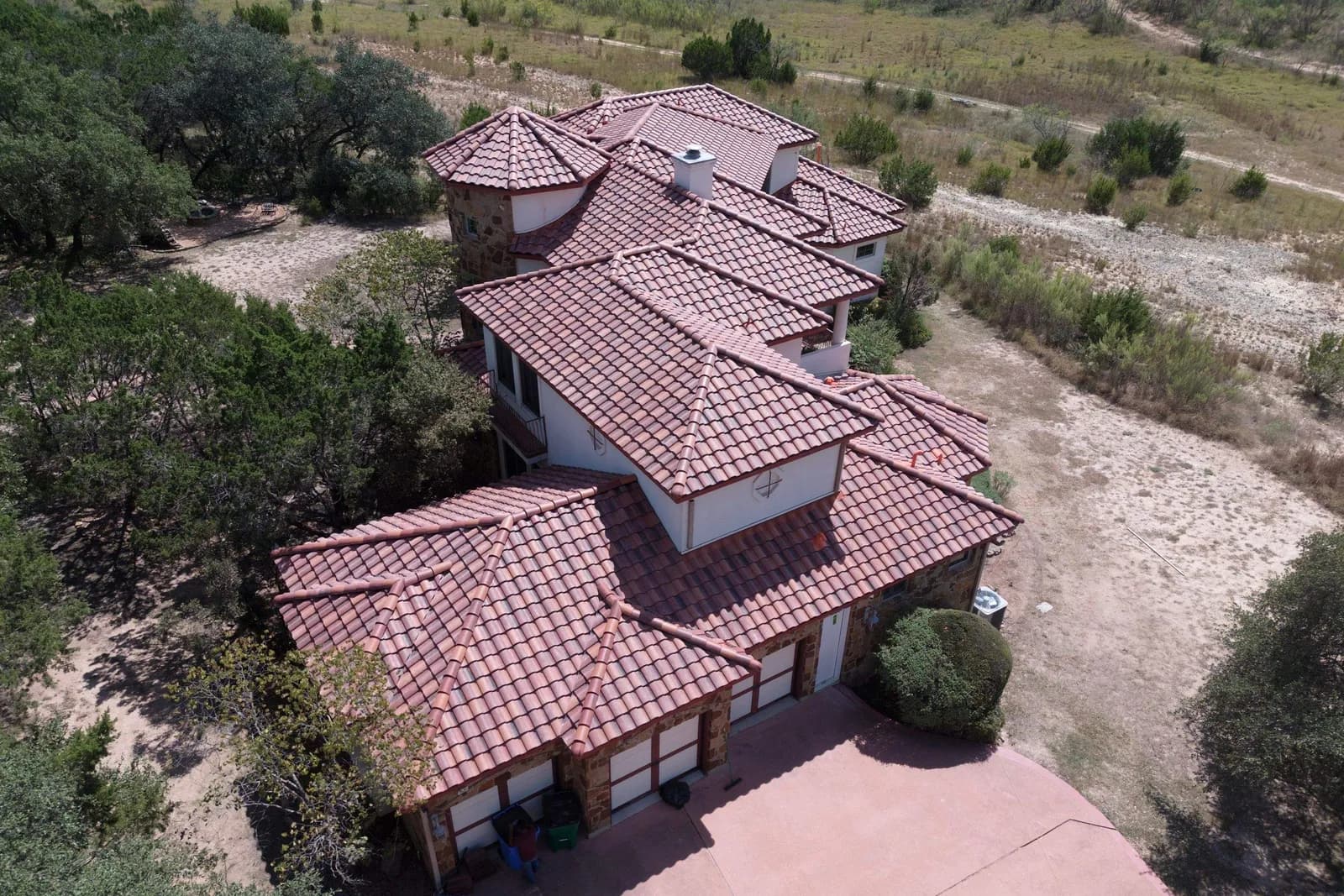
Concrete tile roofing costs $10-$18/sq ft installed and lasts 40-75 years. Compare concrete vs clay tile, see maintenance costs, and learn if tile is right for your Texas home.
Concrete tile roofing costs $10-$18 per square foot installed, putting a typical 2,000 sq ft Texas home at $20,000-$36,000 for a full replacement. That price tag comes with real longevity: concrete tile roofs last 40-75 years with proper maintenance, according to the National Association of Home Builders (NAHB). For comparison, architectural shingles last 20-30 years and cost half as much upfront. The tradeoff is straightforward -- you pay more now and replace far less often.
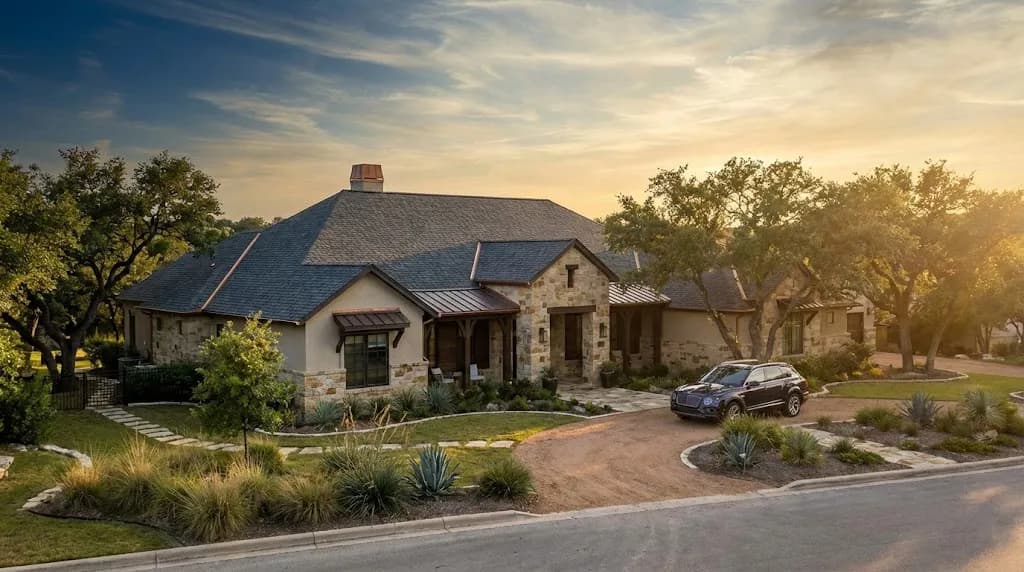
Concrete tile is especially popular in Texas hill country, Mediterranean-style neighborhoods, and the Austin-to-San Antonio corridor where Spanish and Tuscan architecture dominates. If you're considering tile for your home, this guide covers the real costs, honest pros and cons, and whether the investment makes sense for your specific situation. Learn more about our residential roofing services.
How Much Does a Concrete Tile Roof Cost?
Concrete tile pricing in Texas depends on your roof size, the tile profile you choose (flat, low-profile, or high-profile barrel), and the condition of your existing roof structure. Here is a breakdown of material-only versus fully installed costs:
| Roof Size | Materials Only | Fully Installed |
|---|---|---|
| 1,500 sq ft | $6,000-$10,500 | $15,000-$27,000 |
| 2,000 sq ft | $8,000-$14,000 | $20,000-$36,000 |
| 2,500 sq ft | $10,000-$17,500 | $25,000-$45,000 |
| 3,000 sq ft | $12,000-$21,000 | $30,000-$54,000 |
Labor accounts for 40-55% of your total cost with tile roofing, higher than the 30-40% typical with shingles. Tile installation demands experienced crews who understand proper battening, underlayment layering, and fastening methods. A poorly installed tile roof fails years before it should. According to HomeAdvisor 2025 data, the national average for concrete tile installation runs $13.50 per square foot, though Texas pricing tends to land on the higher side of the range due to demand in metro areas.
Structural reinforcement adds another variable. Concrete tiles weigh 900-1,100 pounds per roofing square (100 sq ft), compared to 230-350 pounds for asphalt shingles. Homes not originally built for tile may need truss reinforcement costing $2,000-$8,000 before tile installation can begin. Explore financing options if the upfront cost is a concern.
Concrete Tile Roofing Pros and Cons
Concrete tile has genuine strengths and genuine weaknesses. Here is an honest assessment based on what we see in the field across Texas.
Advantages
- Exceptional lifespan: 40-75 years when properly installed and maintained, per NAHB estimates. Some tile roofs in the Southwest have lasted over a century.
- Fire resistance: Class A fire rating (the highest). Concrete tile won't burn, melt, or contribute to fire spread. This matters in wildfire-prone hill country areas west of Austin and San Antonio.
- Wind resistance: Properly fastened concrete tile withstands winds up to 150 mph. The Tile Roofing Industry Alliance (TRIA) reports that mechanically fastened tile systems outperform nail-only installations in sustained wind events.
- Energy efficiency: The air gap between tile and roof deck creates natural ventilation that reduces heat transfer by 12-22%, according to a 2019 Florida Solar Energy Center study. In a Texas summer, that gap translates to measurable cooling savings.
- Color and style variety: Concrete can be molded into flat, S-shaped, barrel, and slate-look profiles. Colors are integral to the mix or surface-coated, offering dozens of options that complement Mediterranean, Spanish Colonial, and contemporary Texas architecture.
Disadvantages
- Weight: At 900-1,100 lbs per square, concrete tile is 3-4x heavier than asphalt shingles. Many homes need structural evaluation before installation. Older framing may require costly reinforcement.
- Hail vulnerability: Individual tiles can crack under large hailstones (1.5 inches and above). While the underlayment still protects the deck, cracked tiles need replacement. This is a real concern in the Austin metro, where NOAA records show an average of 4-6 significant hail events per year.
- Walking damage: Tiles can break when walked on incorrectly. Maintenance, satellite dish installation, or HVAC work on the roof requires trained technicians who know where to step.
- Repair cost: Replacing individual cracked tiles costs $8-$15 per tile for materials plus labor. Finding matching tiles for older roofs can be difficult if the manufacturer discontinued the profile or color.
Concrete Tile vs. Clay Tile
Both concrete and clay tile appear in Texas neighborhoods, especially in upscale subdivisions and historic districts. They look similar from the street, but the differences matter when you're writing the check.
| Factor | Concrete Tile | Clay Tile |
|---|---|---|
| Installed Cost (per sq ft) | $10-$18 | $15-$30 |
| Lifespan | 40-75 years | 75-100+ years |
| Weight (per square) | 900-1,100 lbs | 800-1,000 lbs |
| Fire Rating | Class A | Class A |
| Wind Rating | Up to 150 mph | Up to 150 mph |
| Color Retention | Fades over 10-15 years; can be recoated | Natural color lasts indefinitely |
| Style Options | Wide variety (flat, S-tile, barrel, slate-look) | Traditional barrel and flat profiles |
| Hail Resistance | Moderate (denser material) | Lower (more brittle) |
The bottom line: concrete tile gives you 70-80% of clay's longevity at 50-60% of the cost. For most Texas homeowners, concrete is the practical choice. Clay tile makes sense for historic restoration projects, luxury builds, or homeowners who want the absolute longest-lasting roof and are willing to invest accordingly. In New Orleans, where Mediterranean and French Colonial styles are common, both tile types appear on historic properties throughout the Garden District and French Quarter.
Concrete Tile vs. Asphalt Shingles
This is the comparison most homeowners actually face. Asphalt shingles cover roughly 75% of American homes, according to the Asphalt Roofing Manufacturers Association (ARMA). Here's how the two stack up for Texas conditions.
| Factor | Concrete Tile | Architectural Shingles |
|---|---|---|
| Installed Cost (per sq ft) | $10-$18 | $4.50-$7.00 |
| Lifespan | 40-75 years | 20-30 years |
| Wind Rating | Up to 150 mph | 110-130 mph (varies by product) |
| Fire Rating | Class A | Class A (most products) |
| Weight (per square) | 900-1,100 lbs | 230-350 lbs |
| Insurance Discount Potential | 5-15% (fire/wind rating) | 10-28% (with Class 4 IR shingles) |
| Cost Over 60 Years | $20,000-$36,000 (1 replacement) | $30,000-$48,000 (2-3 replacements) |
Over a 60-year ownership period, concrete tile often costs less than shingles because you avoid one or two full replacements. A 2023 report from the Tile Roofing Industry Alliance estimated the lifetime cost per year for concrete tile at $0.44 per square foot, compared to $0.52 for architectural shingles. But that math only works if you stay in the home long enough. If you plan to sell within 10-15 years, shingles deliver better value. See our full roofing materials comparison guide for help deciding between all available options.
Is Concrete Tile Right for Texas Homes?
Texas presents both advantages and challenges for concrete tile roofing. The answer depends on where you live and what your home can support.
Heat Performance
Concrete tile excels in Texas heat. The thermal mass of the tile combined with the air gap above the roof deck creates a buffer that reduces cooling loads. In Austin, where summer highs regularly exceed 100 degrees and roof surface temperatures can reach 160-170 degrees, the Florida Solar Energy Center data suggests tile roofs keep attics 20-40 degrees cooler than direct-deck materials. Homeowners in the Austin-San Antonio corridor report noticeable cooling bill reductions after switching from shingles to tile.
Hail Considerations
This is where Texas makes tile roofing complicated. Central Texas averages 4-6 significant hail events annually, according to NOAA Storm Prediction Center data. While concrete tile handles small hail (under 1 inch) without issue, stones 1.5 inches and larger can crack individual tiles. The good news: a properly installed underlayment (synthetic or self-adhering) protects the deck even when surface tiles break. The bad news: after a major hail event, you might need to replace dozens of individual tiles at $8-$15 each plus labor.
Wind Resilience
Mechanically fastened concrete tile systems perform well in high wind. The TRIA has tested systems to 150 mph with proper screw or clip attachment. Houston homeowners, who face Gulf hurricane exposure, should note that tile can achieve comparable wind ratings to standing seam metal when properly installed. The weight of tile actually works in its favor during sustained high winds where lighter materials experience uplift.
Structural Requirements
Before committing to concrete tile, have a structural engineer evaluate your home. Many Texas tract homes built since the 1980s were framed for lightweight asphalt shingles. Adding 600-800 extra pounds per square requires trusses rated for the load. Homes with 2x6 or larger rafters on 16-inch centers can often support tile without modification. Homes with 2x4 trusses on 24-inch centers almost always need reinforcement.
Pro tip: Request a structural evaluation before getting tile roofing quotes. The $300-$500 engineering assessment can save you from discovering mid-project that your home needs $5,000+ in truss reinforcement. We include a structural pre-check in every tile roofing estimate at no extra charge.
Concrete Tile Roof Maintenance
Concrete tile is low-maintenance, but it is not no-maintenance. Here is what to expect over the life of your roof.
Annual Inspection ($150-$300)
A professional inspection once a year catches cracked or displaced tiles before leaks develop. Inspectors check for broken tiles, deteriorated flashing, debris accumulation in valleys, and biological growth. In Austin and Houston, where trees overhang many roofs, inspections matter even more because fallen branches are the most common cause of tile damage outside of hail.
Cleaning ($200-$500 per session)
Concrete tile develops algae, moss, and lichen in humid climates. Houston roofs are especially prone to biological growth due to year-round humidity averaging 75%. Low-pressure washing every 2-4 years keeps tiles clean without damaging the surface. Never use a high-pressure washer on concrete tile -- it strips the surface coating and accelerates wear.
Tile Replacement (as needed)
Individual cracked tiles should be replaced promptly. The repair itself is simple: slide out the broken tile, slide in a new one, and refasten. Costs run $8-$15 per tile for materials. Labor for a small repair (under 10 tiles) typically runs $150-$400 for the service call. The challenge comes with older roofs where matching tiles may be discontinued. Keep a small stock of replacement tiles when your roof is installed.
Recoating (every 15-25 years, $2,000-$5,000)
Unlike clay tile, concrete tile does fade over time as the surface coating wears. Recoating restores color and adds a fresh protective layer. This is optional and cosmetic, not structural. Many homeowners prefer the weathered look and skip recoating entirely.
Concrete Tile and Insurance in Texas
Texas homeowners insurance and concrete tile have a nuanced relationship. The material offers some advantages that can reduce premiums, but the hail factor complicates things.
Premium Discounts
Concrete tile's Class A fire rating and high wind resistance may support carrier review for fire or wind-resistance credits in some Texas markets. Treatment varies by insurer and policy, so confirm current premium rules with your agent before choosing tile for savings alone.
Hail Deductible Considerations
Here is the tradeoff: Texas insurers are increasingly applying higher hail deductibles to many roof types, and carrier treatment differs by material. Some carriers recognize Class 4 impact-resistant shingles with the right product label and documentation, while tile may be reviewed under different rules. Run the total premium math with your agent before committing to either material.
Claims Experience
After a hail event, tile roof claims can be more complex than shingle claims. Adjusters must assess individual tile damage rather than measuring a uniform surface. We recommend documenting your roof's condition with photos annually and immediately after any major storm. This documentation helps during claims by establishing baseline condition. For general information about navigating insurance claims, contact our Austin office at (512) 877-3087 or our Houston office at (346) 517-6200.
Common questions
Frequently asked
Concrete tile roofs last 40-75 years in Texas with proper installation and maintenance, according to the National Association of Home Builders. The primary threats to longevity in Texas are hail damage to individual tiles and UV degradation of surface coatings. With annual inspections and timely tile replacement, concrete tile consistently outlasts both asphalt shingles (20-30 years) and wood shakes (15-25 years).

Founder of Lapeyre Roofing, continuing a family legacy in Louisiana since 1699. Licensed in Louisiana, GAF Certified, and FORTIFIED Roofing specialist serving Texas and Louisiana.
Found this helpful? Choose Lapeyre Roofing as a source you want to see on Google.
Add Lapeyre Roofing as a preferred source on Google (opens a Google window)