Call Now - Free Estimate
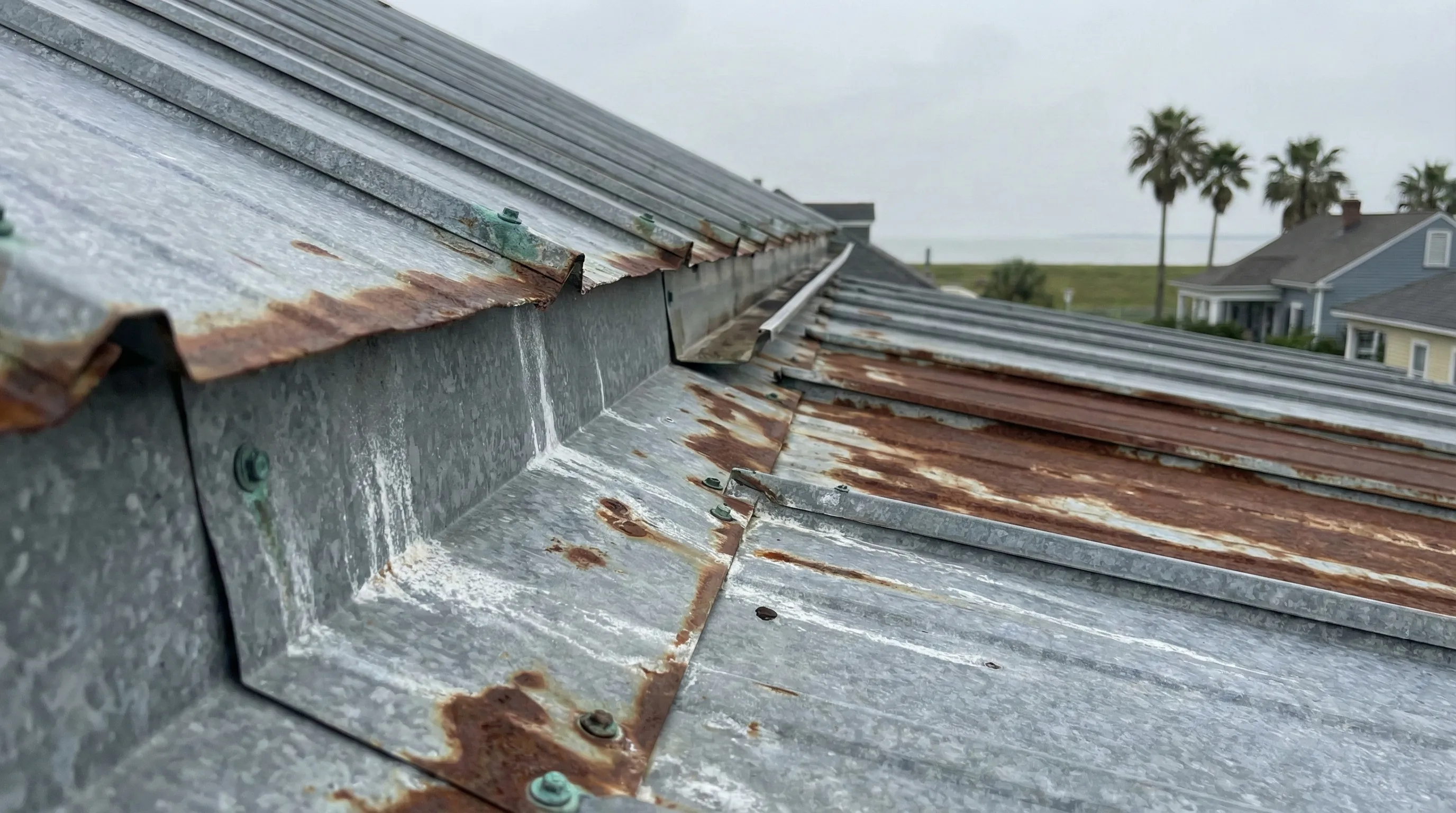
Corroded roof flashing on New Orleans home near Lake Pontchartrain showing salt air damage

Salt Air Corrosion Zones in New Orleans: A Guide to Coastal Roof Protection

14 min readJan 24, 2026

Salt air corrosion destroys standard roofing materials in coastal New Orleans neighborhoods. This guide maps the corrosion zones and explains which materials and coatings survive.

TL;DR: Salt air from Lake Pontchartrain causes accelerated corrosion of standard galvanized steel roofing components within approximately 1 mile of the shoreline. Lakeview, Gentilly, Lake Vista, and Northshore communities fall within this "severe corrosion zone" where aluminum, stainless steel, or copper components should replace standard galvanized. Historic districts (French Quarter, Garden District) have additional material requirements under Vieux Carré Commission (VCC) and Historic District Landmarks Commission (HDLC) guidelines.

How Salt Air Destroys Roofing Materials

Lake Pontchartrain is a brackish estuary with salinity ranging from 4-6 parts per thousand (ppt)—lower than ocean water (35 ppt) but high enough to cause significant corrosion. When wind carries moisture from the lake, salt particles deposit on roofing materials and absorb additional moisture from New Orleans' 75%+ average humidity.

This creates a continuous electrochemical corrosion cycle:

  1. Salt particles deposit on metal surfaces
  2. Humidity keeps the salt constantly moist, creating an electrolyte solution
  3. Galvanic corrosion accelerates at junctions between dissimilar metals
  4. Protective coatings break down, exposing base metal to further attack

Standard galvanized steel (zinc-coated carbon steel) is particularly vulnerable. The zinc coating that protects inland steel from rust is rapidly consumed by chloride ions in salt air. Once the zinc is gone, the underlying carbon steel corrodes at 5-10x the rate it would inland.

Corrosion Rate Data

The American Galvanizers Association provides corrosion rate data by environment category. Lake Pontchartrain's shoreline qualifies as "severe marine" despite the brackish (not ocean-salinity) water:

Environment Zinc Corrosion Rate Time to Failure (G90 Galvanized)
Rural/Low Pollution 0.1-0.5 μm/year 50+ years
Urban/Industrial 0.5-2.0 μm/year 25-40 years
Moderate Marine (1-3 miles) 2.0-4.0 μm/year 12-20 years
Severe Marine (<1 mile) 4.0-8.0+ μm/year 8-15 years

G90 galvanized steel (the standard for roofing flashings) has approximately 25 microns of zinc per side. At severe marine corrosion rates, this protection can be consumed in 8-15 years—well before most homeowners expect to need flashing replacement.

New Orleans Corrosion Zones

We've mapped Greater New Orleans into three corrosion zones based on distance from Lake Pontchartrain and observed material performance:

Zone 1: Severe (0-1 Mile from Lake Pontchartrain)

Neighborhoods: Lake Vista, Lake Terrace, Lake Oaks, Lakefront, Lakeshore East, West End, Bucktown, portions of Lakeview north of Robert E. Lee Blvd, Old Metairie (lake side), Lake Shore Estates

Corrosion Impact:

  • Standard galvanized flashing fails in 8-15 years
  • Galvanized gutters show visible rust within 5-7 years
  • Steel roof vents and penetration flashings corrode first (thinner material)
  • Even stainless steel fasteners can show pitting

Recommendation: Aluminum, copper, or marine-grade stainless steel for all metal components. No galvanized steel.

Zone 2: Moderate (1-3 Miles from Lake Pontchartrain)

Neighborhoods: Most of Lakeview, Gentilly Terrace, Gentilly Woods, Pontchartrain Park, Lake Carmel, Fillmore, Navarre, portions of City Park area, Old Metairie (central)

Corrosion Impact:

  • Galvanized flashing lasts 12-20 years (reduced from 25-40 year inland expectation)
  • Gutters show rust spots within 10-15 years
  • Dissimilar metal junctions (aluminum/galvanized) corrode preferentially

Recommendation: Galvanized acceptable for budget constraints but aluminum preferred. Avoid mixing metals—use consistent material throughout.

Zone 3: Standard (3+ Miles from Lake Pontchartrain)

Neighborhoods: Uptown, Garden District, Irish Channel, Marigny, Bywater, Mid-City (south), Central City, Carrollton, Broadmoor, Holy Cross

Corrosion Impact:

  • Standard corrosion rates—galvanized materials perform to normal specifications
  • Humidity and rainfall remain higher than national average but salt exposure minimal

Recommendation: Standard galvanized acceptable. Upgrade to aluminum for extended lifespan or premium projects.

Northshore Corrosion Zones

St. Tammany Parish communities along Lake Pontchartrain follow similar patterns:

  • Severe (Zone 1): Mandeville lakefront, Madisonville waterfront, Eden Isles, Lakeshore Estates (Slidell)
  • Moderate (Zone 2): Old Mandeville, Slidell lakeside areas, Lacombe
  • Standard (Zone 3): Covington, Abita Springs, most of Slidell, Hammond

Material Survival Rates by Zone

Based on our inspection records and replacement history across Greater New Orleans:

Material Zone 1 (Severe) Zone 2 (Moderate) Zone 3 (Standard)
Galvanized Steel Flashing 8-15 years 12-20 years 25-40 years
Aluminum Flashing 30-50 years 40-60 years 50+ years
Copper Flashing 75-100+ years 100+ years 100+ years
Stainless Steel (316 Marine) 50-75+ years 75+ years 75+ years
Galvanized Steel Gutters 5-10 years 10-15 years 20-30 years
Aluminum Gutters 25-40 years 30-50 years 40+ years

The cost premium for aluminum over galvanized is typically 20-40%. For Zone 1 properties, this premium is recovered within 10-15 years through avoided replacement—often during the first roof replacement cycle.

Historic District Roofing Requirements

New Orleans has multiple historic districts with varying levels of oversight for exterior modifications including roofing:

Vieux Carré (French Quarter)

The Vieux Carré Commission (VCC) regulates all exterior modifications in the French Quarter under City Code Chapter 84. For roofing:

  • Material restrictions: Visible roofing must be historically appropriate. Slate, tile, and certain metal profiles are typically approved. Architectural shingles are generally not permitted on primary facades.
  • Color requirements: Muted, historically appropriate colors. No bright or reflective materials visible from the street.
  • Flat roofs: Not visible from street level, allowing more material flexibility. Modified bitumen and TPO common.

VCC Application Process: Submit drawings and material specifications to VCC staff for preliminary review. Staff can approve "minor work" applications. Major changes require full Commission review (monthly meetings). Plan for 4-6 weeks minimum from application to approval.

Garden District / HDLC Districts

The Historic District Landmarks Commission (HDLC) oversees the Garden District, Irish Channel, Marigny, Bywater, Esplanade Ridge, and other designated historic districts. Regulations are generally less restrictive than VCC:

  • Material approval: Slate, metal, and architectural shingles typically approvable depending on building's historic character
  • Color: Must be appropriate to building style and period
  • Replacement-in-kind: Matching existing materials usually approved administratively

HDLC Application Process: Staff review for most residential roofing projects. Full Commission review for major changes to landmark properties. Typical turnaround: 2-4 weeks.

Specific VCC Roofing Guidelines

Per VCC Design Guidelines (updated 2021), the following materials are appropriate for French Quarter roofing:

Approved Visible Roofing Materials

  • Natural slate: The historic standard. Acceptable in all applications. Gray, black, green, and purple-gray typical colors.
  • Standing seam metal: Terne-coated steel (traditional), copper, zinc, or painted steel in muted colors
  • Flat-seam metal: Copper or terne-coated steel for low-slope applications
  • Clay tile: Barrel tile on Spanish Colonial influenced buildings

Conditionally Approved Materials

  • Synthetic slate: May be approved when natural slate is cost-prohibitive; must closely match historic appearance
  • Architectural shingles: Only on non-contributing buildings or non-visible slopes; requires staff approval

Generally Not Approved

  • Bright/reflective metal roofing
  • Three-tab shingles on visible slopes
  • Concrete tile (not historically appropriate for the Quarter)
  • Rubber or membrane roofing on visible slopes

For properties in VCC jurisdiction, we recommend scheduling a pre-application consultation with VCC staff before finalizing material selections. This prevents delays from rejected applications and helps identify any building-specific requirements.

Material Recommendations by Zone and District

Zone 1 + No Historic Restrictions

Properties in Lakeview, Lake Vista, Gentilly lakeside without historic overlay:

  • Shingles: Standard architectural or Class 4 impact-resistant (GAF Timberline HDZ or Armor Shield II)
  • Metal components: Aluminum for all flashing, gutters, vents. No galvanized.
  • Fasteners: Stainless steel or hot-dip galvanized (HDG) nails. Standard electroplated galvanized fasteners corrode too quickly.
  • Alternative: Standing seam aluminum or painted steel (Galvalume) with marine-grade components

Zone 1 + Historic District (Rare Overlap)

A few lakefront properties fall within historic overlays:

  • Copper: Ideal—historically appropriate and salt-resistant
  • Natural slate: Excellent salt resistance; ensure copper flashing
  • Terne-coated stainless: Modern substitute for traditional terne plate; excellent durability

Zone 3 + VCC (French Quarter)

French Quarter properties with minimal salt exposure:

  • Natural slate: Preferred for historic authenticity and 100+ year lifespan
  • Copper standing seam: Traditional and approved; develops protective patina
  • Synthetic slate: Cost-effective alternative; requires VCC approval
  • Flat roofs (non-visible): Modified bitumen or TPO membrane; aluminum edge flashing

Zone 3 + HDLC (Garden District, Marigny)

Historic districts with more material flexibility:

  • Natural or synthetic slate: Appropriate for grand Victorian and Greek Revival homes
  • Architectural shingles: Acceptable on most properties with HDLC approval
  • Standing seam metal: In appropriate colors; approved for many building types
  • Copper flashing: Recommended even without salt exposure for longevity and appearance

Corrosion Inspection Checklist

If you live in Zone 1 or Zone 2, inspect these areas annually for corrosion:

High-Priority Inspection Points

  • Chimney flashing: Check for rust bleeding, lifted edges, or white oxidation (zinc consumption)
  • Pipe boot flashings: Thin galvanized boots fail first; look for rust around the base
  • Valley flashing: Inspect where debris accumulates—corrosion concentrates in these areas
  • Drip edge: Check rake edges facing the lake—they receive direct salt exposure
  • Gutter seams: Rust often starts at seams and fastener points

Signs of Active Corrosion

  • Rust staining: Orange/brown streaks below metal components
  • White powder: Zinc oxide indicating galvanic coating consumption
  • Pitting: Small holes or rough texture on previously smooth surfaces
  • Lifted edges: Corrosion causes metal to expand and separate
  • Green/blue patina: On copper—this is normal and protective, not a problem

Free Corrosion Assessment

We offer free inspections for Greater New Orleans homeowners concerned about salt air corrosion. We'll document current conditions, identify corrosion risk areas, and recommend appropriate materials for your specific location and building type.

Schedule Free Assessment →

Frequently Asked Questions

Salt particles from Lake Pontchartrain deposit on roofing materials and remain constantly moist due to New Orleans' high humidity. This creates an electrochemical corrosion cycle that rapidly consumes the zinc coating on galvanized steel. Standard galvanized flashing that would last 25-40 years inland may fail in just 8-15 years within 1 mile of the lake.

Zone 1 (severe corrosion, 0-1 mile from Lake Pontchartrain) includes: Lake Vista, Lake Terrace, Lake Oaks, Lakefront, Lakeshore East, West End, Bucktown, Lakeview north of Robert E. Lee Blvd, lake-side Old Metairie, and Lake Shore Estates. On the Northshore, this includes Mandeville lakefront, Madisonville waterfront, Eden Isles, and Slidell's Lakeshore Estates.

For Zone 1 (within 1 mile of the lake), use aluminum for all flashing, gutters, and vents—no galvanized steel. Copper and marine-grade 316 stainless steel are premium options with even longer lifespans. Use stainless steel or hot-dip galvanized (HDG) nails, not standard electroplated galvanized. Standing seam aluminum or Galvalume roofing works well for full metal roof applications.

The Vieux Carré Commission (VCC) requires historically appropriate materials on visible roofing in the French Quarter. Approved materials include natural slate, standing seam metal (copper, terne-coated steel, or painted steel in muted colors), flat-seam copper, and clay tile on Spanish Colonial buildings. Synthetic slate may be approved as a cost-effective alternative. Architectural shingles are generally only permitted on non-visible slopes.

Submit drawings and material specifications to VCC staff for preliminary review. Staff can approve "minor work" applications including like-for-like replacements. Major changes or new materials require full Commission review at monthly meetings. Plan for 4-6 weeks minimum from application to approval. We recommend scheduling a pre-application consultation with VCC staff before finalizing material selections.

Aluminum flashing typically costs 20-40% more than galvanized steel. However, in Zone 1 (within 1 mile of Lake Pontchartrain), aluminum lasts 30-50 years versus 8-15 years for galvanized. This means the premium is recovered within the first roof cycle, and you avoid the cost and disruption of mid-life flashing replacement.

Signs of active corrosion include: rust staining (orange/brown streaks below metal components), white powder on galvanized surfaces (zinc oxide indicating coating consumption), pitting (small holes or rough texture on previously smooth metal), lifted edges where corrosion has caused expansion, and deterioration concentrated at seams and fastener points.

We recommend annual inspections for Zone 1 properties (within 1 mile of Lake Pontchartrain). Focus on chimney flashing, pipe boot flashings, valley flashing where debris accumulates, drip edge on lake-facing sides, and gutter seams. Catching corrosion early allows targeted repairs before it affects adjacent materials or causes leaks.

Ready for Your Residential Roofing Project?

Get a free inspection and estimate from our expert team.

Call (512) 877-3087