Slate roofing costs $20-$40+ per sq ft installed. Compare natural slate vs synthetic slate prices, lifespans of 100+ years, and repair costs for your home.
A slate roof costs $20 to $40+ per square foot installed, putting the total for a 2,000 sq ft home between $40,000 and $80,000+. That price tag places slate at the top of residential roofing materials. But natural slate also outlasts every other option by decades. Homeowners who install slate in their 40s may never need another roof in their lifetime -- and their children probably won't either.
This guide breaks down slate roofing costs by type, the factors that shift your price up or down, and whether slate makes financial sense for homes in Austin, Houston, and New Orleans. We also cover how slate compares to other roofing materials you might be considering.
How Much Does a Slate Roof Cost?
Slate roofing prices depend heavily on the type of slate you choose. Natural quarried slate commands the highest price, while synthetic slate products offer a similar look at a fraction of the cost. Salvaged slate -- reclaimed from older buildings -- falls somewhere in between, with pricing that fluctuates based on availability and condition.
| Slate Type | Cost per Sq Ft (Installed) | 2,000 Sq Ft Home | Expected Lifespan |
|---|---|---|---|
| Natural Slate (Standard) | $20-$35 | $40,000-$70,000 | 100-150+ years |
| Natural Slate (Premium/Imported) | $35-$50+ | $70,000-$100,000+ | 150-200 years |
| Salvaged/Reclaimed Slate | $20-$40 | $40,000-$80,000 | 75-100+ years (remaining) |
| Synthetic Slate | $10-$20 | $20,000-$40,000 | 40-60 years |
According to the National Roofing Contractors Association (NRCA), natural slate remains one of the few roofing materials that can exceed a century of service when properly installed. The material cost alone (before labor) ranges from $5 to $15 per square foot, but the specialized labor required to install slate tiles nearly doubles the total project price.
Slate Roof Cost Factors
The range between $20 and $50+ per square foot is wide. Several variables determine where your project lands on that spectrum.
Roof Size and Complexity
Larger roofs cost more in total but sometimes less per square foot due to labor efficiencies. A simple gable roof with minimal penetrations will be far less expensive than a complex design with dormers, valleys, hip ridges, and skylights. Each intersection requires custom-cut slate pieces and additional flashing work. Expect complex rooflines to add 20-30% to the baseline price.
Roof Pitch and Structural Requirements
Natural slate weighs 800 to 1,500 pounds per roofing square (100 sq ft), compared to 200-300 pounds for asphalt shingles. Many homes need structural reinforcement before they can support this weight. Adding collar ties, sister rafters, or replacing undersized framing members can add $5,000 to $15,000 to your project. A structural engineer's assessment ($500-$1,000) should be your first step before committing to natural slate.
Slate Origin and Quality
Vermont and Pennsylvania quarries produce the most common domestic slate. Welsh, Spanish, and Brazilian imports cost more due to shipping but offer distinct color variations and proven durability records. Hard slate from Vermont's Unfading Green or Black varieties commands premium pricing because these stones show virtually no weathering over centuries.
Regional Labor Rates
Skilled slate installers are uncommon in many markets. In Texas and Louisiana, where slate roofs are relatively rare compared to the Northeast, you may face higher labor rates simply because fewer crews have the training and experience. Austin and Houston labor rates for slate installation run 10-15% above national averages due to limited specialist availability.
Natural Slate vs. Synthetic Slate
Synthetic slate products have improved dramatically in recent years. Made from engineered polymers, rubber, or fiber cement, these products mimic the look of real slate at roughly half the cost. But the differences go beyond price.
| Feature | Natural Slate | Synthetic Slate | Salvaged Slate |
|---|---|---|---|
| Cost per Sq Ft | $20-$50+ | $10-$20 | $20-$40 |
| Lifespan | 100-200 years | 40-60 years | 75-100+ years remaining |
| Weight (per 100 sq ft) | 800-1,500 lbs | 150-400 lbs | 800-1,500 lbs |
| Structural Reinforcement | Usually required | Rarely needed | Usually required |
| Appearance | Authentic, natural variation | Close replica, uniform look | Authentic, weathered character |
| Fire Rating | Class A (non-combustible) | Class A (most products) | Class A (non-combustible) |
| Environmental Impact | Quarried stone, fully recyclable | Manufactured, varies by brand | Reclaimed, lowest impact |
For homeowners who want the slate aesthetic without the structural demands and premium price, synthetic slate from manufacturers like DaVinci Roofscapes or CertainTeed's Symphony line delivers a convincing appearance with warranties of 40-50 years. The trade-off is that synthetic products will need replacement within your lifetime, while natural slate likely will not.
According to a 2024 report from HomeAdvisor, synthetic slate installations have grown 35% year-over-year as products improve and homeowners seek premium looks at lower price points.
How Long Does a Slate Roof Last?
Natural slate is the longest-lasting roofing material available. Period. Buildings across Europe and the eastern United States have slate roofs that are 200+ years old and still functioning. The National Slate Association notes that properly installed slate from quality quarries routinely exceeds 150 years of service.
That extreme longevity reshapes the cost conversation entirely. When you calculate cost per year of service, slate often beats materials that seem cheaper upfront:
- Asphalt shingles: $12,000 / 25 years = $480 per year
- Metal roofing: $28,000 / 60 years = $467 per year
- Natural slate: $60,000 / 150 years = $400 per year
- Synthetic slate: $30,000 / 50 years = $600 per year
Of course, that math only works if you plan to own the home long enough to benefit from the lifespan difference. For a 5-year flip, slate makes no financial sense. For a multi-generational family home, it can be the most economical choice.
Maintenance Costs Over Time
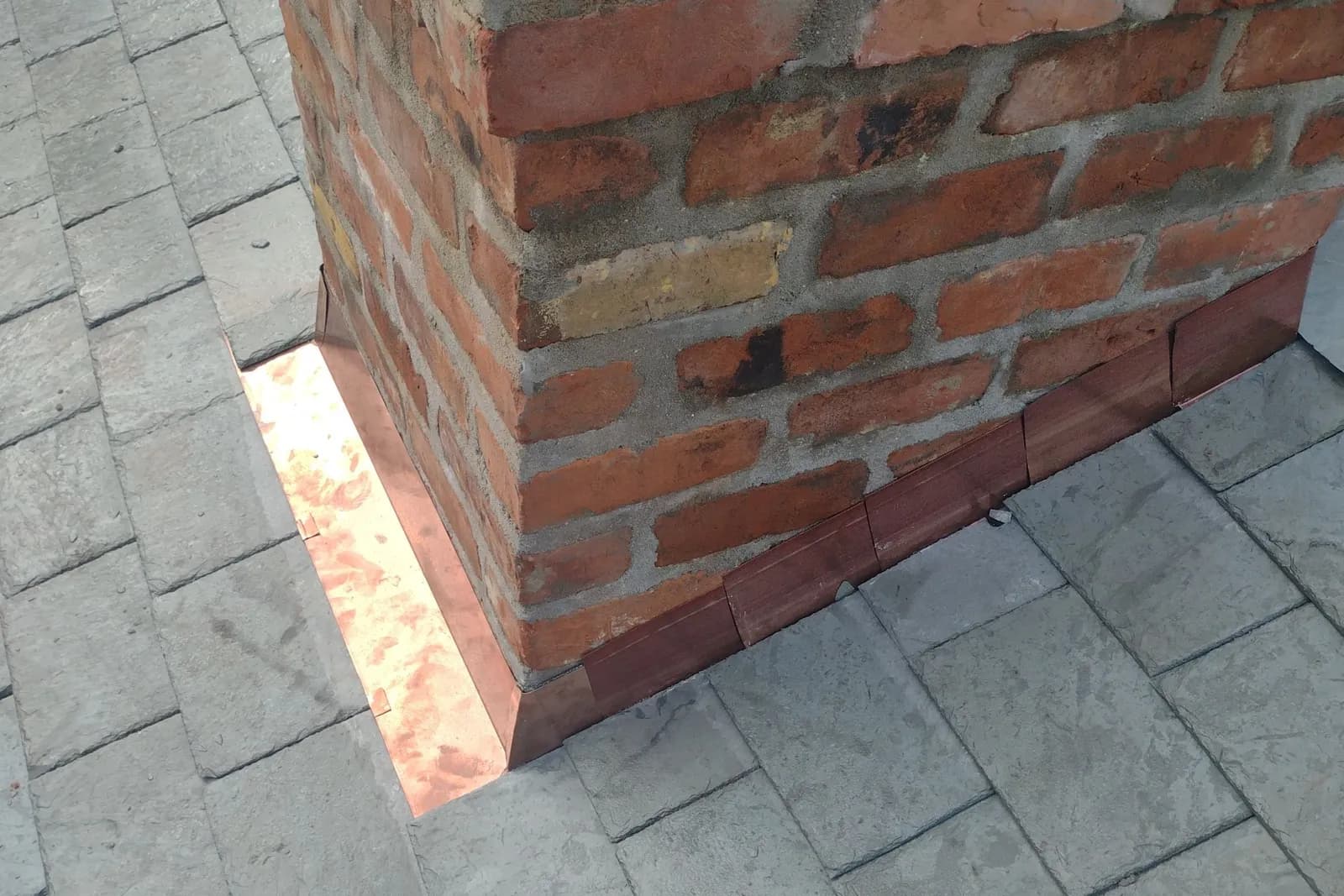
Slate roofs require periodic inspection and occasional tile replacement. A qualified roofer should inspect your slate roof every 5-10 years. Individual cracked or slipped tiles can be replaced without disturbing the surrounding slate. Budget $300 to $600 per year for ongoing maintenance on a natural slate roof. The most common maintenance need is replacing copper or stainless steel flashing, which typically lasts 70-100 years before showing wear.
Is Slate Roofing Worth It in Texas and Louisiana?
Slate roofing in the Gulf Coast region presents a different calculation than in the Northeast, where slate has been the standard for centuries. Here is what homeowners in our service areas should consider.
Hurricane and Wind Resistance
Natural slate tiles resist wind well when properly fastened. The National Roofing Contractors Association rates properly installed slate for winds up to 110 mph. However, in extreme hurricane conditions above Category 3 (winds exceeding 130 mph), individual tiles can break loose. Synthetic slate products typically offer higher wind ratings -- some are rated for 150+ mph -- because they are lighter and more flexible.
For Louisiana homeowners, pairing slate with FORTIFIED installation methods adds an extra layer of storm protection. FORTIFIED-certified installation can be applied to slate roofs with proper fastening and sealed deck techniques.
Historic Homes in New Orleans
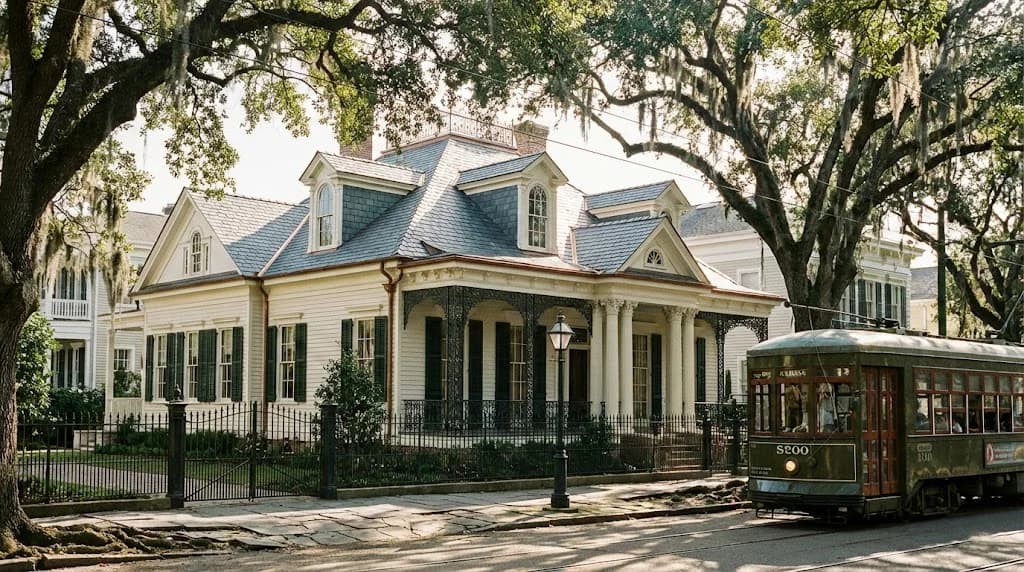
Slate is one of the few roofing materials that makes clear historical sense in New Orleans. Many Garden District mansions, French Quarter townhouses, and Uptown homes were originally built with slate roofs in the 1800s. Replacing an existing slate roof with asphalt can diminish the property's historic character and potentially reduce its value. We have installed and restored slate roofs on several historic properties in the New Orleans metro, matching original patterns and colors to preserve architectural integrity.
From our team: Slate is a specialty product, and we treat it that way. In New Orleans, we work with salvaged slate from regional demolitions when homeowners want an authentic period-correct restoration. In Austin and Houston, synthetic slate is the more common request -- homeowners want that upscale look without the structural upgrades most Texas homes would need. Either way, this is a project that demands an experienced crew. The difference between a 100-year slate roof and a 20-year headache comes down to installation quality.
-- Hunter Lapeyre, Owner
Heat and Climate Considerations
Both natural and synthetic slate handle Texas and Louisiana heat without issues. Natural slate is non-combustible (Class A fire rating) and does not absorb heat the way dark asphalt shingles do. In Austin, where summer temperatures regularly exceed 100 degrees, slate keeps attic temperatures measurably lower than asphalt. Synthetic slate products vary by composition, but most quality brands hold up well in sustained heat.
Resale Value
Slate adds measurable resale value, though the return varies by market. In New Orleans, a well-maintained slate roof on a historic home can increase the asking price by 10-15%, according to local real estate data. In Houston and Austin, where slate is uncommon, buyers may not assign as much value to it -- but the curb appeal advantage is undeniable. A study from Remodeling Magazine's 2025 Cost vs. Value report indicates that premium roofing materials return 60-70% of their cost at resale in the South Central region.
Slate Roof Repair Cost
One of slate's advantages is that individual tiles can be replaced without tearing off the entire roof. A skilled slater can remove a broken tile and slide a new one into place with minimal disruption.
Common Repair Costs
- Single tile replacement: $250-$500 per tile (including labor and materials)
- Flashing repair or replacement: $500-$1,500 per area
- Ridge cap repair: $1,000-$3,000
- Valley repair: $1,500-$4,000
- Full inspection and minor repairs: $400-$800
The biggest cost variable in slate repair is finding matching replacement tiles. If your roof uses a common Vermont slate, replacements are readily available from quarries and salvage dealers. Rare imported slate or discontinued colors may require sourcing from demolition sites, which adds time and cost.
Repair vs. Full Replacement
Because of slate's extreme longevity, full replacement is rarely necessary unless the roof has been neglected for decades or the underlying structure has failed. If more than 20-30% of your tiles need replacement, a full re-roof becomes more cost-effective than piecemeal repairs. For roofs where the majority of tiles remain sound, targeted repairs can extend the roof's life by another 50+ years at a fraction of the replacement cost.
Need help deciding whether to repair or replace? Explore our financing options to make either project more manageable.
Comparing all your options?
Read our comprehensive Roofing Materials Guide to see how slate stacks up against metal, asphalt, tile, and other roofing materials for your home.
Common questions
Frequently asked
Natural slate roofing costs $20-$50+ per square foot installed, depending on the slate type and origin. Standard domestic slate from Vermont or Pennsylvania runs $20-$35, while premium imported slate reaches $35-$50+. Synthetic slate is significantly cheaper at $10-$20 per square foot installed.

Founder of Lapeyre Roofing, continuing a family legacy in Louisiana since 1699. Licensed in Louisiana, GAF Certified, and FORTIFIED Roofing specialist serving Texas and Louisiana.
Found this helpful? Choose Lapeyre Roofing as a source you want to see on Google.
Add Lapeyre Roofing as a preferred source on Google (opens a Google window)