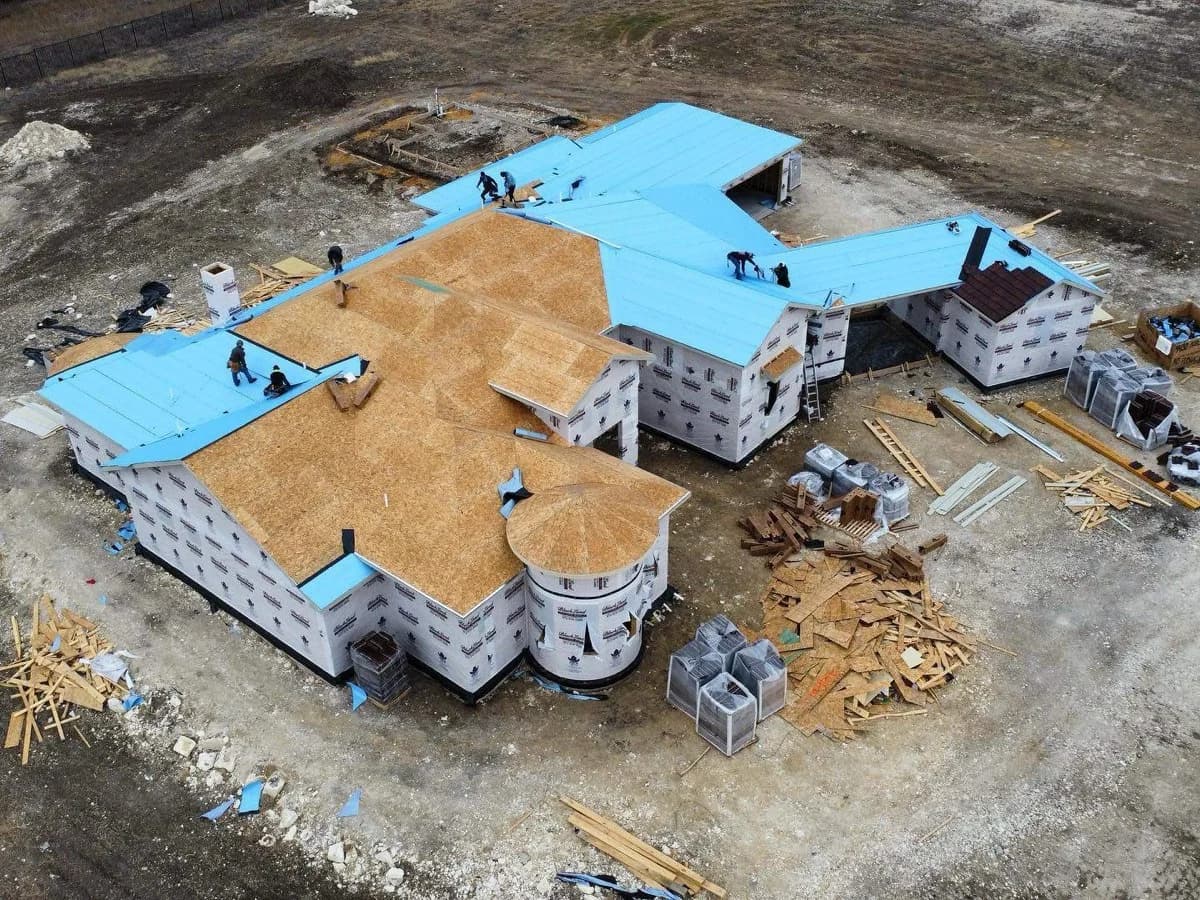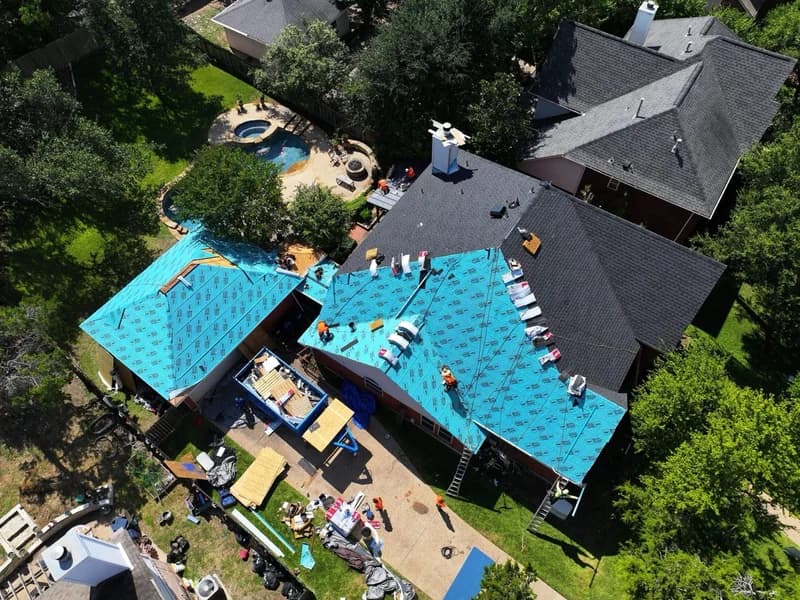
Underlayment is a separate layer beneath the covering. Product compatibility and the complete assembly matter more than a broad material label.
Roof underlayment is a layer beneath the roof covering. When comparing felt and synthetic options, choose by the exact product's suitability for the covering, slope, and installation conditions—not the word “synthetic” alone. Two estimates using the same broad label can specify different products and different assemblies.
Where underlayment fits in the roof
GAF's underlayment explanation describes the protective layer beneath the covering and identifies different product options. Underlayment is separate from structural decking, starter shingles, and specialized leak barriers. A complete material list should distinguish those components.
If a proposal uses “roof paper” for everything below the shingles, ask for the specific products and their locations. A field underlayment and a self-adhering membrane at a vulnerable detail are not automatically interchangeable just because both are hidden when the roof is complete.
Compare products, not categories
Traditional felt and synthetic products differ in composition and handling. GAF's synthetic-underlayment discussion outlines product characteristics, but a category name still does not establish the specification for your job. Request the exact manufacturer and product in each estimate.
| Characteristic | Traditional asphalt felt | Synthetic underlayment |
|---|---|---|
| Composition | Paper or fiberglass mat saturated with asphalt. | Polymer construction, such as polypropylene or polyethylene. |
| Budget and handling | Generally less expensive, with heavier rolls. | Generally higher material cost and lighter handling. |
| Exposure and surface | Can absorb water and wrinkle; exposure limits matter. | Many products offer improved tear resistance and longer permitted exposure, but the exact product controls. |
These category differences come from the GAF discussion linked above; they do not make every synthetic product equivalent. For example, GAF FeltBuster is a synthetic product despite its name, while Deck-Armor is marketed as breathable roof-deck protection. Identify the actual accessory and its approved use rather than selecting from a label alone.
Then ask the contractor to identify the relevant differences: compatible coverings, installation instructions, permitted exposure, fastening, and any assembly requirements. A premium label is not a substitute for explaining which benefit matters on this roof.
Do not assume that changing underlayment improves every warranty. Ask how the proposed roof warranty treats the accessory and which installation conditions apply. The answer should reference the actual warranty being offered, not a general marketing statement about the brand.
What should be checked in the instructions?
- The roof covering and substrate the product is intended to serve.
- Any slope-specific installation requirements.
- Required fastening and overlap details.
- Permitted exposure before the covering is installed.
- How it interfaces with leak barriers and edge details.
- Conditions requiring repair or replacement before covering.
These items matter when weather interrupts the schedule. Ask who checks the exposed layer before work resumes and how any required repairs will be documented. A photograph showing a roof covered in underlayment does not by itself establish that every requirement has been met.
Two quotes with the same shorthand
Imagine both estimates say “synthetic underlayment included.” Proposal A names a product and describes a separate low-slope section. Proposal B does not name the product or distinguish the lower roof. You cannot compare the assemblies yet.
Ask B for its intended product and low-slope detail. Ask A to explain why the lower section differs. The result may be equivalent specifications at different prices, or it may reveal a substantive scope difference. Clarifying this before ordering is easier than debating a delivered roll on installation day.
If a substitution becomes necessary, compare the replacement against the approved assembly rather than accepting that it is “also synthetic.” Record the accepted change and retain the new product information with the job file.
Verify while the material is visible
Request progress photographs identifying the product and representative installed areas before the covering conceals them. A photograph of a roll label helps establish what arrived; installation photographs document where it was used. Neither requires the homeowner to access the roof.
Save those records with the final scope and warranty. If future work disturbs the covering, the repair contractor can identify the intended layers rather than guessing what lies below the shingles.
For quotes with an optional upgrade, request the separate price and the particular product difference. That lets you decide whether the added feature addresses a real project need.
Underlayment selection should fit the roof, not distract from unresolved decking damage or an unsuitable covering. Establish the complete assembly during the installation assessment, then use our replacement timeline to understand when those layers will be inspected and covered.
Common questions
Frequently asked
Do not treat underlayment as the permanent roof covering. Follow the specific product’s exposure and installation limits and complete the specified assembly.
Published by
Editorial team
Our editorial team publishes homeowner guides with sources linked in the article. For a recommendation about your roof, request an inspection of the property.
Found this helpful? Choose Lapeyre Roofing as a source you want to see on Google.
Add Lapeyre Roofing as a preferred source on Google (opens a Google window)