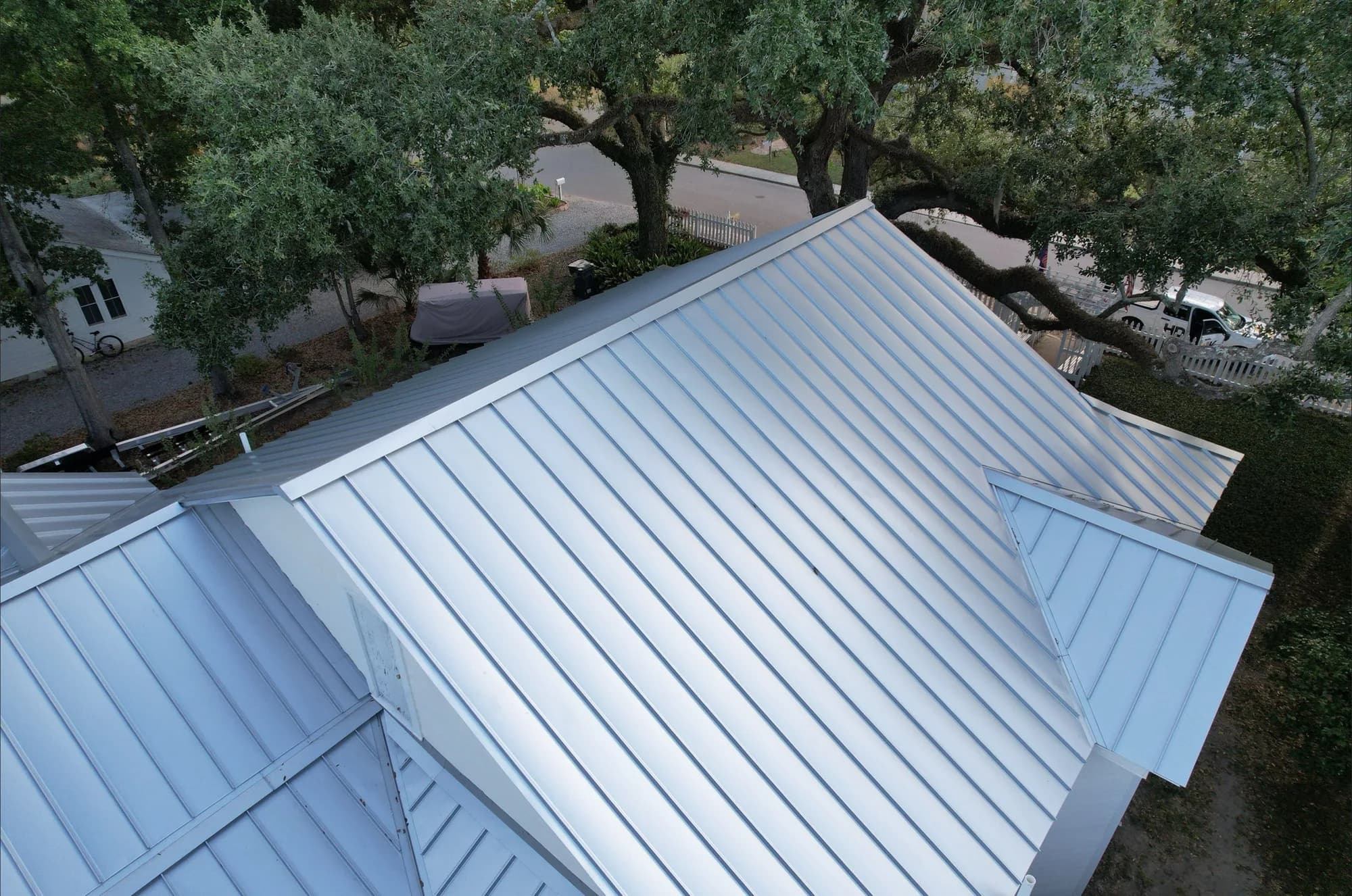
Oil canning describes visible waviness in flat metal-panel areas. Its appearance alone does not prove a leak, but the installation should be assessed before dismissing every irregularity as cosmetic.
Oil canning describes visible waviness in flat metal-panel areas. Its appearance alone does not prove a leak, but the installation should be assessed before dismissing every irregularity as cosmetic.
Set expectations before ordering
McElroy Metal's oil-canning guidance addresses panel-surface choices and appearance expectations. Review actual samples and the proposed profile with the installer before purchase.
Lighting and viewing angle can make waviness more noticeable. Ask which panel options may reduce its appearance and what tradeoffs they introduce. Do not accept a promise of an entirely flat visual surface unless the actual agreement supports it.
Separate appearance from other defects
If the roof is already installed, photograph the same area under different conditions and request an inspection of the installation. Ask whether the concern is limited to appearance or accompanied by attachment, panel, or drainage issues.
For example, a wavy reflection on an otherwise assessed panel is a different finding from a damaged seam or a leak at a penetration. A provider should name the observed condition rather than labeling all concerns oil canning.
Keep the agreed profile, finish, appearance discussion, and completion records. For product selection, use our metal roofing service to compare the complete panel system, not just the color and thickness.
Published by
Editorial team
Our editorial team publishes homeowner guides with sources linked in the article. For a recommendation about your roof, request an inspection of the property.
Found this helpful? Choose Lapeyre Roofing as a source you want to see on Google.
Add Lapeyre Roofing as a preferred source on Google (opens a Google window)