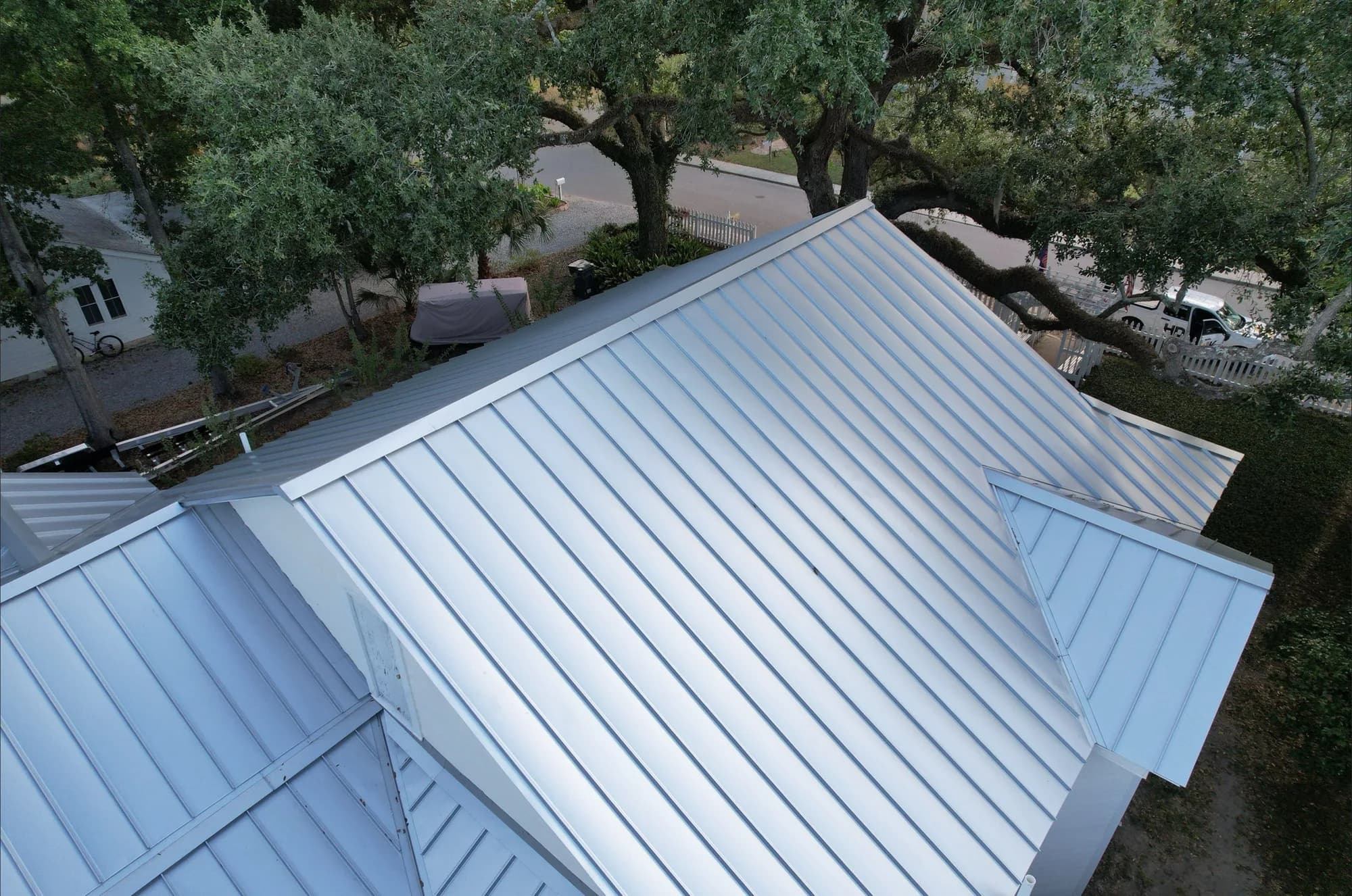
Exposed-fastener panels attach through the panel face; standing-seam systems generally conceal their primary attachment within the seam or panel system. Compare the exact profile and installation rather than assuming all metal roofs have the same details.
Exposed-fastener panels attach through the panel face; standing-seam systems generally conceal their primary attachment within the seam or panel system. Compare the exact profile and installation rather than assuming all metal roofs have the same details.
The attachment changes the assembly
McElroy Metal's residential panel guide distinguishes these systems. Ask which panel, attachment, substrate, slope limit, and finish are proposed. A standing-seam label alone does not identify a particular seam design.
The proposal should also explain how penetrations, edges, and transitions are handled. An attractive uninterrupted sample panel does not show those important parts of the installed roof.
Compare the same project scope
Ask for maintenance expectations specific to the system, not a blanket maintenance-free claim. Confirm which fasteners or components are exposed and what periodic inspection the manufacturer recommends.
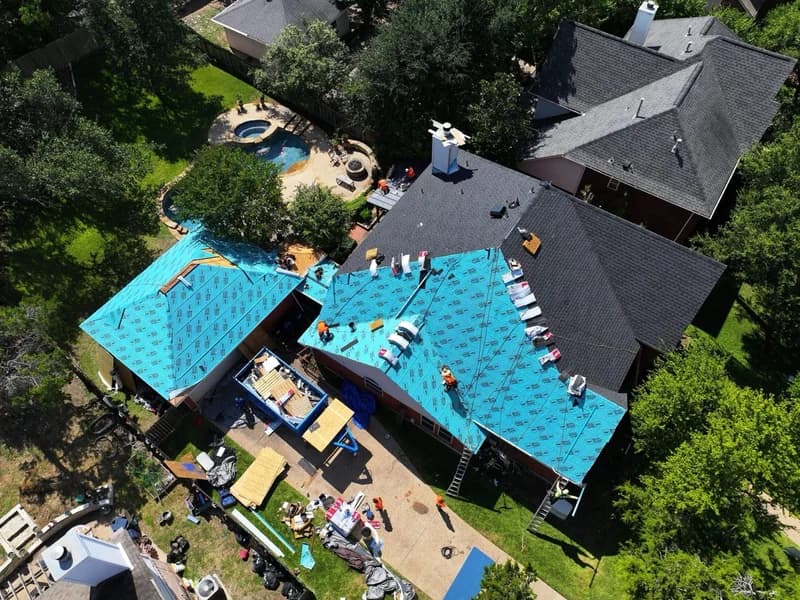
For example, one bid may include new decking and trim while another prices panels over a retained substrate. Resolve that difference before attributing the total premium to hidden fasteners.
Review finish samples and appearance expectations, including oil canning. Keep the approved panel specification and require approval of substitutions. A metal roofing assessment should produce a complete system comparison.
Published by
Editorial team
Our editorial team publishes homeowner guides with sources linked in the article. For a recommendation about your roof, request an inspection of the property.
Found this helpful? Choose Lapeyre Roofing as a source you want to see on Google.
Add Lapeyre Roofing as a preferred source on Google (opens a Google window)