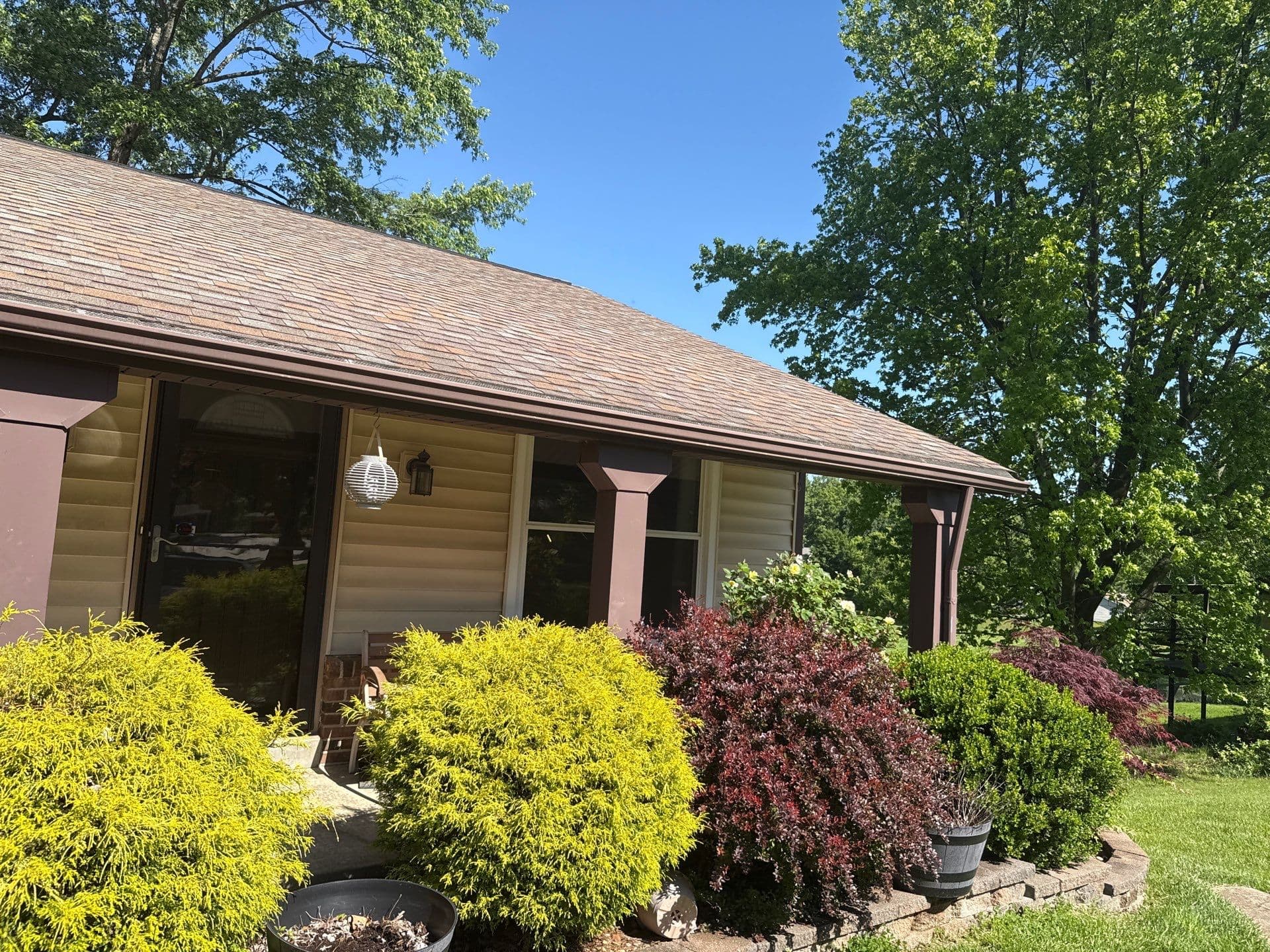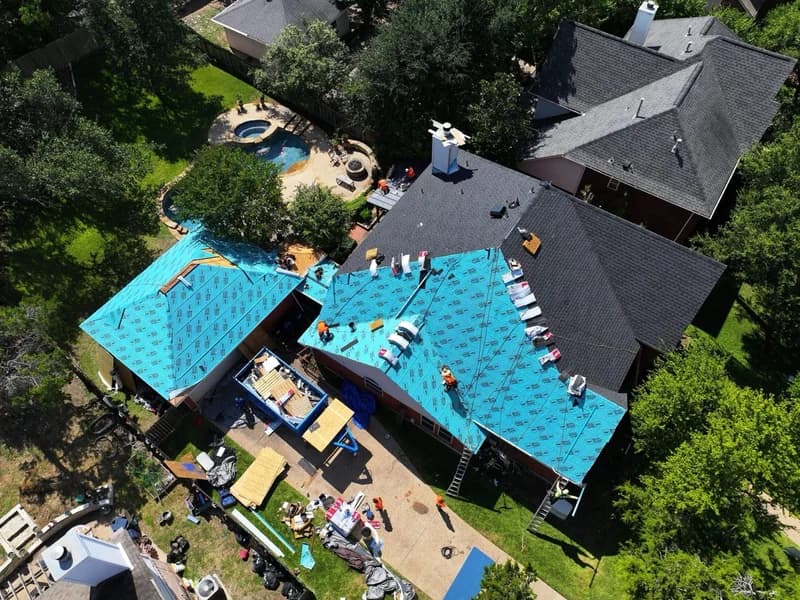
Flashing manages roof junctions that shingles alone cannot describe. A repair should identify the junction, layers, and surrounding work that will change.
Roof flashing manages the junctions where a covering meets walls, chimneys, and other interruptions. Step flashing uses individual pieces along a sloped junction; counterflashing protects the upper connection of another flashing component. Understanding the terms helps you compare the actual repair rather than a vague promise to “seal everything.”
Step flashing and counterflashing have different roles
IKO's flashing guide explains step-flashing pieces coordinated with shingle courses and chimney counterflashing. The selected detail must suit the covering and adjoining material. The size of a generic metal piece is not a complete installation specification.
The homeowner does not need to design that detail. Ask the contractor to identify it in a photograph or sketch, name the components being repaired, and explain what remains. This avoids confusing a finish patch with replacement of the underlying water-management assembly.
Describe the location before discussing the remedy
A roof-to-wall intersection beside a dormer is different from the uphill side of a chimney. Both may be called flashing work, but access and adjacent materials can differ. Mark the location in a wider photograph, then use close photographs to show the observed defect.
If there is an interior stain, give the inspector its history. Note whether it changes during ordinary rain, wind-driven rain, or another condition. A useful report separates observed defects from suspected causes and states which concealed areas could not be inspected.
Why surrounding work matters
A proper repair may need access behind a wall finish or beneath adjoining shingles. Ask what must be removed, who reinstalls it, and how the repaired assembly connects to materials that remain. “Flashing replacement included” leaves those responsibilities unclear if siding or masonry work is involved.
Also ask whether the proposal replaces all relevant pieces or repairs a specific section. A partial repair can be appropriate, but its boundaries should be deliberate and documented. A complete replacement proposal should explain why the broader work is needed.
Sealant may appear in an approved detail, but simply adding it over a junction is not an explanation of how the assembly works. Ask the installer to describe the water path and the observed defect that the proposed work corrects.
Two chimney-area estimates
Suppose Estimate A describes a sealant repair at the chimney counterflashing. Estimate B includes new step flashing, counterflashing, and adjoining shingle work. The price difference alone cannot tell you which is appropriate.
Ask A whether the underlying pieces were inspected and found serviceable. Ask B which findings justify replacing them. If masonry work is excluded, clarify whether it is separately recommended and who coordinates it. This lets the homeowner compare diagnosis, scope, and responsibility together.
For any hidden condition, agree on how photographs and change approval will work before removal begins. A crew uncovering damage needs a clear process; the homeowner needs evidence and a defined additional scope.
Useful completion records
- Photographs identifying the roof junction and original finding.
- The materials and detail used in the repair.
- Progress photographs before surrounding finishes conceal the work.
- Any retained components and stated exclusions.
- The finished repair and the agreed workmanship terms.
Save the record with previous roof work. If the area later needs another repair, the next contractor can distinguish an original detail from a later modification and avoid relying on the appearance of the outside finish alone.
A flashing issue does not automatically require a new roof, but the surrounding covering must be suitable for the intended repair. Ask for that assessment explicitly. During a reroof, resolve whether flashing is retained or replaced before signing; it should not be an unexplained assumption.
Our repair-versus-replacement guide helps organize the larger decision. A roof repair assessment should give you a finding and a defined scope at the specific junction.
Common questions
Frequently asked
No. Sealant can be part of a specified detail, but a repair should identify the flashing assembly and the defect instead of using the terms interchangeably.
Published by
Editorial team
Our editorial team publishes homeowner guides with sources linked in the article. For a recommendation about your roof, request an inspection of the property.
Found this helpful? Choose Lapeyre Roofing as a source you want to see on Google.
Add Lapeyre Roofing as a preferred source on Google (opens a Google window)