Separate chimney flashing and masonry questions before buying a St. Louis roof leak repair. Learn what photos, scope boundaries, and follow-up to request.
A stain near a chimney does not name the failed component
If water appears beside a chimney in your St. Louis home, begin with a diagnosis that separates roofing and masonry questions. The visible stain is a location to investigate, not proof that the entire roof needs replacement or that a bead of sealant will solve the problem. Ask which observed defect the proposed repair addresses.
Document when the leak appears, the weather conditions you observed, and whether the stain changes after different storms. Photograph the interior from a safe location. Do not climb onto the roof or ask a homeowner to conduct an improvised hose test; the contractor should select a safe investigation method and explain its limitations.
Understand the roof-side proposal
GAF’s flashing guide describes the base and counterflashing relationship at chimneys and the use of step flashing where roof surfaces meet walls. Ask the roofer to identify the existing details and show the specific problem in photographs. “Chimney flashing” may refer to several connected pieces rather than one strip of exposed metal.
Have the proposal distinguish replacement of the relevant flashing assembly from an exposed sealant repair. Ask what roofing must be removed to access the work, which materials will be replaced, and how the detail connects to the surrounding covering. Avoid comparing these different scopes as if they were the same repair.
Give the masonry questions an owner
Ask whether the inspector observed concerns outside the roofing scope, such as visible conditions in the chimney masonry or its top. If another specialist is needed, request a specific referral question: which component needs evaluation and how the result could change the roof repair. A vague instruction to “call a chimney person” leaves you coordinating an unresolved problem.
Keep the scopes separate but coordinated. The roofer should state what it will waterproof at the roof intersection, and the masonry or chimney specialist should describe its own work. Neither proposal should silently assume the other company is repairing an identified defect. Request one sequence that both contractors understand.
Compare access and restoration as part of the price
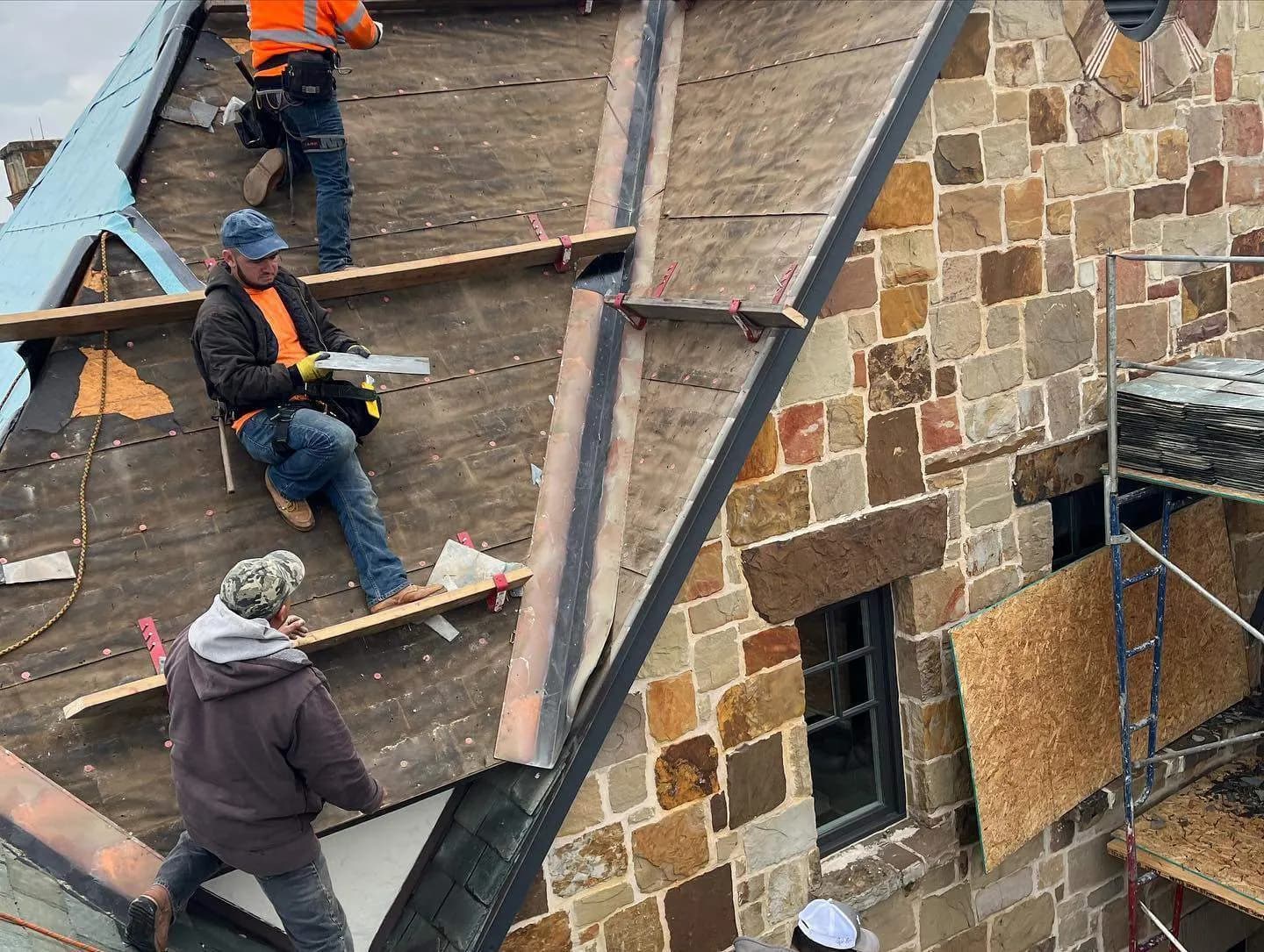
Ask each contractor to identify access equipment, protection for landscaping and adjacent surfaces, removal and replacement of surrounding roofing, cleanup, and any interior work. For slate or tile around a chimney, ask how the covering will be protected and whether replacement pieces can be matched. Access and restoration can make two superficially similar flashing estimates quite different.
As a hypothetical example, one bid may replace only exposed counterflashing while another removes surrounding shingles and rebuilds the complete roof intersection. Ask why the first scope is sufficient or why the second is necessary. The answer should refer to observed conditions and the intended detail, not just a longer warranty.
Check historic-review implications before visible changes
If the property is a City Landmark or in a City Historic District, ask about proposed exterior changes before replacing visible metal or altering the chimney. The City Cultural Resources Office reviews exterior-work permit applications for those properties. Have the responsible contractor establish which review applies to the exact work.
Provide clear existing-condition photographs and the proposed material. Keep any approval with the repair scope so the crew does not substitute a different visible finish without resolving the change. The contractor’s installation recommendation and the city’s review are separate decisions that should be coordinated before work starts.
Define follow-up before signing
Ask what completion photographs you will receive, whether any verification is appropriate, and who to contact if water returns. The proposal should explain what is covered by the repair warranty and what remains outside the scope. Keep the initial photos and dates so a later callback can be compared with the original condition.
Request a St. Louis roof leak inspection and mention the chimney location when booking. Share prior roof or masonry repair invoices if available. A good assessment produces a defined repair and names any remaining specialist question, instead of passing the homeowner back and forth between trades.
Published by
Lapeyre Roofing Editorial Team
Homeowner guides
Our editorial team publishes homeowner guides with sources linked in the article. For a recommendation about your roof, request an inspection of the property.
Found this helpful? Choose Lapeyre Roofing as a source you want to see on Google.
Add Lapeyre Roofing as a preferred source on Google (opens a Google window)