Call Now - Free Estimate
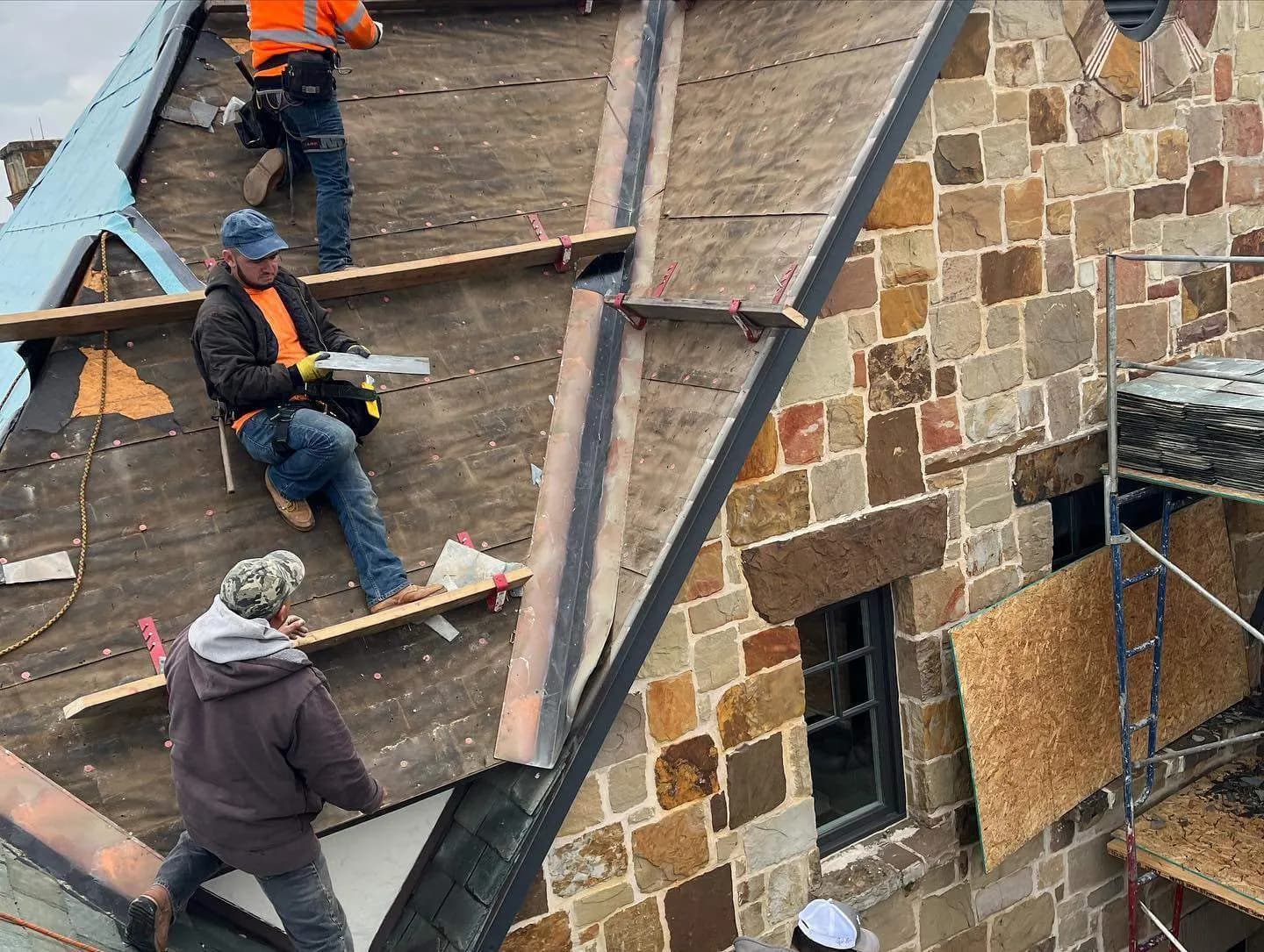
Roofer replacing a broken slate tile on a historic slate roof using a slate ripper and hook

Slate Roof Repair: Repair vs Replace Guide

By Hunter Lapeyre·GAF Certified Contractor·FORTIFIED Roofing Evaluator
8 min readJul 8, 2026

Broken slates and failed flashings are repairable. Delaminating slate is not. Here is how to tell the difference, what repairs cost, and when replacement wins.

Most slate roof problems are repairable for $250 to $4,000 -- full replacement only makes sense when more than roughly 20-30% of the slates themselves are failing. That distinction matters, because slate is the one roofing material where a "worn out roof" diagnosis is often wrong. A slate roof with broken tiles, slipped tiles, and leaking valleys can have 75+ years of life left in the stone. The trick is knowing whether the slate is failing, or whether everything around the slate is failing.

This guide shows you how to tell the difference, what each common repair costs, and how to avoid the mistakes that turn a repairable slate roof into a tear-off. If you are still pricing options, our slate roofing cost guide covers full installation numbers.

Is Your Slate Roof Repairable?

Slate fails in two very different ways, and the repair-vs-replace decision hinges on which one you have.

Localized Damage: Almost Always Repairable

Broken, cracked, or slipped individual slates are localized problems. A falling branch, a hailstone, a corroded nail, or someone walking on the roof damages a handful of tiles while the rest of the field stays sound. A skilled slater removes the broken piece with a slate ripper, slides in a matching slate, and secures it with a copper nail or hook. The surrounding roof is untouched. If your roof has scattered broken or missing slates but the rest look crisp and hard, you have a repair, not a replacement.

Systemic Delamination: The Slate Itself Is Dying

Soft slate -- common in some Pennsylvania ribbon slates used heavily in the early 1900s -- eventually absorbs water and delaminates, flaking apart in layers like pastry. This is not localized. It happens across the whole roof at roughly the same time, because every slate came from the same quarry run. Delaminating slate looks chalky and powdery, sheds flakes into the gutters, and shows soft, crumbling edges.

Two field tests tell you a lot:

  • The fingernail test: Scratch the surface of a slate. Hard, sound slate resists and leaves little mark. Soft, dying slate scratches easily and powders under your nail.
  • The tap test: Knock on a slate with your knuckle or a coin. Sound slate rings with a sharp, almost metallic clink. Delaminating slate answers with a dull thud, like tapping cardboard.

If slates across the roof fail these tests, replacing individual tiles is pouring money into stone that is at the end of its life. New slates hung on a dying field will outlast their neighbors and you will be back on the roof every year.

Symptom Likely Cause Verdict
A few broken or missing slates Impact, foot traffic, storm debris Repair
Slates sliding out of position Corroded nails ("nail sickness") Repair, or re-lay if widespread
Leaks at valleys, chimneys, walls Failed metal flashings Repair (replace the metal)
Flaking, powdery, soft slates everywhere Delamination -- slate at end of life Plan for replacement
Sagging roof planes Structural or decking failure Structural assessment first

The 20-30% Rule

Slaters use a simple threshold: if more than about 20-30% of the slates on a roof are broken, slipped, or failing, full replacement usually beats continued repair. Below that line, targeted repairs are dramatically cheaper and can keep a sound roof running for decades. Above it, you are paying repair-rate labor ($250-$500 per slate) across so much of the roof that a systematic re-roof -- with new underlayment, new flashings, and a fresh warranty -- costs less per year of life gained.

The rule has a second dimension: trajectory. A roof at 10% failure from a single hailstorm is a stable repair candidate. A roof at 10% failure from delamination will be at 20% in a few years, because every slate is aging on the same clock. Ask your roofer not just "how many slates are bad?" but "why are they bad, and is the rest of the field sound?"

Slate Roof Repair Costs

Slate repair is priced by the problem, not the square foot. These are typical 2026 ranges; steep, tall, or complex roofs run higher because staging and access dominate the labor.

Repair Typical Cost Notes
Single slate replacement $250-$500 Per-slate price drops when several are done in one visit
Flashing repair or replacement $500-$1,500 per area Chimneys, sidewalls, pipe penetrations
Ridge repair $1,000-$3,000 Ridge slates or metal ridge caps re-set or replaced
Valley replacement $1,500-$4,000 Slates lifted, new metal valley installed, slates re-laid
Inspection with minor repairs $400-$800 Smart every 5-10 years, and after major hail

These numbers assume a contractor who actually works on slate. Prices from general roofing companies can be lower on paper -- and cost far more later, for reasons covered below. Every roof is different, so treat these as planning ranges, not quotes. If a larger repair is needed, financing options can spread the cost.

Why Flashings Fail Before the Slate

Here is the pattern behind most "my slate roof is leaking" calls: the stone is fine, the metal is done. A quality slate lasts 100-200 years, but the flashings woven through it -- valleys, chimney flashings, sidewall step flashing, ridge metal -- were often galvanized steel or terne metal with a 40-70 year life. On a 90-year-old roof, the flashings are simply the first component to reach the end of its design life.

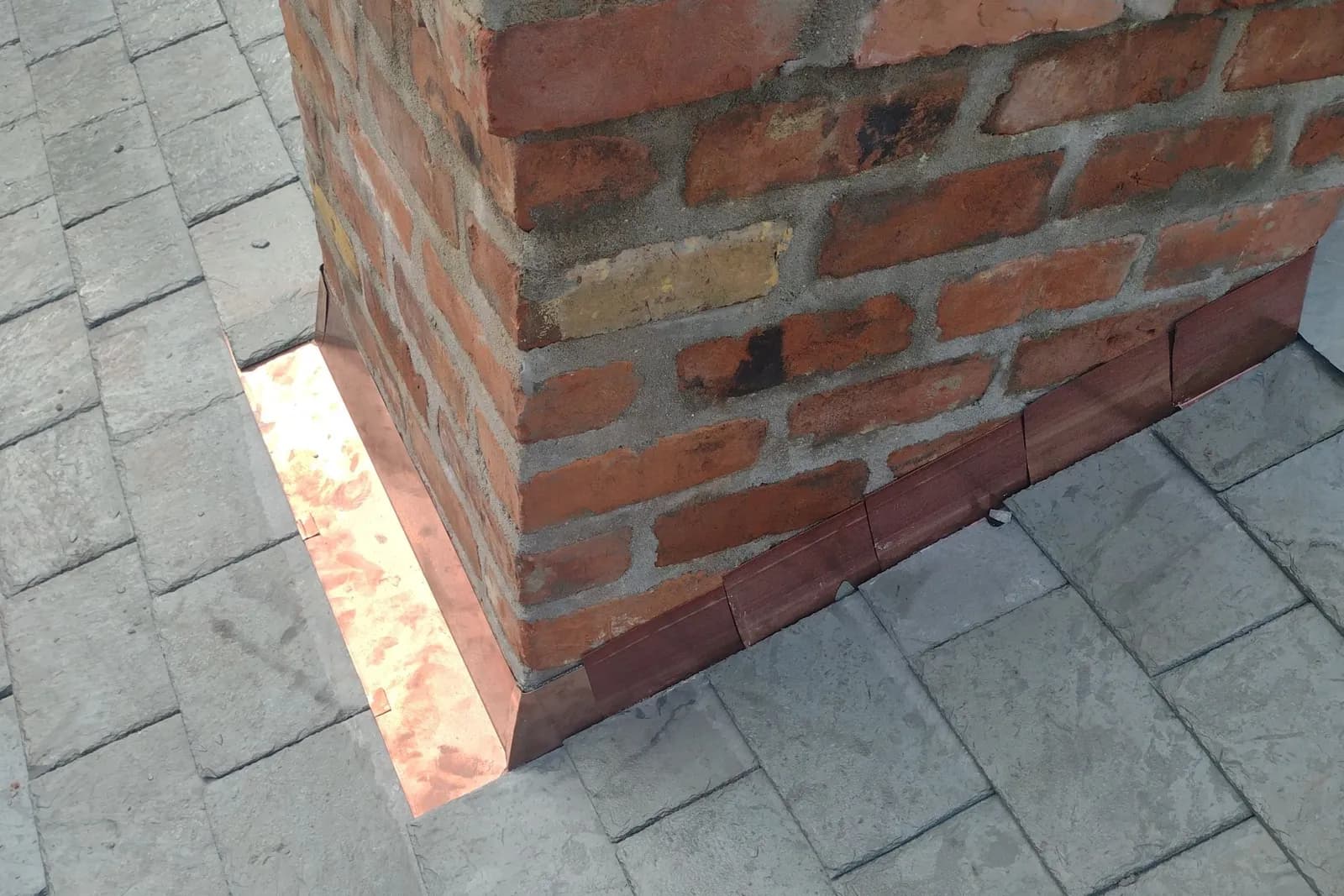
That is why re-flashing is the most valuable "repair" in slate roofing. Replacing tired valleys and chimney flashings with 16- or 20-ounce copper (or stainless steel) resets the clock on the roof's most vulnerable points for 70-100+ years. Done properly, the slates in the work area are lifted, numbered, and re-laid -- not smashed and swapped. It is meticulous work, and it routinely buys a sound slate roof another 50+ years of service for a fraction of replacement cost. The National Slate Association treats flashing renewal as standard slate roof maintenance, not a sign of roof failure.

The corollary: never let anyone "fix" a failed valley with roof cement or a coating. Tar over metal traps water, accelerates corrosion, and makes the eventual proper repair more expensive because the goo has to be cleaned off first.

Matching Replacement Slate

A slate repair is only as good as the match. There are two sources for replacement slate:

  • New quarry stock: Vermont, Virginia, and Pennsylvania quarries still produce many historic colors, and new S1-grade slate guarantees hardness. The catch is appearance -- fresh slate can read darker and cleaner than a century of weathered neighbors, though most colors blend within a few years.
  • Salvaged slate: Reclaimed from demolished buildings, salvage matches the weathered look immediately and is often the only source for discontinued colors and unusual sizes. The catch is quality control -- every salvaged piece needs the tap test, because some of it is as old and tired as what you are replacing.

Good slaters keep relationships with both quarries and salvage yards, and will match thickness and exposure, not just color. On highly visible roof planes, an experienced crew will sometimes "borrow" weathered slates from an inconspicuous slope for the front of the house and put new stock on the back.

How Slate Roofs Get Ruined

The number one killer of slate roofs is not weather. It is unqualified roofers. A slate roof that survived a century of storms can be wrecked in an afternoon by a crew that treats it like asphalt. Three mistakes do most of the damage:

Walking on the Slate

Slate is stone, and stone cracks under point loads. Slaters work from hook ladders, chicken ladders, and staged planks that spread their weight -- they do not stroll across the field. Every satellite dish installer, chimney sweep, gutter cleaner, or painter who walks your slate roof leaves cracked slates behind, and the cracks often do not leak until a year later, long after anyone connects cause and effect.

Face-Nailing

Proper slate replacement uses a hidden hook or a nail-and-bib detail. Untrained roofers instead drive a nail straight through the face of the new slate and dab sealant over the head. The sealant fails in a few years, and now there is a hole drilled through the roof on purpose. Face-nailed slates are also pinned rigid, so they crack as the roof moves.

Tar and Roof Cement

Smearing roofing tar over cracked slates or tired flashings is the most common "repair" we find on neglected slate roofs, and it is always a loss. It traps moisture, stains the stone permanently, and turns a $350 slate swap into a much bigger cleanup. If a roofer's slate repair plan involves a caulk gun and a bucket of mastic, keep looking.

From our team: Most of the slate damage we repair in New Orleans was caused by people, not weather -- broken slates tracing a neat path from the ladder to the chimney. It is why we are picky about who touches these roofs. Our slate crews are led by a master craftsman whose portfolio includes campus work at SMU and Tulane and hundreds of specialty slate roofs, and we put that experience on projects like the Sylvain building in the French Quarter, where we restored the historic slate and copper standing-seam roof on one of the oldest buildings in New Orleans. Slate rewards patience and punishes shortcuts.

-- Hunter Lapeyre, Owner

When you hire for slate roof repair, ask three questions: How do you access the roof without walking the slate? How do you fasten a replacement slate? Can I see slate-specific projects, not just shingle work? The answers separate slaters from shinglers within a minute. (The same logic applies to tile roof repair -- clay tile is equally unforgiving of foot traffic.)

Hail Damage and Insurance

Slate handles hail better than asphalt, but large hail -- roughly golf-ball size and up -- can crack and shatter slates, especially older soft slate. Hail claims on slate roofs turn on one distinction:

  • Functional damage: Cracked, broken, or punctured slates that compromise the roof's ability to shed water. This is what policies cover.
  • Cosmetic damage: Surface chips and spatter marks that do not affect performance. Many policies exclude it, and some carriers have added specific cosmetic-damage exclusions -- check your policy language.

Two things protect slate owners in a hail claim. First, documentation: date-stamped photos and a written inspection from a slate-qualified roofer, because adjusters see very few slate roofs and a generalist report can dramatically misjudge both the damage and the repair cost. Second, matching: when hail takes out enough slates on a slope, many policies require the insurer to fund a reasonably uniform result, which can turn a "spot repair" into slope replacement at the carrier's expense. Our insurance claims guide walks through the process step by step.

This matters most in hail-prone markets. St. Louis, with its large stock of century-old slate roofs and regular spring hail, sees more slate hail claims than almost anywhere we work -- we now serve the area through our St. Louis slate roofing team. The same applies to Central Texas hail corridors, where we now offer slate roofing in Austin.

When Full Replacement Wins

Replacement is the right call in a few specific situations:

  • Systemic delamination: The field fails the fingernail and tap tests broadly. No repair fixes dying stone.
  • Past the 20-30% threshold: Failure is widespread enough that repair labor exceeds the economics of re-roofing.
  • Widespread nail sickness: When the original fasteners are dissolving everywhere, slates slip faster than they can be hooked back. If the slate itself is still sound, it can often be salvaged and re-laid on new underlayment with new fasteners.
  • Failed decking or structure: Rot or sagging under the slate requires taking the roof off to fix what is beneath it.

A full natural slate replacement runs $20-$50+ per square foot installed -- $40,000 to $100,000+ for a typical home -- while synthetic slate runs $10-$20. Our slate roofing cost guide breaks down the numbers, and our roofing materials guide compares slate against every alternative if you are weighing a material change. Homeowners in coastal Louisiana should also ask about FORTIFIED installation methods, which can be paired with a slate re-roof for storm resistance and potential insurance discounts.

Not sure which side of the line your roof is on?

An honest slate inspection answers the repair-vs-replace question with photos and numbers. Our slate roofing team handles both, so you get the answer that fits the roof -- not the one that fits a sales quota.

Frequently Asked Questions

Replacing a single broken slate costs $250-$500 including labor. Flashing repairs run $500-$1,500 per area, ridge repairs $1,000-$3,000, and valley replacements $1,500-$4,000. An inspection with minor repairs typically costs $400-$800. Per-slate pricing drops when multiple slates are replaced in one visit, since staging and access make up most of the labor cost.

Repair if the damage is localized -- broken or slipped slates, failed flashings -- and the surrounding slate is hard and sound. Replace when more than roughly 20-30% of slates are failing, or when the slate itself is delaminating across the whole roof. A slate that rings sharply when tapped and resists a fingernail scratch is sound; soft, powdery, flaking slate is at the end of its life.

Look for flaking layers, chalky or powdery surfaces, soft crumbling edges, and slate fragments in the gutters. Then test: scratch a slate with your fingernail -- soft slate powders easily -- and tap it with a knuckle or coin. Sound slate rings with a sharp clink; delaminating slate gives a dull thud. If slates fail these tests across the roof, the field is reaching end of life.

Because the metal failed before the stone. Valleys, chimney flashings, and step flashings on older slate roofs were often galvanized steel with a 40-70 year lifespan, while the slate lasts 100-200 years. Replacing tired flashings with copper resets the roof's weakest points for 70-100+ years and is the most common major repair on otherwise healthy slate roofs.

Not directly -- slate cracks under point loads. Qualified slaters work from hook ladders, chicken ladders, and staged planks that spread weight across the roof. Foot traffic from untrained workers is the single most common cause of slate damage we see, and the cracks often do not leak until months later. Keep dish installers, painters, and gutter cleaners off the slate.

Usually yes for functional damage -- cracked, broken, or punctured slates that compromise water shedding. Cosmetic-only damage like surface chips may be excluded, and some policies carry specific cosmetic exclusions. Get a written inspection from a slate-qualified roofer, since general adjusters see few slate roofs and often misjudge damage and repair cost. Matching requirements can expand covered scope when many slates are hit.

Two sources: active quarries in Vermont, Virginia, and Pennsylvania, which still cut many historic colors in new S1-grade stone, and salvage yards that reclaim slate from demolished buildings. New quarry slate guarantees hardness but can look darker than weathered neighbors at first; salvage matches instantly but every piece must be tap-tested for soundness. Good slaters source from both.

Yes. Roof cement and tar trap moisture against the stone and metal, accelerate flashing corrosion, permanently stain the slate, and make proper repairs more expensive because the mastic must be removed first. Tar is the most common bad repair found on neglected slate roofs. Proper slate repair uses a slate ripper, matching stone, and copper hooks or nail-and-bib details -- never a caulk gun.

Hunter Lapeyre

Hunter Lapeyre

Owner & Lead Roofing Consultant, Lapeyre Roofing

GAF Certified ContractorFORTIFIED Roofing Evaluator5+ years Gulf Coast

Founder of Lapeyre Roofing, continuing a family legacy in Louisiana since 1699. Licensed in Louisiana, GAF Certified, and FORTIFIED Roofing specialist serving Texas and Louisiana.

Ready for Your Slate Roofing Project?

Get a free inspection and estimate from our expert team.

Call (512) 877-3087