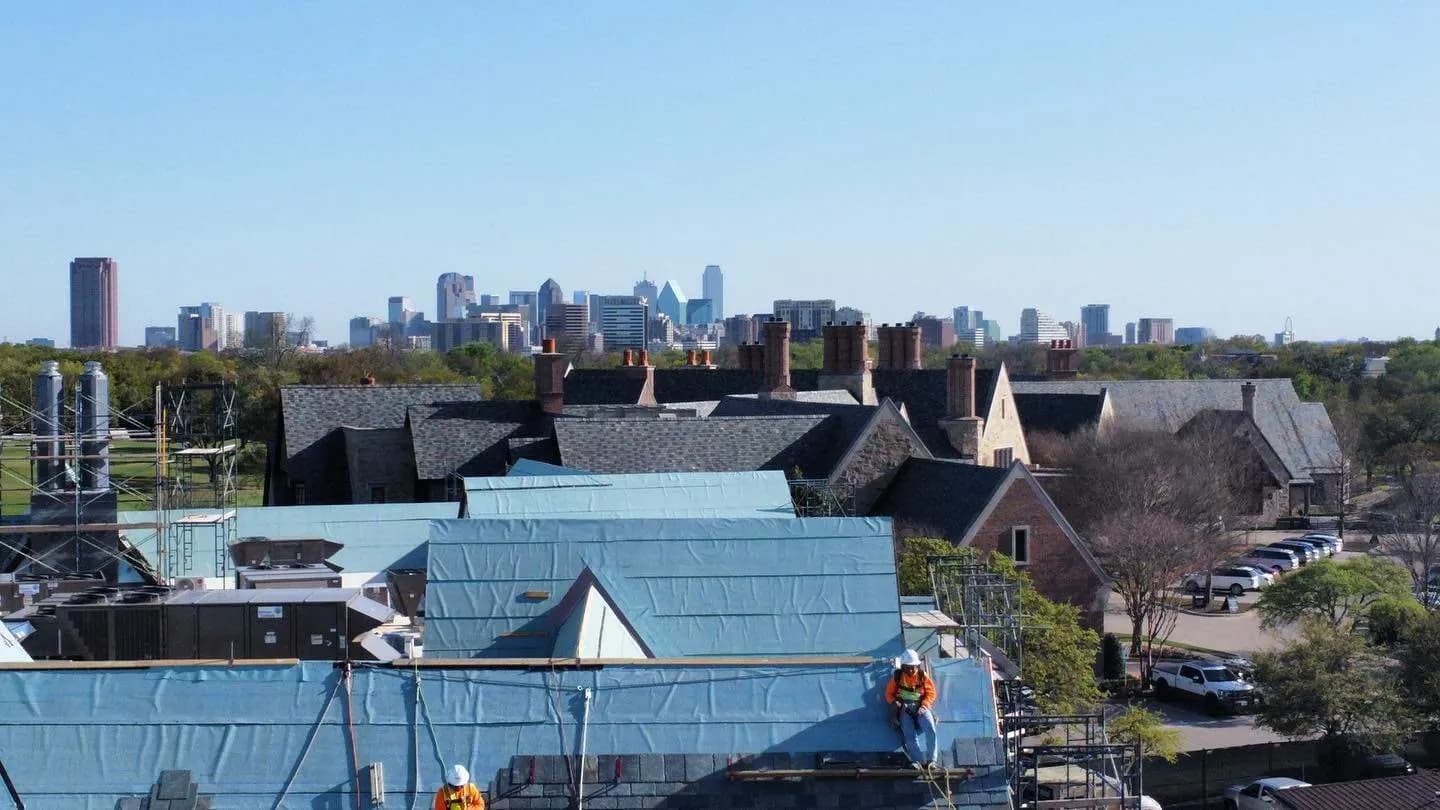
Slate Roofing in Austin, Texas
Repair, Restoration, and New Installation by a Crew That Actually Works on Slate
Most Austin roofing companies will not touch a slate roof, and the ones that will often should not. Slate demands different tools, different fasteners, and a crew that knows how to walk it without breaking it. Lapeyre Roofing brings the team behind the Sylvain restoration and a portfolio of French Quarter slate roofs in New Orleans to Austin—for repairs on existing slate, full restorations, and new natural or synthetic slate installations.
Prefer to book online? Schedule your free Austin estimate
Schedule Your FREE
Roof Inspection & Estimate
Request a written estimate
Where is your property?
We serve Texas, Louisiana & Missouri
What do you need?
Almost done!
How can we reach you?
By submitting, you consent to follow-up messages. Reply STOP to opt out.
Sources we use
Check the scope against current guidance
Official sources reviewed September 7, 2026, plus a planning tool for comparing the decisions in your estimate.
City of Austin
Austin work exempt from building permits
Reviewed September 7, 2026. Check roof-cover exemptions, structural effects, and the Wildland-Urban Interface exception for the actual address.
Read the official guidance →National Park Service
Repairing historic slate roofs
Reviewed September 7, 2026. Repair-first preservation guidance and considerations for material substitution.
Read the official guidance →How much does a slate roof cost in Austin, TX?
A natural slate roof in Austin typically costs $20 to $50+ per square foot installed in 2026, depending on slate grade, roof complexity, and whether structural reinforcement is needed. For a 3,000 square foot roof, expect $60,000 to $150,000+. Synthetic slate runs meaningfully less. Slate repairs are far more affordable: replacing a handful of broken or slipped slates typically runs $600 to $2,500, and repair is almost always the right call on an otherwise sound slate roof. Weight matters in Austin—natural slate requires a structural check, especially on conventionally framed homes.
- Natural slate installation: $20-$50+ per sq ft installed (2026)
- Typical slate repair (broken or slipped slates): $600-$2,500
- S1-grade natural slate lasts 75-150+ years; the flashings usually fail first
- Natural slate weighs 800-1,500 lbs per square—structural verification required
- Synthetic slate offers the look at roughly half the cost and a quarter of the weight
Slate in the Central Texas Climate
How Austin Weather Treats a Slate Roof
Slate is one of the few roofing materials that genuinely shrugs off Austin's worst weather. But Central Texas still creates specific failure patterns—mostly in the metal and fasteners around the slate, not the stone itself—and an installer who does not understand them will build problems into a roof that should last a century.
Central Texas Hail
Impact: Austin averages several significant hail events per year. Quality S1 slate is remarkably impact-resistant, but large hail can crack individual slates—and cracked slate on a steep roof is easy to miss from the ground until it slips or leaks.
Our Solution: We inspect slate roofs after major hail the same way we document shingle claims: slope by slope, with photos. Cracked slates are replaced individually with matched stock using slate hooks or bibs—no need to disturb the surrounding roof. We are honest about the difference between hail fractures (claimable) and delamination from age (not).
Extreme UV and Thermal Cycling
Impact: Austin roofs swing 60-80 degrees Fahrenheit in a single day. Slate itself barely moves, but the flashings, fasteners, and sealants around it expand and contract constantly. Undersized or galvanized flashings fatigue and fail decades before the slate does.
Our Solution: We flash slate in 20oz copper as standard—soldered, not sealed—so the metal matches the life of the stone. On repairs, we upgrade failed galvanized valleys and step flashing to copper rather than patching metal that has already proven too light for this climate.
Slate Weight on Texas Framing
Impact: Natural slate weighs 800-1,500 lbs per square. Custom homes in Westlake and Barton Creek are often engineered for it; conventionally framed 1980s-2000s production homes usually are not, and putting slate on unverified framing is how ridgelines sag.
Our Solution: Every natural slate proposal includes a structural assessment by a licensed engineer. Where framing cannot economically carry natural slate, we recommend high-quality synthetic slate—about a quarter of the weight—rather than gambling with your structure.
Wind-Driven Spring Storms
Impact: Severe thunderstorms push horizontal rain under roofing. On slate, the vulnerable points are headlap shortcuts and worn flashings—a properly lapped slate field sheds driving rain for a century, but a roof installed with shingle-style habits will leak in its first spring.
Our Solution: We install slate to traditional headlap standards and detail every penetration in soldered copper. On existing roofs, most "slate leaks" we diagnose in Austin are actually flashing failures—a much cheaper fix than owners fear.
Where Slate Makes Sense in Austin
Slate is not the right roof for every Austin home, and we will tell you when it is not. These are the areas where we most often field slate inquiries, and what actually matters in each:
Tarrytown and Old Enfield
Central Austin's historic core—1920s-1950s Tudor, Colonial Revival, and period cottages, some with original slate that is now 80-100 years old. Heavy live-oak canopy.
Original slate here is often still viable stone on failed fasteners and flashings—a restoration candidate, not a tear-off. Matching the original slate color and coursing matters for both aesthetics and any historic review. Limb abrasion and oak debris in valleys accelerate flashing wear under the canopy.
Westlake Hills and Rollingwood
Custom estates from the 1970s to today, many designed with slate or slate-look roofs specified by the architect. Larger, steeper, more complex rooflines.
Custom builds here are frequently engineered for slate weight from the start, which makes natural slate straightforward. The complexity is in the details—turrets, dormers, mixed materials—where flashing craftsmanship separates a good slate roof from an expensive problem.
Barton Creek and Rob Roy
Gated golf-course and hill-country communities with $2M+ custom homes, strong architectural standards, and a mix of Tuscan, contemporary, and traditional styles.
HOA and architectural review boards here generally welcome natural slate and increasingly accept premium synthetics. Full-sky exposure on hill-country ridges means maximum UV and hail loading—an argument for slate, and for copper flashings sized to match it.
Pemberton Heights and Bryker Woods
Prestigious central neighborhoods with 1930s-1940s architecture, including some of Austin's few surviving original slate roofs.
These roofs deserve repair-first thinking. A slate roof from the 1930s with slipping slates usually needs fastener and flashing work, not replacement. We assess whether the stone itself has life left before quoting anything bigger.
Hill Country West (Steiner Ranch to Lakeway)
Newer custom and semi-custom homes on exposed ridges, large roof areas, minimal tree cover, squarely in the hail path.
Owners here often want the slate look with Class 4 impact protection. This is where we most often recommend high-end synthetic slate: hail-rated, light enough for conventional framing, and honest about what it is. Natural slate remains an option where framing is verified.
Slate Roofing Costs in Austin (2026)
Slate is a wide price category because "slate" covers everything from a ten-slate repair to a full estate installation. Here is what work actually runs in Austin in 2026:
Slate Repair (Broken or Slipped Slates)
$600 - $2,500
Replacing individual cracked, slipped, or missing slates with matched stock, installed with slate hooks or copper bibs. The most common slate work we do—and usually all an otherwise sound roof needs.
Flashing Replacement on Slate
$1,500 - $8,000+
Copper valley, chimney, or step flashing replacement, working the surrounding slate loose and re-laying it. Failed flashings—not failed stone—cause most slate leaks in Austin.
Slate Restoration (Partial Re-Lay)
$8 - $15 per sq ft of affected area
Re-laying viable existing slate over new underlayment and flashings on roofs where the stone is sound but the system beneath it has aged out. Preserves original material on historic homes.
Synthetic Slate Installation
$9 - $16 per sq ft installed
Premium composite or polymer slate. Class 4 impact-rated options available. No structural reinforcement needed on most homes.
Natural Slate Installation
$20 - $50+ per sq ft installed
S1-grade natural slate with copper flashings. Price varies with slate origin and grade, roof pitch and complexity, and structural requirements. Includes engineering assessment.
Factors Affecting Price
- 1Slate grade and origin (S1 domestic slate costs more than imported alternatives, and lasts decades longer)
- 2Roof pitch, height, and complexity (slate work is staging-intensive; turrets and dormers add real labor)
- 3Structural reinforcement (verified case by case; more common on conventionally framed homes)
- 4Flashing package (20oz copper is our standard; existing failed metal adds replacement scope)
- 5Access and staging around landscaping, pools, and tight Central Austin lots
- 6Matching stock for repairs (sourcing color-matched slate for older roofs takes time and adds cost)
Ranges reflect 2026 material costs and Austin-area labor for properly detailed slate work. Every roof is different—we provide a written, itemized proposal after inspection, and we will tell you plainly when a repair serves you better than a bigger ticket.
How We Handle Slate Work in Austin
Slate punishes shortcuts. Whether the job is a ten-slate repair or a full installation, the process is deliberate:
Inspection and Honest Diagnosis
We walk the roof (correctly—on hooks and padded ladders, never directly on unsupported slate), document its condition slope by slope, and identify what is actually failing: stone, fasteners, flashings, or underlayment. Most slate roofs we inspect need far less than the owner fears.
Local Note: On Central Austin's older slate, the usual finding is sound stone on tired metal. That is a repair conversation, not a replacement conversation.
Structural Assessment (New Installations)
For natural slate, a licensed structural engineer verifies your framing can carry 800-1,500 lbs per square. We provide the documentation for permits and HOA review. If the structure cannot economically support natural slate, we say so and price the synthetic alternative.
Local Note: Custom homes in Westlake and Barton Creek often pass without reinforcement. Conventionally framed production homes usually point toward synthetic slate.
Material Selection and Sourcing
We source S1-grade natural slate from established quarries and provide physical samples so you can see color and texture in Texas sunlight. For repairs, we match existing slate in color, size, and exposure—sourcing matched stock is half the craft of slate repair.
Tear-Off or Selective Removal
Full installations get careful tear-off and deck inspection; repairs get selective removal using a slate ripper so surrounding courses stay intact. We replace compromised decking before anything goes back on.
Local Note: Live-oak debris rots decking near eaves and in valleys under Austin's canopy neighborhoods. We open and check those areas rather than roofing over them.
Copper Flashing First
Valleys, chimneys, walls, and penetrations get 20oz soldered copper before slate goes down. Flashings are the components that fail first on every slate roof—we size them to match the stone's lifespan, not the warranty period.
Slate Installation to Traditional Standards
Proper headlap for the roof pitch, copper or stainless fasteners nailed to hang (not pinned tight), staggered joints, and coursing laid to line. Repaired slates are secured with slate hooks or copper bibs so the repair is as permanent as the original installation.
Documentation and Care Plan
You receive photo documentation, material specifications, and a realistic maintenance outline. A slate roof needs an occasional professional inspection and clear valleys—not much else. We remain available for the small repairs that keep a slate roof running for generations.
Slate and Supporting Materials for Austin Roofs
The stone gets the attention, but the system around it determines whether a slate roof performs. Here is what we specify and why:
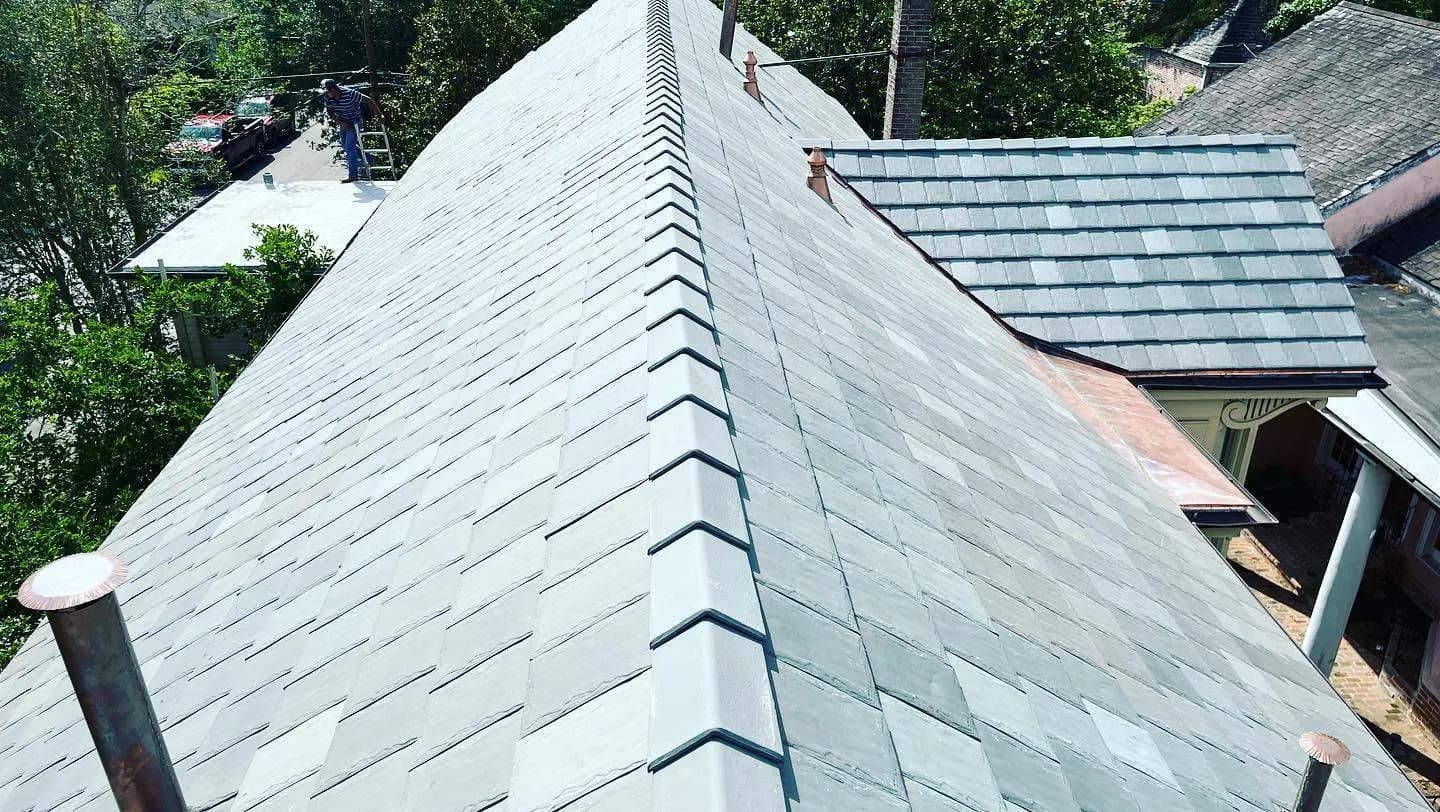
S1-Grade Natural Slate
Why for Austin
S1 is the highest ASTM durability grade—75 years to well over a century of expected service. Austin's UV and thermal cycling, brutal on asphalt, are essentially irrelevant to dense S1 stone.
Best For
Custom homes with verified framing, historic restorations, owners planning in decades
Considerations
Cheaper S2/S3 or soft imported slates delaminate in decades, not centuries. If the budget forces low-grade natural slate, a premium synthetic is usually the smarter buy—we will tell you which situation you are in.
Premium Synthetic Slate
Why for Austin
Modern composite slate delivers the look at roughly a quarter of the weight, with Class 4 impact ratings that matter in Austin's hail corridors. No structural reinforcement on most homes.
Best For
Conventionally framed homes, exposed hill-country sites, HOA slate-look requirements
Considerations
Lifespan is 40-50 years, not 100+. It is an excellent product when sold honestly as what it is—we never pass synthetic off as stone, in either direction of the comparison.
20oz Copper Flashings
Why for Austin
Copper survives Austin's daily expansion-contraction cycles for a century. Soldered joints stay watertight without sealants that fail in Texas heat within a few years.
Best For
All valleys, chimneys, walls, and penetrations on natural slate; strongly recommended on synthetic
Considerations
Copper patinas green over 5-10 years and can stain light limestone—lead-coated copper solves that where flashings meet masonry. Never mix galvanized fasteners with copper.
Copper and Stainless Fasteners
Why for Austin
Slates outlive cheap nails. Fastener fatigue—not stone failure—is why 80-year-old Austin slate roofs shed slates. Copper and stainless nails match the material's lifespan.
Best For
All slate fastening, new and repair
Considerations
Slates must hang on their nails, not be pinned tight—overdriven fasteners crack slate through thermal cycles. This is exactly the kind of detail a shingle crew gets wrong.
High-Temperature Underlayment
Why for Austin
Under slate in Texas heat, standard felt cooks. We use high-temp self-adhering membrane at eaves, valleys, and penetrations, with premium synthetic or double felt in the field per traditional practice.
Best For
All slate installations and re-lays
Considerations
On a proper slate roof the stone and headlap do the waterproofing; the underlayment is a backup that still needs to survive decades of attic heat.
Why Austin Homeowners Trust Lapeyre With Slate
Slate is a small, unforgiving specialty inside a big industry. Here is our honest pitch: we are an established roofing company with a genuine slate portfolio—built in New Orleans, on some of the hardest slate work in the country—now operating from our Austin office.
A Real Slate Portfolio, Stated Honestly
Lapeyre restored the slate and copper standing-seam roof of the Sylvain building in the French Quarter—one of the oldest buildings in New Orleans—and holds a portfolio of additional French Quarter slate roofs. That is historic, steep, high-consequence slate work, and it is the team now serving Austin.
Master Craftsman Crew Leadership
Our slate and tile crews are led by a master craftsman whose portfolio includes university landmarks like SMU and Tulane and hundreds of specialty slate and Ludowici roofs across the country. That depth of hands-on slate experience is nearly impossible to find in the Austin market.
Repair-First Honesty
Most slate roofs do not need replacement; they need someone competent to replace broken slates and rebuild failed flashings. We would rather do the $1,500 repair your roof actually needs than sell the $100,000 replacement it does not.
Copper Standards That Match the Stone
We specify 20oz soldered copper flashings as standard on slate. Installing century stone over 20-year metal is the most common failure we see in slate work, and we do not do it.
Engineering Before Weight
Every natural slate proposal includes a licensed structural engineering assessment. If your framing cannot carry the stone, we tell you before contract—not after your ridge sags.
A Local Office, Not a Fly-In Specialist
Our Austin office is at 215 Brazos Street. Slate roofs benefit from a long-term relationship with one competent contractor—we are set up to be that for the life of your roof.
Compare slate retention with a material conversion
For an existing slate roof in Austin, distinguish stone condition from flashing or fastening failure before recommending replacement. National Park Service guidance favors repair of historic slate where feasible. Ask for a marked condition map and a repair option that retains sound material, with the access method and matching slate identified.
A conversion from shingles or another light covering to natural slate needs a structural and product-specific review. The material selector can organize appearance, maintenance, and budget priorities, but it cannot establish load capacity. Include framing implications, staging, and the cost of specialty edge and flashing details in the comparison.
Confirm Austin permit and property requirements for the actual work, particularly when a material change affects the structure. Compare localized repair, restoration of flashing and slate, and full replacement as different scopes. Record ownership of salvage and approval of visible replacement samples before work begins.
Craftsmanship You Can Inspect
Slate and tile reward close inspection. These photos show the coursing, copper work, and finish detail our crews hold themselves to on every roof.
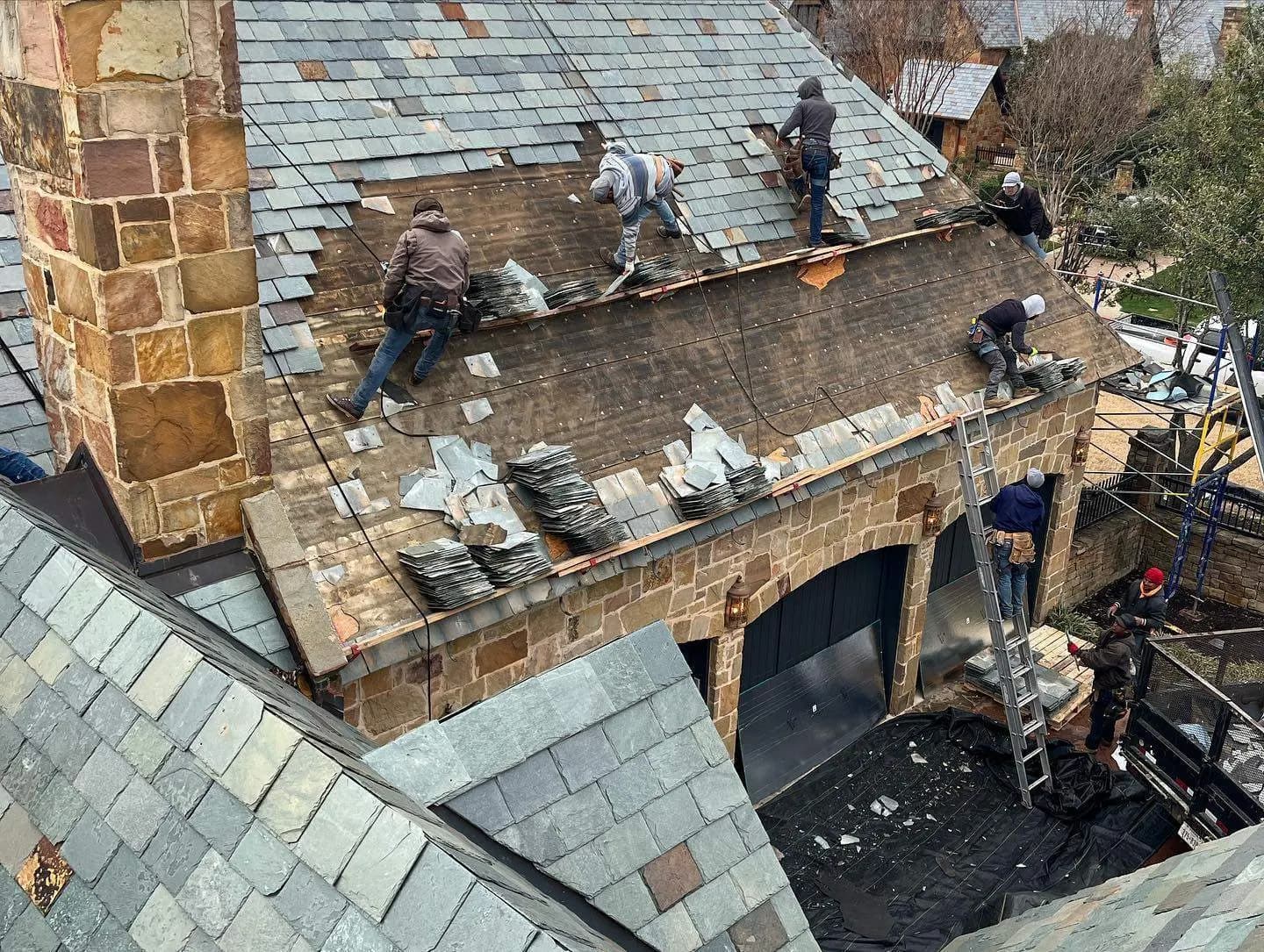
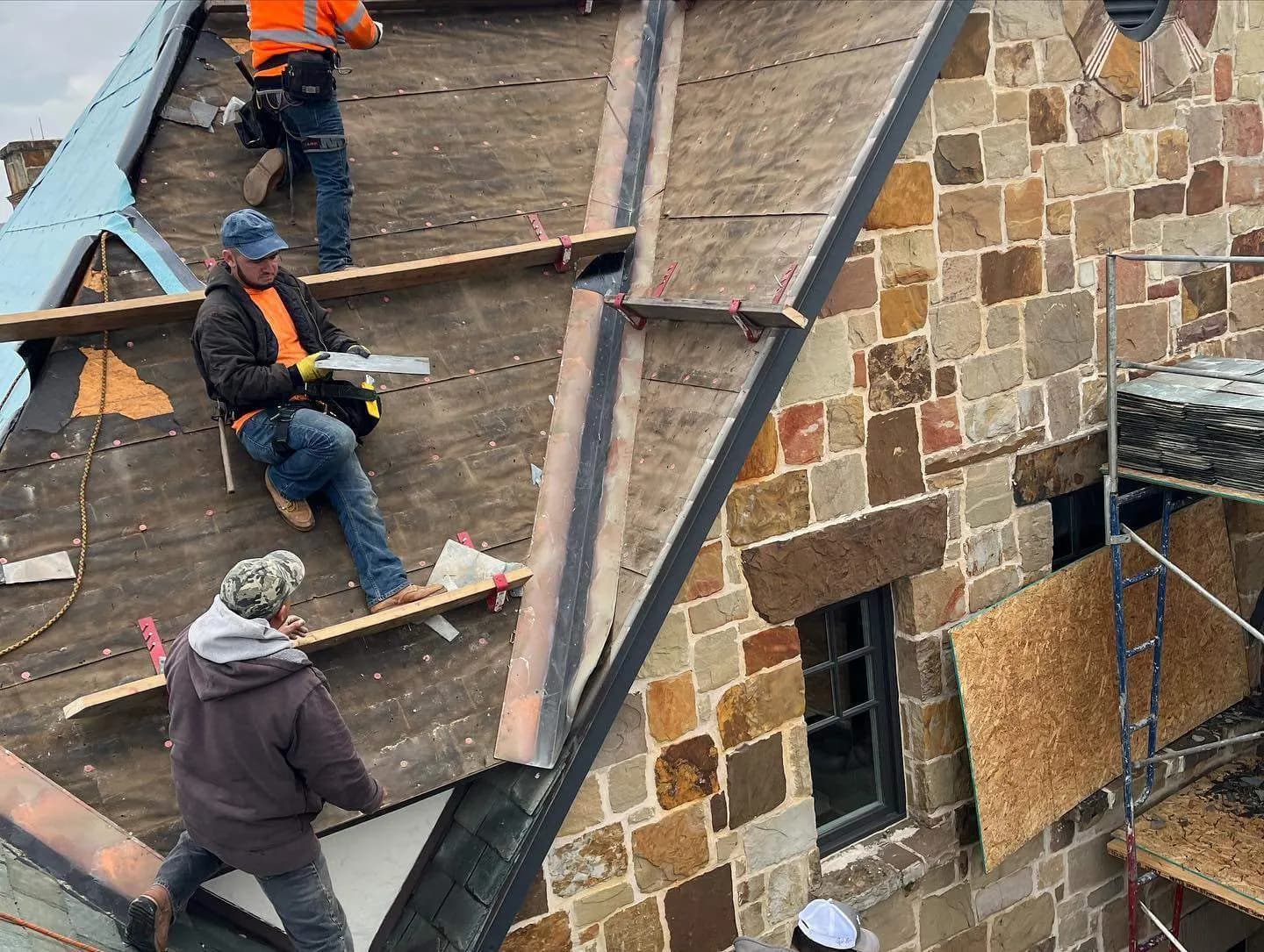
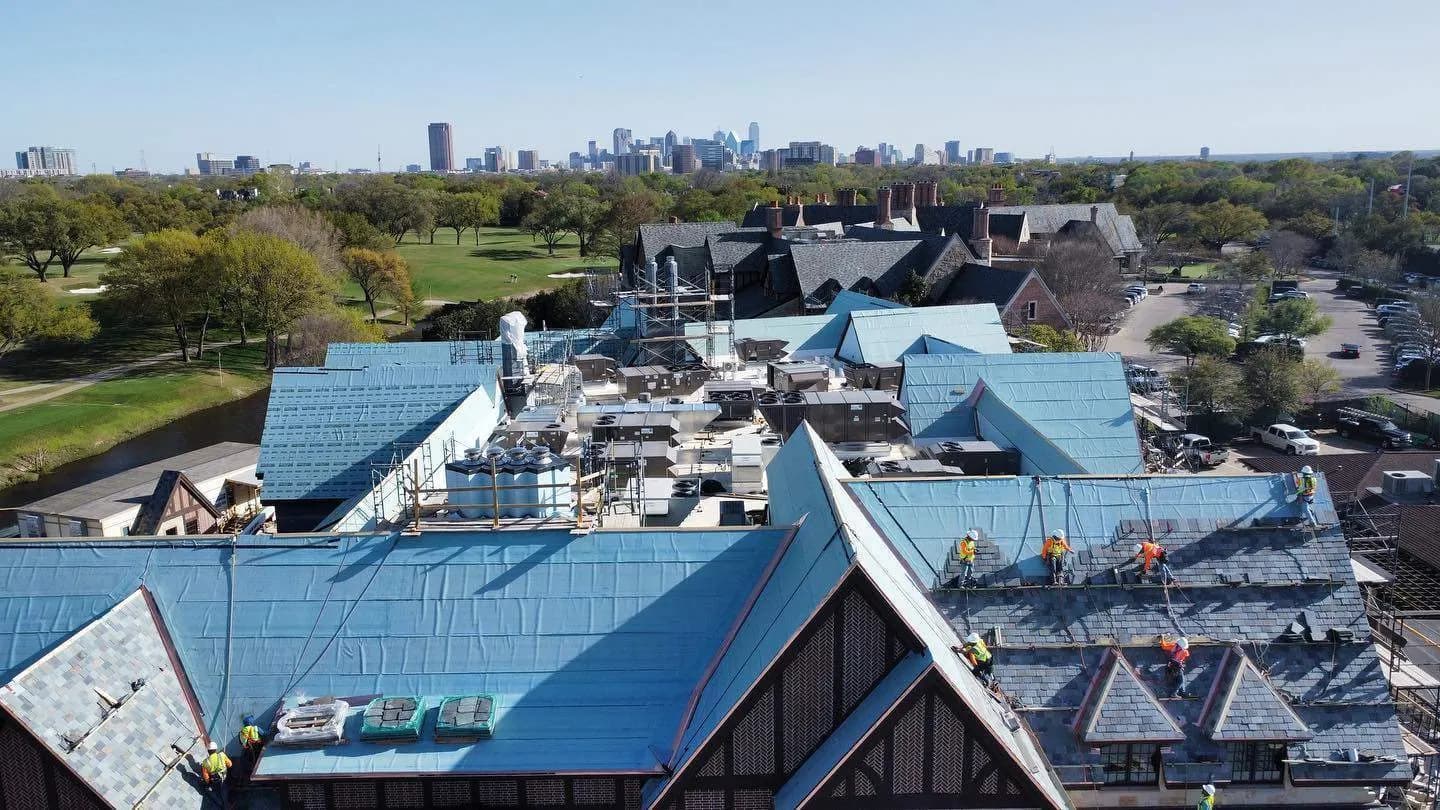
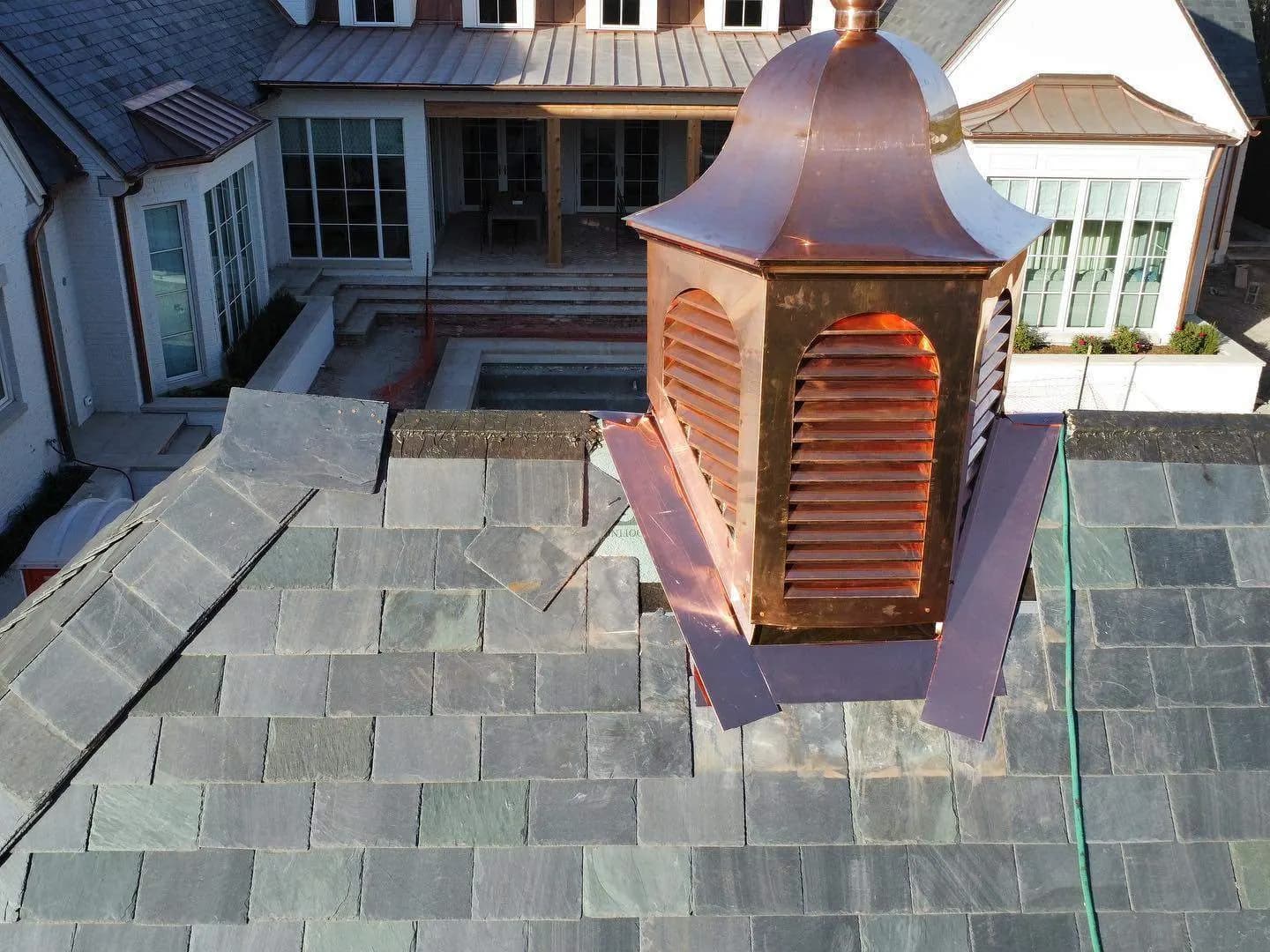
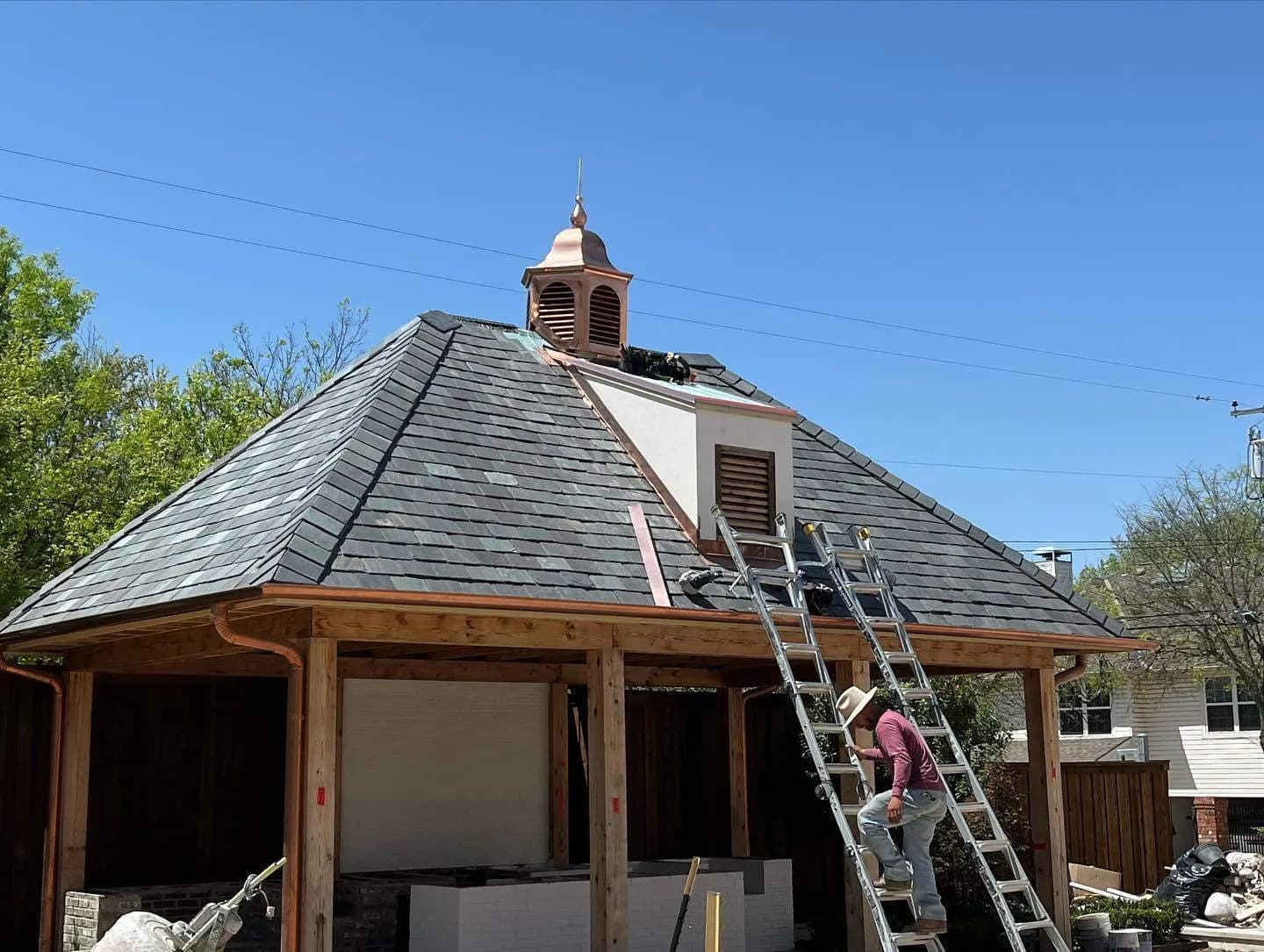
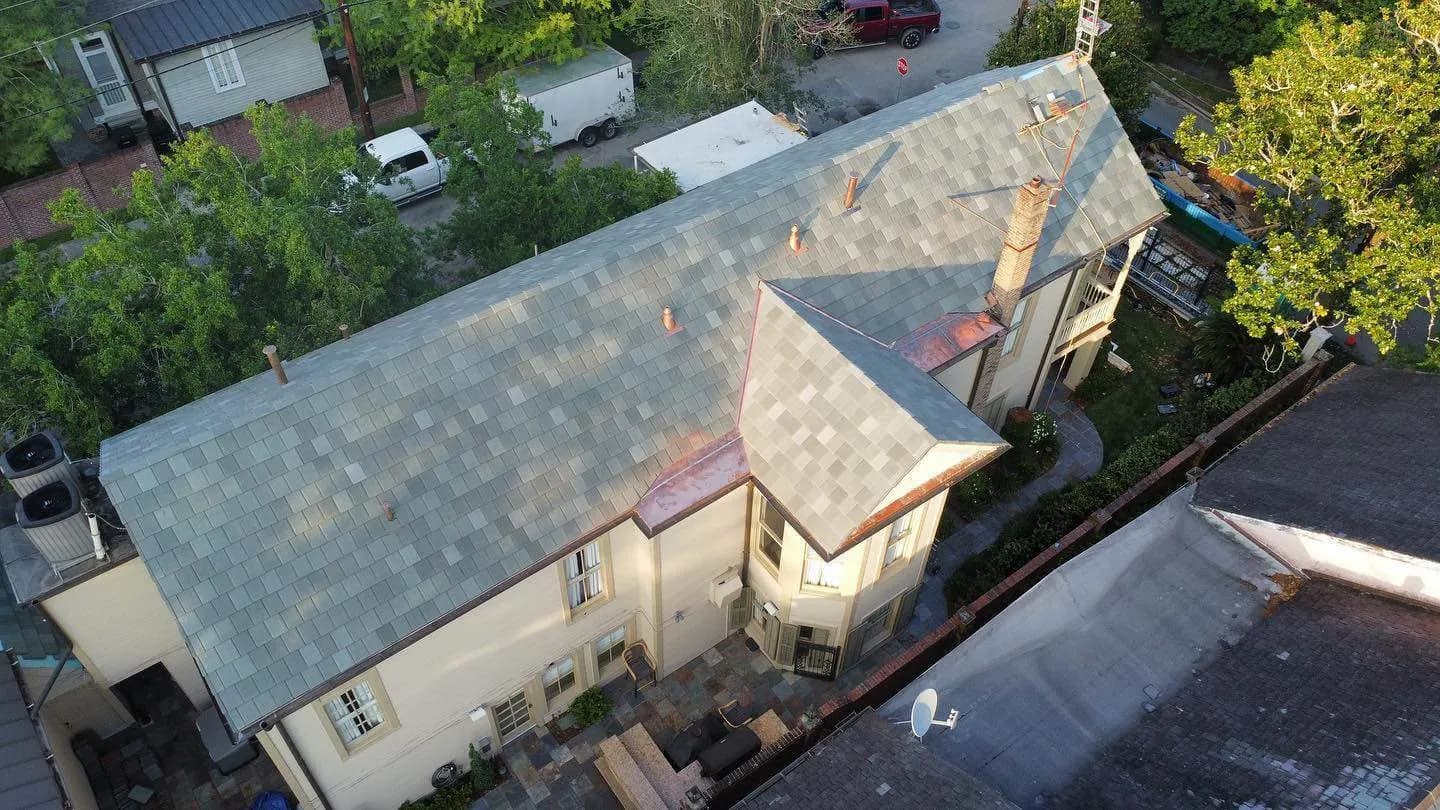
Gallery photography is from the portfolio of our slate and tile crew lead — a master craftsman with hundreds of specialty slate and tile roofs completed across the country.
Compare your options before signing
Compare roofing material priorities
Organize budget, maintenance, and material tradeoffs before a property-specific specification.
Read more about this roofing decision
Slate Roofing Cost 2026: Real Prices
Slate roofing costs $20-$40+ per sq ft installed. Compare natural slate vs synthetic slate prices, lifespans of 100+ years, and repair costs for your home.
Synthetic vs Natural Slate: Honest Comparison
We install both synthetic and natural slate, so we have no axe to grind. Here is the honest comparison: cost, weight, lifespan, hail and wind ratings, and resale.
Why Austin Roofs Fail Early
Austin roofs face a unique triple threat: extreme thermal cycling, intense UV radiation, and acidic debris from Live Oak trees. Understanding the science helps you choose materials that actually last.
FAQ
Frequently Asked Questions
Can the material selector confirm that my Austin home supports slate?
No. A qualified design review must establish structural suitability for the actual assembly. The selector only helps organize material priorities.
What should a slate repair option include?
A condition map, matching slate, flashing and fastening scope, safe access, and protection of retained material. Ask how the repair addresses the leak source rather than only visible broken pieces.
How much does slate roof repair cost in Austin?
Most slate repairs in Austin run $600 to $2,500—replacing individual cracked, slipped, or missing slates with matched stock secured by slate hooks or copper bibs. Flashing rebuilds on slate (the most common real cause of slate leaks) run $1,500 to $8,000+ depending on scope. Repair is almost always cheaper and better than replacement on a structurally sound slate roof, because quality slate routinely outlives the metal and fasteners around it.
Who repairs slate roofs in Austin?
Very few companies—slate requires different tools, fasteners, and roof-walking technique than shingle work, and most Austin roofers decline it or subcontract it. Lapeyre Roofing maintains dedicated slate and tile crews led by a master craftsman with hundreds of specialty slate roofs in his portfolio, backed by Lapeyre's own French Quarter slate restoration work in New Orleans. We operate from 215 Brazos St in Austin and handle everything from single-slate repairs to full restorations.
Is my slate roof leak actually a slate problem?
Usually not. On the slate roofs we inspect, the stone is typically sound and the leak traces to failed flashings, fatigued fasteners, or worn valley metal—components that age out decades before quality slate does. That is good news: a copper valley rebuild costs a fraction of what owners fear when they hear "slate roof leak." We diagnose the actual failure point before quoting anything.
Can my Austin home structurally support a natural slate roof?
It depends on the framing. Natural slate weighs 800-1,500 lbs per square—two to four times asphalt shingles. Custom homes in Westlake, Barton Creek, and similar areas were often engineered for it. Conventionally framed production homes usually were not, and reinforcement can be costly. We include a licensed structural engineering assessment with every natural slate proposal, and we recommend synthetic slate (about a quarter of the weight) where the structure argues for it.
How does slate hold up to Central Texas hail?
Better than nearly anything except thick metal. Dense S1 slate resists most hail, though very large stones can crack individual slates—which are then replaced one at a time, unlike monolithic systems. After major hail we inspect slate slope by slope, because cracked slates are easy to miss from the ground. For maximum hail protection with a slate look, several premium synthetic slates carry Class 4 impact ratings.
Natural slate or synthetic slate for an Austin home?
Natural slate wins on lifespan (75-150+ years vs 40-50), authenticity, and long-run cost per year—if your framing supports it and the upfront budget works. Synthetic wins on weight (no reinforcement), Class 4 hail ratings, and price ($9-$16 per sq ft vs $20-$50+). On exposed hill-country homes with conventional framing, synthetic is often genuinely the better engineering answer, not just the cheaper one. We install both and will give you a straight recommendation.
How long does a slate roof last in Texas?
S1-grade natural slate lasts 75 to 150+ years, and Texas heat does not meaningfully shorten that—UV and thermal cycling destroy asphalt, not dense stone. What fails on Texas slate roofs is the supporting system: galvanized flashings, cheap fasteners, and cooked underlayment. A slate roof flashed in soldered 20oz copper and fastened with copper or stainless nails is realistically the last roof a home ever needs.
Can I walk on my slate roof?
You should not. Slate is strong against weather but brittle under point loads—foot traffic is a leading cause of the cracked slates we repair, and unsupported walking can also void insurance arguments about hail damage causation. Professional slate work uses hook ladders, staging, and padded equipment that spreads load across courses. If something on your slate roof needs attention, the inspection is free and safer than the DIY look.
Do you restore historic slate roofs in Austin?
Yes—restoration is often the right call in Tarrytown, Old Enfield, and Pemberton Heights, where original 1930s-era slate is frequently sound stone on failed fasteners and flashings. We can re-lay viable existing slate over new underlayment and copper, preserving original material at $8-$15 per square foot of affected area rather than the cost of new stone. Our restoration standards come from Lapeyre's French Quarter work in New Orleans, where preserving historic roofs is the entire job.
Contact information
Thank you for considering us for roofing needs. We will get back to you during normal business hours.


Send us a message