We install both synthetic and natural slate, so we have no axe to grind. Here is the honest comparison: cost, weight, lifespan, hail and wind ratings, and resale.
Synthetic slate costs $10-$20 per square foot installed and lasts 40-60 years; natural slate costs $20-$50+ and lasts 100-200 years. Synthetic wins on weight, impact ratings, and upfront price. Natural wins on longevity, historic-district approval, and cost per year of service. Neither is "better" -- they solve different problems.
We install both, so we have no axe to grind in this comparison. Roofers who only install natural slate tend to call synthetic "plastic"; roofers who cannot find slaters tend to call natural slate "obsolete." Both claims are wrong. Here is how the two materials actually stack up, and a straightforward framework for choosing. (For broader context on how slate compares to metal, tile, and asphalt, see our roofing materials guide.)
Synthetic vs Natural Slate: Head-to-Head
| Feature | Synthetic Slate | Natural Slate |
|---|---|---|
| Installed Cost per Sq Ft | $10-$20 | $20-$50+ |
| Lifespan | 40-60 years | 100-200 years |
| Weight (per 100 sq ft) | 150-400 lbs | 800-1,500 lbs |
| Structural Reinforcement | Rarely needed | Often required ($5,000-$15,000) |
| Typical Warranty | Limited lifetime / 50-year material | 75-100 year material (S1 grade); workmanship is what matters |
| Appearance Up Close | Convincing at street distance; molded texture repeats | Authentic stone, no two tiles alike, weathers to a patina |
| Resale Perception | Reads as premium; appraisers treat it as high-end composite | Genuine slate carries prestige, especially on historic homes |
| Fire Rating | Class A (most products, as assembled) | Class A (non-combustible stone) |
| Impact Rating | Class 4 (UL 2218) common -- highest rating | Hard slate resists most hail; large hail can crack tiles |
| Wind Rating | Often tested to 110-150+ mph | Strong when properly fastened; ~110 mph typical |
Two rows in that table deserve emphasis because they genuinely surprise people. First, synthetics often carry higher tested wind and impact ratings than natural slate -- lighter, flexible tiles with modern fastening schedules perform very well in lab conditions, and many carry the Class 4 impact rating insurers reward. Second, natural slate's "warranty" question is mostly beside the point: stone does not come with a meaningful manufacturer promise, because the installation -- not the material -- determines whether it lasts a century.
What Synthetic Slate Actually Is
Modern synthetic slate is molded from engineered polymers or polymer composites, usually cast from molds of real slate so the surface texture is authentic. The category has matured a lot since the first generation of products in the 1990s, and today's major brands are legitimately good:
- DaVinci Roofscapes (Westlake Royal): The most widely installed composite slate in the U.S., with multi-width profiles and large color libraries. Class A fire and Class 4 impact options.
- Brava Roof Tile: Composite slate known for deep color blending through the tile and a convincing multi-tone look; strong choice when appearance is the priority.
- CertainTeed: Composite slate lines backed by one of the biggest names in roofing, with the distribution and warranty infrastructure that implies.
A fair word about the category's history: some first-generation synthetic slates from the 1990s and early 2000s faded, curled, or cracked well short of their warranties, and those failures still color the material's reputation. The products above are not those products. Formulations now include UV stabilizers and impact modifiers, colors are blended through the tile rather than coated on, and the major brands have decades of installed track record. Still, the buyer's homework is the same for any engineered product: look for a Class A fire rating as assembled, UL 2218 Class 4 impact testing, ASTM wind-uplift testing, and an ICC-ES evaluation report -- and read the warranty's fine print on fading and pro-rating, because coverage typically steps down over time.
Each system rises or falls on installation details -- fastening schedule, exposure, ventilation -- just like slate. A good synthetic installed correctly outperforms real slate installed badly, every time.
Maintenance and Repair Differences
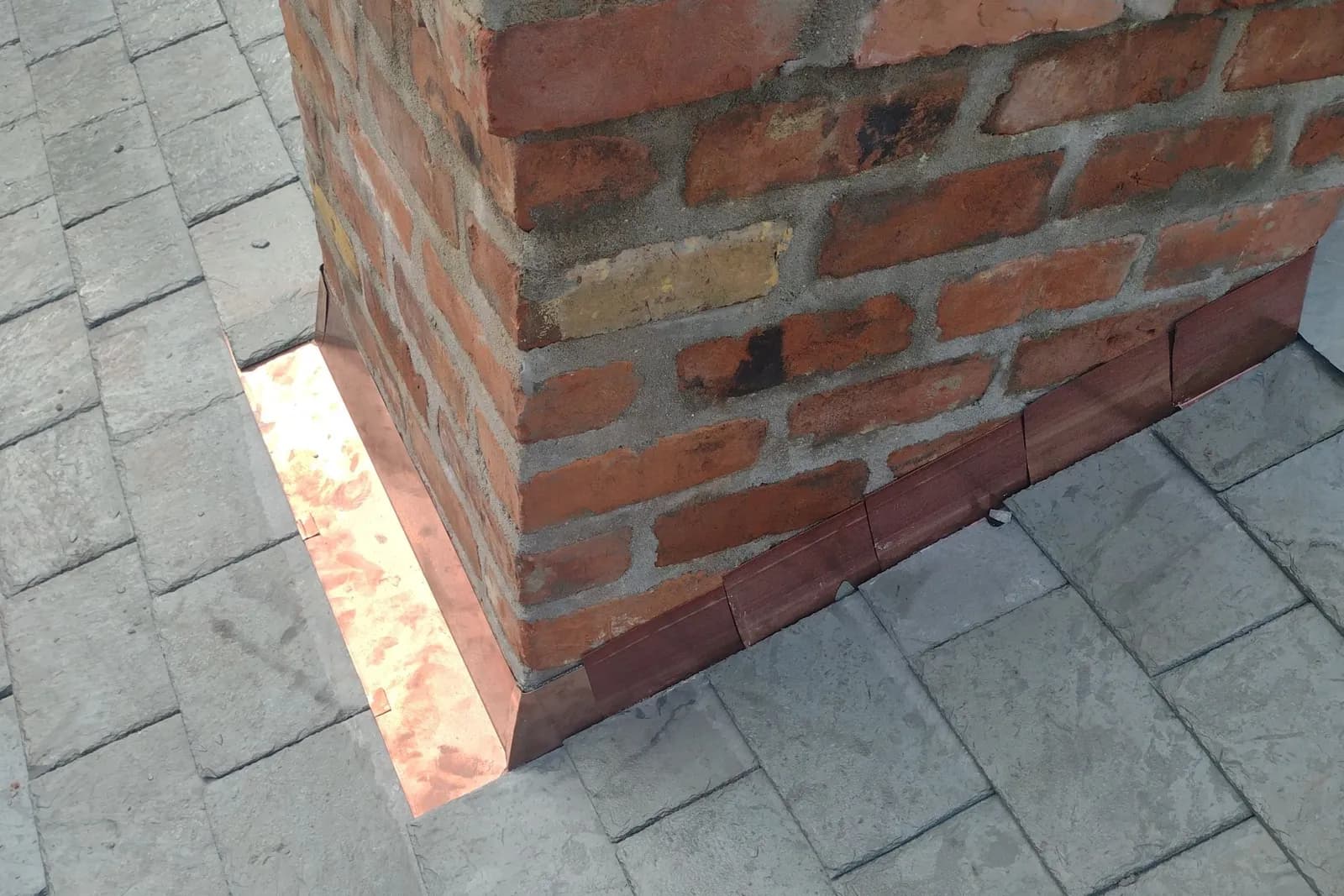
Day to day, the two materials live differently. Synthetic tiles tolerate careful foot traffic, so a plumber or dish installer on the roof is an inconvenience rather than a disaster, and a damaged tile is swapped from current factory stock in minutes. Natural slate cracks under point loads and should only be accessed by crews using hook ladders and staging; replacement slates must be matched from quarry or salvage stock and installed with a slate ripper and copper hooks. The flip side: natural slate is repairable essentially forever -- a 120-year-old slate roof with a broken tile is a routine service call -- while a synthetic roof at year 45 is nearing the end of its designed life no matter how well you patch it. If you inherit a slate roof and are weighing your options, our guide to slate roof repair and restoration covers when fixing beats replacing.
Where Synthetic Slate Wins
Weight-Limited Framing
This is the biggest one. Natural slate weighs 800-1,500 pounds per square, and most homes framed for asphalt shingles need engineering review and often $5,000-$15,000 of structural reinforcement before they can carry it. Synthetic slate weighs 150-400 pounds per square -- shingle territory -- and goes on almost any roof as-is. If your framing cannot take stone without major surgery, synthetic turns a six-figure project back into a normal re-roof.
Hail Corridors
In markets that get golf-ball hail every few springs, a Class 4 impact-rated synthetic is a genuinely rational choice: it flexes where stone cracks, and many insurers offer premium discounts for Class 4 roofs. This is a real consideration for homeowners we now serve in Austin and St. Louis, both of which sit in active hail territory.
Hurricane Wind Zones
Many synthetic slate products are tested to 110-150+ mph wind ratings, and their light weight means a dislodged tile is far less dangerous than airborne stone. On the Gulf Coast, synthetic slate also pairs cleanly with FORTIFIED roof installation -- sealed deck, enhanced fastening -- for homeowners chasing both the slate look and insurance-grade storm resistance.
Budget -- and HOA "Looks Only" Requirements
At roughly half the installed cost of natural slate with no structural add-ons, synthetic is the value play. And when a neighborhood covenant or HOA requires a "slate appearance" without mandating actual stone -- common in upscale developments -- synthetic satisfies the requirement at a fraction of the cost. Financing stretches further on a $30,000 roof than a $70,000 one.
Where Natural Slate Wins
True Longevity
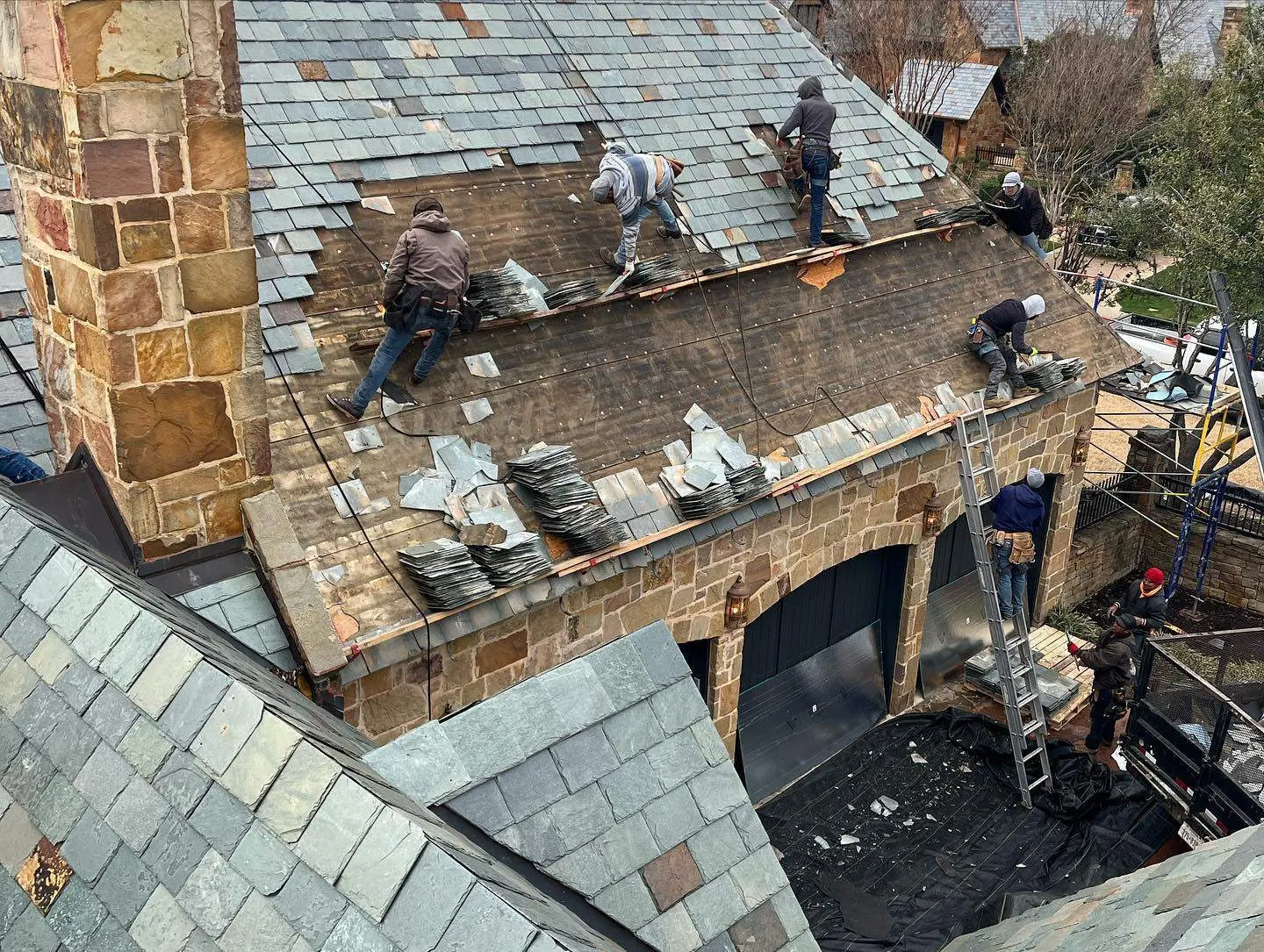
No manufactured product has natural slate's track record, because nothing else has been on roofs for centuries. Good hard slate routinely serves 100-200 years -- the National Slate Association documents American slate roofs still working past the 200-year mark. A 50-year synthetic warranty is excellent for a manufactured product; it is also the point at which a natural slate roof is just getting started.
Historic Districts
This one is often decisive in our home market. In New Orleans, the Historic District Landmarks Commission (HDLC) and the Vieux Carré Commission (VCC) review exterior changes in their districts, and on landmarked and highly rated historic buildings they typically require in-kind natural materials -- synthetic substitutes are generally not approved where original slate is character-defining. If you own a contributing building in the French Quarter or a landmarked Garden District home, the synthetic conversation may end before it starts. Check with the relevant commission before pricing anything.
Patina and Authenticity
Synthetic slate looks convincing from the street. Up close, molded texture repeats and cut edges give it away to a trained eye. Natural slate is the opposite: it looks better with age, weathering into a patina no factory can mold, and no two tiles are alike. On architecture where the roof is a design feature -- steep visible slopes, turrets, patterned slatework -- stone still wins on looks.
Resale on the Right House
Both materials read as premium from the curb, but they land differently with buyers. On a newer suburban home, most buyers cannot tell the difference and would not pay extra if they could -- synthetic captures nearly all of the curb-appeal value. On a historic or architecturally significant home, genuine slate is part of the property's identity, and knowledgeable buyers, appraisers, and preservation-minded lenders treat it accordingly. Replacing original slate with a composite on that kind of house can read as a downgrade in a way it never would on new construction.
Cost Per Year Over a Century
Spend more once, or less twice. Over a 100+ year horizon, natural slate is frequently the cheaper roof -- the math is below.
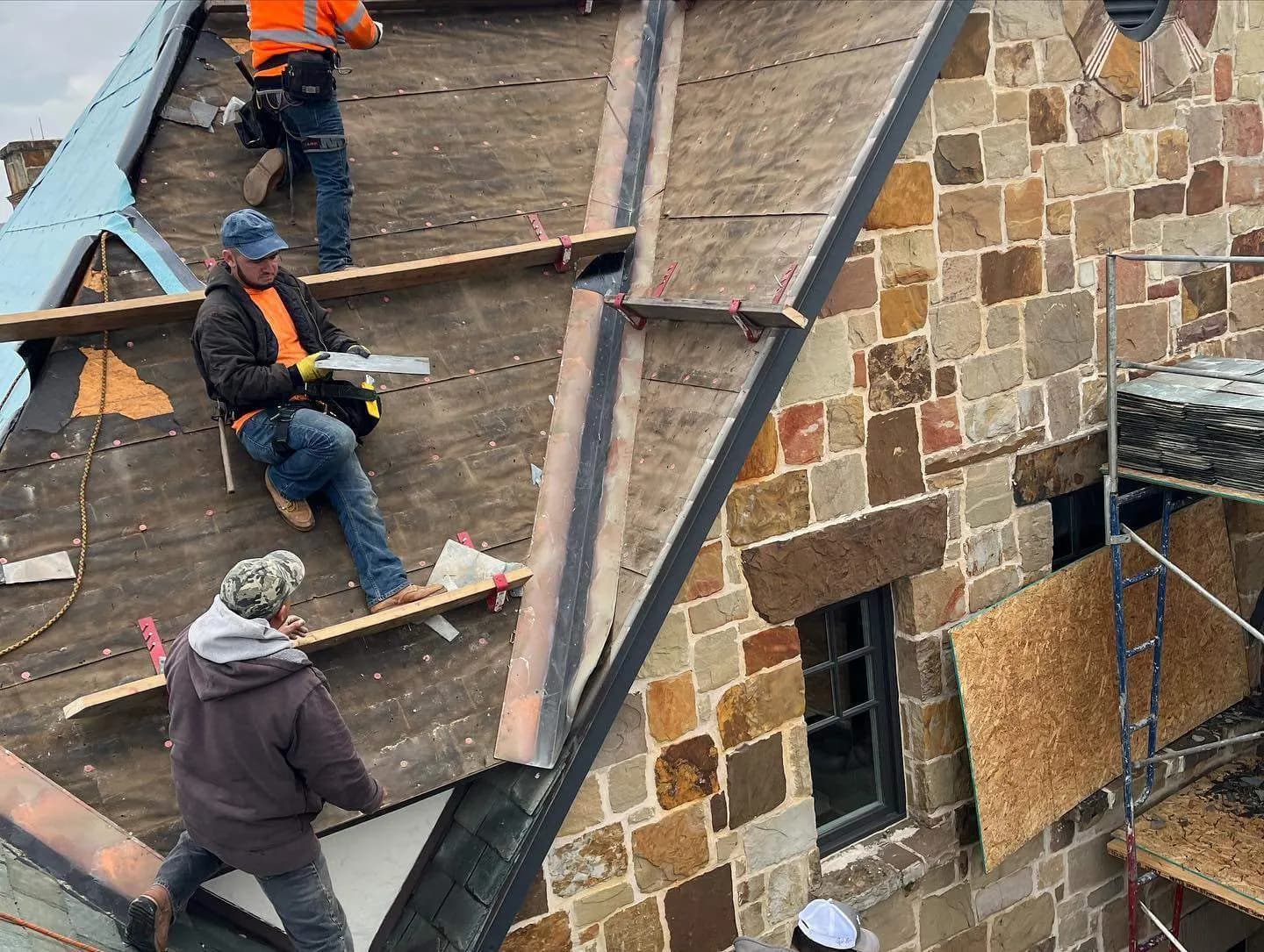
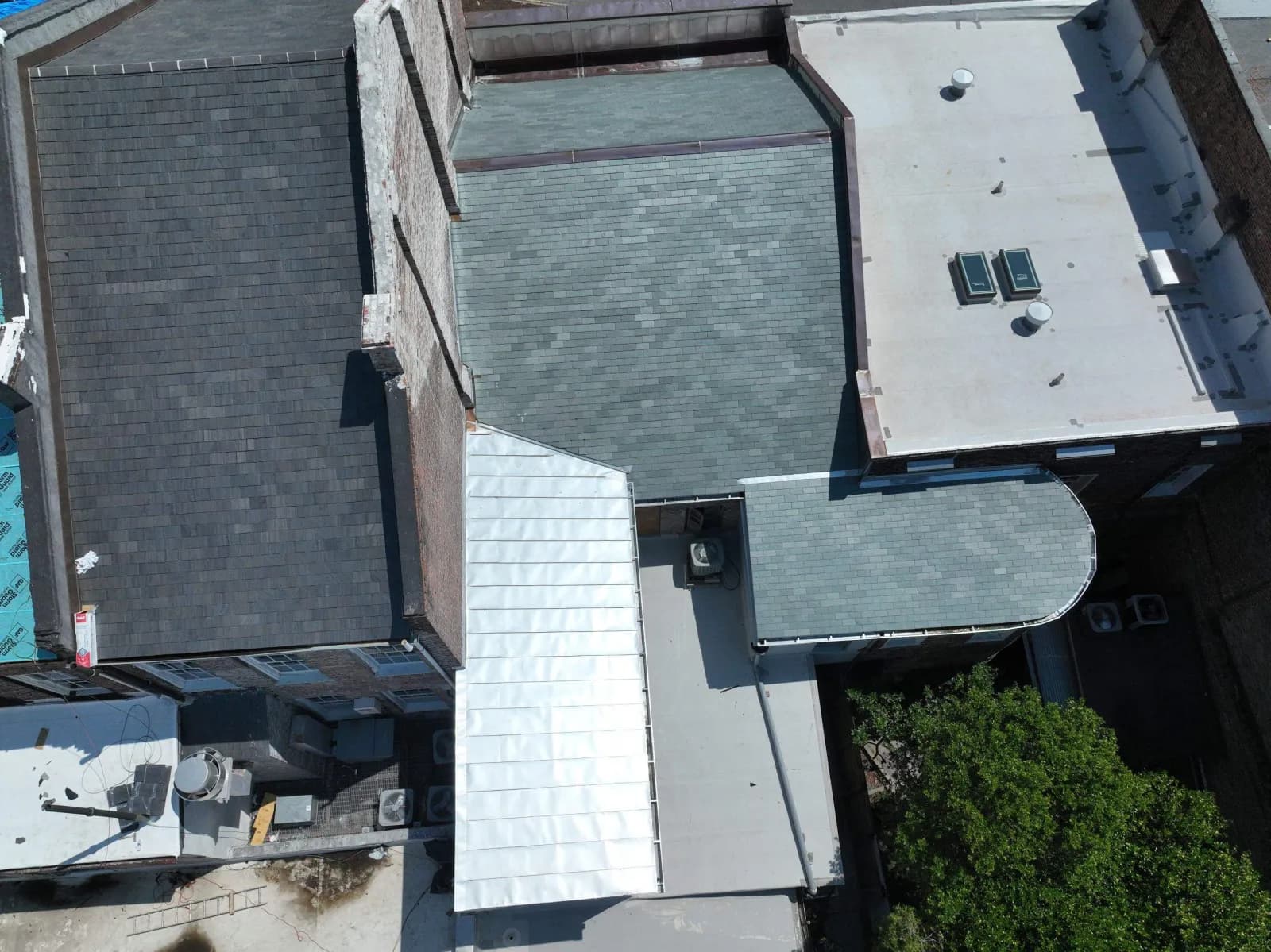
From our team: We quote both materials, sometimes on the same house. When we restored the Sylvain building in the French Quarter -- historic slate plus a copper standing-seam roof on one of the oldest buildings in New Orleans -- synthetic was never on the table, and it shouldn't have been. But when a family in a newer suburb wants the slate look on framing that was engineered for asphalt, recommending stone plus $12,000 of structural work over a Class 4 synthetic would be malpractice. The right answer is the one that fits the building, the budget, and the length of time you plan to own it.
-- Hunter Lapeyre, Owner
The Cost-Per-Year Math
Upfront price and lifetime price point in opposite directions. For a typical 2,000 sq ft roof (ranges vary by market and complexity -- treat these as illustrations, not quotes):
| Material | Installed Cost | Realistic Lifespan | Cost per Year |
|---|---|---|---|
| Synthetic slate | $30,000 | 50 years | $600 |
| Natural slate | $60,000 | 150 years | $400 |
| Natural slate + $10,000 reinforcement | $70,000 | 150 years | $467 |
Maintenance tilts the same direction but more gently. Natural slate wants a professional inspection every 5-10 years and occasional tile or flashing work -- budget a few hundred dollars a year on average, with copper flashing renewal as the one large mid-life expense. Synthetic needs less attention in its first decades, but the whole system, underlayment included, comes off and gets replaced at the end of its 40-60 year run, and that future re-roof is the hidden line item in its lifetime cost.
Even loaded with structural work, natural slate wins the long game -- if the roof stays maintained and someone benefits from year 51 onward. That is the honest catch: cost-per-year math pays off across generations, not ownership stints. If you will sell in ten years, both roofs are still on the house and the difference shows up only in resale perception. If the home is a keeper -- or a landmark -- the century math is real. Full pricing detail is in our slate roofing cost guide.
Which Should You Choose?
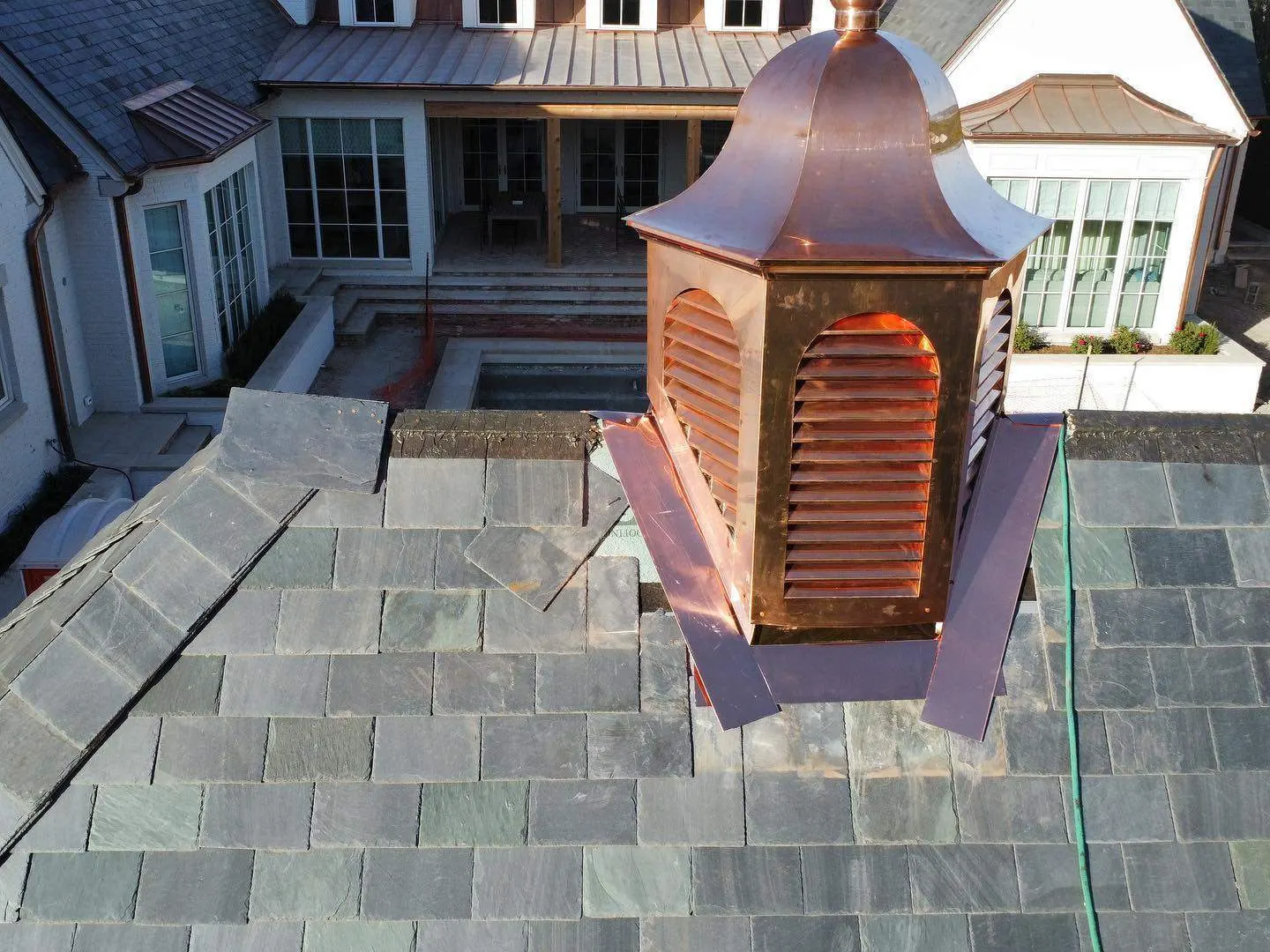
Most head-to-head questions dissolve once you name the actual situation. Match the material to the scenario:
- Landmarked or historic-district property (HDLC/VCC): Natural slate. Approval requirements typically settle it, and authenticity protects the property's value.
- Framing engineered for asphalt, no appetite for structural work: Synthetic. The weight difference alone decides it.
- Hail corridor (Central Texas, Missouri): Synthetic with a Class 4 rating, unless historic status dictates stone. Ask your insurer about impact-rated roof discounts.
- Hurricane zone, non-historic home: Either works; synthetic's wind ratings and light weight are advantages, especially combined with FORTIFIED methods.
- Multi-generational home you never plan to sell: Natural slate. Cost per year favors stone, and it may be the last roof the house ever needs.
- HOA requires the slate look, budget is real: Synthetic. It satisfies the covenant at half the cost.
- The roof is the architecture -- turrets, patterns, steep visible slopes: Natural slate, for the patina and tile-to-tile variation no mold reproduces.
And whichever way you go, weight the installer more heavily than the material. Synthetic slate installed to the letter of the manufacturer's specs will outlive natural slate laid by a crew that learned on asphalt. Our slate roofing team installs both systems -- crews led by a master craftsman whose portfolio includes campus work at SMU and Tulane and hundreds of specialty slate roofs -- and we serve New Orleans along with Austin and St. Louis.
Still comparing materials?
See how both slates stack up against metal, clay tile, and asphalt in our Roofing Materials Guide, or explore clay tile roofing if you are drawn to another century-class material.
Common questions
Frequently asked
It is good at different things. Synthetic slate matches or beats natural slate on impact rating (Class 4 is common), tested wind resistance, and weight, at roughly half the installed cost. Natural slate wins decisively on lifespan -- 100-200 years versus 40-60 -- plus authenticity, patina, and historic-district approval. Neither is universally better; the right choice depends on your framing, climate, budget, and how long the roof needs to last.

Founder of Lapeyre Roofing, continuing a family legacy in Louisiana since 1699. Licensed in Louisiana, GAF Certified, and FORTIFIED Roofing specialist serving Texas and Louisiana.
Found this helpful? Choose Lapeyre Roofing as a source you want to see on Google.
Add Lapeyre Roofing as a preferred source on Google (opens a Google window)