Slate Roofing in New Orleans
Historic Slate Restoration, Repair, and New Installation in Hurricane Country
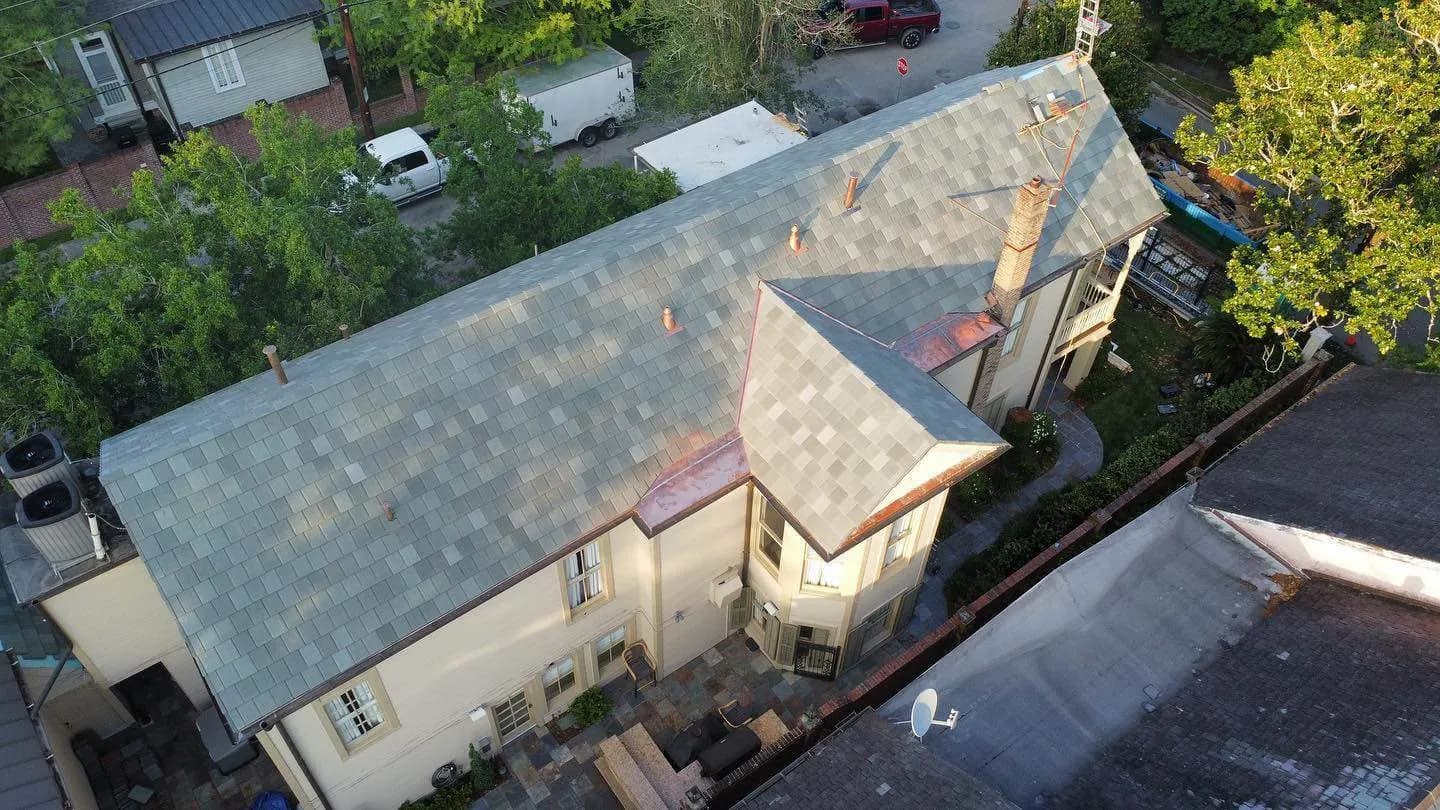
New Orleans has one of the oldest slate roofing traditions in America. The 1800s mansions of the Garden District and Uptown still carry original slate, and the French Quarter holds slate roofs that predate most American cities. Lapeyre Roofing restores, repairs, and installs slate across the city, including our restoration of the historic slate and copper standing-seam roof on the Sylvain building, one of the oldest buildings in New Orleans. We handle HDLC and VCC approvals, hurricane-rated fastening, and the copper detail work that determines whether a slate roof lasts 30 years or 130.
Prefer to book online? Schedule your free New Orleans estimate
Schedule Your FREE
Roof Inspection & Estimate
Request a written estimate
Where is your property?
We serve Texas, Louisiana & Missouri
What do you need?
Almost done!
How can we reach you?
By submitting, you consent to follow-up messages. Reply STOP to opt out.
Sources we use
Check the scope against current guidance
Official sources reviewed September 7, 2026, plus a planning tool for comparing the decisions in your estimate.
City of New Orleans
Residential re-roofing permit
Reviewed September 7, 2026. Covers qualifying residential replacement, construction photo stages, and historic review.
Read the official guidance →New Orleans HDLC
Historic exterior-work application process
Reviewed September 7, 2026. Identify the district and itemize existing and proposed exterior materials with photos before work.
Read the official guidance →National Park Service
Repairing historic slate roofs
Reviewed September 7, 2026. Repair-first preservation guidance and considerations for material substitution.
Read the official guidance →Who installs and repairs slate roofs in New Orleans?
Lapeyre Roofing installs, repairs, and restores slate roofs throughout New Orleans from our office at 421 Ninth St. Our completed local portfolio includes the restoration of the historic slate and copper standing-seam roof on the Sylvain building in the French Quarter, plus multiple additional French Quarter slate roofs. Slate installation in New Orleans typically costs $20-$50+ per square foot installed depending on slate type, roof complexity, and historic-district requirements. Repairs for slipped or broken slates commonly run $600-$3,000. We handle HDLC and VCC approval paperwork for roofs in historic districts and detail every roof for Gulf Coast wind and humidity.
- Completed restoration of the Sylvain building slate and copper roof in the French Quarter
- Slate installation: $20-$50+ per square foot installed (2026 ranges)
- Slate repairs: typically $600-$3,000 depending on access and scope
- HDLC and VCC (Vieux Carre Commission) approval experience for historic districts
- Copper flashings and hurricane-rated fastening standard on every slate project
- Salvaged slate sourcing for matching historic Buckingham, Vermont, and Pennsylvania stone
Slate Roofing in the New Orleans Climate
Why Slate Works Here, and Where It Fails
Slate itself is nearly indestructible in the Gulf Coast climate. It does not rot in humidity, corrode in salt air, or fade in sun. When a New Orleans slate roof leaks, the stone is almost never the problem. The failures are in fasteners, flashings, and past repairs done with the wrong materials. Understanding that distinction is the difference between restoring a slate roof and needlessly tearing one off.
Hurricane Wind Uplift
Impact: Orleans Parish sits in a high wind zone, with design wind speeds around 130-150 mph depending on exposure. Wind works individual slates loose at edges, ridges, and rakes, and a single slipped slate opens a water path.
Our Solution: We fasten slate with copper or stainless steel nails at proper head positions, use hook fasteners or hidden straps in high-exposure zones, and detail eaves, rakes, and ridges to the enhanced fastening schedules the wind zone requires. Slate roofs installed this way have ridden out a century of hurricanes in the Garden District.
Humidity and Fastener Corrosion
Impact: The most common killer of old New Orleans slate roofs is not the slate. It is corroded fasteners. Original roofs hung on iron or plain steel nails eventually shed sound slates because the nails rusted through in the humid air.
Our Solution: We use copper or stainless steel fasteners exclusively. On restorations, we assess whether the roof is suffering isolated slippage (repairable slate by slate) or systemic nail failure (which calls for relaying the existing slate on new fasteners and underlayment).
Salt Air and Flashing Life
Impact: Salt-laden air off the Gulf and the river accelerates corrosion of galvanized steel and aluminum flashings. Cheap flashing metal on a slate roof guarantees leaks decades before the stone wears out.
Our Solution: We flash slate with 16oz and 20oz copper, soldered rather than caulked at valleys, built-in gutters, and chimneys. Copper performs exceptionally in coastal air, developing a protective patina, and its service life finally matches the slate above it.
Intense Rainfall and Valley Volume
Impact: New Orleans averages over 60 inches of rain a year, often in short, violent bursts. Valleys and built-in gutters on steep Victorian and Italianate rooflines carry enormous concentrated flow.
Our Solution: We size valleys and built-in gutter liners for real Gulf Coast rainfall, use 20oz copper where flow concentrates, and maintain proper slate headlap so wind-driven rain cannot back up under the courses.
Heat and Attic Moisture
Impact: Long, hot summers cook underlayments, and trapped attic moisture rots historic decking, especially skip sheathing and original boards under 150-year-old roofs.
Our Solution: During restoration we inspect and repair original decking, replace failed boards in kind, and specify underlayments rated for high-temperature service so the system under the slate lasts as long as the stone.
Where Slate Lives in New Orleans
Slate is concentrated in the city's oldest and most architecturally protected neighborhoods. Each area brings its own approval process, roof geometry, and material-matching challenges.
French Quarter
The oldest building stock in the city, with slate roofs on Creole townhouses and landmark commercial buildings, often paired with copper standing-seam sections, parapets, and abat-vents. All exterior work is regulated by the Vieux Carre Commission (VCC).
VCC approval is required before work begins, and material substitutions are heavily scrutinized. Our French Quarter slate portfolio, led by the Sylvain building restoration, means we already know what the VCC expects in drawings, specifications, and material samples. Access and staging in the Quarter also require careful logistics planning.
Garden District
Greek Revival and Italianate mansions from the mid-1800s, many carrying original slate on steep, complex rooflines with towers, dormers, and built-in gutters. Regulated by the HDLC.
These roofs reward restoration over replacement. Much of the original stone is sound and worth saving, with failures concentrated in fasteners and flashings. HDLC Certificates of Appropriateness are typically required for visible roof work, and matching original slate color and coursing matters for approval.
Uptown and Audubon
Late 1800s and early 1900s mansions along St. Charles Avenue and near Audubon Park, with slate on Queen Anne, Colonial Revival, and Richardsonian designs.
Partial HDLC jurisdiction depending on the block. Common work includes valley and built-in gutter relining in copper, slate repair after storms, and full restorations where past contractors face-nailed or tarred repairs that now have to be undone properly.
Esplanade Ridge and Bayou St. John
Historic homes along Esplanade Avenue with slate mansards and steep gables, often with decorative patterned slate.
Patterned and colored slate (purple, green, red accents) requires sourcing specific quarries or salvaged stone to match. We maintain salvage relationships to match historic patterns rather than settling for a mismatched patch.
Faubourg Marigny and Bywater
Creole cottages and townhouses, some with original slate, in local historic districts with HDLC review.
Smaller roofs but tight access and party-wall conditions. Repairs are often modest in scope but demand the same craft: copper bibs, matched slates, and no exposed sealant passing as flashing.
Slate Roofing Costs in New Orleans (2026)
Slate is a premium system, and honest numbers help you plan. These are typical 2026 ranges for New Orleans slate work. Every project gets a written, itemized estimate after inspection.
Slate Repair (Slipped or Broken Slates)
$600 - $3,000
Replacing individual slates with matched stone, secured with copper bibs or hooks, never face-nailed and tarred. Cost depends on roof height, access, and how many slates are involved.
Copper Valley or Built-In Gutter Relining
$2,500 - $15,000+
Removing slate courses along the detail, installing soldered 20oz copper, and relaying the slate. The most common major repair on Garden District and Uptown slate roofs.
Slate Restoration (Relay on New Fasteners and Underlayment)
$14 - $25 per sq ft
Salvaging sound existing slate, replacing failed decking, and relaying on stainless or copper fasteners with new underlayment and copper flashings. Often the smartest path for historic roofs with good stone and bad nails.
New Slate Installation (Standard Complexity)
$20 - $35 per sq ft installed
New quarried slate (Vermont, Virginia Buckingham, or Spanish) on straightforward geometry, including copper valleys and hurricane-rated fastening.
New Slate Installation (Historic and Complex)
$35 - $50+ per sq ft installed
Steep or complex rooflines, towers, patterned slate, graduated coursing, extensive copper work, and historic-district documentation.
Factors Affecting Price
- 1Slate type and source (Vermont, Buckingham Virginia, Spanish, or salvaged historic stone)
- 2Roof pitch, height, and access (French Quarter staging is its own line item)
- 3Copper flashing scope: valleys, built-in gutters, chimneys, dormers
- 4HDLC or VCC approval requirements and documentation
- 5Structural and decking condition under the existing roof
- 6Hurricane fastening details for the exposure of the specific site
These are typical 2026 ranges for New Orleans slate work, not quotes. Historic roofs hold surprises, and exact pricing depends on conditions we verify during inspection. You will receive a written estimate before any work begins.
How We Restore and Install Slate in New Orleans
Slate work is a craft trade with a defined sequence. Cutting corners at any step shows up as leaks within a few years and as failure within a decade. Here is how we run a New Orleans slate project.
Inspection and Honest Diagnosis
We inspect the slate, fasteners, flashings, decking, and attic. The central question on an existing roof: is the stone sound? If it is, restoration or repair usually beats replacement, and we will tell you so.
Local Note: On 1800s Garden District roofs we frequently find slate with 50+ years of life left hanging on nails with none. That roof needs relaying, not landfilling.
HDLC or VCC Approval
For roofs in historic districts, we prepare the Certificate of Appropriateness application: photos, material specifications, slate samples where required, and drawings for any visible change. In-kind slate repair is often staff-approvable; material or profile changes go to architectural review.
Local Note: The French Quarter falls under the Vieux Carre Commission and most other historic neighborhoods under the HDLC. We have been through both processes and build the review time into your schedule honestly.
Slate Sourcing and Matching
We match existing stone by quarry type, color, thickness, and size, sourcing new quarried slate or salvaged historic slate from regional demolitions. Samples are approved by you (and the commission, where applicable) before ordering.
Local Note: Much of the historic slate in New Orleans is Buckingham Virginia or Vermont stone. Salvaged matches keep a repair invisible from the street, which is exactly what HDLC reviewers want to see.
Protection and Careful Tear-Off or Selective Removal
For restorations we remove slate carefully for reuse, palletizing sound stone. For repairs, we open only what is needed. Landscaping, galleries, and neighboring structures are protected throughout.
Local Note: In the Quarter, that includes protecting balconies, courtyards, and pedestrians below, with staging coordinated around tight streets.
Deck Repair and Underlayment
We replace deteriorated boards in kind, maintain historic skip sheathing where the system calls for it, and install high-temperature underlayments appropriate for slate in a hot, humid climate.
Copper Flashing First
Valleys, built-in gutters, chimney flashings, and dormer details go in before slate, in 16oz-20oz copper with soldered joints. Caulk is not flashing, and we do not treat it as such.
Local Note: Copper is the traditional New Orleans pairing with slate for a reason: it shrugs off salt air and humidity, and its patina belongs on these buildings.
Slate Installation with Hurricane Fastening
Slates are laid to proper headlap and exposure with copper or stainless nails, with enhanced fastening at eaves, rakes, ridges, and hips per the wind zone. Ridges and hips are finished in slate or copper per the historic detail.
Final Inspection and Documentation
We photograph and document the completed work, provide maintenance guidance, and remain available for the small periodic attention (a slipped slate after a major storm, debris in valleys) that keeps a slate roof running for generations.
Local Note: Documentation also supports insurance and any future historic tax credit work on the property.
Slate and Copper Specifications for New Orleans
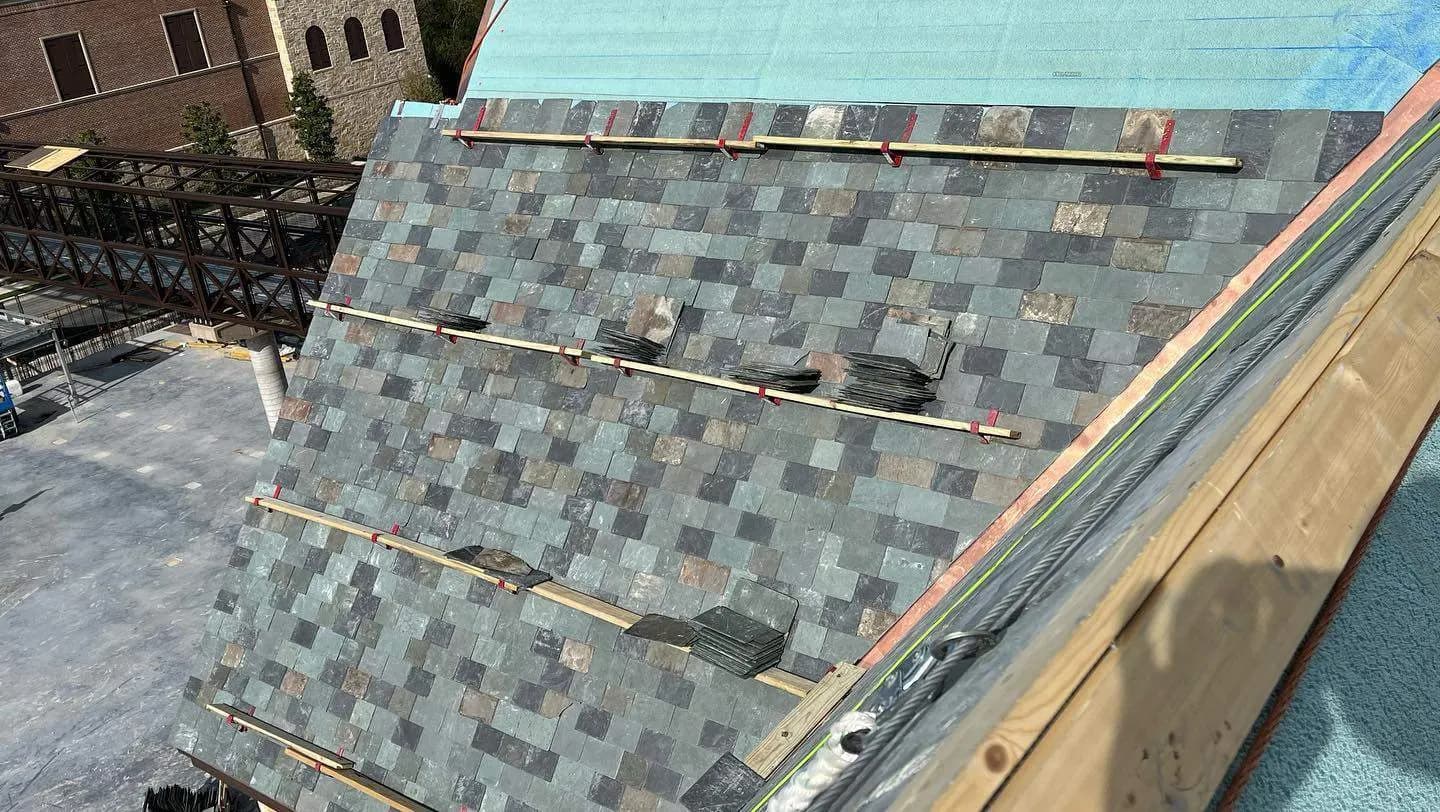
A slate roof is a system: stone, fasteners, flashings, and underlayment, each specified to match the century-scale life of the slate. Here is what we specify and why it suits this climate.
Buckingham Virginia Slate
Why for New Orleans
The blue-black unfading slate found on many historic New Orleans roofs. Extremely dense, with documented service lives well past 150 years, and unaffected by humidity or salt air.
Best For
Historic restorations and matches in the Garden District, Uptown, and the French Quarter; premium new installations.
Considerations
Among the most expensive slates, with lead times to plan around. Salvaged Buckingham is often available and matches aged roofs beautifully.
Vermont Slate (Unfading and Weathering Varieties)
Why for New Orleans
Available in gray, black, purple, green, and red, which matters for the patterned slate roofs of Esplanade Ridge and Uptown. Proven performance in every American climate.
Best For
Color-matched repairs, patterned historic roofs, and new installations where color range matters.
Considerations
Specify unfading grades where color stability matters for historic review. Weathering varieties shift tone over decades.
Salvaged Historic Slate
Why for New Orleans
Slate reclaimed from regional demolitions carries the same age and weathering as the roof being repaired, making repairs invisible and satisfying historic commissions.
Best For
Repairs and partial restorations on pre-1930 roofs where new stone would read as a patch.
Considerations
Each lot must be inspected and sounded for delamination before reuse. We source through salvage networks and reject soft stone.
16oz-20oz Copper Flashings
Why for New Orleans
Copper outlasts every alternative in coastal Gulf air. Soldered copper valleys, built-in gutter liners, and chimney flashings are the traditional and technically correct companions to slate here.
Best For
All valleys, built-in gutters, chimney and parapet flashings, dormers, and ridge details. 20oz where water concentrates.
Considerations
Copper patinas from bright to brown to green over years. Runoff can stain light masonry, so we detail drip edges and consider lead-coated copper against light stucco.
Copper and Stainless Steel Fasteners
Why for New Orleans
Fastener corrosion is the number one cause of slate roof failure in New Orleans humidity. Copper and stainless nails and hooks remove that failure mode entirely.
Best For
Every slate on every project. Hook fasteners for repairs and high-wind edge zones.
Considerations
Costs more than galvanized. On a roof meant to last a century, fastener savings are the most expensive shortcut available.
Why New Orleans Trusts Lapeyre with Slate
Slate is unforgiving of general-roofing habits. Face nails, tar, and caulk destroy historic roofs slowly and expensively. Our slate work is led by people who have spent their careers on exactly this kind of roof.
A Verifiable French Quarter Portfolio
We restored the historic slate and copper standing-seam roof on the Sylvain building, one of the oldest buildings in New Orleans, and have completed multiple additional slate roofs in the French Quarter. You can stand on the street and look at our work.
Master Craftsman Leadership
Our slate and tile crews are led by a master craftsman whose portfolio includes university landmarks like SMU and Tulane and hundreds of specialty slate and Ludowici roofs across the country. That experience sets the standard for every slate our crews hang.
HDLC and VCC Fluency
We prepare Certificate of Appropriateness applications, provide the samples and specifications reviewers expect, and design repairs that pass review the first time. Historic approval is part of the job, not an obstacle we leave to the homeowner.
Copper Done Correctly
Soldered copper valleys, built-in gutter liners, and chimney flashings sized for Gulf Coast rainfall. We do not substitute caulk for craftsmanship on a roof built to outlive all of us.
Restoration-First Honesty
If your slate is sound, we will tell you to keep it and fix the fasteners and flashings instead of selling you a tear-off. The cheapest slate roof you can buy is usually the one already on your house.
Storm-Zone Engineering
Every slate project is fastened and detailed for Orleans Parish wind speeds, and we can pair slate work with FORTIFIED-aligned deck and water-barrier upgrades during full restorations.
Preserve sound slate while resolving flashing and review requirements
On a New Orleans slate roof, inspect the stone, fastening, and flashing as separate components. National Park Service guidance supports repair of historic slate where feasible. Request a condition map and explain which material can remain, which needs replacement, and how access will protect sound slate.
For an HDLC-regulated property, assemble photographs, the proposed scope, and replacement material details before work. A switch to synthetic slate or another covering should be reviewed as an actual material change. Coordinate the City reroof process and historic review rather than treating either as a substitute for the other.
At built-in gutters, valleys, or dormers, compare renewal of the metal water-management details with a broader slate replacement. Ask how flashing is integrated with retained stone and how salvage is handled. The material selector can compare priorities if replacement is needed; it cannot approve a historic substitute or determine which slates remain serviceable.
Craftsmanship You Can Inspect
Slate and tile reward close inspection. These photos show the coursing, copper work, and finish detail our crews hold themselves to on every roof.
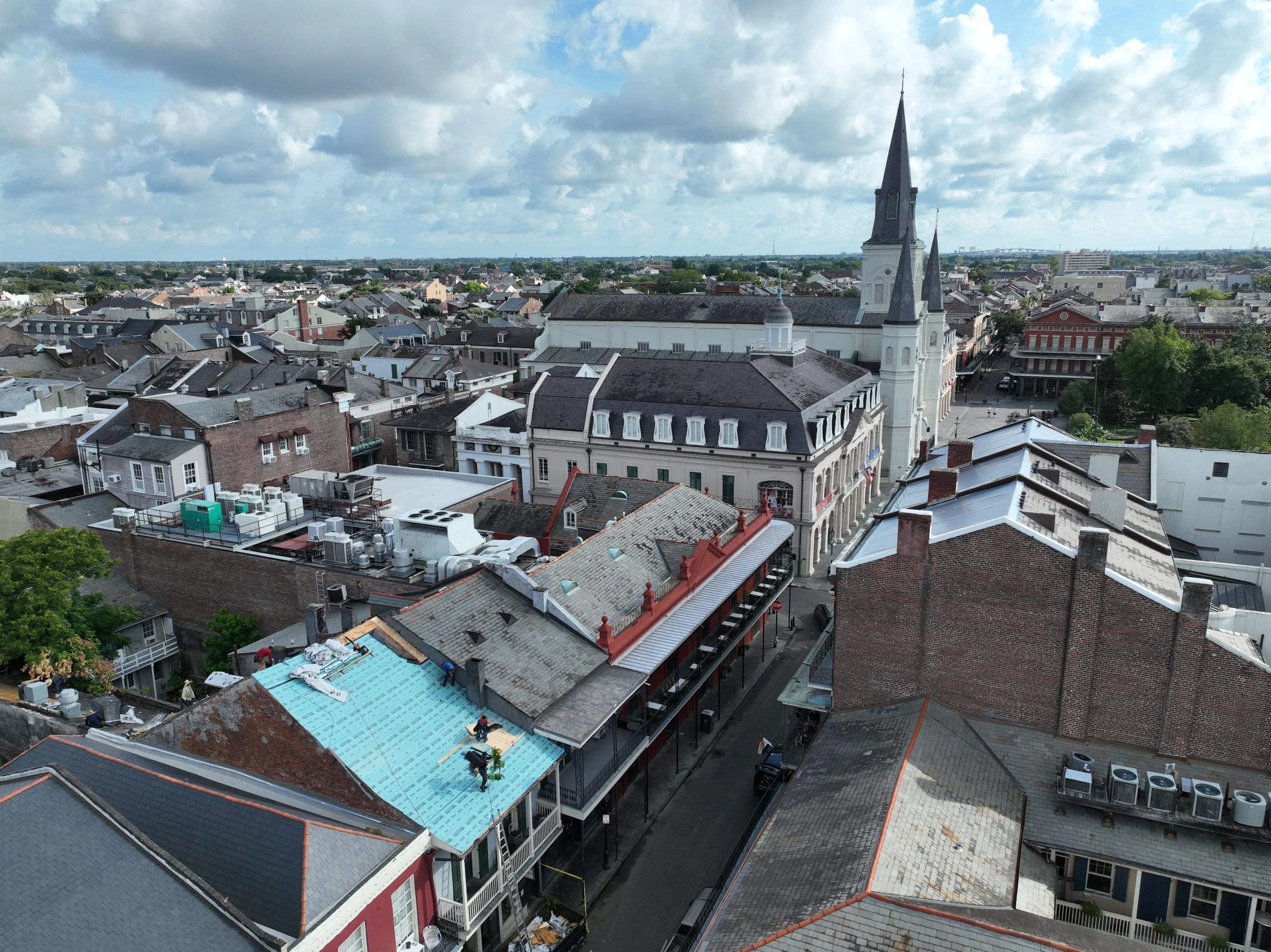
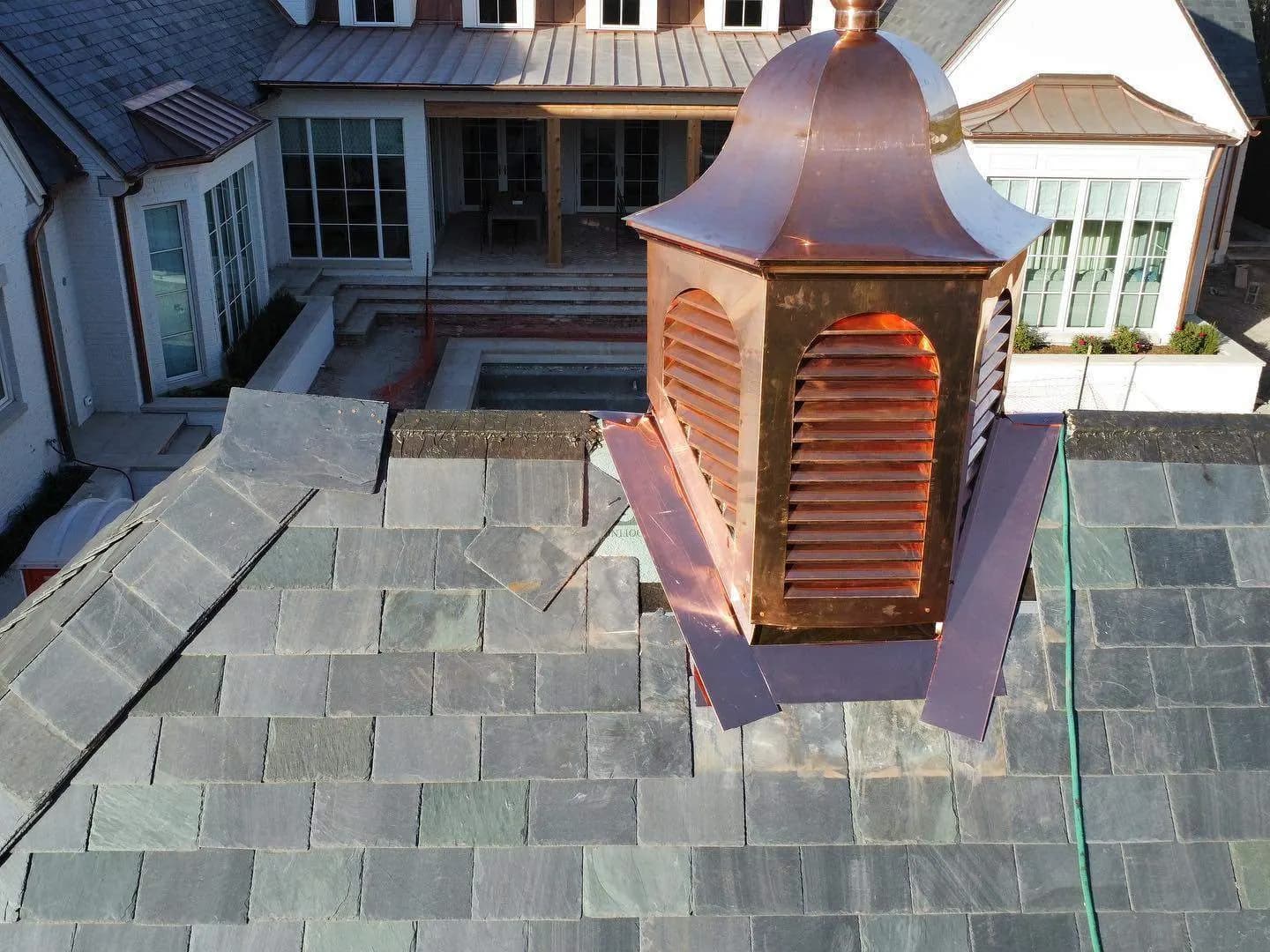
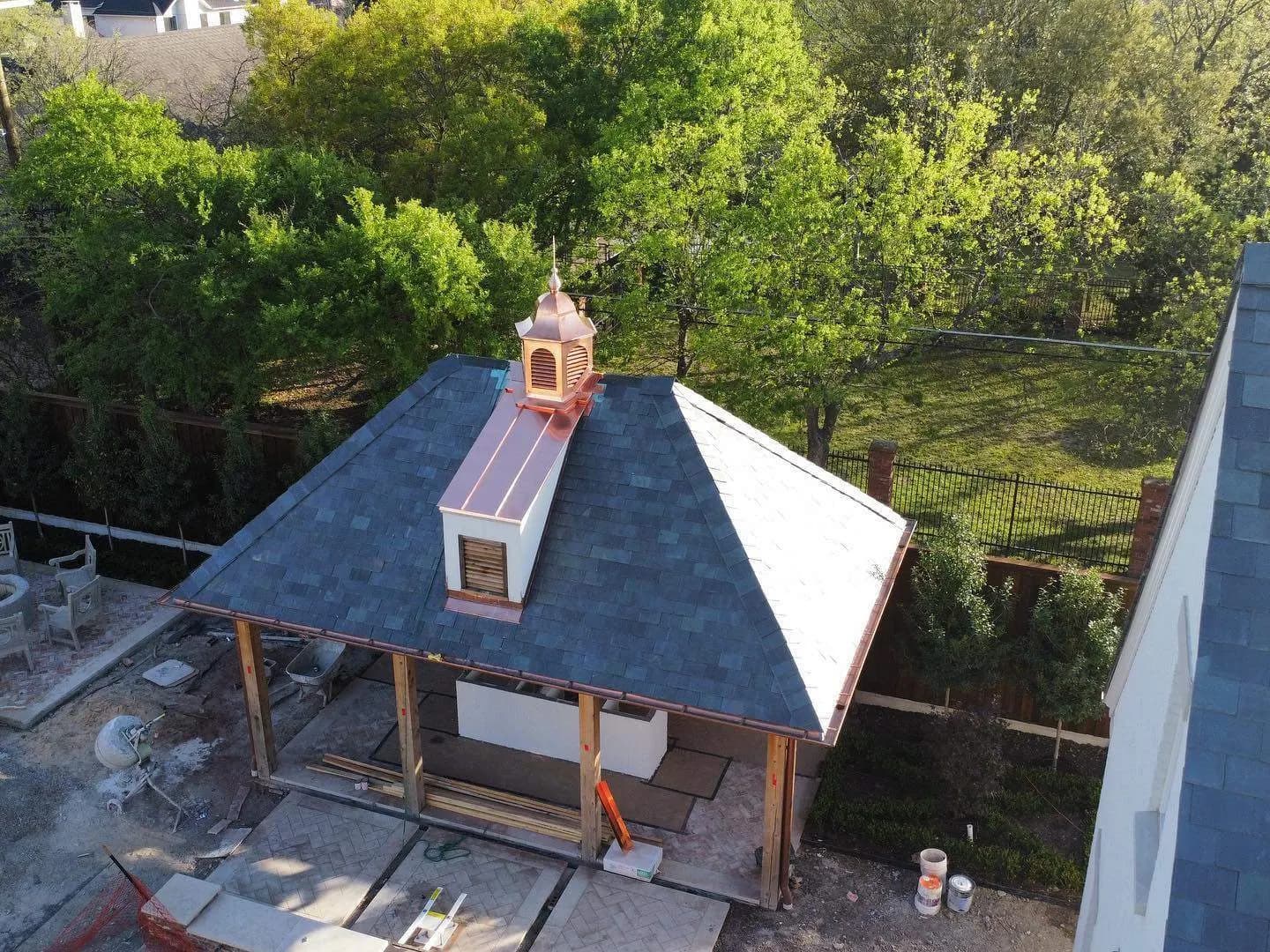
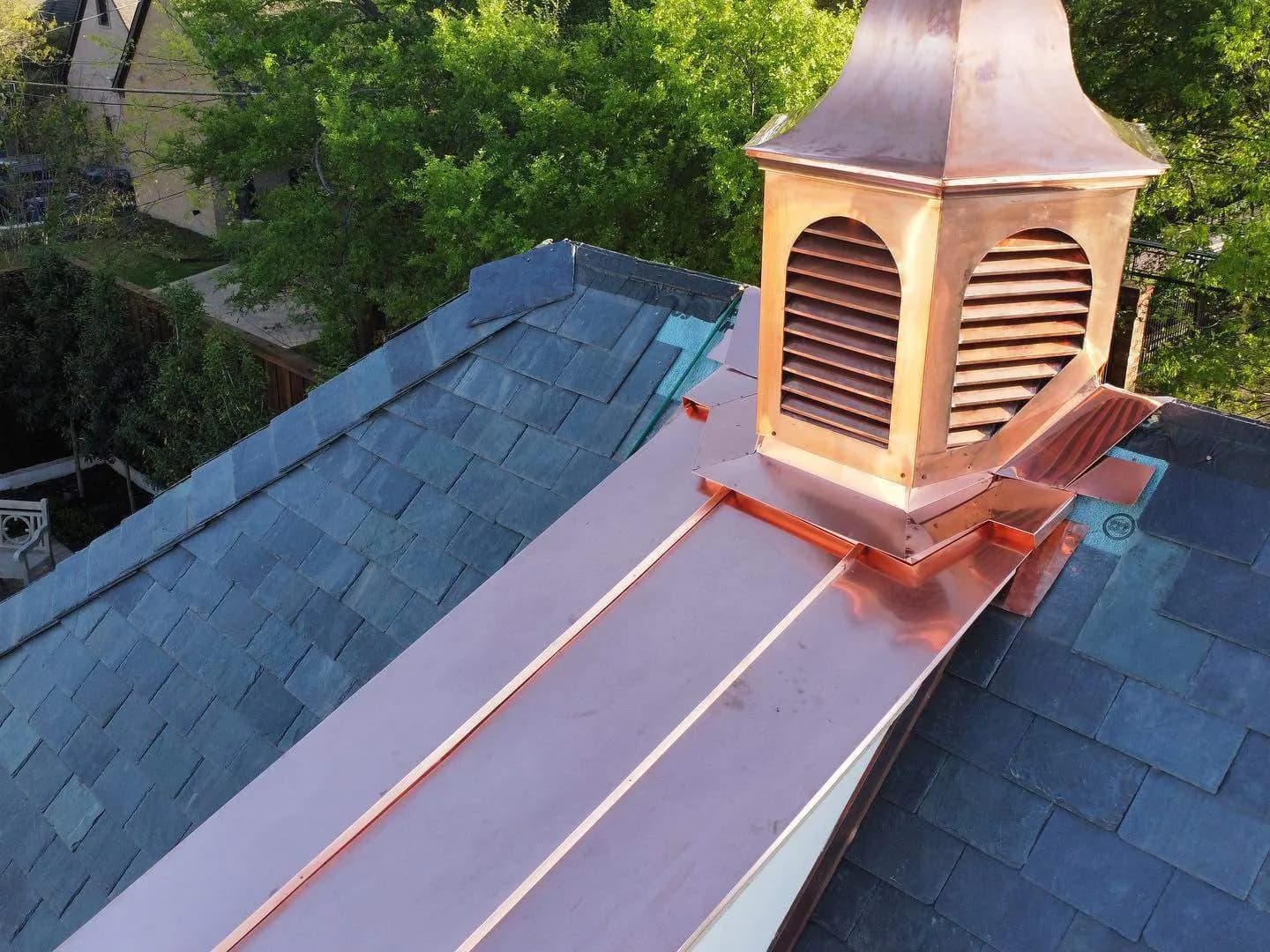
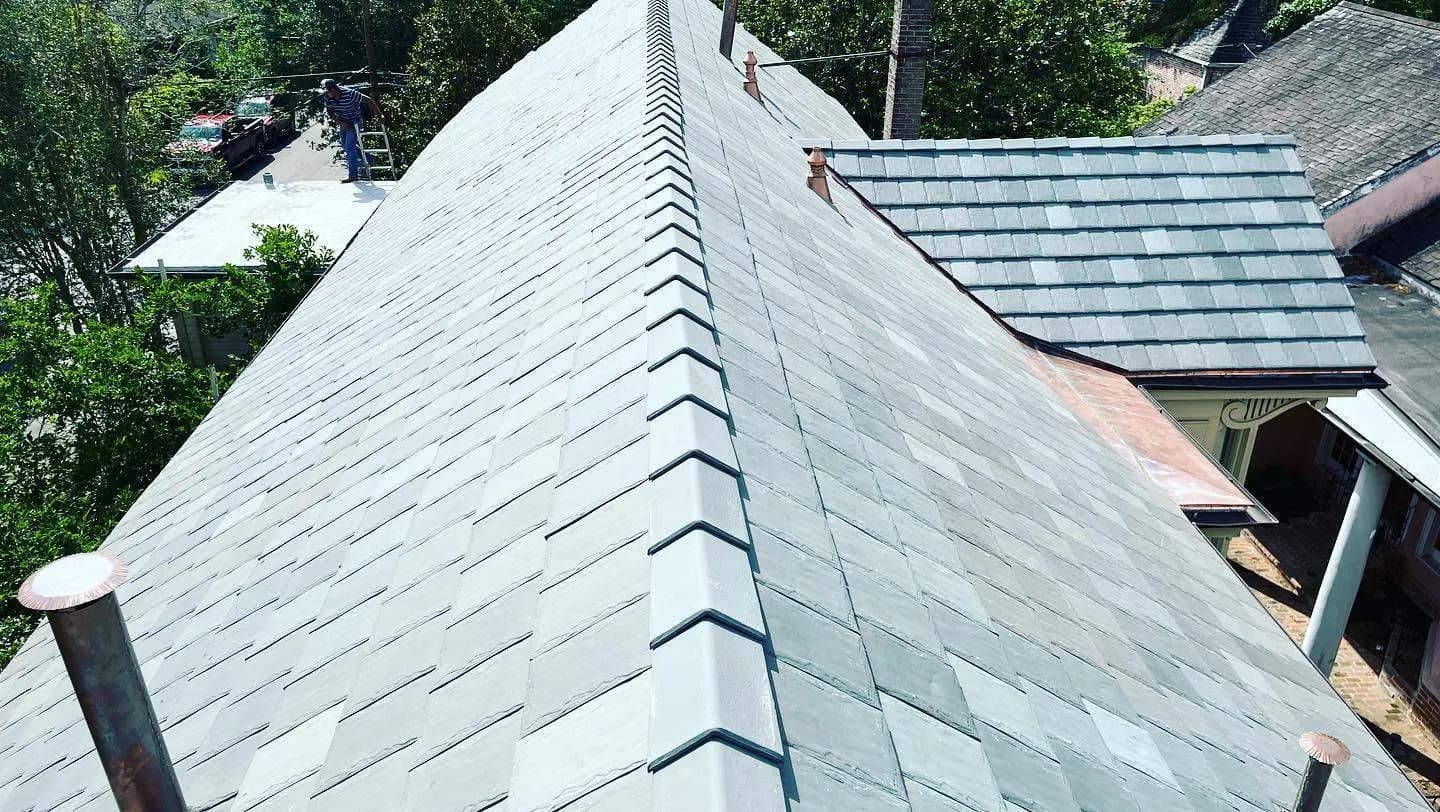
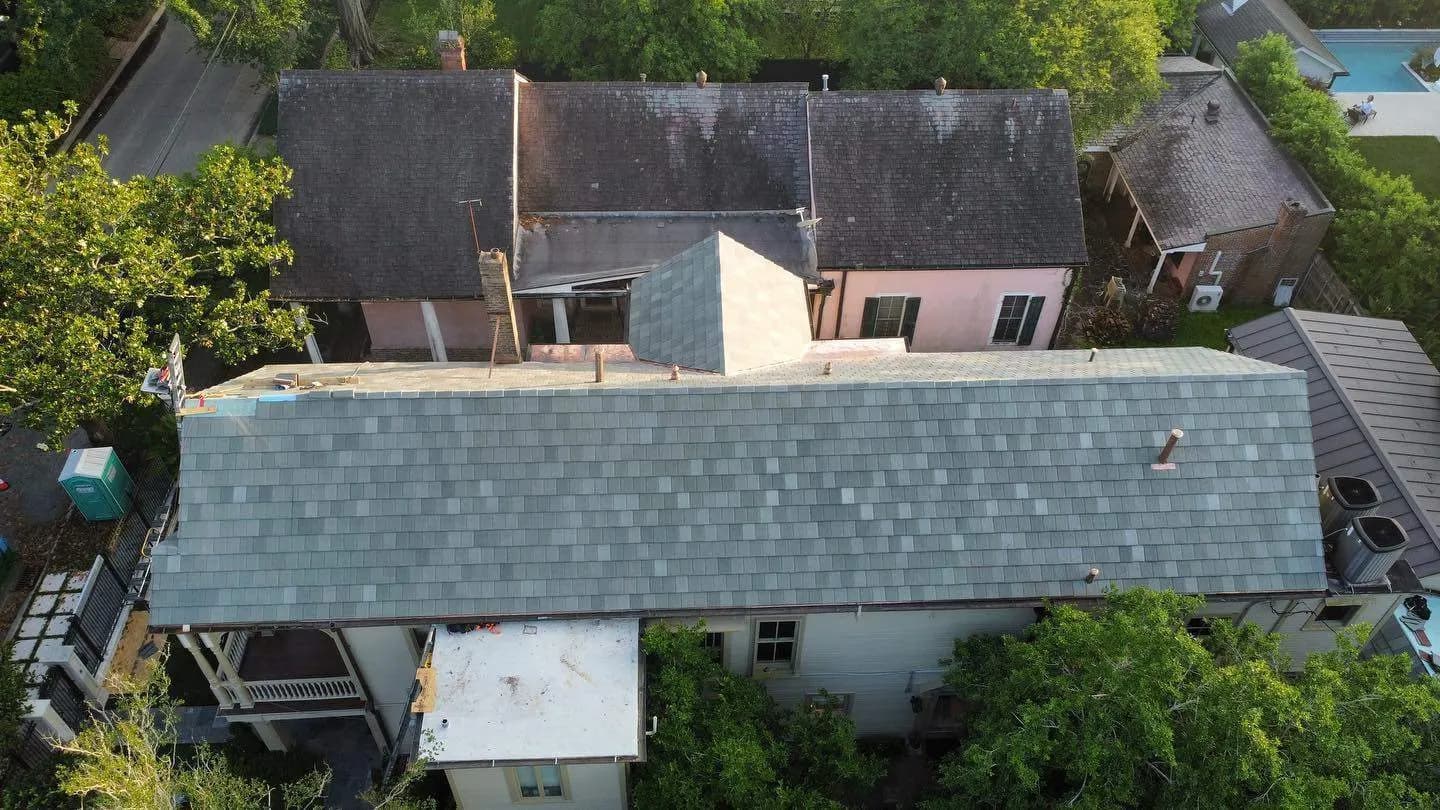
French Quarter photography is from Lapeyre projects. Remaining gallery photography is from the portfolio of our slate and tile crew lead — a master craftsman with hundreds of specialty slate and tile roofs completed across the country.
Compare your options before signing
Compare roofing material priorities
Organize budget, maintenance, and material tradeoffs before a property-specific specification.
Read more about this roofing decision
Slate Roofing Cost 2026: Real Prices
Slate roofing costs $20-$40+ per sq ft installed. Compare natural slate vs synthetic slate prices, lifespans of 100+ years, and repair costs for your home.
Slate Roof Repair vs. Replacement: Inspect Before Deciding
Compare slate condition, flashings, fasteners and repair access before replacing a historic roof. Use a documented inventory rather than a blanket percentage rule.
Synthetic vs Natural Slate: Honest Comparison
We install both synthetic and natural slate, so we have no axe to grind. Here is the honest comparison: cost, weight, lifespan, hail and wind ratings, and resale.
FAQ
Frequently Asked Questions
What should be reviewed before changing a New Orleans slate covering?
Confirm the property jurisdiction and historic status, then document the existing and proposed materials for applicable City and HDLC review.
Can new flashing extend the usefulness of a slate roof?
It can address a leak where flashing has failed and the surrounding slate remains serviceable. A condition assessment should establish the repair limits and method before choosing that scope.
How much does a slate roof cost in New Orleans?
New slate installation in New Orleans typically costs $20-$50+ per square foot installed in 2026. Straightforward roofs with standard slate run $20-$35 per square foot; steep, complex, or historic-district projects with extensive copper work run $35-$50+. Repairs for slipped or broken slates usually cost $600-$3,000, and copper valley or built-in gutter relining runs $2,500-$15,000+. Exact pricing depends on conditions we verify during a free inspection.
Which slate roofing contractor in New Orleans has verifiable historic project experience?
Lapeyre Roofing restored the historic slate and copper standing-seam roof on the Sylvain building, one of the oldest buildings in New Orleans, and has completed multiple additional slate roofs in the French Quarter, all as Lapeyre contracts. That work is publicly visible and verifiable, which matters more than marketing claims when you are choosing who touches a historic roof. Our crews are led by a master craftsman with hundreds of specialty slate roofs in his portfolio.
Should I repair, restore, or replace my historic slate roof?
It depends on the stone, not the age. If your slate is sound and the problems are slipped slates, corroded nails, or failed flashings, repair or restoration (relaying your slate on new fasteners and copper) is usually far smarter than replacement. If the slate itself is soft, delaminating, or flaking, replacement with matched new or salvaged slate makes sense. We sound-test the stone during inspection and tell you honestly which situation you have.
Do I need HDLC or VCC approval to work on my slate roof?
Usually yes, if your property is in a regulated historic district. The Vieux Carre Commission governs the French Quarter and the HDLC governs most other local historic districts, including the Garden District. Visible roof work generally requires a Certificate of Appropriateness. In-kind slate repair is often approvable at staff level; changing materials or profiles triggers architectural review. We prepare and submit the application, samples, and specifications as part of the project.
Can a slate roof survive a hurricane in New Orleans?
Yes. Garden District and French Quarter slate roofs have survived more than a century of hurricanes, which is the most honest wind test available. Performance depends on fastening: slates secured with copper or stainless nails at proper headlap, with enhanced fastening at eaves, rakes, and ridges for Orleans Parish wind speeds, resist uplift well. After major storms, slate roofs typically need a handful of slates reset rather than wholesale replacement.
Where do you find matching slate for repairs on old New Orleans roofs?
Two sources: new quarried slate matched by type and color (much historic New Orleans slate is Buckingham Virginia or Vermont stone, both still quarried), and salvaged slate reclaimed from regional demolitions, which carries genuine age and weathering. We inspect and sound-test salvaged lots before reuse. Matched salvage usually makes repairs invisible from the street, which historic district reviewers specifically look for.
Why is copper used with slate roofs in New Orleans?
Because it is the only common flashing metal whose lifespan matches slate in coastal air. Galvanized steel and aluminum corrode decades before slate wears out, especially in humidity and salt air, which means the flashings fail while the stone is still good. Soldered 16oz-20oz copper valleys, built-in gutter liners, and chimney flashings routinely last 80-100+ years here, and copper is also the historically correct detail on these buildings.
How long does slate roof installation or restoration take?
A typical New Orleans slate repair takes one to three days. Restorations and new installations usually take three to eight weeks on site depending on roof size and complexity, plus lead time for slate sourcing (several weeks for quarried stone) and historic approval where required. French Quarter projects add staging and logistics time. We give you a realistic schedule in writing, including the approval timeline, before work starts.
Is synthetic slate a good option in New Orleans?
Sometimes, but not in regulated historic districts, where the HDLC and VCC generally require natural slate on roofs that historically had it. On non-historic homes, quality synthetic slate costs less, weighs less, and carries good wind ratings, making it a reasonable middle option. On an 1800s Garden District mansion, natural slate is both the required and the better answer. We will tell you plainly which category your roof falls into.
What maintenance does a slate roof need in this climate?
Very little, but not zero. Plan on a professional inspection every year or two and after major storms: checking for slipped or cracked slates, debris in valleys and built-in gutters, and flashing condition. Individual slates can be replaced without disturbing the roof. Never let anyone walk your slate casually or pressure-wash it, and never accept tar or caulk as a repair. Small, correct maintenance is what gets a slate roof past 100 years.
Contact information
Thank you for considering us for roofing needs. We will get back to you during normal business hours.


Send us a message