Roof Repair in Austin: Get a Clear Answer, Not Just a Quote
Clear roofing decisions for Austin homeowners
Here's the thing about roofs. They rarely fail all at once. They leak a little, dry out, then leak again the next time it rains hard. By the time water shows up on your ceiling, it's usually been traveling through the decking for a while.
Prefer to book online? Schedule your free Austin estimate
Schedule Your FREE
Roof Inspection & Estimate
Request a written estimate
Where is your property?
We serve Texas, Louisiana & Missouri
What do you need?
Almost done!
How can we reach you?
By submitting, you consent to follow-up messages. Reply STOP to opt out.
Sources we use
Austin repair guidance grounded in current rules
We use the property, roof system, and current public guidance to shape the recommendation. A citywide script cannot do that.
City of Austin
Austin work exempt from building permits
Reviewed September 7, 2026. Check roof-cover exemptions, structural effects, and the Wildland-Urban Interface exception for the actual address.
Read the official guidance →Austin Fire
Wildland-Urban Interface Code
Check whether a property is in a WUI proximity zone and which roof assembly, valley, eave, and vent requirements may apply.
Read the official guidance →Texas Department of Insurance
Roofing and insurance: Know the law
Explains why the contractor doing the work cannot act as the homeowner's public adjuster or negotiate policy coverage.
Read the official guidance →Texas Department of Insurance
Can a contractor waive my deductible?
Confirms that a contractor cannot waive, rebate, credit, or otherwise help a policyholder avoid the deductible.
Read the official guidance →Repair, Monitor, or Replace: How the Decision Gets Made
Here's how we sort it out. Three things drive the call: how much of the roof is affected, how old the shingles or tiles are, and whether the deck underneath is still sound. Small, isolated damage on a roof with years of life left is a repair. Full stop. Wind lifted eight shingles off a west-facing slope, the underlayment is intact, the decking is dry - that's a half-day fix, not a reason to talk about tear-off.
- The inspection separates the leak location from the actual water entry point
- Your report includes photos, urgency, repair scope, and replacement triggers
- Active leaks can be stabilized before the permanent scope is approved
- The insurance carrier decides policy coverage; the roofer documents construction
- Texas contractors cannot waive or absorb your deductible
What we diagnose on Austin roof-repair calls
Four failure patterns that require different fixes
Here's the thing about roofs. They rarely fail all at once. They leak a little, dry out, then leak again the next time it rains hard. By the time water shows up on your ceiling, it's usually been traveling through the decking for a while.
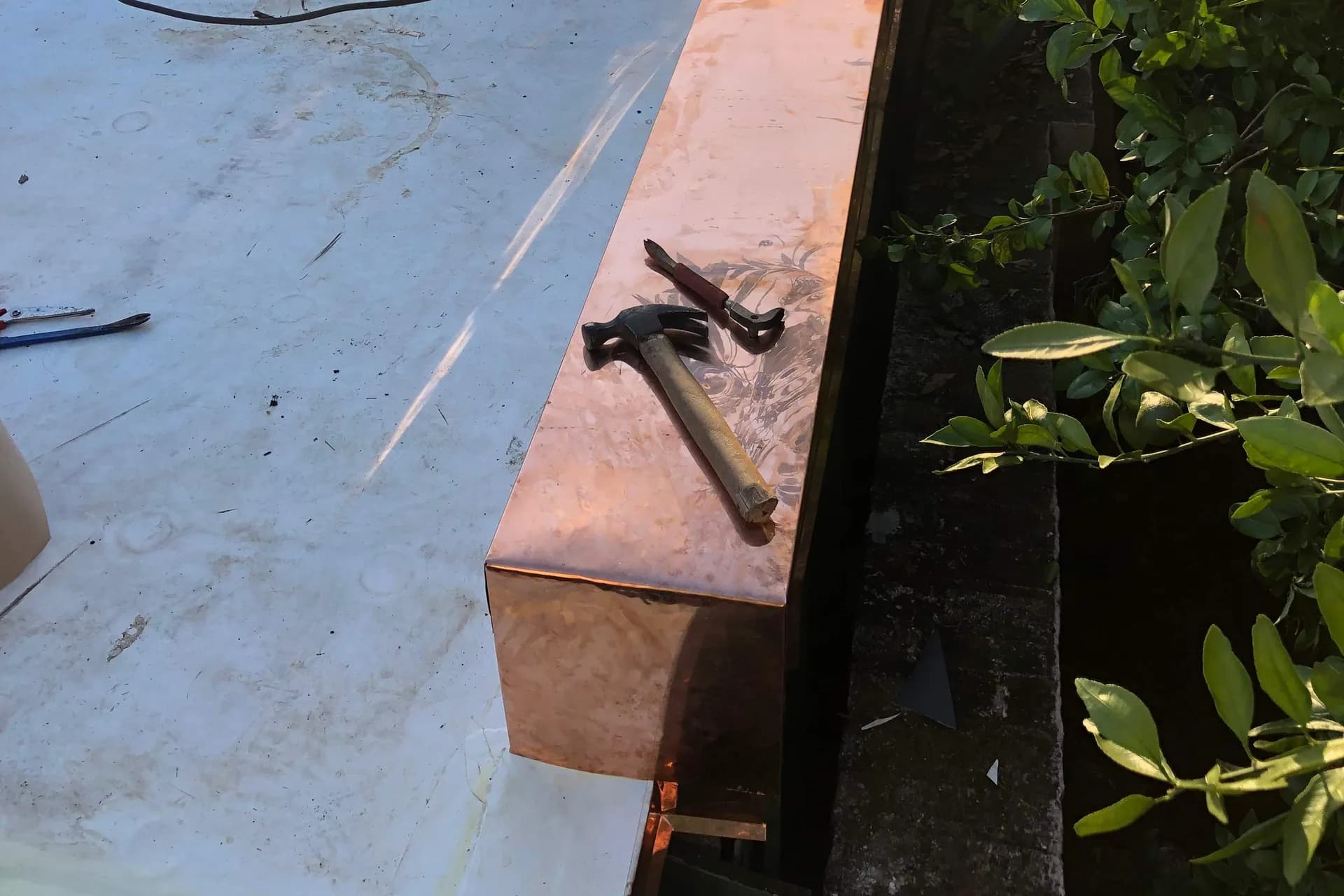
Flashing and roof penetrations
Impact: Pipe boots, roof-to-wall transitions, chimneys, skylights, and valleys can admit water even while the field shingles look serviceable.
Our Solution: We trace the water path and rebuild the failed detail rather than coating the symptom with more sealant.
Wind-lifted or missing shingles
Impact: A lifted edge or broken seal can expose fasteners and underlayment while the rest of the slope remains sound.
Our Solution: We map the affected area, check nearby courses, and replace or reseal only where the existing material can support a durable repair.
Hail impacts
Impact: Dents in metal accessories do not by themselves prove functional shingle damage, and damage can differ by slope.
Our Solution: We photograph test areas and separate functional damage, cosmetic observations, and normal aging without promising a claim outcome.
Heat, debris, and drainage
Impact: UV exposure, clogged drainage paths, tree contact, and low-slope tie-ins can shorten the life of vulnerable details.
Our Solution: The scope addresses the source, such as drainage, material compatibility, or a transition detail. Fixing the wet interior finish alone will not stop the leak.
Property-specific Austin considerations
Neighborhood names are not a diagnosis. These are the physical conditions we verify when they are present.
Older central-city homes
Additions, dormers, porch tie-ins, mature tree cover, and prior repairs are common variables.
We inspect transitions and decking conditions and identify whether a compatible repair can integrate with the existing assembly.
Hill-country and WUI properties
Exposure, complex slopes, and proximity to wildland vary parcel by parcel.
We check the current Austin WUI map and flag relevant assembly, valley, eave, soffit, and vent details for the proposed scope.
Newer production neighborhoods
The roof may still have substantial service life even when one detail or storm-exposed slope fails.
A targeted repair can preserve a sound system; we also note potential installation or product-warranty questions for the owner to verify.
What changes an Austin roof-repair price
A repair price follows the inspected failure, access and material availability. Compare a written scope for each repair and identify any concealed-damage allowances.
Small isolated repair
Quote after inspection
Examples include a limited shingle area or a straightforward penetration detail with accessible matching materials.
Multi-detail repair
Quote by affected detail
Examples include flashing, a valley, several penetrations, or multiple localized failures requiring coordinated work.
Emergency stabilization
Scoped after inspection
Temporary dry-in or tarping is separated from the permanent repair so you can see what each step solves.
Factors Affecting Price
- 1Roof height and pitch
- 2Material availability and compatibility
- 3Decking or underlayment damage
- 4Number of failure points
- 5Safe access and emergency timing
Your written estimate follows an on-roof inspection. If repair is poor value, the report explains why and links to the replacement option.
The Austin Roof Performance Report process
Here's what a visit looks like from your side of it. We start on the ground, not the roof. Slope direction, gutter condition, what's stacked against the fascia, where water is landing when it comes off the edge. A lot of leaks get solved standing in the yard looking up.
Triage the problem
We document active leaks, interior symptoms, storm timing, prior work, and the roof areas that need immediate attention.
Inspect the roof system
We check the suspected source plus adjacent shingles, flashing, penetrations, drainage, and visible deck conditions.
Local Note: For a property in Austin’s WUI, we also identify which current zone-specific questions affect the proposed work.
Deliver the report
You receive labeled photos, findings, urgency, a repair scope, and the observable conditions that would change the recommendation to replacement.
Approve a written scope
Materials, exclusions, price, and temporary-versus-permanent work are stated before work begins.
Verify the repair
We photograph completed work and explain maintenance items or future warning signs worth monitoring.
Repair materials must match the roof system
A compatible repair matters more than a brand name. We select components based on the existing assembly and failure detail.
Compatible field shingles
Why for Austin
A repair must integrate with the existing profile, exposure, and fastening pattern.
Best For
Localized shingle damage on an otherwise serviceable slope
Considerations
Color and profile matches can be imperfect on aged or discontinued products.
Purpose-built flashing
Why for Austin
Metal details move water away from transitions more reliably than surface caulk alone.
Best For
Walls, chimneys, valleys, and roof penetrations
Considerations
The surrounding material may need to be lifted or replaced to rebuild the detail correctly.
Low-slope membrane
Why for Austin
Shingles are not appropriate below their required slope.
Best For
Porches, additions, and low-slope transitions
Considerations
The transition into the steep-slope roof is part of the repair scope.
Why the diagnosis comes before the proposal
Homeowners are rightly skeptical after a storm. We make the recommendation inspectable.
Repair is a real option
We do not treat every inspection as a replacement lead. If a contained repair is defensible, the report says so.
Photos tied to findings
Each important recommendation is connected to visible evidence and a written scope.
Clear insurance boundary
We document construction damage and pricing; your carrier determines coverage, and we do not act as your public adjuster.
Local accountability
Our Austin office remains available after the storm cycle and after the repair.
Using Your Roof Repair Documentation With Insurance
Storm hits. You see grit in the gutters, maybe a few bruised shingles. Now what? Most folks call the insurance company first and the roofer second. We'd flip that order. A claim goes a lot smoother when you already know what's wrong up there.
Our inspections come with photos and a written scope. That's not paperwork for the sake of paperwork. It's the difference between telling an adjuster "I think we got hail" and showing them dated images of soft spots in the mat, creased shingles on the windward slope, and dented metal at the vents. Hail leaves a signature. So does wind. And the two get handled differently.
Austin sits in a part of Central Texas where spring hail and straight-line wind both show up in the same season, sometimes the same week. A roof can take a wind event in March and a hail event in May. Documentation dated close to each storm helps keep those separate.
Here's what we won't do: tell you your claim will be approved. We don't make that call, and neither does any honest roofer. What we can do is hand you clear evidence and a scope that spells out what the repair involves.
Ask your carrier what your deductible is for wind and hail specifically. It's often different from your standard deductible.
Ask whether your policy pays replacement cost or actual cash value on the roof.
Ask if there's a filing deadline tied to the date of loss.
Ask what the adjuster wants to see before the inspection visit.
Keep your own copies of everything, photos, scope, adjuster notes. We've watched homeowners lose months because a file went missing between three phone calls.
And if the damage turns out to be minor? You may be better off paying for a small repair and leaving the claim alone. That's a real option, not a throwaway line.
Compare your options before signing
Compare a written roof estimate
Use measured roof area, installed prices, and separate allowances to compare scope. Planning output is not a project quote.
Read more about this roofing decision
Roof Repair vs. Replacement: Compare Evidence and Scope
Repair is worth evaluating when the cause is localized and a sound repair can connect to the retained roof. Replacement becomes more compelling when broader deterioration or assembly problems make that repair unsuitable. Neither age alone nor a fixed percentage of damage settles the decision.
Roof Leak Repair Austin: Costs & Fixes
Trace an Austin roof leak to its actual source, compare repair scopes, document insurance questions, and understand what the repair does and does not address.
Emergency Roof Repair Austin (2026)
Austin emergency roof repair: safe first steps, dispatch questions, temporary-protection scope, actual charges, and the transition to a permanent repair.
Texas Roof Insurance Claims Guide
Learn how to document roof damage, review your policy, work with the carrier’s adjuster, and keep the contractor’s role clear under Texas law.
Compare the right next step
Austin roofing decision center
Start with the Austin market overview or go directly to the service that matches what you found.
FAQ
Frequently Asked Questions
How do I know if my roof needs a repair or a full replacement?
It depends on how much damage there is and how old your roof is. If damage is small and isolated, like wind lifting a few shingles, that's usually a quick repair. But if granule loss is widespread or the decking underneath is soft, patching won't fix the real problem. We photograph everything and write up what we find, so you can see the evidence and decide with us, not just take our word for it.
Can a roof repair wait, or should I call right away?
Some things can wait, but anything with water behind it can't. A few granules in the gutter or light algae streaking is cosmetic and can go on a watch list. But a growing ceiling stain, daylight in the attic, or loose flashing gets worse fast. Waiting on hail damage also has a downside in Texas since claims run on a clock, so document it with photos even if you decide to hold off on repairs.
What should I expect when someone comes to inspect my roof?
We start on the ground before we ever climb up. We look at slope direction, gutter condition, and where water lands off the edge, because a lot of leaks get solved just standing in the yard. Then we walk the roof itself and check flashing, shingles, and vents up close. You get photo documentation of everything we find, so you're looking at the same evidence we are.
Why does my roof leak after a hard rain but seem fine other times?
Roofs rarely fail all at once. They leak a little, dry out, then leak again the next time it rains hard, which is why the damage feels random. By the time water shows up on your ceiling, it's usually been traveling through the decking for a while. That's why we trace stains back to their real source, like a cracked pipe boot, instead of just patching the spot you can see.
Why does Austin weather cause so many roof problems?
Central Texas is hard on roofs in two ways. Spring brings hail and wind-driven rain, then summer heat cycling expands and contracts materials day after day. That combination loosens fasteners and opens seams that looked fine the year before. Many older central Austin homes still have original 1970s and 1980s decking, which is thinner plywood that struggles once moisture gets in behind loosened fasteners.
What are the warning signs that my roof needs attention now?
Watch for shingle granules collecting in your gutters, dark ceiling stains, or daylight showing through the attic decking. Bruised or dented shingles after hail and loose flashing around chimneys or vents are also red flags. A sudden jump in your energy bill paired with a muggy upstairs can mean wet attic insulation, which often gets blamed on the roof last, even though it points to a real problem.
What do I receive after the inspection?
You receive an Austin Roof Performance Report with labeled photos, findings, urgency, recommended scope, and repair-versus-replacement triggers.
Contact information
Thank you for considering us for roofing needs. We will get back to you during normal business hours.


Send us a message