Trace an Austin roof leak to its actual source, compare repair scopes, document insurance questions, and understand what the repair does and does not address.
Protect people and document the leak safely
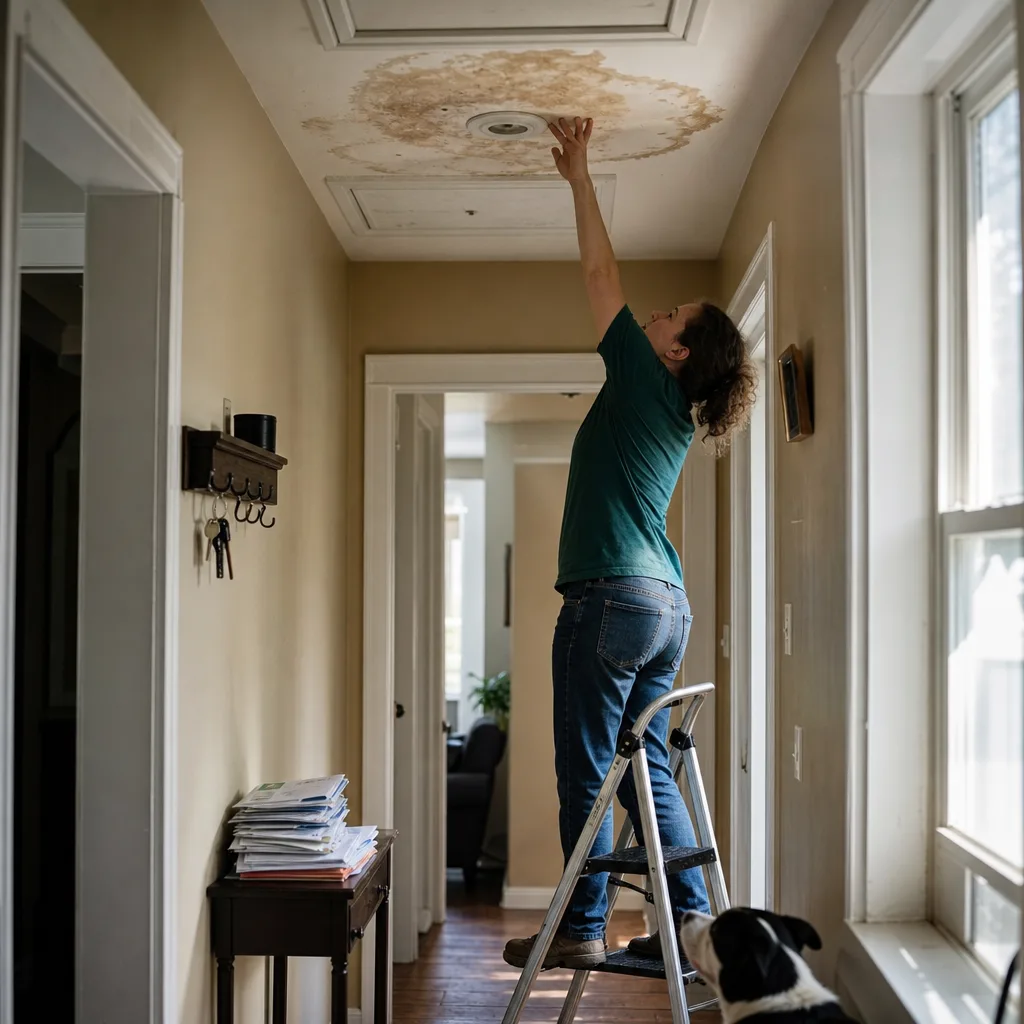
If water is entering your Austin home, keep people away from wet electrical fixtures, sagging ceilings, and unstable areas. Seek emergency assistance for immediate danger. From a safe area, move belongings and photograph the location and time of the leak. Do not climb onto the roof to locate the entry point.
Describe whether the leak is active, which rooms are affected, and whether you noticed it during wind-driven rain or after the storm. These observations help the contractor plan the inspection. They do not establish the source by themselves: water can travel before it becomes visible indoors.
Ask which roof detail is actually leaking
A leak assessment may involve the covering, penetrations, valleys, wall intersections, or another part of the building. Ask the inspector to show the suspected entry point and explain the evidence. A ceiling stain does not automatically mean the shingles directly above it need replacement.
GAF’s flashing guidance explains the role of flashing at roof intersections and penetrations. Use that context to ask whether the proposed repair replaces a failed detail or only applies surface sealant. Those scopes can have very different limitations.
Request an evidence-led diagnosis
Ask the roofer which exterior and attic areas were accessible, whether prior patches conceal details, and what remains uncertain. If further investigation is proposed, request its purpose, cost, and the plan to restore any opening. A useful inspection record identifies roof areas and links photographs to findings.
Share earlier repair invoices and explain whether they changed the leak. A repeat leak does not prove the previous contractor acted improperly; it does make it important to distinguish a recurring defect from another entry point. Ask what the new inspection establishes that the prior repair did not.
Compare the repair scope before the price
| Decision | Evidence to obtain | Who resolves it |
|---|---|---|
| Targeted repair | Location, defect, access, replacement materials | Roofer |
| Temporary protection | Coverage area, attachment, removal, revisit | Emergency contractor |
| Larger repair | Affected section and evidence for expanding scope | Roofer |
| Replacement | Why repair is insufficient; full itemized scope | Roofer and owner |
This guide does not claim a verified Austin flat-rate price for an unidentified leak. Ask for a written quote after the source and access needs are assessed. The estimate should separate hidden-damage allowances, interior restoration, and work by other trades.
A hypothetical boot replacement and a wall-flashing rebuild are not equivalent purchases even if both are called “leak repair.” Have each contractor explain what will be removed, replaced, and left in place before you compare totals.
Keep insurance and construction decisions separate
If the leak may involve an insured loss, follow your policy’s notice and documentation requirements and ask your insurer about next steps. Do not assume every sudden leak is covered or that gradual damage is automatically the only alternative. The contractor documents construction conditions; the insurer decides coverage.
Keep photographs, receipts, and the observed timeline. Ask what permanent work can proceed while the insurer reviews the matter. Do not delay necessary safety measures because a generic website suggests waiting for an appointment.
Know what happens after the repair
Request completion photos, the repair warranty and exclusions, and a contact for follow-up if water returns. If parts of the assembly remain unverified, have them named in the report. A focused repair can be appropriate without promising the entire roof will never leak.
Request an Austin roof leak inspection and describe the active conditions when booking. For immediate protection questions, read our emergency repair guide. If replacement is recommended, use the cost estimator to compare the written scopes rather than guessing from interior square footage.
Common questions
Frequently asked
The source, access, materials, and concealed damage determine the scope. Obtain an itemized inspection-based quote rather than relying on a generic flat-rate range.
Published by
Lapeyre Roofing Editorial Team
Homeowner guides
Our editorial team publishes homeowner guides with sources linked in the article. For a recommendation about your roof, request an inspection of the property.