Austin siding cost depends on material, house size, and a few Texas-specific factors that quotes often skip over. Here is what homeowners actually pay in 2026, sourced from current market pricing and broken down by material family.
Austin siding cost in 2026 ranges by material and complexity. The honest answer: siding for a typical 2,500 square foot Austin home runs from the budget tier (premium vinyl) to a premium tier (Hardie ColorPlus HZ10), with engineered wood (LP SmartSide) sitting between them. Anyone giving you a single point estimate without measuring your home is guessing.
This guide walks through the cost ranges by material, the factors that move pricing within each range, and the Austin-specific considerations that affect what you actually pay.
Quick Answer
For a 2,500 square foot Austin home with typical roof complexity:
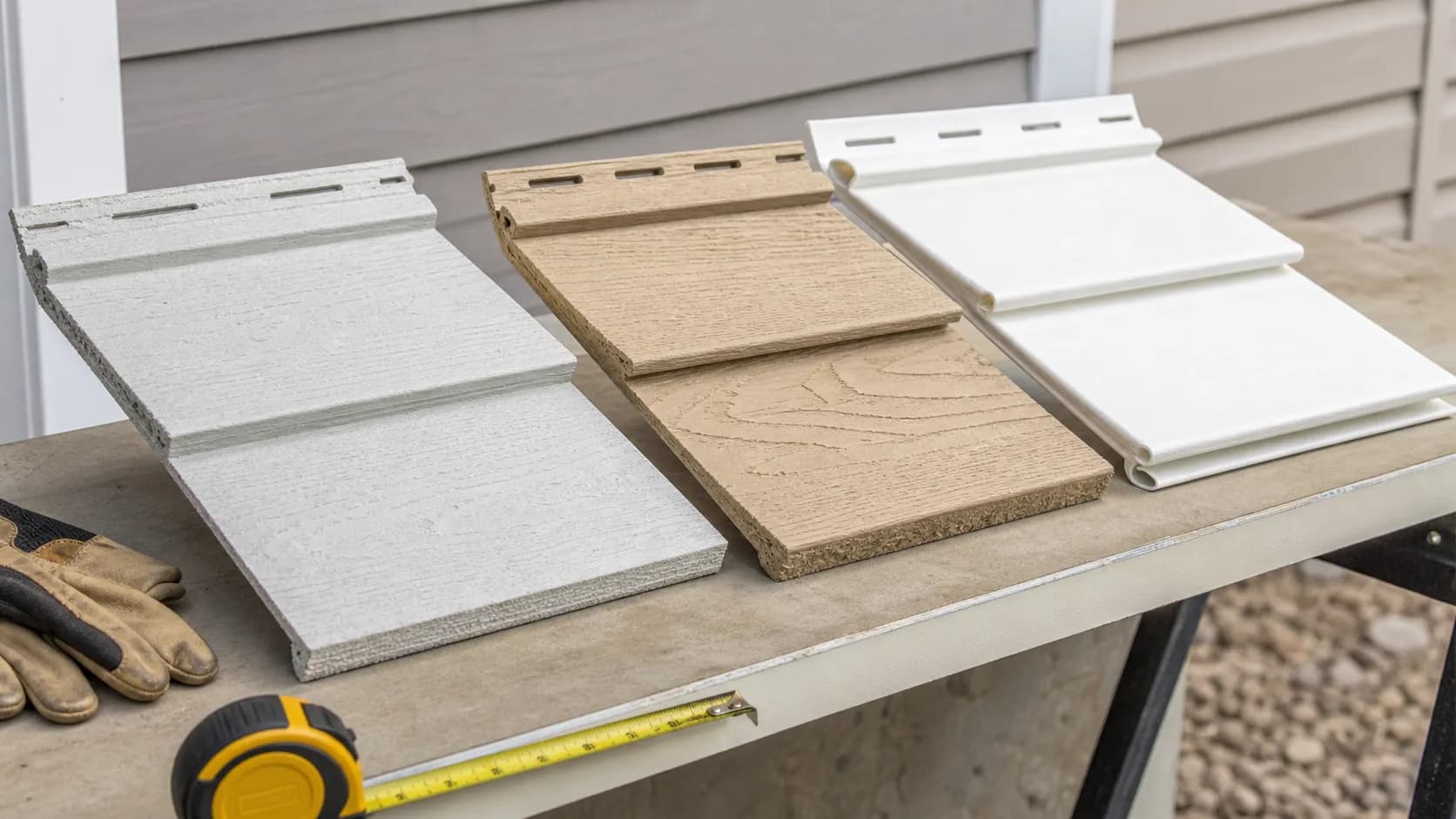
- Premium vinyl (whole-house re-side): the budget tier — typically the lowest installed cost across the four material families we install
- Insulated vinyl: a modest premium over standard vinyl with measurable thermal and impact gains
- LP SmartSide (engineered wood): sits between vinyl and fiber cement, often closer to fiber cement when ExpertFinish prefinish is specified
- Hardie ColorPlus HZ10 (fiber cement): the premium tier for most installs, with cost driven up by trim complexity, multi-story access, and ColorPlus colorway selection
Cost by Material
Premium Vinyl (Budget Tier)
Premium vinyl in the 0.046-0.055 inch panel grade range, certified to ASTM D3679 under the Vinyl Siding Institute Product Certification Program. Wind ratings reach 150-200+ mph in premium grades when installed correctly. The trade-offs in Austin: heat distortion risk on dark colors at south- and west-facing elevations, and cold-weather hail brittleness during spring storms.
Insulated Vinyl
Foam-backed vinyl panels add roughly R-2 to R-3 of continuous insulation, reduce oil-canning, and improve impact performance against hail. Modest premium over standard vinyl with measurable gains — particularly relevant in Austin's spring storm season.
LP SmartSide (Engineered Wood)
Mid-tier pricing. Engineered wood with the SmartGuard zinc-borate treatment for termite and decay resistance. Carries a 5/50/15 warranty — five years 100% labor and material replacement, fifty years prorated substrate, fifteen years on ExpertFinish prefinish — plus an explicit hail damage warranty up to 1.75 inches in diameter when properly installed. The hail warranty is one of the strongest reasons to choose LP in Austin.
Hardie ColorPlus HZ10 (Fiber Cement, Premium Tier)
Premium tier for most installs. James Hardie HardiePlank in the HZ10 formulation — engineered specifically for hot, humid, hurricane-exposed zones 6-10. Carries a 30-year non-prorated, transferable substrate warranty, with the ColorPlus baked-on factory finish under its own separate warranty. Cost premium driven by trim complexity, multi-story access, and color selection (some ColorPlus colors carry surcharges for limited stocking).
Cost by House Size
Roughly speaking, total project cost scales with wall area more than house square footage. A two-story 2,000 square foot home has more wall area than a one-story 2,500 square foot home, and the multi-story access adds labor.
- Single-story 1,500-2,000 sq ft: lower total cost, simpler access, typically more straightforward sheathing inspection
- Two-story 2,000-2,800 sq ft: typical Austin-suburban home; multi-story access drives 15-25% labor premium over single-story
- 2,800+ sq ft / complex geometry: trim complexity, gable ends, dormers, multiple elevations — costs scale faster than wall area alone
What Makes Austin Different
A few Austin-specific factors that move pricing within each material tier:
- Hail-priority upgrades. Travis County has documented hail history. LP SmartSide's 1.75-inch warranty and Class 4 impact-rated systems where available add modestly to the base material cost but pay back in claim scenarios.
- UV-stable color selection. ColorPlus and ExpertFinish factory-finished colors are the right call on south- and west-facing elevations where field-painted finishes fade fastest.
- Sheathing repair revealed at tear-off. Older Austin homes (especially central and east Austin pre-1960 housing stock) frequently reveal rotted OSB or plywood from years of failed flashings. Sheathing repair is rarely included in the base bid because the scope is unknown until tear-off; we bid time and material on this scope.
- Travis County is NOT in the TDI windstorm program. Austin homes do not require WPI-8 inspection or impact-rated cladding by code. This is a Houston / coastal-Texas consideration, not an Austin one.
- Expansive clay grade considerations. Hardie technical spec calls for siding clearance from grade (6 inches from earth, 2 inches from hard surfaces). Many older Austin homes have siding installed too close to grade — adjustment may be needed during install.
Insurance and Storm Damage
Wind, hail, and wind-driven debris are typically named perils on Austin homeowners policies. Adjusters routinely under-scope siding storm damage by missing:
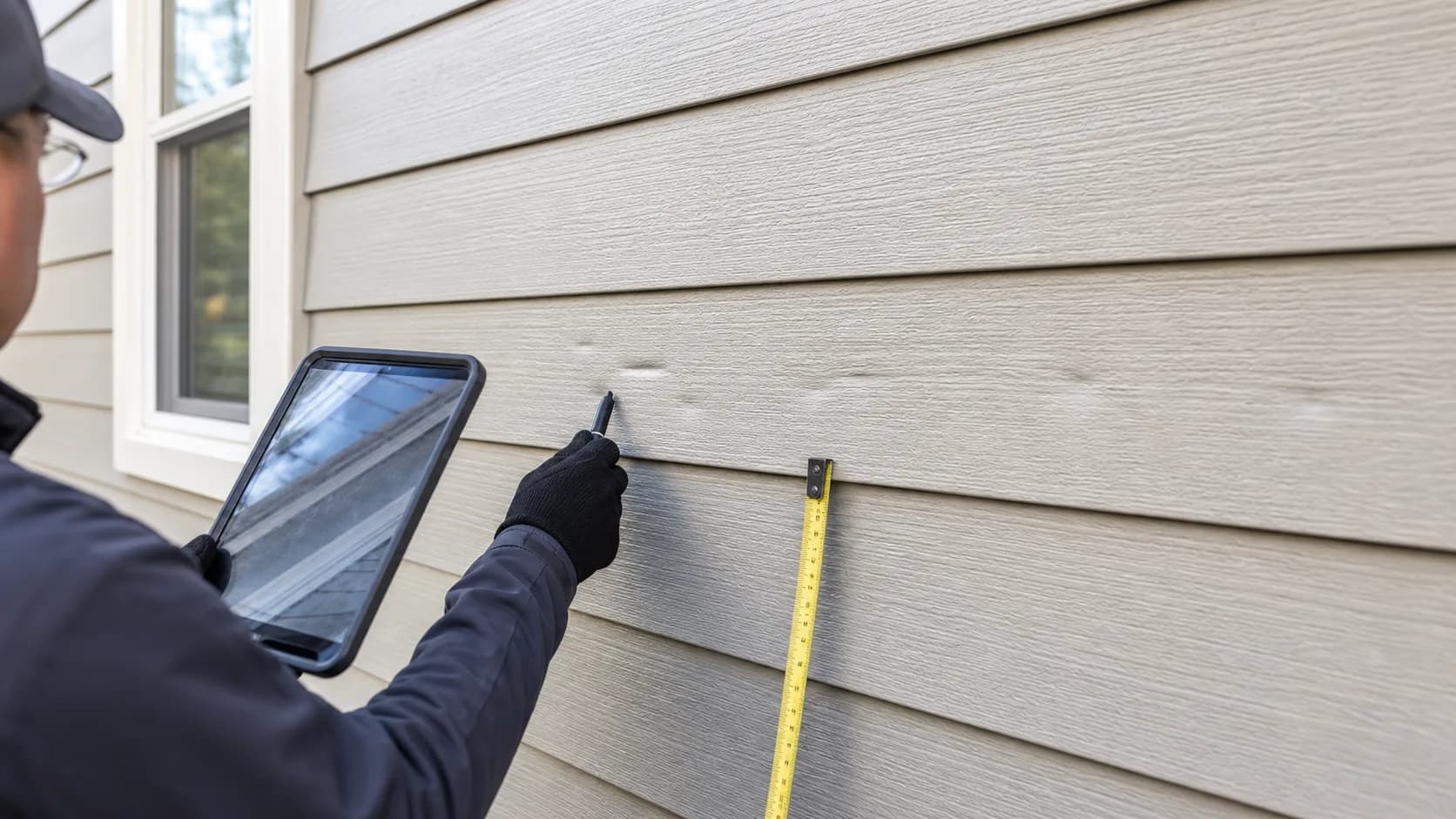
- Hidden hail bruising on vinyl (visible only at oblique angles or under flashlight)
- Wind-creased fiber cement (micro-cracks that become visible after the next freeze-thaw cycle)
- Backside water intrusion (damage discovered only when panels are pulled)
- Color-match issues for partial replacements (a covered "matching" issue under most policies)
Documenting damage slope-by-slope and panel-by-panel — the same approach we use for roof claims — is the difference between a claim that covers actual scope and one that under-scopes. We document every Austin storm-damage claim with photo-by-elevation methodology and supplement when initial estimates miss damage.
ROI and Resale
Remodeling magazine's annual Cost vs Value report tracks national and regional resale value recovery on common remodels. For siding, fiber cement consistently shows higher cost-recovery percentages than vinyl across regions, particularly in markets where higher-end finishes are common. Premium ColorPlus Hardie installations in Austin tend to recover well at resale, especially in central and west Austin neighborhoods where buyers expect quality.
Beyond raw dollar recovery, factory-finished fiber cement is one of the strongest "no immediate work needed" signals for a buyer reviewing your listing photos.
How to Spot a Lowball Estimate
Quotes that come in unusually low typically cut corners on:
- WRB and flashing detail. Pan flashing at every sill and head flashing above every opening are non-negotiable. Quotes that don't mention them are skipping them.
- Sheathing repair allowance. Bids that promise no sheathing scope are setting up a change order at tear-off.
- Fastener spec. Hardie technical bulletin calls for specific fasteners, blind-nailing, and expansion gaps — non-negotiable for warranty.
- HardieZone formulation. Ask whether they are quoting HZ5 or HZ10. Austin needs HZ10. Anyone quoting HZ5 in Austin is selling the wrong product.
- Trim and corner detail. Frieze boards, corner boards, and window/door surrounds drive a meaningful chunk of the cost. Light trim packages look cheap on paper and look cheap when finished.
Frequently Asked Questions
Common questions
Frequently asked
When the cause is a covered peril (hail, wind, wind-driven debris, falling trees), yes. Hidden hail bruising and wind-creased fiber cement are routinely under-scoped by adjusters. We document slope-by-slope and supplement when initial estimates miss damage. The same playbook we use for roof claims.

Founder of Lapeyre Roofing, continuing a family legacy in Louisiana since 1699. Licensed in Louisiana, GAF Certified, and FORTIFIED Roofing specialist serving Texas and Louisiana.