Texas heat is an underrated siding stressor. Surface temperatures on south-facing dark walls regularly exceed 165°F in summer — enough to soften lower-grade vinyl. Here is which siding actually survives Texas heat, hail, and Hill Country UV.
Texas heat is an underrated siding stressor. The 100°F+ ambient temperatures get attention, but the real damage driver is surface temperature on dark south- and west-facing walls — which routinely reach 165°F or higher under direct summer sun. Layer in spring hail, year-round UV, and the occasional gulf-coast hurricane (in Houston ZIPs), and you have a climate that punishes the wrong siding choice quickly.
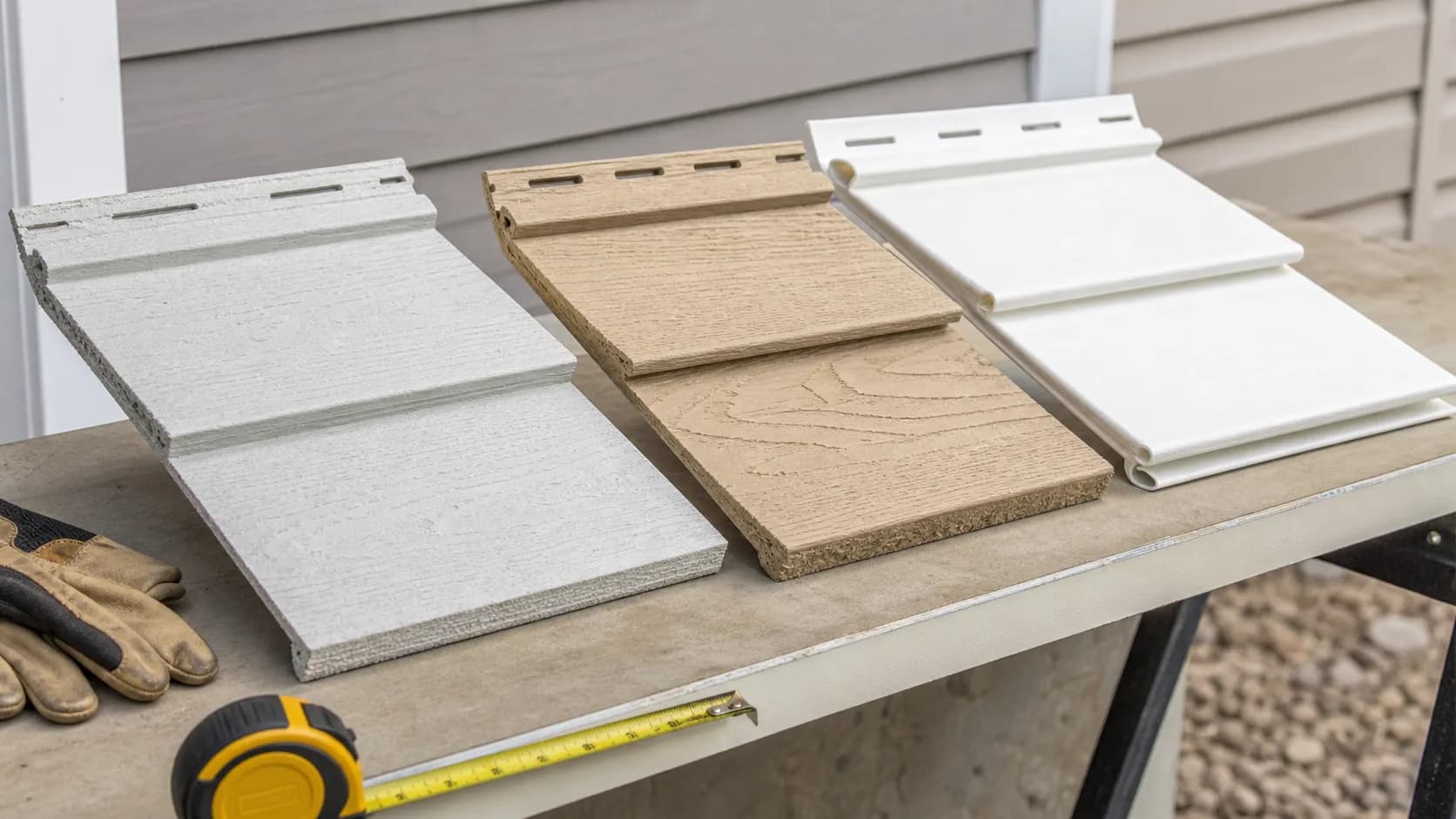
This guide compares the three siding material families that actually survive Texas heat: James Hardie HZ10 fiber cement, LP SmartSide engineered wood, and premium vinyl. Real specs, no hype.
Why Texas Heat Matters for Siding
Three failure modes get triggered or accelerated by sustained heat exposure:
- Vinyl heat distortion. Vinyl siding can soften and warp at sustained surface temperatures above its heat-distortion threshold. Premium "color-hold" formulations resist this better than budget vinyl, but physics still applies. Dark colors absorb significantly more heat than light colors.
- UV degradation of pigments and surface coatings. Field-painted finishes fade faster than factory-baked-on finishes. Decade-old vinyl shows uneven fade across elevations, especially north vs south. Repair patches rarely color-match years-old siding.
- Thermal cycling at fasteners and joints. Texas can swing 40°F+ in a 24-hour window during seasonal transitions. Standard latex caulks fail at expansion-prone joints over multiple cycles.
Side-by-Side Comparison
| Property | Hardie HZ10 | LP SmartSide | Premium Vinyl |
|---|---|---|---|
| Climate-engineered for Texas | Yes (HZ10 = zones 6-10) | Yes (engineered wood) | No (universal product) |
| Heat-distortion risk | None (non-combustible) | None (engineered wood) | Yes on dark colors south/west |
| UV-stable finish | ColorPlus baked-on | ExpertFinish prefinish | Color integral; uneven fade |
| Hail performance | Excellent | 1.75" warranty | Brittle below 50°F |
| Substrate warranty | 30 yr non-prorated | 50 yr prorated | Lifetime limited (varies) |
| Termite resistance | Inedible | SmartGuard treated | Inedible |
| Texas climate suitability | Excellent (HZ10 zones 6-10) | Strong | Acceptable for budget builds |
Hardie HZ10 in Detail
James Hardie sells HardiePlank in two formulations under their HardieZone System:
- HZ5 — engineered for cold-climate zones 1-5. Reduced water absorption rate. Drip-edge profile. Wrong product for Texas.
- HZ10 — engineered for hot, humid, hurricane-exposed zones 6-10. Resists cracking, splitting, rotting, and swelling through Texas heat and storm seasons. The right Hardie product for Austin and Houston.
The HardieZone System uses eight climatic variables to engineer formulation: temperature range, UV, humidity, rain, snow, hurricanes, hail, and topography. HZ10 specifically addresses the Texas combination of sustained high temperatures, UV, and (in Houston) hurricane wind.
Substrate warranty is 30 years, non-prorated, transferable. ColorPlus baked-on factory finish is the right choice for UV-stable color longevity on Texas walls. Field-painted Hardie does work but requires periodic repaints, and the painting itself is a weather-window challenge in Texas summer.
LP SmartSide in Detail
LP SmartSide is engineered wood with the SmartGuard process — zinc borate, waxes, and resins for termite and decay resistance. Carries a 5/50/15 warranty (5 years 100% labor and material, 50 years prorated substrate, 15 years on ExpertFinish prefinish).
The headline LP differentiator for Texas: an explicit hail damage warranty up to 1.75 inches in diameter when properly installed. Few siding warranties name a specific hail size, and Texas hail history makes this meaningful — particularly for Austin homeowners with documented claim history.
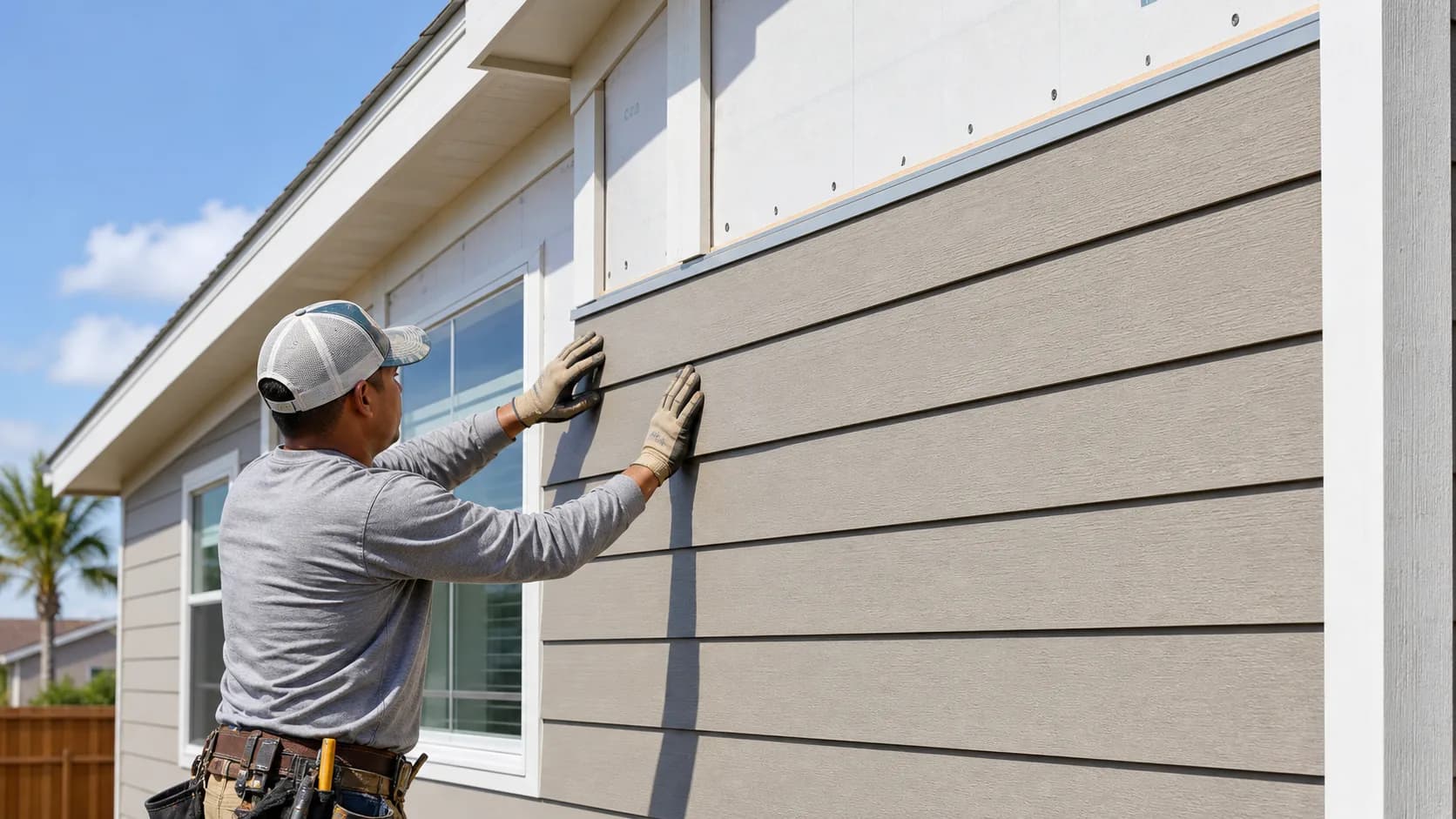
LP is lighter than fiber cement, which makes upper-story access easier on multi-story homes. It cuts and fastens like wood (standard carpentry tools, no specialty blades). For homes where install logistics matter — narrow lots with limited staging space, multi-story homes with access constraints — LP can be the practical choice.
Vinyl: When It Works, When It Doesn't
Vinyl works in Texas when a few conditions are met:
- Premium grade. 0.046 inches or thicker, ideally 0.050+ for south and west elevations. Standard 0.040 inch grade is risky.
- Light or medium colors. Dark colors absorb significantly more heat. Black, dark brown, and deep red all carry heat-distortion risk on south/west walls.
- Certified to ASTM D3679 under the VSI Product Certification Program.
- Insulated or premium product line. Foam-backed vinyl improves dimensional stability and impact performance. Premium product lines (typically 0.048+ inch thick) are noticeably better than economy.
Vinyl does NOT work well in Texas when:
- Standard-grade (0.040 inch) on south or west elevations
- Dark colors on direct-sun elevations
- Coastal-adjacent Houston ZIPs with chronic salt exposure (durability concerns at fastener penetrations)
- Hurricane-priority projects where hurricane wind uplift is a real consideration
- Hail-priority projects in areas with documented multi-event claim history
Our Recommendation by Scenario
- Austin or Houston, premium budget, long-term ownership: Hardie HZ10 ColorPlus. Thirty-year non-prorated warranty, factory-finished color, climate-matched formulation.
- Austin or Houston, hail-priority budget: LP SmartSide ExpertFinish. Named hail warranty, lighter weight, faster install.
- Coastal-adjacent Houston (Galveston, Clear Lake, Seabrook): Hardie HZ10 with stainless or hot-dip galvanized fasteners. Vinyl is not the right call in chronic salt exposure.
- Budget-driven projects on simpler homes: Premium-grade insulated vinyl in light to medium colors. Avoid standard-grade vinyl and dark colors.
- Historic restoration: Restoration of original siding where feasible; matched-profile Hardie HardiePlank Beaded for replacement sections.
Frequently Asked Questions
Common questions
Frequently asked
Lower-grade vinyl (0.040 inch standard) in dark colors on south or west elevations is at real risk of heat distortion under sustained 100°F+ ambient with direct sun pushing surface temperatures higher. Premium "color-hold" formulations and lighter colors resist this better. We recommend avoiding dark vinyl on direct-sun elevations regardless of grade.

Founder of Lapeyre Roofing, continuing a family legacy in Louisiana since 1699. Licensed in Louisiana, GAF Certified, and FORTIFIED Roofing specialist serving Texas and Louisiana.