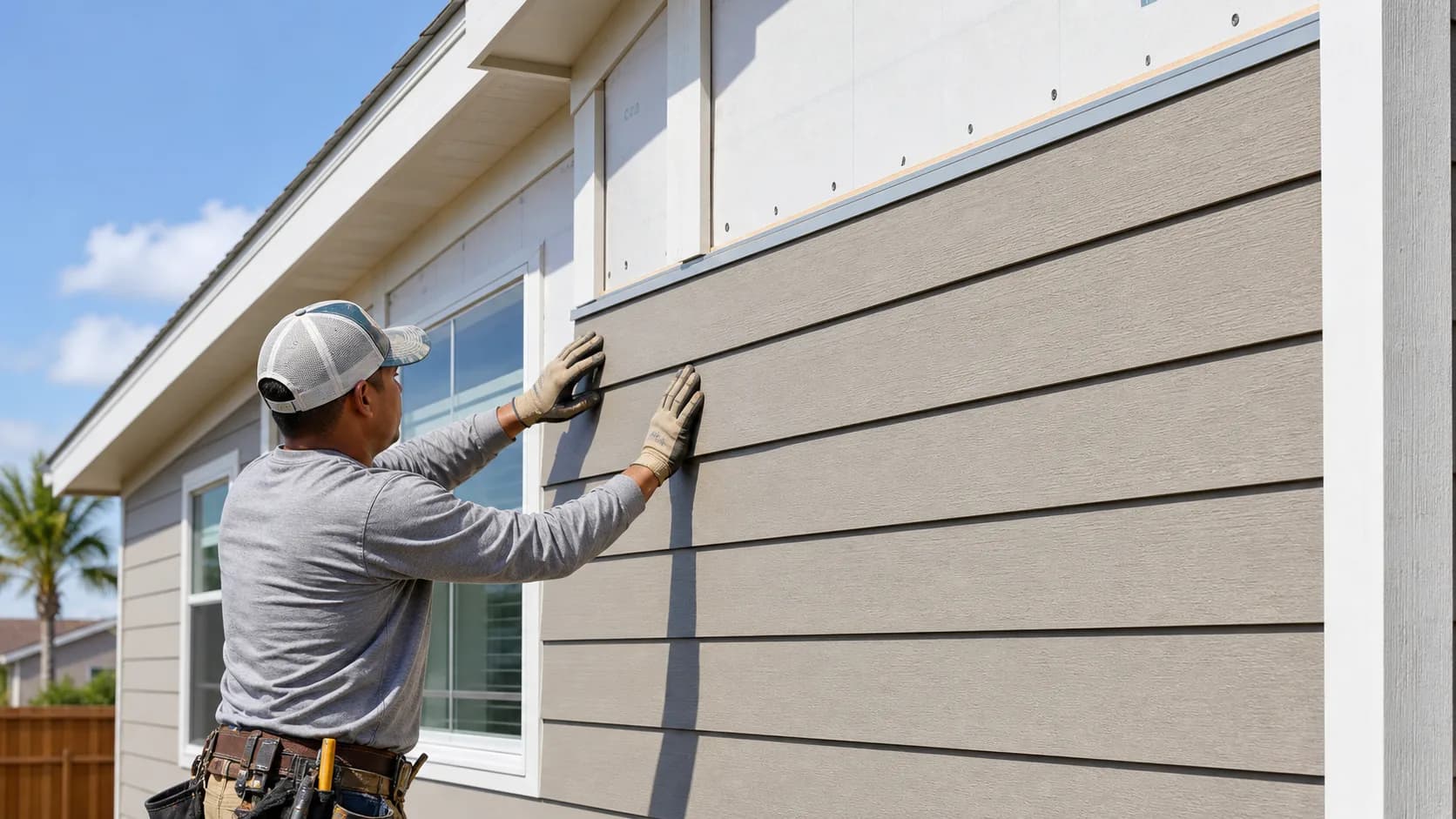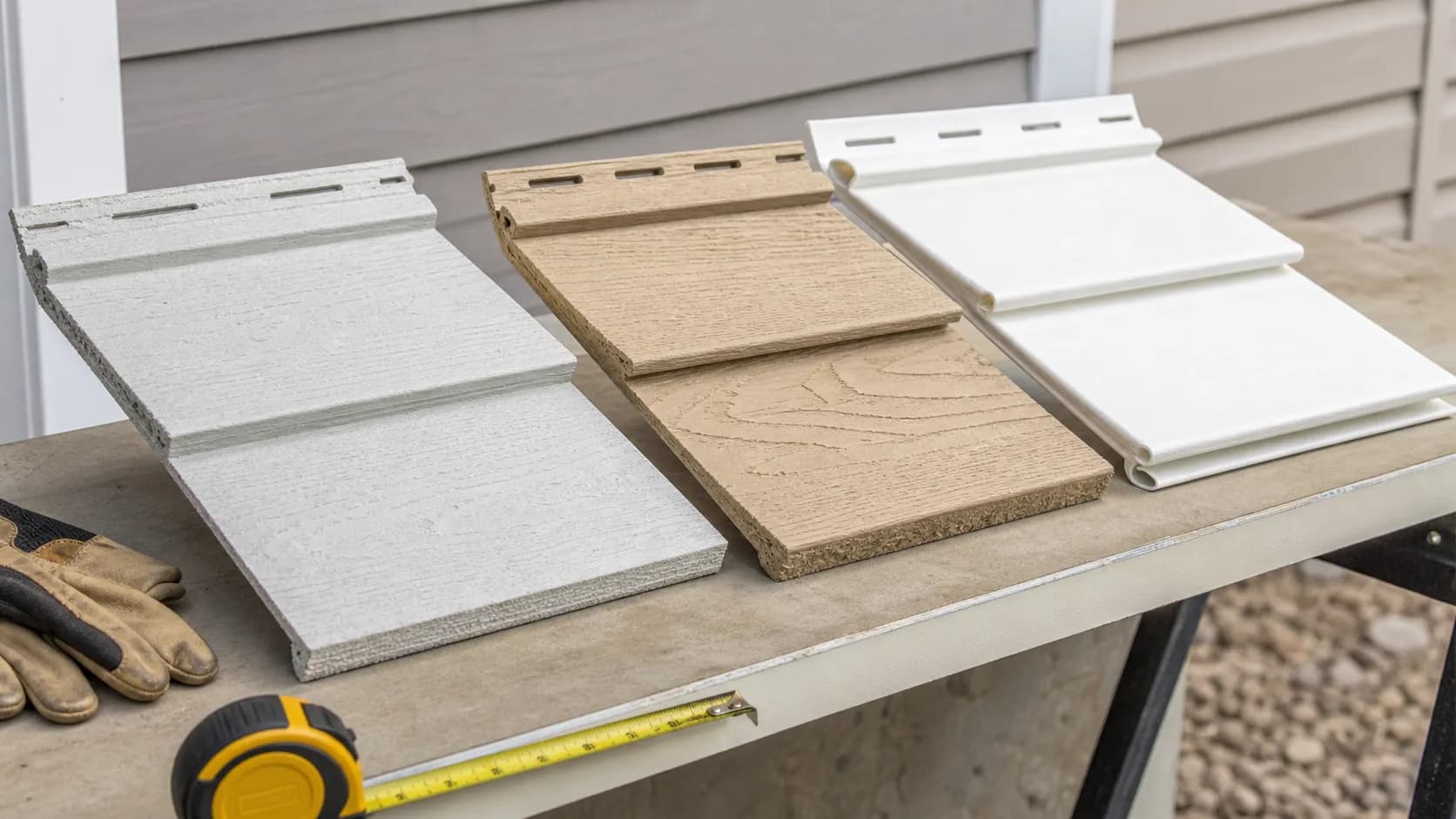
Vinyl is the budget choice. Fiber cement is the premium choice. The trade-offs are real and depend heavily on climate, hail exposure, and how long you plan to stay in the home. Here is the honest breakdown.
Vinyl and fiber cement are two completely different siding categories that often get compared head-to-head because they cover most of the residential market between them. The honest answer is that they each have a place — vinyl in the budget tier, fiber cement in the premium tier — and the right choice depends on climate, hail exposure, and how long you plan to stay in the home.
TL;DR
- Vinyl wins on: upfront cost, easy installation, no painting, well-established product, broad color selection in most grades
- Fiber cement wins on: longevity, fire rating, hail performance, heat tolerance, paintability, professional appearance, resale recovery
- Vinyl loses on: heat distortion in extreme sun, brittleness in cold-weather hail, uneven UV fade, partial-replacement color match
- Fiber cement loses on: cost, install complexity (heavier, specialty tools), repair difficulty
Cost
Premium vinyl is typically the lowest-cost installed siding category. Fiber cement (Hardie ColorPlus is the dominant brand) typically runs 30-50% above premium vinyl on a like-for-like installation, sometimes more on complex homes with significant trim work.
Cost factors that move the spread:
- Vinyl in standard grade (0.040 inch) is much cheaper than premium grade (0.048+ inch); we recommend premium for any meaningful exposure
- Insulated vinyl (foam-backed) sits between standard and premium vinyl on cost
- Fiber cement field-painted is cheaper than ColorPlus factory-finished; we recommend ColorPlus for UV-stable color longevity
- Multi-story homes pay more for fiber cement labor (heavier; lifting and access)
- Trim complexity drives fiber cement cost more than vinyl cost
Lifespan and Warranty
Vinyl: Manufacturer warranties typically run "lifetime limited" but the practical service life depends heavily on grade and climate. Premium vinyl in moderate climates can serve 30-40+ years. Standard vinyl in extreme climates (Texas heat, St. Louis cold-weather hail) shows degradation faster.
Fiber cement (Hardie): 30-year non-prorated transferable substrate warranty. Field experience routinely exceeds the warranty period. ColorPlus factory finish has its own separate warranty.
The structural difference: vinyl warranties are often pro-rated and lifetime-limited (with restrictions), while Hardie's 30 years are full-coverage non-prorated. For homeowners planning to be in the home 20+ years, the warranty math favors fiber cement.
Climate Performance
Hot/Humid (Texas, Louisiana, Houston)
- Vinyl: Heat distortion risk on dark colors at south and west elevations. Premium grades and color-hold formulations resist this better but physics still applies. Standard vinyl is risky.
- Fiber cement (HZ10): Engineered specifically for hot/humid zones. No heat distortion. Stable across humidity cycles. Class A fire-rated, important in WUI areas.
Cold-Climate (St. Louis, Missouri)
- Vinyl: Becomes brittle below 50°F, cracks on impact. Cold-weather hail is the dominant problem. Insulated vinyl performs better than standard.
- Fiber cement (HZ5): Engineered for cold climates with reduced water absorption and freeze-thaw resistance. Drip-edge profile for water management.
Hail and Impact
Hail is where the gap between vinyl and fiber cement is largest:
- Vinyl: Bruises and cracks under hail impact. Cold-weather hail (below 50°F) is particularly bad — vinyl becomes brittle. Insulated vinyl performs noticeably better.
- Fiber cement: Excellent hail resistance. Properly-installed fiber cement handles moderate hail without significant damage. Class 4 impact-rated systems are available where homeowners prioritize hail performance.
For St. Louis, Austin hail-priority homes, and any market with multi-event hail history, fiber cement is the materially better choice for hail durability.
Fire Rating
- Vinyl: Combustible. Will burn and melt under sustained heat exposure. Class B or C fire-rated typically.
- Fiber cement: Non-combustible per ASTM E136. Will not burn. Class A fire-rated.
For Wildland-Urban Interface (WUI) zones and homes with elevated wildfire risk, fiber cement is the default choice.
Repair and Color Matching
- Vinyl: Easier to spot-replace damaged panels (snaps in/out). But UV fade is uneven, so a new panel rarely matches years-old siding. Color match for partial replacements is one of vinyl's weakest practical points.
- Fiber cement: Harder to spot-replace (cut-in repairs require more skill), but ColorPlus factory finish holds color much more uniformly. Field-painted fiber cement can be touched up at the worst-fade areas.
For full-elevation replacements after storm damage, neither is meaningfully easier than the other.
How to Choose
Honest decision tree:
- Budget tight, simple home, moderate climate? Premium vinyl (0.046+ inch grade) in light to medium colors. Avoid standard grade and dark colors on direct-sun elevations.
- Hail-priority market (St. Louis, parts of Austin)? Fiber cement or LP SmartSide engineered wood. Vinyl is risky in cold-weather hail.
- Hurricane country (Houston, NOLA)? Fiber cement or LP SmartSide. Standard vinyl is not the right call for coastal hurricane-exposed homes.
- WUI / wildfire zone? Fiber cement, full stop. Class A non-combustible cladding is the right move.
- Long-term ownership (20+ years)? Fiber cement's warranty math wins. Premium vinyl can also last 30+ years in moderate climates but the warranty structure is weaker.
- Resale priority in mid-market neighborhood? Fiber cement signals "premium" to buyers. Vinyl signals "budget" or "starter home." This is unfair but real.
Frequently Asked Questions
Common questions
Frequently asked
For long-term ownership, hail-prone climates, hurricane country, WUI zones, or homes where resale value matters: yes. For budget-driven projects in moderate climates on simpler homes where the homeowner plans to be there 5-10 years, premium vinyl is a defensible choice. The 30-50% cost premium for fiber cement buys real differences in longevity, hail performance, and fire rating.

Founder of Lapeyre Roofing, continuing a family legacy in Louisiana since 1699. Licensed in Louisiana, GAF Certified, and FORTIFIED Roofing specialist serving Texas and Louisiana.