Compare St. Louis historic slate roof proposals by damaged area, flashing, matching material, access, and Cultural Resources review before replacing sound slate.
Ask what is failing before replacing the slate
A historic slate roof deserves a component-by-component assessment. A leak, missing pieces, or an aging metal detail does not by itself establish that every slate must be removed. Before comparing repair and replacement proposals in St. Louis, ask the contractor to identify the failed components and show how widespread the condition is.
The National Park Service’s slate preservation brief explains repair and replacement considerations for historic slate assemblies. Use it to frame questions for a specialist, not to diagnose the roof from the sidewalk. The useful deliverable is a documented assessment of your roof’s slate, fasteners, flashing, and supporting conditions.
Request a roof-area inventory
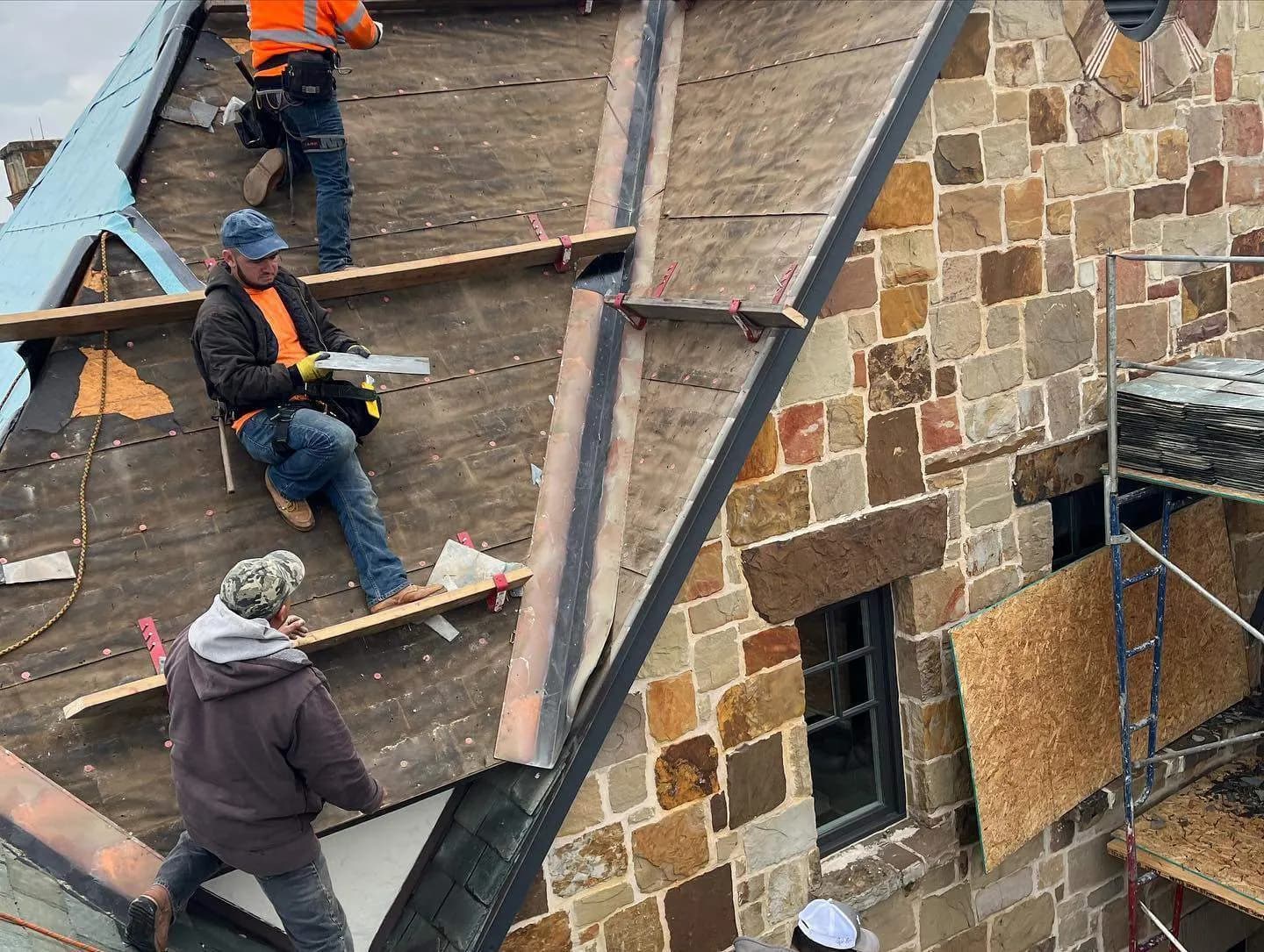
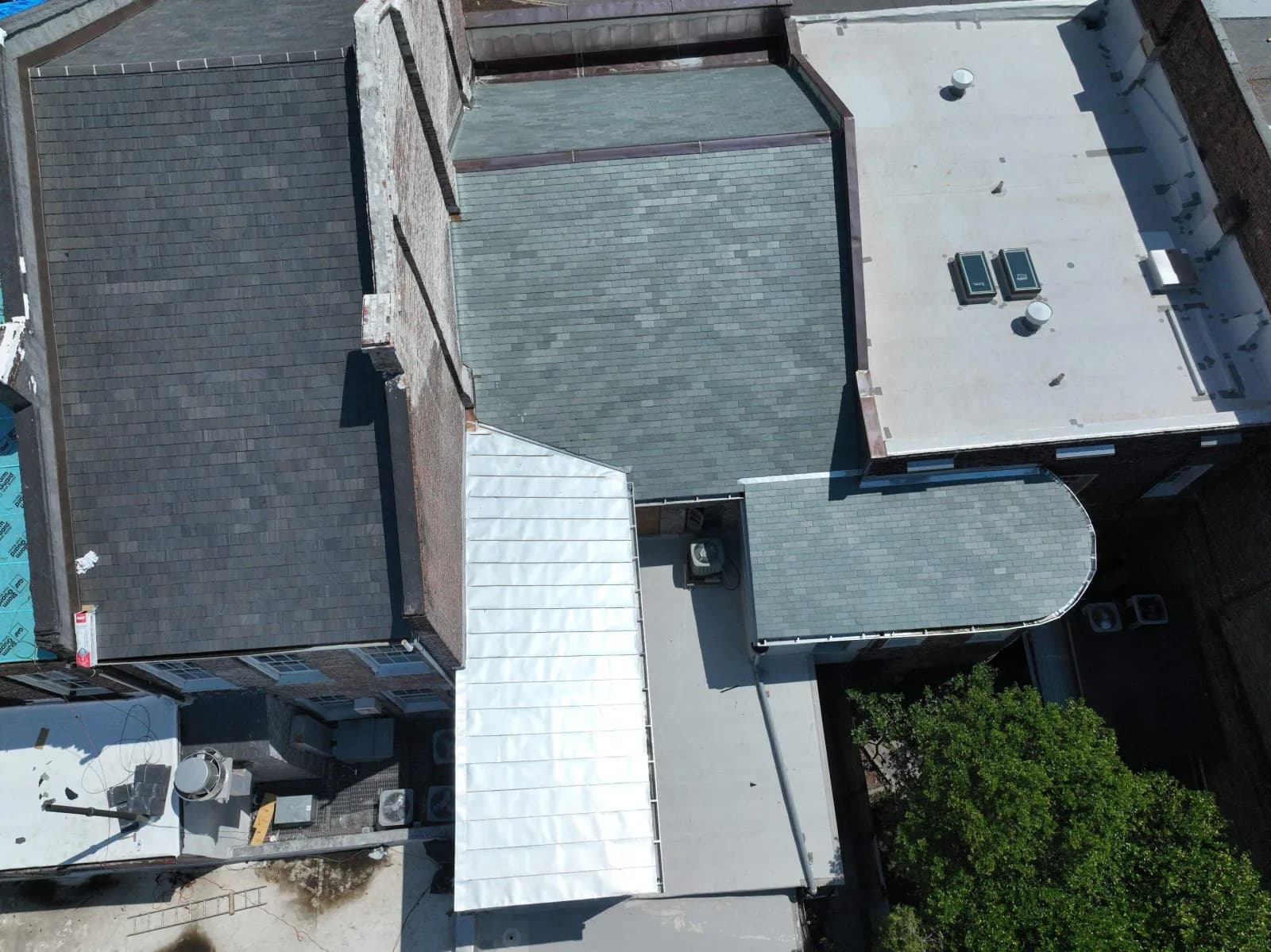
Ask the contractor to divide the roof into identifiable sections and record missing, broken, slipping, or otherwise suspect pieces by location. Have it identify visible metal details and roof intersections that need attention. Request the inspection method and any inaccessible areas so the map does not imply that concealed components were fully examined.
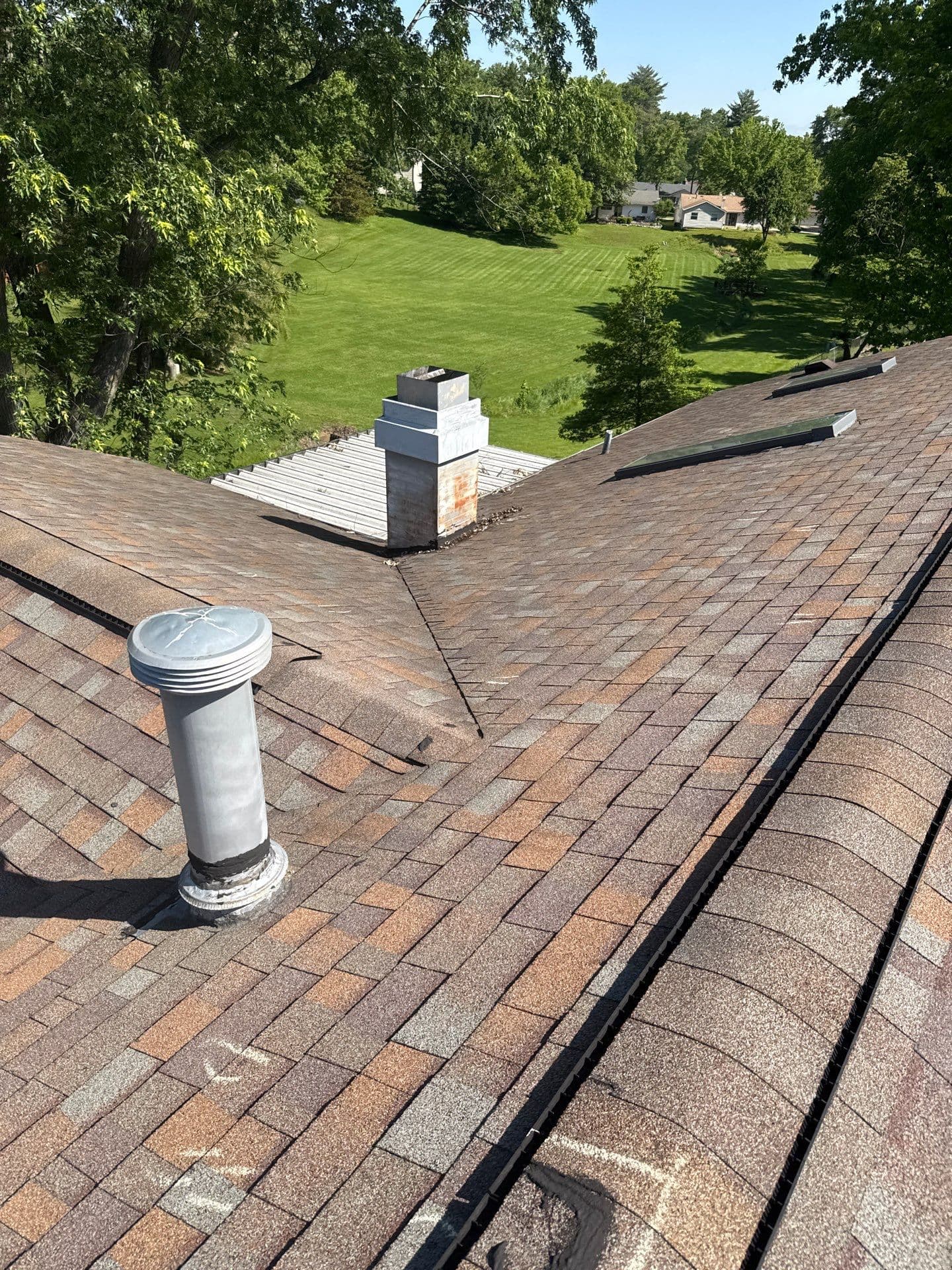
Separate field slate from valleys, chimney intersections, ridges, and other details. If replacement is recommended, ask whether the recommendation applies to one section or the entire roof and what evidence supports that boundary. “Old roof” is context; it is not a measured scope of deterioration.
Specify the repair material and handling plan
Ask how replacement slate will be matched for dimensions, thickness, color, and installation compatibility. Have the contractor identify whether suitable pieces are already available or need to be sourced. Do not allow a generic material allowance to hide uncertainty about availability and timing.
Ask how workers will access the roof and protect pieces outside the repair area. The proposal should state how unexpected breakage is documented and priced, where removed reusable material will be stored, and whether spare matching pieces will be left for future maintenance. These are practical scope questions, not a reason to assume a repair will necessarily damage the surrounding roof.
Address local historic review before selecting a substitute
The City’s historic district guidance explains that exterior changes are generally reviewed against district standards. Confirm whether the property is covered and ask the Cultural Resources Office about the exact proposed material and visible details. Do not assume an asphalt or synthetic substitute is acceptable because it is marketed as resembling slate.
Prepare photographs and a concise scope that distinguishes repair in kind from replacement with another material. Ask which specifications or samples are needed before ordering. Approval for one area or material should not be treated as permission to make a different visible substitution during installation.
Compare meaningful repair and replacement options
For each viable option, request the work included, components retained, limitations, and maintenance questions that remain. A repair estimate should identify the specific defects it addresses. A replacement estimate should explain removal, deck assessment, flashing, material selection, and the protection of architectural details. Neither should promise an unsupported remaining lifespan.
For a hypothetical roof with localized slate loss and a failing valley, compare a defined local repair with a larger scope only after the contractor explains the condition of adjacent materials. The price difference is informative when the scopes describe the same evidence. It is much less useful when one assumes a sound roof and another assumes complete failure.
Prepare for a specialist inspection
Gather prior slate repair invoices, available installation history, and photos of interior leak locations. Identify access constraints and any historic-review records. Ask the contractor whether its assessment includes the specialty details involved and which items require another professional. Do not request destructive investigation without a specific purpose and repair plan.
Request a St. Louis roof assessment and identify the slate roof when booking. For the broader material decision, read our slate repair-versus-replacement guide. The next step should be a scoped diagnosis and review path, not automatic replacement based on age alone.
Published by
Lapeyre Roofing Editorial Team
Homeowner guides
Our editorial team publishes homeowner guides with sources linked in the article. For a recommendation about your roof, request an inspection of the property.
Found this helpful? Choose Lapeyre Roofing as a source you want to see on Google.
Add Lapeyre Roofing as a preferred source on Google (opens a Google window)