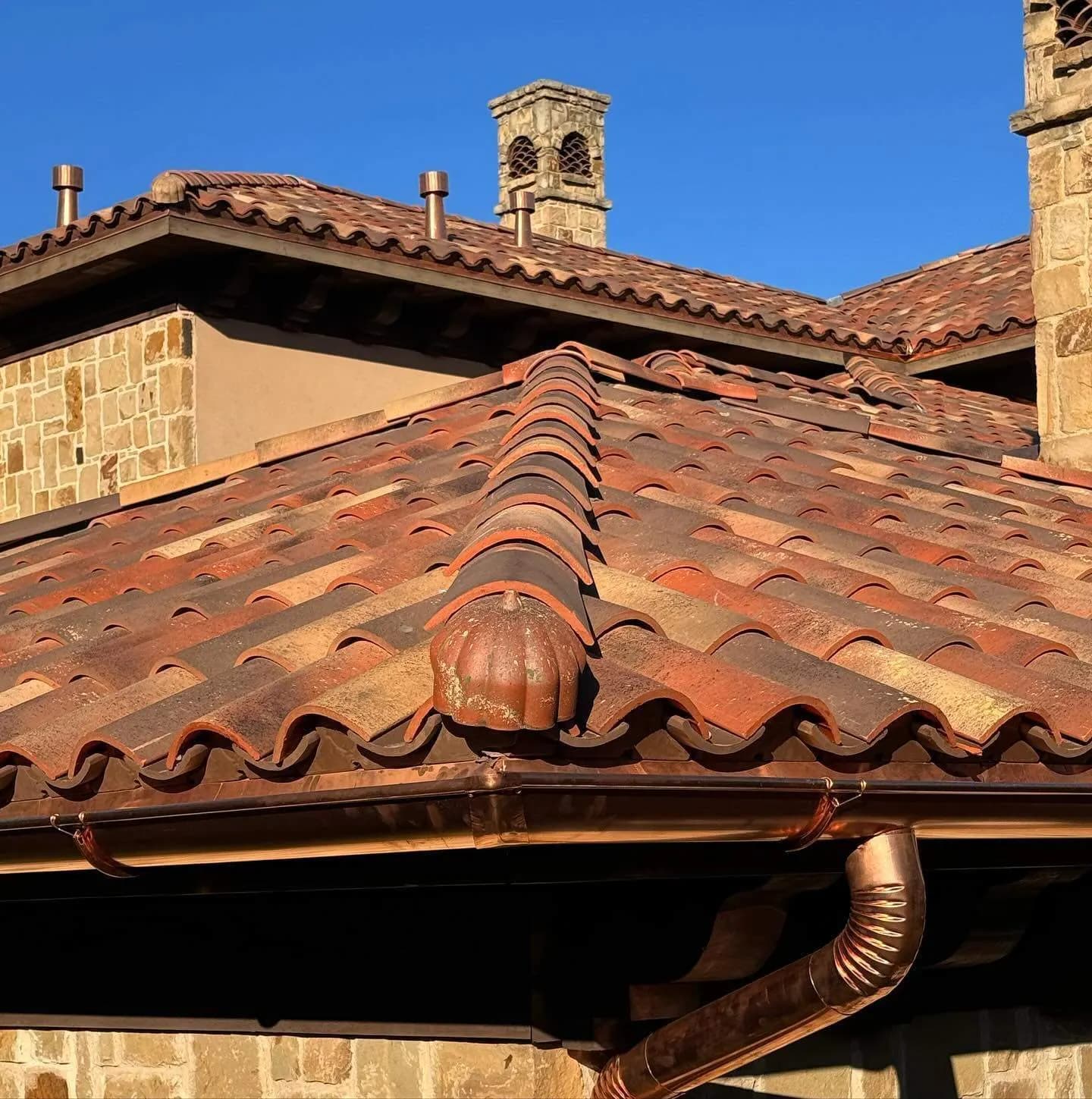
Clay Tile Roofing in New Orleans
Installation, Repair, and Reclaimed Tile Matching for Historic Roofs
Clay tile has covered New Orleans buildings since the French and Spanish colonial era, and the French Quarter still holds terracotta roofs that define the city's skyline. Lapeyre Roofing installs new clay tile, repairs and restores existing tile roofs, and sources reclaimed and salvaged tile from regional demolitions to match historic profiles that are no longer manufactured. Our specialty roofing craft was built on French Quarter landmarks, including the slate and copper restoration of the historic Sylvain building, and we bring that same standard to clay tile: correct fastening for hurricane wind, soldered copper flashings, and honest guidance on what your roof actually needs.
Prefer to book online? Schedule your free New Orleans estimate
Schedule Your FREE
Roof Inspection & Estimate
Request a written estimate
Where is your property?
We serve Texas, Louisiana & Missouri
What do you need?
Almost done!
How can we reach you?
By submitting, you consent to follow-up messages. Reply STOP to opt out.
Sources we use
Check the scope against current guidance
Official sources reviewed September 7, 2026, plus a planning tool for comparing the decisions in your estimate.
New Orleans HDLC
Historic exterior-work application process
Reviewed September 7, 2026. Identify the district and itemize existing and proposed exterior materials with photos before work.
Read the official guidance →National Park Service
Preserving and repairing historic clay tile
Reviewed September 7, 2026. Preservation Brief 30 explains compatible repairs, salvage, and matching historic clay tile.
Read the official guidance →Who installs clay roof tiles in New Orleans, and what does it cost?
Lapeyre Roofing installs, repairs, and restores clay tile roofs throughout New Orleans from our office at 421 Ninth St. Clay tile installation in New Orleans typically costs $16-$50+ per square foot installed in 2026: stock barrel and Spanish profiles run $16-$25, premium and custom profiles $25-$40, and historic restorations with reclaimed tile matching $30-$50+. Repairs for cracked or displaced tiles commonly run $500-$2,500. We source reclaimed and salvaged clay tile from regional demolitions to match discontinued historic profiles, handle HDLC and VCC approvals in historic districts, and fasten every roof to Orleans Parish wind requirements.
- Clay tile installation: $16-$50+ per square foot installed (2026 ranges)
- Clay tile repairs: typically $500-$2,500 depending on access and scope
- Reclaimed and salvaged tile sourcing to match discontinued historic profiles
- HDLC and VCC (Vieux Carre Commission) approval experience
- Hurricane-rated fastening: mechanical attachment sized for Orleans Parish wind speeds
- Copper flashing standard; crews led by a master craftsman with hundreds of specialty tile and slate roofs
Clay Tile in the New Orleans Climate
Why Clay Tile Belongs on the Gulf Coast
Clay tile is one of the few roofing materials genuinely at home in New Orleans weather. Kiln-fired terracotta does not rot, rust, or fade, and it sheds heat better than nearly anything else you can put on a roof. But the climate punishes bad installation: wind uplift, wind-driven rain, and corroded fasteners are what actually take clay tile roofs down here, and each has a known engineering answer.
Hurricane Wind Uplift
Impact: Orleans Parish design wind speeds run roughly 130-150 mph. Tiles that are merely bedded in mortar or nailed to older schedules can lift at edges, ridges, and field during hurricanes, and a displaced tile becomes both a leak and a projectile.
Our Solution: We mechanically fasten every tile with stainless or copper screws and nails per high-wind attachment tables, add clips or adhesive-foam supplementation in edge and corner zones where the exposure demands it, and secure hips and ridges mechanically rather than relying on mortar alone.
Wind-Driven Rain
Impact: Gulf storms push rain sideways and under tile laps. On a tile roof, the tile is the armor but the underlayment is the actual waterproofing, and old felt underlayments fail decades before the tile does.
Our Solution: We install self-adhering, high-temperature underlayments as a true secondary water barrier beneath the tile, the same sealed-deck logic that FORTIFIED standards are built on, so wind-driven rain that gets past the tile still never reaches your decking.
Heat and Humidity
Impact: New Orleans summers cook roof assemblies for months, degrading cheap underlayments and rotting wood battens that stay damp in trapped humidity.
Our Solution: Clay tile itself thrives in heat, and its natural airspace vents the roof. We specify high-temperature underlayments and, where battens are used, detail them for drainage so water never ponds behind them.
Salt Air and Fastener Corrosion
Impact: Salt-laden coastal air corrodes galvanized fasteners and cheap flashing metals, which is how tile roofs with perfectly good tile end up leaking or shedding tiles.
Our Solution: Stainless steel and copper fasteners exclusively, with copper flashings at valleys, walls, and penetrations. Corrosion-proof metals are what let the fastening system last as long as the fired clay above it.
Torrential Rainfall
Impact: Sixty-plus inches of rain a year, delivered in bursts, means valleys and roof-to-wall transitions on tile roofs carry heavy concentrated flow.
Our Solution: Wide-profile copper valleys with proper tile setback, copper pan flashings at walls, and correct headlap keep concentrated water moving off the roof instead of under it.
Clay Tile Across New Orleans Neighborhoods
Clay tile shows up in two very different roles in New Orleans: original historic terracotta on colonial-era and early 20th-century buildings, and newer tile on Mediterranean-style homes. The right approach differs by neighborhood.
French Quarter
The heart of the New Orleans clay tile tradition, with flat terracotta tile and barrel tile dating to Spanish colonial rebuilding after the great fires. All exterior work is regulated by the Vieux Carre Commission.
VCC review requires matching original tile profiles, which frequently means sourcing reclaimed tile because the originals are long out of production. Our French Quarter craft portfolio and salvage sourcing relationships exist for exactly this situation.
Esplanade Ridge and Bayou St. John
Early 20th-century Mediterranean Revival and Spanish Revival homes with barrel and Spanish tile, many with original terracotta approaching a century old.
These roofs are prime candidates for restoration: relaying sound original tile over new underlayment and flashings. Reclaimed tile fills in for broken pieces so the roof keeps its aged color blend.
Uptown and University Area
Mediterranean Revival homes near Audubon Park and the universities, plus institutional buildings with historic clay tile roofs.
Partial HDLC jurisdiction. Common work includes underlayment replacement beneath original tile, copper valley relining, and matched repairs after storms using salvaged tile lots.
Lakeview and Lake Vista
Mid-century and newer homes, including Mediterranean-style builds with clay tile, largely outside historic district regulation.
More freedom in profile and color selection. New installations here focus on wind engineering: sealed-deck underlayment, mechanical fastening, and edge-zone detailing, with FORTIFIED pairing available at replacement time.
Metairie-Adjacent Lakefront and Old Metairie
Established luxury homes, many with clay or concrete tile from the 1970s-2000s now reaching underlayment end-of-life.
The classic scenario: tile with decades of life left sitting on dead felt. Lift-and-relay restoration reuses your tile over new underlayment at a fraction of full replacement cost.
Clay Tile Roofing Costs in New Orleans (2026)
Clay tile spans a wide price range depending on tile source, profile, and whether the project is new installation, restoration, or historic matching. These are honest 2026 ranges for New Orleans work.
Clay Tile Repair (Cracked or Displaced Tiles)
$500 - $2,500
Replacing broken tiles with matched new or reclaimed pieces, re-securing displaced tiles, and correcting flashing failures. Cost driven by access, tile availability, and scope.
New Clay Tile — Stock Profiles
$16 - $25 per sq ft installed
Standard barrel, Spanish (S-tile), and flat profiles in stock colors from major manufacturers, installed with high-temperature underlayment and stainless fastening.
New Clay Tile — Premium and Custom Profiles
$25 - $40 per sq ft installed
Premium domestic and imported tile, custom color blends, and complex rooflines with full copper flashing packages.
Lift-and-Relay Restoration (Reusing Your Tile)
$12 - $22 per sq ft
Carefully removing existing tile, replacing underlayment and flashings, and relaying your original tile with reclaimed pieces filling breakage. Often the best value on historic tile roofs.
Historic Restoration with Reclaimed Tile Matching
$30 - $50+ per sq ft installed
Sourcing salvaged tile to match discontinued profiles, historic-district documentation, and full copper detail work on landmark-grade roofs.
Factors Affecting Price
- 1Tile source: stock production, imported, or reclaimed/salvaged lots
- 2Whether existing tile can be salvaged and relaid (condition and breakage rate)
- 3Roof complexity: hips, valleys, dormers, and parapet conditions
- 4Structural capacity: clay tile weighs roughly 600-1,100 lbs per square
- 5HDLC or VCC approval and matching requirements
- 6Copper flashing scope and hurricane fastening detail for the site exposure
These are typical 2026 ranges for New Orleans clay tile work, not quotes. Tile roofs vary enormously in condition and matching difficulty, and exact pricing follows a free inspection and a written, itemized estimate.
How We Handle Clay Tile Projects in New Orleans
Clay tile work in New Orleans is equal parts engineering and detective work: engineering for the wind zone, detective work for matching tile that may not have been manufactured in 80 years. Here is our process.
Inspection and Tile Assessment
We inspect the tile, underlayment, fasteners, flashings, and structure. The key question on existing roofs: is the tile sound and the underlayment dead? If so, lift-and-relay restoration usually beats replacement, and we say so.
Local Note: On pre-1940 New Orleans tile roofs, the terracotta is often in remarkable shape while the felt beneath it turned to dust decades ago.
Profile Identification and Sourcing Plan
We identify the tile profile, maker, and dimensions, then build a sourcing plan: current production match, compatible modern equivalent, or reclaimed tile from salvage networks and regional demolitions.
Local Note: Many historic New Orleans profiles are discontinued. Reclaimed tile from demolished buildings across the Gulf South is frequently the only correct match, and we maintain the relationships to find it.
HDLC or VCC Approval Where Required
For historic districts, we prepare the Certificate of Appropriateness application with photos, tile samples, and specifications. In-kind repair is often staff-approvable; visible material changes go to architectural review.
Local Note: The Vieux Carre Commission covers the French Quarter; the HDLC covers most other local historic districts. We build realistic review timelines into the schedule.
Structural Verification
Clay tile weighs 600-1,100 lbs per square depending on profile. For new tile on a roof that never carried it, we verify framing capacity and coordinate engineering before ordering material.
Local Note: Many older New Orleans homes were framed generously and take tile well, but we confirm rather than assume.
Tear-Off or Careful Tile Removal
For relays, tile comes off carefully, palletized and staged for reuse, with expected breakage covered by reclaimed stock. For replacements, we tear off and inspect the deck, repairing decking before anything goes back on.
Sealed-Deck Underlayment
Self-adhering high-temperature underlayment across the deck, the true waterproofing layer of a tile roof and the same secondary water barrier philosophy FORTIFIED standards use. This is the component that decides whether wind-driven rain reaches your ceiling.
Copper Flashing and Mechanical Tile Fastening
Copper valleys, wall pans, and penetration flashings go in first. Tile is then fastened mechanically with stainless or copper fasteners per high-wind attachment schedules, with enhanced fastening in edge and corner zones and mechanically secured hips and ridges.
Local Note: Mortar-only attachment does not survive hurricane uplift. Every tile on our roofs is mechanically secured.
Final Inspection and Documentation
We verify fastening, flashing integration, and appearance, then document the completed roof for your records, insurance, and any historic review closeout. Leftover matched tile is left with you as attic stock for future repairs.
Clay Tile Options for New Orleans Roofs
The right clay tile for a New Orleans roof depends on whether you are matching history or building new. These are the categories we work with and where each fits.
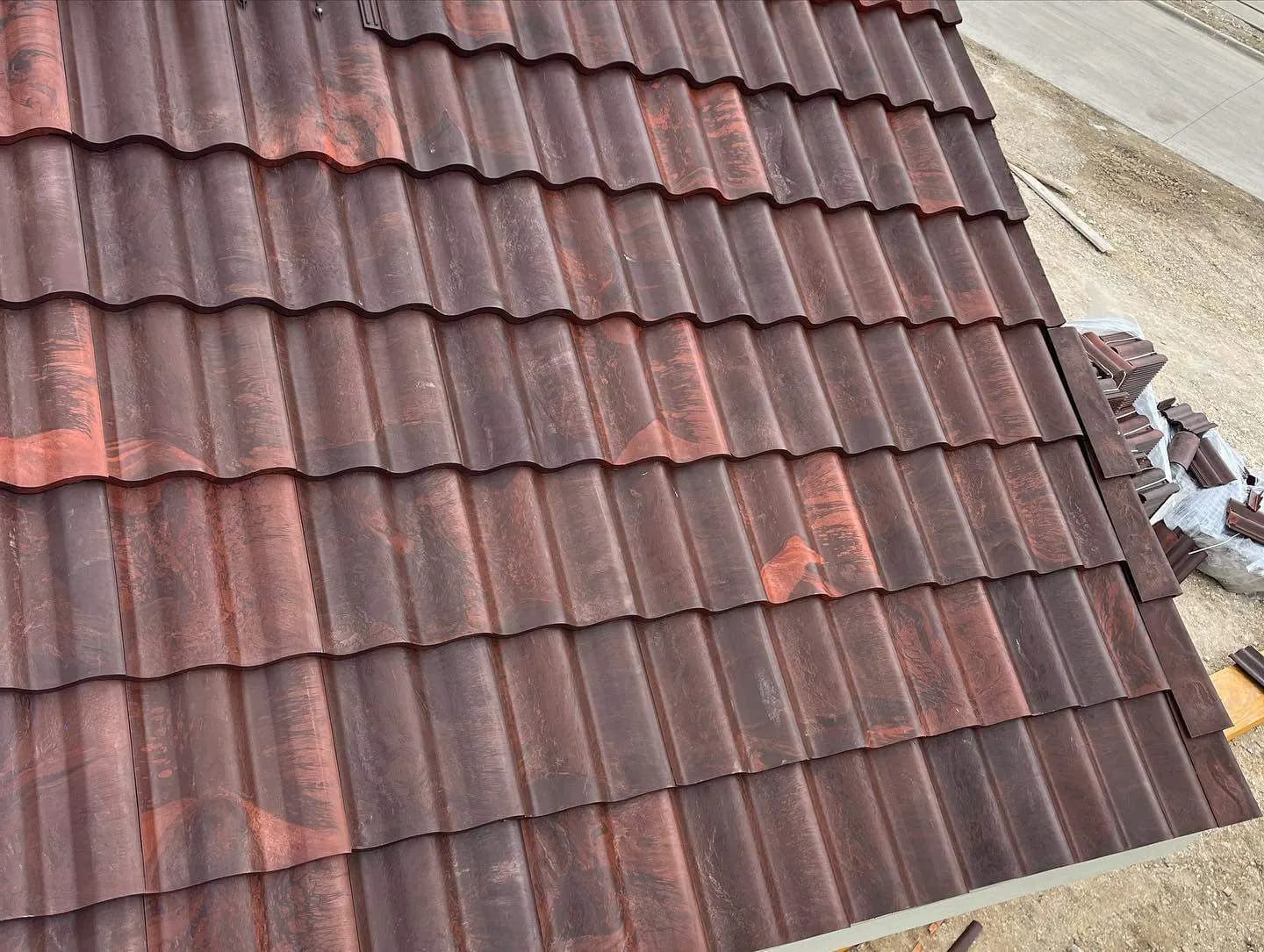
Reclaimed and Salvaged Clay Tile
Why for New Orleans
New Orleans has more discontinued historic tile profiles per square mile than almost any American city. Reclaimed tile from regional demolitions carries authentic age, color, and exact profile geometry that new production cannot replicate.
Best For
Historic repairs and restorations in the French Quarter, Esplanade Ridge, and Uptown; filling breakage on lift-and-relay projects; any roof where the patch must disappear.
Considerations
Supply is lot-by-lot and quality varies, so every reclaimed lot gets inspected for cracks, spalling, and frost damage before we buy it. Good salvage costs real money but solves problems nothing else can.
Barrel and Spanish (S) Profile Clay Tile
Why for New Orleans
The classic Gulf Coast look, with deep channels that shed torrential rain and a ventilated profile that cuts attic heat in long summers.
Best For
Mediterranean Revival homes, new construction in Lakeview and lakefront neighborhoods, and colonial-influenced architecture.
Considerations
True two-piece barrel costs more to install than one-piece S-tile. High-profile tile demands disciplined edge-zone fastening in this wind region.
Flat Terracotta Tile
Why for New Orleans
The flat clay tile of early New Orleans, still correct for many French Quarter and Creole-era restorations, with a clean shadow line that reads properly on historic facades.
Best For
Historic restorations under VCC and HDLC review; buildings documented with flat tile originally.
Considerations
Historic flat profiles frequently require reclaimed sourcing or specialty manufacturers. Interlocking modern flat tile is a different look and not always approvable as a substitute.
Premium Domestic Clay Tile (Including Ludowici)
Why for New Orleans
For owners who want new tile with century-scale documented performance, premium American terracotta offers custom profiles and colors that can replicate historic New Orleans looks with modern warranties.
Best For
Landmark-grade new installations and full replacements where budget supports the best available material.
Considerations
Lead times of several weeks to months for custom work. See our dedicated New Orleans Ludowici clay tile page for depth on that manufacturer.
Copper Flashings and Stainless Fastening
Why for New Orleans
Tile lasts a century; the metals must too. Copper handles salt air and humidity better than any common alternative, and stainless fasteners eliminate the corrosion failures that strip tile roofs in coastal climates.
Best For
All valleys, wall pans, penetrations, and every tile fastener on every project.
Considerations
Copper runoff can stain light masonry, so drip details matter. Never mix galvanized fasteners into a copper system.
Why Choose Lapeyre for Clay Tile in New Orleans
Most roofing companies in this market install shingles and treat tile as an occasional sideline. Specialty steep-slope craft is the center of our reputation, and clay tile work draws directly on it.
Craft Proven on French Quarter Landmarks
Our specialty roofing portfolio includes the restoration of the historic slate and copper standing-seam roof on the Sylvain building, one of the oldest buildings in New Orleans, plus multiple additional French Quarter slate roofs. Clay tile demands the same disciplines: matched materials, soldered copper, and coursing that survives scrutiny.
Master Craftsman-Led Crews
Our slate and tile crews are led by a master craftsman whose portfolio includes university landmarks like SMU and Tulane and hundreds of specialty slate and Ludowici roofs across the country. Clay tile installation is a craft trade, and our crews learn it from someone who has spent a career in it.
Reclaimed Tile Sourcing
We actively source salvaged clay tile from regional demolitions and salvage networks to match discontinued historic profiles. When your 1920s barrel tile has no modern equivalent, we can usually still find it.
Hurricane Engineering, Not Just Aesthetics
Every tile mechanically fastened to high-wind attachment schedules, sealed-deck underlayment beneath, and edge zones detailed for Orleans Parish wind speeds. We build tile roofs to be standing after the storm, and we can pair replacement projects with FORTIFIED upgrades.
HDLC and VCC Experience
We prepare Certificate of Appropriateness applications, provide samples and documentation reviewers expect, and design tile work that passes historic review. The approval process is part of our scope, not your homework.
Restoration-First Honesty
If your tile is sound and only the underlayment has died, we will quote you a lift-and-relay instead of a full replacement. Reusing good terracotta is better for your budget and for the building.
Make reclaimed clay tile a documented material decision
A reclaimed tile lot is useful only if it fits the roof being repaired. Ask for a sample comparison covering profile, dimensions, exposure, thickness, fastening, and color variation. Count field tiles and accessories separately: ridge, hip, starter, and cut pieces may be harder to replace than standard field units. The estimate should explain how missing or damaged pieces are sourced and whether an acceptable sample must be approved before the lot is purchased.
The National Park Service's clay-tile preservation guidance emphasizes matching historic clay material and avoiding incompatible patching. Use that principle to compare repair, lift-and-relay, and replacement scopes. Ask what condition supports salvage, how pieces will be handled and stored, and how breakage or a low salvage yield changes the price. A replacement covering that looks similar from the street may still differ in fit and historic character; resolve that decision with the applicable reviewer before demolition.
For New Orleans properties subject to historic review, show the proposed field tile, trim, and visible flashing as a single package. Determine whether HDLC, VCC, or another review path applies to the address. Keep the roofing permit and any design approval in the project record. A complete proposal also addresses underlayment, fastening, structural suitability, drainage, and temporary protection. Use the material selector to clarify priorities, then obtain a written scope for the actual tile system rather than applying a shingle-roof cost assumption.
Craftsmanship You Can Inspect
Tile rewards close inspection. These photos show the hips, ridges, copper work, and finish detail our crews hold themselves to on every roof.
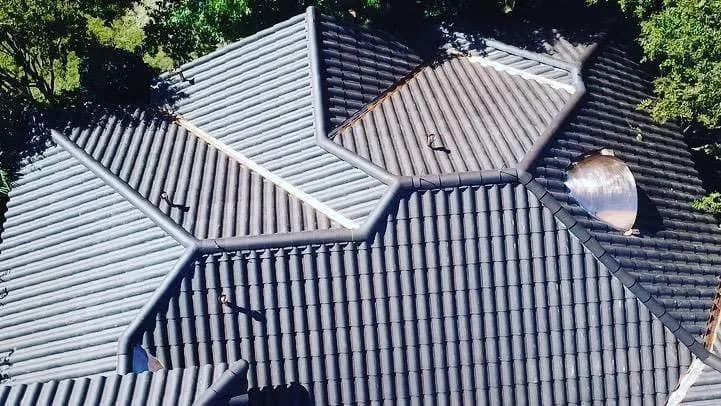
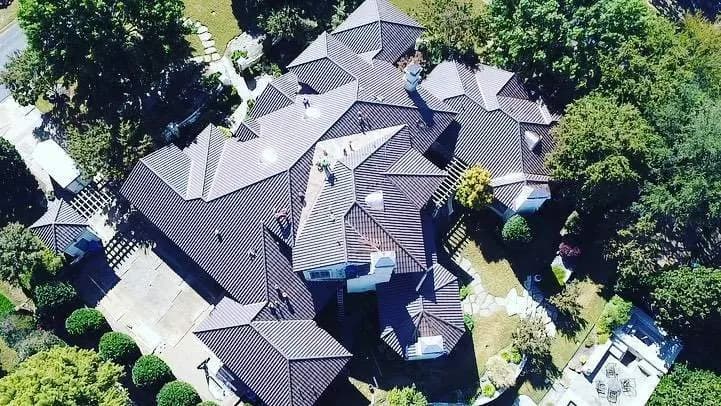
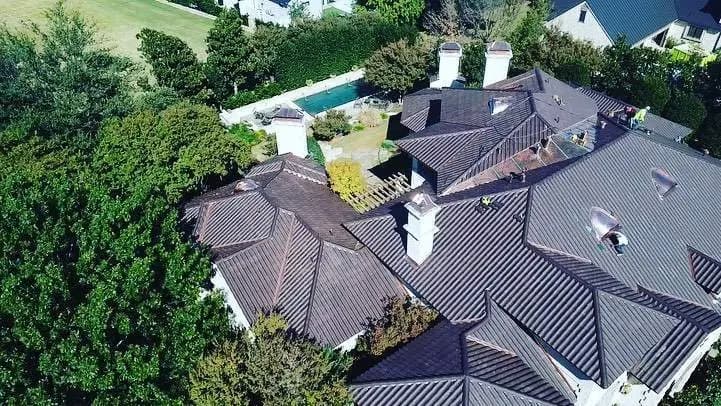
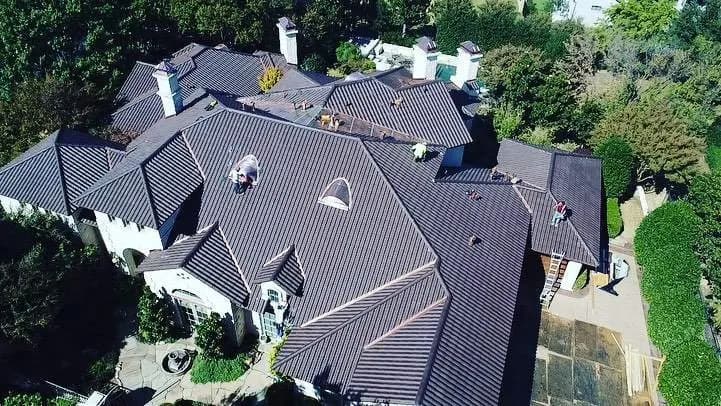
Gallery photography is from the portfolio of our slate and tile crew lead — a master craftsman with hundreds of specialty slate and tile roofs completed across the country.
Compare your options before signing
Compare roofing material priorities
Organize budget, maintenance, and material tradeoffs before a property-specific specification.
Read more about this roofing decision
Clay Tile Roof Cost 2026: Real Prices
Clay tile roofing costs $16-$50+ per sq ft installed. Compare Spanish tile, terracotta, and Ludowici prices, 75-100+ year lifespans, and real repair costs.
Ludowici Tile Cost & Profile Guide 2026
Ludowici terra cotta tile costs $25-$50+ per sq ft installed. This guide covers every profile, how to identify Ludowici tile, and matching discontinued patterns.
Slate Roofing Cost 2026: Real Prices
Slate roofing costs $20-$40+ per sq ft installed. Compare natural slate vs synthetic slate prices, lifespans of 100+ years, and repair costs for your home.
FAQ
Frequently Asked Questions
Can I buy reclaimed clay tile before the roof is inspected?
Wait until the needed profile, dimensions, quantities, and accessory pieces are identified. Ask for sample approval and a written sourcing plan; a visually similar pallet may not fit the existing roof.
Is concrete tile an automatic substitute for missing historic clay tile?
No. The National Park Service identifies concrete tile as incompatible for individual historic clay-tile repairs. Confirm both physical compatibility and the applicable historic review before choosing replacement material.
How much does clay tile roof installation cost in New Orleans?
Clay tile installation in New Orleans typically costs $16-$50+ per square foot installed in 2026. Stock barrel and Spanish profiles run $16-$25 per square foot, premium and custom tile $25-$40, and historic restorations with reclaimed tile matching $30-$50+. Lift-and-relay restorations reusing your existing tile run roughly $12-$22 per square foot, and repairs typically cost $500-$2,500. Exact pricing follows a free inspection and written estimate.
Where can I find reclaimed or salvaged clay roof tiles in New Orleans?
Reclaimed clay tile comes from demolitions and reroofing projects across the Gulf South, sold through salvage networks and specialty tile brokers. Lapeyre Roofing sources salvaged lots directly for client projects, matching profile, dimensions, and weathered color to your existing roof, and we inspect every lot for cracks and spalling before purchase. For homeowners, buying through your contractor matters because a visually similar tile with the wrong dimensions will not course into your roof correctly.
My historic tile profile is discontinued. Can it still be matched?
Usually yes, through one of three paths: reclaimed tile salvaged from buildings that used the same profile, custom production runs from specialty manufacturers who can replicate historic shapes, or a compatible profile blended in where the commission and the roof geometry allow it. We identify your tile first (maker, profile, dimensions), then pursue the most cost-effective match. This is routine work for us, not an exotic request.
Can a clay tile roof survive a hurricane in New Orleans?
Yes, when it is fastened for it. Modern high-wind attachment uses mechanical fasteners (stainless screws or nails) on every tile, supplemental clips or foam adhesive in edge and corner zones, and mechanically secured hips and ridges rather than mortar alone. Combined with a sealed self-adhering underlayment as a secondary water barrier, a properly built tile roof meets Orleans Parish wind requirements. Old mortar-set roofs are the ones that shed tile in storms.
Do I need HDLC or VCC approval to replace my clay tile roof?
If your property is in a regulated historic district, visible roof work generally requires a Certificate of Appropriateness: from the Vieux Carre Commission in the French Quarter or the HDLC in most other local historic districts. In-kind repair with matching tile is often approvable at staff level, while changing material or profile triggers architectural review. We prepare the application, samples, and specifications as part of the project scope.
Is my house strong enough for a clay tile roof?
Clay tile weighs roughly 600-1,100 lbs per square (100 square feet), several times the weight of shingles, so framing capacity must be verified before installing tile on a roof that never carried it. Many older New Orleans homes were framed heavily and handle tile well, and homes that already carry tile have proven capacity. We verify structure during inspection and coordinate an engineering assessment when new tile weight is being added.
My clay tiles look fine but the roof leaks. What is going on?
Almost certainly dead underlayment. On a tile roof, the tile sheds most water but the underlayment is the actual waterproofing, and traditional felt lasts 20-30 years while the tile lasts 75-100+. The fix is a lift-and-relay: carefully removing your tile, installing new self-adhering underlayment and copper flashings, and relaying the original tile with reclaimed pieces covering breakage. You keep the historic roof and its appearance at well below full replacement cost.
How long does a clay tile roof last in the New Orleans climate?
The fired clay itself commonly lasts 75-100+ years here; terracotta is immune to the humidity, salt air, and UV that destroy other materials, and the French Quarter proves it with tile far older than that. The practical lifespan is set by the supporting system: underlayment (20-40 years depending on type), flashings, and fasteners. Specify high-temperature self-adhering underlayment, copper flashings, and stainless fasteners, and the maintenance cycle stretches dramatically.
Clay tile versus concrete tile in New Orleans: which should I choose?
Clay costs more ($16-$50+ per square foot versus $8-$18 for concrete) but holds its color for life, resists Gulf humidity without absorbing water the way concrete can, and is the only acceptable material for historic terracotta roofs under HDLC and VCC review. Concrete is the value play for Mediterranean looks outside historic districts. If the house is historic or you plan to own it for decades, clay usually justifies its premium.
Contact information
Thank you for considering us for roofing needs. We will get back to you during normal business hours.


Send us a message