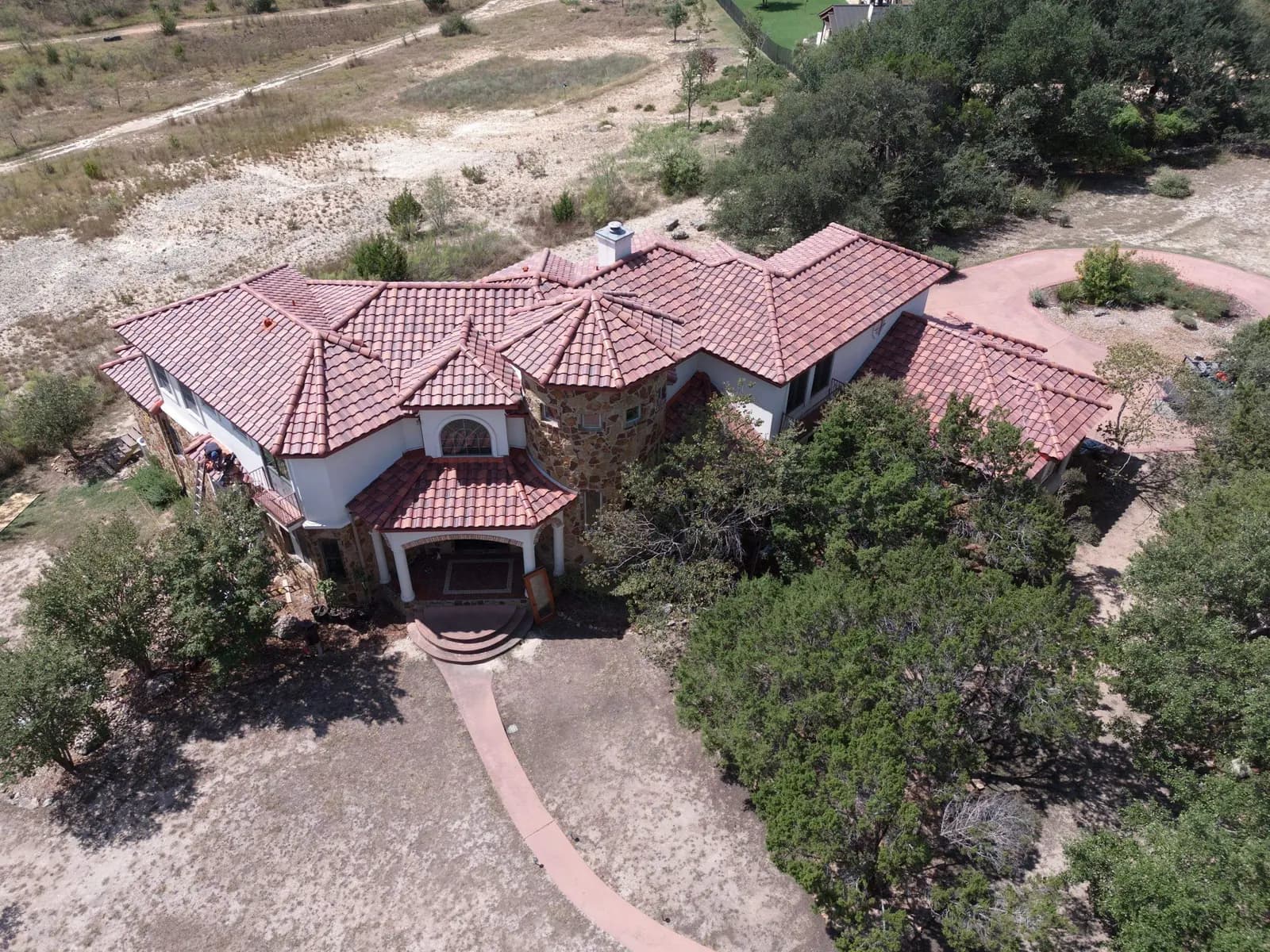
Concrete Tile Roofing in New Orleans
Tile Durability at a Working Budget, Engineered for Hurricane Country
Concrete tile gives New Orleans homeowners the look and longevity of a tile roof at roughly half the cost of clay. Done right, it is one of the most storm-worthy residential systems available: heavy enough to resist uplift, impact-resistant, and fireproof, with a sealed underlayment beneath it doing the real waterproofing. Lapeyre Roofing installs and repairs concrete tile across the metro with the same specialty-roofing standards we built on French Quarter landmarks like the Sylvain building slate and copper restoration: mechanical fastening to wind tables, corrosion-proof metals, and honest advice about whether concrete tile suits your structure.
Prefer to book online? Schedule your free New Orleans estimate
Schedule Your FREE
Roof Inspection & Estimate
Request a written estimate
Where is your property?
We serve Texas, Louisiana & Missouri
What do you need?
Almost done!
How can we reach you?
By submitting, you consent to follow-up messages. Reply STOP to opt out.
Sources we use
Check the scope against current guidance
Official sources reviewed September 7, 2026, plus a planning tool for comparing the decisions in your estimate.
City of New Orleans
Residential re-roofing permit
Reviewed September 7, 2026. Covers qualifying residential replacement, construction photo stages, and historic review.
Read the official guidance →New Orleans HDLC
Historic exterior-work application process
Reviewed September 7, 2026. Identify the district and itemize existing and proposed exterior materials with photos before work.
Read the official guidance →Tile Roofing Industry Alliance
Concrete and clay tile installation guidance
Reviewed September 7, 2026. System installation manuals and manufacturer-specific requirements for concrete and clay tile.
Read the official guidance →How much does a concrete tile roof cost in New Orleans?
Concrete tile roofing in New Orleans typically costs $8-$18 per square foot installed in 2026. Standard flat and S-profile tiles in stock colors run $8-$12 per square foot; premium profiles, custom color blends, and complex rooflines run $12-$18. For a typical 2,500 sq ft roof, expect roughly $20,000-$45,000 including sealed-deck underlayment and hurricane-rated mechanical fastening. Repairs for cracked or slipped tiles usually cost $400-$2,000. Structural verification is required because concrete tile weighs 800-1,100 lbs per square. Lapeyre Roofing provides free inspections and written estimates from our office at 421 Ninth St, New Orleans.
- Concrete tile installation: $8-$18 per square foot installed (2026 ranges)
- Roughly half the cost of clay tile with a similar look and 40-50+ year tile life
- Class A fire rating and strong hail impact resistance
- Hurricane performance depends on mechanical fastening and sealed underlayment, both standard on our installs
- Weighs 800-1,100 lbs per square; framing verification included in every proposal
- Pairs naturally with FORTIFIED sealed-deck upgrades at replacement time
Concrete Tile in the New Orleans Climate
What the Gulf Coast Does to Concrete Tile, and How We Build for It
Concrete tile handles the two headline threats of New Orleans weather, wind and heat, better than most systems. Its weak points here are subtler: water absorption in a climate that never dries out, fastener corrosion in salt air, and underlayments that quietly expire beneath tile that still looks perfect. Each one is solvable at installation time.
Hurricane Wind Uplift
Impact: Orleans Parish design wind speeds run roughly 130-150 mph. Loose-laid or mortar-only tile sheds in hurricanes, and airborne tile is dangerous to everything downwind.
Our Solution: Every tile mechanically fastened with corrosion-resistant screws per high-wind attachment tables, supplemental clips or foam adhesive in edge and corner zones, and mechanically anchored hips and ridges. The mass of concrete tile then works for you instead of against you.
Wind-Driven Rain
Impact: Storm rain travels sideways and gets under tile laps. The tile is armor; the underlayment underneath is the actual roof.
Our Solution: We install self-adhering high-temperature underlayment as a sealed secondary water barrier, the same principle behind FORTIFIED sealed-deck requirements, so water that passes the tile never reaches wood.
Permanent Humidity and Water Absorption
Impact: Concrete is more porous than fired clay and can absorb several percent of its weight in water. In a climate with 60+ inches of rain and year-round humidity, that means added weight, efflorescence, and algae streaking on shaded slopes.
Our Solution: We specify quality tile with integral color and low absorption, detail the roof to drain and dry (correct headlap, clear valleys, ventilated profiles), and set expectations honestly: a soft wash every few years keeps north-facing slopes clean.
Salt Air and Fastener Corrosion
Impact: Coastal air corrodes cheap fasteners and flashing metals long before concrete tile wears out, loosening tiles from the deck.
Our Solution: Stainless or coated corrosion-resistant fasteners and quality flashing metals throughout, with copper available where budget allows. The attachment system is engineered to last as long as the tile it holds.
Heat and Attic Load
Impact: Months of intense sun push shingle roof deck temperatures far above ambient, driving cooling costs.
Our Solution: Concrete tile absorbs and sheds heat slowly, and its profile creates an airspace above the deck that vents heat before it enters the attic. Owners switching from dark shingles routinely notice the difference in summer.
Where Concrete Tile Makes Sense in New Orleans
Concrete tile fits some New Orleans neighborhoods and building types much better than others. The honest guide: great outside regulated historic districts, structurally dependent everywhere, and usually the wrong answer on landmark terracotta roofs.
Lakeview and Lake Vista
Post-Katrina rebuilds and mid-century homes, many with Mediterranean styling, largely outside historic district regulation.
The sweet spot for concrete tile: design freedom, newer framing that can be verified or reinforced economically, and owners planning FORTIFIED upgrades at replacement time.
New Orleans East and Gentilly
Ranch homes and newer builds on larger lots with simpler gable and hip rooflines.
Simple geometry keeps concrete tile installation efficient and pricing near the low end of the range. Framing verification is the gating item on older ranches.
Algiers and the Westbank
Mix of historic cottages near the river and newer subdivisions further out, with strong wind exposure across open water on river-adjacent blocks.
Newer subdivision homes take concrete tile well; the exposed river-facing blocks need disciplined edge-zone fastening. Historic Algiers Point cottages usually call for different materials.
Old Metairie and Lakefront-Adjacent Areas
Established upscale homes, many carrying 1980s-2000s concrete tile now reaching underlayment end-of-life.
Classic lift-and-relay territory: the tile has decades left, the felt beneath is finished. Relaying your tile over new sealed underlayment costs a fraction of replacement.
French Quarter, Garden District, and Other Historic Districts
Regulated historic architecture under VCC and HDLC review, with original slate and clay terracotta roofs.
We will be straight with you: concrete tile is generally not approvable as a substitute for historic slate or clay in these districts, and it is usually the wrong aesthetic answer even where allowed. For those roofs, see our New Orleans slate and clay tile pages.
Concrete Tile Roofing Costs in New Orleans (2026)
Concrete tile is the value tier of tile roofing, and the numbers below reflect real 2026 New Orleans ranges with proper wind engineering included, not bare-minimum installs.
Concrete Tile Repair (Cracked or Slipped Tiles)
$400 - $2,000
Replacing broken tiles with matched pieces, re-securing slipped tiles, and correcting flashing failures. Most manufacturers keep common profiles in production, which keeps matching simpler than clay.
Standard Profiles (Flat and S-Tile, Stock Colors)
$8 - $12 per sq ft installed
Stock concrete tile on straightforward rooflines, including sealed self-adhering underlayment and mechanical hurricane fastening.
Premium Profiles and Custom Blends
$12 - $18 per sq ft installed
High-barrel profiles, slate-look and shake-look tile, custom color blends, and complex rooflines with additional flashing detail.
Lift-and-Relay (Reusing Your Existing Tile)
$7 - $12 per sq ft
Removing sound existing tile, replacing dead underlayment and flashings, and relaying your tile. The best-value option when tile is good and felt is gone.
Structural Reinforcement (When Required)
Varies by structure
If framing needs reinforcement to carry tile weight, we price it explicitly after engineering review rather than hiding it in the roofing number.
Factors Affecting Price
- 1Roof size, pitch, and complexity (hips, valleys, dormers)
- 2Framing capacity and any reinforcement scope
- 3Profile and color selection (stock versus premium and custom)
- 4Whether existing tile can be salvaged and relaid
- 5Edge-zone exposure and the fastening schedule it requires
- 6FORTIFIED designation scope, if pursued at replacement
These are typical 2026 ranges for the New Orleans market, not quotes. Structural condition is the biggest variable in concrete tile pricing, and exact numbers follow a free inspection and written, itemized estimate.
How We Install Concrete Tile in New Orleans
A concrete tile roof succeeds or fails on three things: the structure under it, the underlayment beneath it, and the fastening holding it down in a hurricane. Our process is built around those three.
Inspection and Structural Screening
We inspect the existing roof and assess framing. Concrete tile weighs 800-1,100 lbs per square, so the first honest question is whether your structure carries it as-is, needs reinforcement, or makes lighter materials the smarter buy.
Local Note: Plenty of New Orleans homes take tile weight without issue, but we verify with engineering when the answer is not obvious. Guessing with this much mass is not a service to anyone.
Design and Tile Selection
We help you choose profile and color: flat tile for contemporary lines, S-profile for Mediterranean looks, slate-look or shake-look for traditional homes. Samples on your roof in your light, not in a showroom.
Written Proposal with Wind Engineering Included
Your estimate spells out the underlayment system, the fastening schedule by roof zone, flashing metals, and any structural scope. Hurricane engineering is in the base price, not an upsell.
Tear-Off and Deck Preparation
Complete removal of existing roofing, inspection of the deck, and replacement of any compromised sheathing. Tile demands a sound, flat substrate.
Local Note: Humidity-driven rot hides at eaves and around old penetrations on New Orleans roofs. We fix it now, while it is cheap to reach.
Sealed-Deck Underlayment
Self-adhering high-temperature underlayment across the entire deck, creating the sealed secondary water barrier that actually keeps wind-driven rain out. This is the same core measure FORTIFIED standards require, and the natural moment to pursue the designation.
Local Note: A FORTIFIED designation can meaningfully reduce Louisiana windstorm insurance premiums. We are FORTIFIED specialists and can fold the certification into the project.
Flashing and Battens
Valley metal, wall pans, and penetration flashings in corrosion-resistant metals go in first, followed by battens where the profile and pitch call for them, detailed so water drains rather than ponds behind them.
Mechanical Tile Installation
Tiles fastened with corrosion-resistant screws per the high-wind attachment schedule, supplemental securement in edge and corner zones, and mechanically anchored hip and ridge assemblies. No tile on the roof relies on gravity or mortar alone.
Final Inspection, Documentation, and Attic Stock
We verify fastening and flashing integration, document the completed system for insurance and any FORTIFIED evaluation, and leave you spare matched tiles for future repairs.
Concrete Tile Profiles and System Components
Concrete tile comes in more looks than most homeowners expect, and the supporting components matter as much as the tile. Here is what we install and why it fits this market.
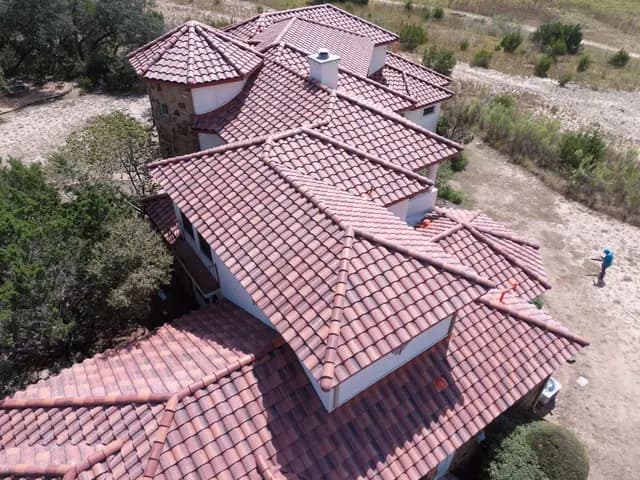
Flat Profile Concrete Tile
Why for New Orleans
Clean lines suited to contemporary and transitional homes, with the lowest wind profile of the tile shapes and efficient installation on simple rooflines.
Best For
Modern builds in Lakeview and newer subdivisions; owners who want tile durability without a Mediterranean look.
Considerations
Flat tile shows dirt and algae streaking more readily on shaded slopes; plan on periodic soft washing.
S-Profile (Spanish) Concrete Tile
Why for New Orleans
The classic Gulf Coast tile look at half the price of clay barrel tile, with deep water channels for torrential rain and a ventilated profile that cuts attic heat.
Best For
Mediterranean-style homes outside historic districts; the most popular concrete profile in this market.
Considerations
High-profile tile catches more wind at edges, so edge-zone fastening discipline matters most on this shape.
Slate-Look and Shake-Look Concrete Tile
Why for New Orleans
Textured concrete tile that reads as slate or wood shake from the street, for traditional architecture where real slate is outside the budget.
Best For
Traditional homes outside regulated districts wanting an upgraded appearance at concrete pricing.
Considerations
Convincing at street distance, not up close, and not approvable as a slate substitute in HDLC and VCC districts. For real slate, see our New Orleans slate page.
Self-Adhering High-Temperature Underlayment
Why for New Orleans
The actual waterproofing of a tile roof, and the component that decides whether hurricane rain reaches your framing. High-temperature rating is mandatory under tile in this sun.
Best For
Every concrete tile installation, no exceptions. Also the backbone of a FORTIFIED sealed-deck upgrade.
Considerations
Costs more than felt and is worth every dollar; underlayment failure is the number one reason tile roofs get opened up early.
Corrosion-Resistant Fastening and Flashing Package
Why for New Orleans
Salt air and humidity destroy bargain fasteners and flashings decades before concrete tile wears out. Stainless and quality coated metals keep the attachment system alive as long as the tile.
Best For
All fasteners, clips, valley metal, and penetration flashings on every project. Copper upgrades available where budget allows.
Considerations
Invisible on day one, decisive in year twenty. This is where low bids usually cut, and where we do not.
Why Choose Lapeyre for Concrete Tile in New Orleans
Concrete tile occupies a middle ground: too specialized for shingle crews, too often treated carelessly by volume tile installers. We bring specialty steep-slope standards to it at a working budget.
Specialty Craft Standards at Concrete Prices
Our reputation was built on French Quarter landmark work, including the restoration of the historic slate and copper roof on the Sylvain building, one of the oldest buildings in New Orleans. The same disciplines (mechanical fastening, corrosion-proof metals, sealed decks) go into every concrete tile roof we install.
Master Craftsman-Led Tile Crews
Our slate and tile crews are led by a master craftsman whose portfolio includes university landmarks like SMU and Tulane and hundreds of specialty slate and Ludowici roofs across the country. Concrete tile is the accessible end of that same trade, held to the same standard.
Hurricane Engineering in the Base Price
Sealed self-adhering underlayment, zone-by-zone mechanical fastening, and anchored ridges are our standard specification, not premium add-ons. We build tile roofs to be intact after the storm, because here that is the entire point.
FORTIFIED Pairing and Insurance Value
As FORTIFIED specialists, we can fold a FORTIFIED Roof designation into your concrete tile replacement, which can reduce Louisiana windstorm premiums and strengthens the roof where hurricanes actually attack it.
Structural Honesty
Concrete tile weighs 800-1,100 lbs per square. If your framing cannot carry it economically, we will tell you and point you to better options rather than hanging a liability over your bedrooms.
Straight Talk on Material Choice
If your house is historic terracotta or slate territory, we will say so and steer you to the right material, even when it is not the product on this page. The right roof for the building beats the easy sale.
Compare the full concrete-tile assembly and visible change
Concrete tile and clay tile are different products even when their profiles look similar. For a New Orleans replacement, identify the proposed manufacturer and profile, then confirm the structure, slope, attachment, and accessory details. The Tile Roofing Industry Alliance provides installation guidance, but the actual product and building still determine the specification.
If the property is subject to HDLC review, document the existing covering and proposed replacement with photographs and material information before work. A color match alone does not establish approval for a material substitution. Confirm the scope through the applicable City reroof and historic-review processes.
For a leaking tile roof, price tile handling and the underlying water barrier separately from the visible covering. Ask how sound tiles will be stored and reused, how broken accessories will be sourced, and how the roof will be protected while open. Compare repair of a section against full replacement using the same condition findings.
Compare your options before signing
Compare roofing material priorities
Organize budget, maintenance, and material tradeoffs before a property-specific specification.
Read more about this roofing decision
Clay Tile Roof Cost 2026: Real Prices
Clay tile roofing costs $16-$50+ per sq ft installed. Compare Spanish tile, terracotta, and Ludowici prices, 75-100+ year lifespans, and real repair costs.
Slate Roofing Cost 2026: Real Prices
Slate roofing costs $20-$40+ per sq ft installed. Compare natural slate vs synthetic slate prices, lifespans of 100+ years, and repair costs for your home.
Synthetic vs Natural Slate: Honest Comparison
We install both synthetic and natural slate, so we have no axe to grind. Here is the honest comparison: cost, weight, lifespan, hail and wind ratings, and resale.
FAQ
Frequently Asked Questions
Is matching the color enough when changing clay to concrete tile?
No. Confirm material, profile, installation requirements, and any historic approval. Photographs and product details should describe the actual proposed change.
What should a concrete-tile leak repair include?
Identify the water-entry detail, tile removal and reuse, underlayment or flashing work, matching accessories, and temporary protection. Replacing a visible tile alone may not resolve the underlying entry point.
How much does a concrete tile roof cost in New Orleans?
Concrete tile installation in New Orleans typically costs $8-$18 per square foot installed in 2026. Standard flat and S-profile tile in stock colors runs $8-$12; premium profiles, custom blends, and complex rooflines run $12-$18. A typical 2,500 sq ft roof lands around $20,000-$45,000 including sealed underlayment and hurricane fastening. Lift-and-relay projects reusing your existing tile run roughly $7-$12 per square foot, and repairs typically cost $400-$2,000.
Is concrete tile cheaper than clay tile, and what do I give up?
Yes, substantially: concrete runs $8-$18 per square foot installed versus $16-$50+ for clay in this market. The trade-offs are color life (concrete color can fade over decades while fired clay holds it permanently), water absorption (concrete absorbs more moisture in our humid climate, adding weight and algae streaking), and tile lifespan (40-50+ years versus 75-100+ for clay). For non-historic homes, concrete is a strong value; for historic roofs, clay is the answer.
Can my New Orleans home support the weight of concrete tile?
Only a structural check answers that: concrete tile weighs 800-1,100 lbs per square, several times the load of shingles. Homes that already carry tile have proven capacity, many older homes were framed heavily enough, and newer homes vary by design. We screen framing during inspection and bring in engineering when the answer is not clear. If reinforcement is needed, we price it explicitly; if lighter materials make more sense, we say so.
How does concrete tile hold up in hurricanes?
Very well when properly fastened, poorly when it is not. Concrete tile carries strong wind ratings, and its mass resists uplift, but performance depends on mechanical fastening: screws on every tile per high-wind attachment tables, supplemental securement in edge and corner zones, and mechanically anchored hips and ridges. Beneath the tile, sealed self-adhering underlayment keeps wind-driven rain out even if individual tiles are damaged. That combination is our standard specification for Orleans Parish wind speeds.
Can I get a FORTIFIED designation with a concrete tile roof?
Yes. FORTIFIED Roof requirements center on a sealed roof deck, enhanced attachment, and detailed edges, all of which fold naturally into a proper concrete tile installation. As FORTIFIED specialists, we handle the documentation and evaluator coordination as part of the project. A FORTIFIED designation can reduce Louisiana windstorm insurance premiums, which meaningfully improves the lifetime math on a tile roof.
Why does my concrete tile roof leak when the tiles look fine?
Because the underlayment, not the tile, is the waterproofing, and underlayment dies decades before concrete tile does. Original felt under 1980s-2000s tile roofs is commonly finished while the tile has 20+ years left. The remedy is a lift-and-relay: removing your tile, installing new self-adhering underlayment and flashings, and relaying the same tile, at roughly $7-$12 per square foot instead of full replacement cost.
How long does a concrete tile roof last in New Orleans?
The tile itself typically lasts 40-50+ years here, and often longer. The practical service interval is set by the underlayment (20-40 years depending on type) and the fasteners and flashings, which is why we specify high-temperature self-adhering underlayment and corrosion-resistant metals. Expect one underlayment renewal within the life of the tile, plus periodic soft washing on shaded slopes to control algae in our humidity.
Can concrete tile be used on historic New Orleans homes?
Generally no in regulated districts. The Vieux Carre Commission and HDLC typically require in-kind materials on historic roofs, meaning slate stays slate and terracotta stays clay, and concrete look-alikes are usually not approvable substitutes. Outside regulated districts, concrete slate-look and shake-look profiles are legitimate options for traditional aesthetics. If your home is in a historic district, start with our New Orleans slate or clay tile pages instead.
What maintenance does concrete tile need in this climate?
Modest but real: an inspection every year or two and after major storms, checking for cracked or slipped tiles, debris in valleys, and flashing condition; soft washing every few years on shaded slopes where Gulf humidity grows algae; and never walking the tile casually, since foot traffic is a leading cause of breakage. Keep the attic stock tiles we leave you, and individual replacements stay quick and cheap.
Contact information
Thank you for considering us for roofing needs. We will get back to you during normal business hours.


Send us a message