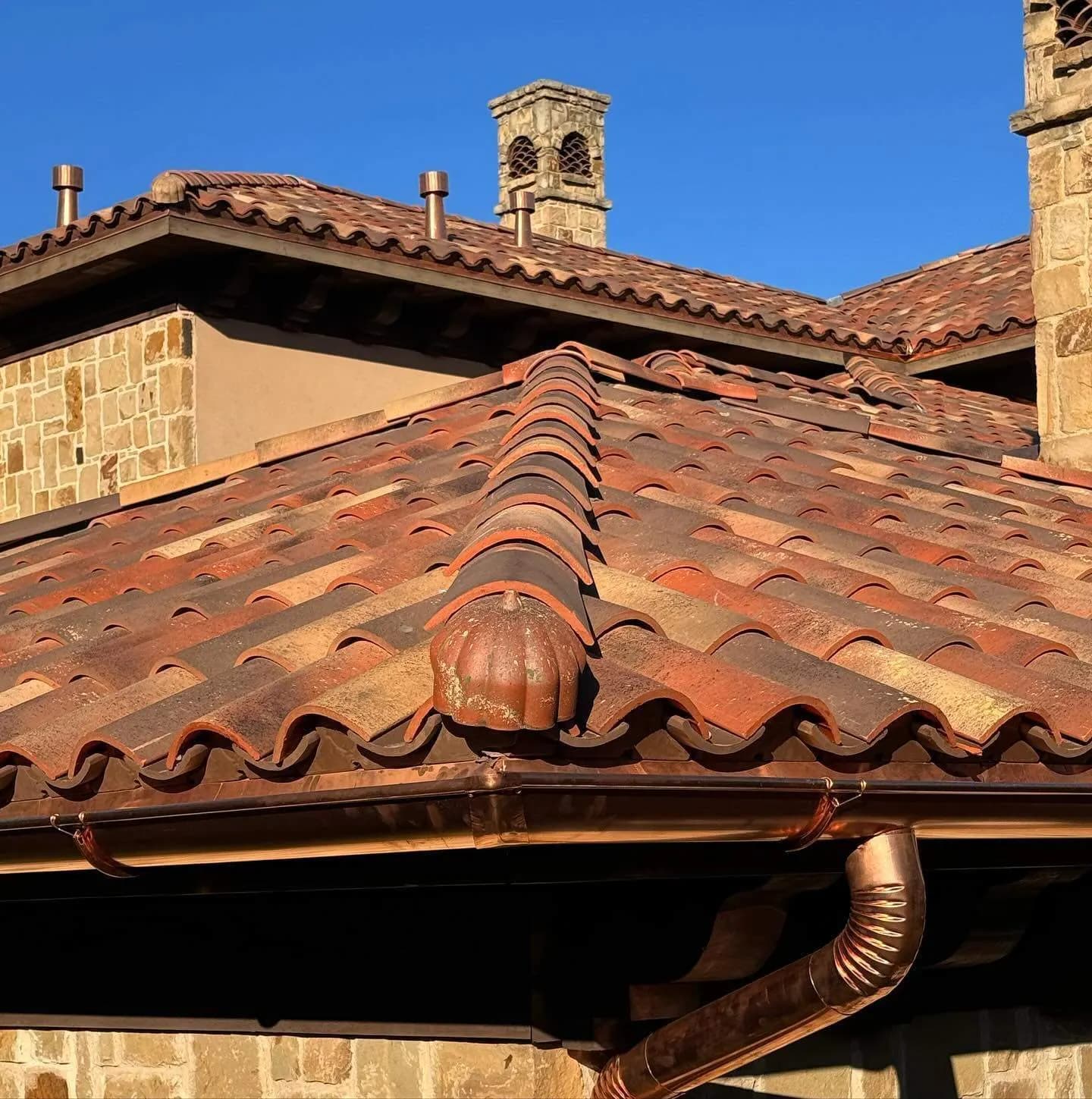
St. Louis Clay Tile Roofing: Repair, Tile Matching & Installation
Specialty Tile Crews for Century Homes and New Installations Alike
St. Louis has a remarkable stock of original clay tile roofs: Spanish and mission barrel tile in Frontenac and Ladue, flat shingle tile in the Central West End, French interlocking profiles in Webster Groves and Kirkwood. Most of those tiles were made by companies that no longer exist, in profiles no longer produced, on roofs that now sit in one of the most hail-active markets in America. Repairing them takes matching skill, correct technique, and honest hail assessment. Our tile crews are led by a master craftsman whose portfolio includes university landmarks like SMU and Tulane and hundreds of specialty tile roofs across the country, and the team behind our French Quarter slate portfolio in New Orleans now serves St. Louis.
Prefer to book online? Schedule your free St. Louis estimate
Schedule Your FREE
Roof Inspection & Estimate
Request a written estimate
Where is your property?
We serve Texas, Louisiana & Missouri
What do you need?
Almost done!
How can we reach you?
By submitting, you consent to follow-up messages. Reply STOP to opt out.
Sources we use
Check the scope against current guidance
Official sources reviewed September 7, 2026, plus a planning tool for comparing the decisions in your estimate.
City of St. Louis
City residential permit criteria
Reviewed September 7, 2026. Distinguishes like-material roof work and sheathing extent; historic properties require separate attention. City guidance does not establish suburban requirements.
Read the official guidance →National Park Service
Preserving and repairing historic clay tile
Reviewed September 7, 2026. Preservation Brief 30 explains compatible repairs, salvage, and matching historic clay tile.
Read the official guidance →How much does clay tile roof repair and installation cost in St. Louis?
In St. Louis, individual clay tile replacement typically runs $250-$500 per tile installed when matching stock is available, with most tile repair visits landing between $750 and $3,500. Discontinued profiles that require salvage sourcing cost more per tile. Hail-damage repair scopes commonly run $3,000-$20,000+ and are often insurance-covered when tiles are fractured. Lifting and relaying existing tile over new underlayment runs roughly $12-$25 per square foot, and new clay tile installation runs $16-$50+ per square foot depending on profile, manufacturer, and roof complexity. We provide free inspections with photo documentation before any work begins.
- Individual clay tile replacement: $250-$500 per tile installed (more for rare salvage profiles)
- Typical tile repair visits: $750-$3,500
- Hail-damage repair scopes: $3,000-$20,000+ (often insurance-covered)
- Lift-and-relay over new underlayment: roughly $12-$25 per square foot
- New clay tile installation: $16-$50+ per square foot
- Discontinued profile matching through salvage and specialty suppliers
What Clay Tile Roofs Face in St. Louis
Hail, Freeze-Thaw, and the Details That Decide Tile Roof Life
Properly made clay tile is one of the most durable roofing materials on earth, and St. Louis proves it: many local tile roofs are approaching or past 100 years. But this climate is genuinely hard on tile in specific ways, and the difference between a tile roof that fails and one that runs another 50 years usually comes down to how these factors are handled.
Hail Fracture on Clay Tile
Impact: St. Louis is one of the country's biggest hail-loss markets, and clay tile takes large hail badly at impact points: cracked pans, broken corners, shattered covers on barrel profiles. The damage is often functional and claimable, but because most of the affected tiles are discontinued, the matching question, not the damage question, becomes the hard part of the claim.
Our Solution: We document fractured tiles slope by slope, identify the profile and manufacturer, and address matching head-on: salvage sourcing where possible, and documentation of matching limitations for the carrier where it is not. Fractured tiles get replaced individually without disturbing sound tile.
Freeze-Thaw Spalling
Impact: Clay tile that absorbs too much moisture spalls in freeze-thaw climates: the surface flakes off, edges crumble, and the tile weakens winter by winter. Low-fired or improperly graded tile fails this way; hard-fired Grade 1 tile does not. St. Louis crosses the freeze line dozens of times each winter, making tile grade the single most important spec here.
Our Solution: For repairs and new work we use only Grade 1 (severe weathering rated, ASTM C1167) clay tile. During inspection we check existing tile for spalling so you know whether your roof has a weathering problem or just isolated damage.
Snow Load and Ice Dams on Tile
Impact: Snow sits differently on tile than on shingles, and ice damming at eaves pushes meltwater under the tile field, where the underlayment, not the tile, is the actual waterproofing. On old roofs with original felt, that underlayment may have been dust for a decade while the tile looked perfect from the street.
Our Solution: We evaluate the underlayment, not just the tile, and retrofit ice-protection at eaves during repair work. Where underlayment is gone but tile is sound, lift-and-relay over modern underlayment saves the roof for a fraction of replacement cost. Snow retention protects gutters and entries below tile fields.
Broken Tiles from Foot Traffic
Impact: A large share of the tile damage we see in St. Louis was not caused by weather at all, but by people: HVAC techs, painters, chimney sweeps, and gutter cleaners walking tile roofs that cannot be walked casually. Every cracked tile is a future leak path into aging underlayment.
Our Solution: Our crews walk tile correctly, on the load-bearing parts of the profile or on staging, and we repair trade damage routinely. If your home needs other rooftop work, we can stage access or inspect afterward so small cracks get caught before they become interior stains.
Underlayment and Flashing Aging Out Under Good Tile
Impact: Clay tile can outlast two or three generations of everything beneath it. Most leaking tile roofs in St. Louis have sound tile over failed 80-year-old felt, rusted fasteners, and flashings past their service life. Tearing off good tile because the felt failed is the most expensive mistake a tile roof owner can make.
Our Solution: We lift and relay: original tile comes off carefully, new high-temperature underlayment and copper flashings go on, and your original tile goes back. The roof keeps its character and its remaining decades of tile life.
Clay Tile Across St. Louis Neighborhoods
Clay tile shows up all over the St. Louis metro, but the profiles, ages, and repair questions differ by neighborhood.
Frontenac and Ladue
Estate homes from the 1920s-1960s with Spanish and mission barrel tile, plus newer custom homes with contemporary clay profiles. High hail exposure and high replacement values.
Hail claims here frequently hinge on matching coverage for discontinued barrel profiles. Salvage sourcing and carrier documentation matter as much as the repair itself. Structural capacity for tile is rarely an issue on this housing stock.
Central West End and Compton Heights
Late 1800s and early 1900s architecture with flat shingle tile, French interlocking profiles, and ornamental ridge work, much of it original and historically significant.
Repairs must preserve original profiles and ridge details. Matching typically means salvage stock, since these profiles have been out of production for generations. Careless prior repairs (mortar smears, mismatched tile) are common and correctable.
Webster Groves and Kirkwood
Century homes under heavy tree canopy with mixed tile and slate stock; many tile roofs patched inconsistently over the decades.
Debris in valleys and gutters accelerates underlayment failure at exactly the points where water concentrates. These roofs are prime lift-and-relay candidates: sound original tile over underlayment that is simply done.
Clayton
High-value homes from the 1910s-1940s mixing tile, slate, and copper detailing, with active storm-claim history in recent seasons.
Tile and slate often meet on the same roof here, which demands crews fluent in both. Insurance scopes need line items for profile matching and for the copper details original to these homes.
Town and Country, Chesterfield, and Newer West County
Newer custom and semi-custom homes, some with clay tile installations from the 1990s-2010s, others considering tile for replacements and new builds.
Newer tile roofs here often have underlayment nearing end-of-life ahead of the tile. For new installations, the conversation is profile selection, Grade 1 weathering spec, structural verification, and hail resilience.
Clay Tile Roofing Costs in St. Louis (2026)
Clay tile pricing depends heavily on whether we are repairing with available stock, sourcing discontinued profiles, or installing new. These are honest current ranges for the St. Louis market; we confirm scope after a free inspection.
Individual Tile Replacement
$250 - $500 per tile installed
With matching stock in hand. Rare salvage profiles cost more per piece. Most visits replace several tiles plus adjacent detail work.
Tile Repair Visit (Typical Scope)
$750 - $3,500
Cracked and slipped tiles, ridge and hip repairs, minor flashing work. Steep or complex roofs and rare profiles trend to the upper end.
Hail Damage Repair Scope
$3,000 - $20,000+
Tile-by-tile replacement of fractured tiles across affected slopes with carrier-ready documentation, including matching considerations for discontinued profiles.
Discontinued Profile Sourcing
Priced per project
Salvage-yard and specialty-supplier sourcing for out-of-production profiles. We quote sourcing separately so you can see exactly what matching costs.
Lift-and-Relay (New Underlayment Under Original Tile)
$12 - $25 per square foot
Original tile carefully removed, new high-temperature underlayment and copper flashings installed, original tile relaid. The highest-value work on most older St. Louis tile roofs.
New Clay Tile Installation
$16 - $50+ per square foot
Standard Grade 1 profiles at the lower end; premium manufacturers, custom colors, and complex rooflines at the upper end. Structural verification included.
Factors Affecting Price
- 1Profile availability (current production vs salvage sourcing)
- 2Tile grade and manufacturer (Grade 1 severe-weathering spec required here)
- 3Roof pitch, height, and access
- 4Underlayment and flashing condition beneath the tile
- 5Structural verification for new installations (clay tile runs roughly 600-1,100 lbs per square)
- 6Insurance scope alignment and matching documentation on hail claims
These are typical 2026 ranges for the St. Louis market. Exact pricing depends on profile availability, roof condition, and access. We provide a written, itemized estimate before any work begins.
How We Repair and Install Clay Tile in St. Louis
Tile work is identification first, sourcing second, craftsmanship third. Skipping any of the three produces the patchy, mismatched repairs we spend a lot of time undoing.
Tile Identification and Inspection
We identify the profile, manufacturer where possible, and grade of your tile, then assess the field, ridges, hips, flashings, and underlayment. You learn what your roof actually is and how much life each layer has.
Local Note: Many St. Louis tile roofs carry profiles from long-gone Midwest manufacturers. Correct identification is what makes matching possible.
Hail and Storm Documentation
After hail, we map fractured tiles per slope with close-up photos, separate impact fractures from age cracks and old trade damage, and prepare documentation that addresses the matching question your carrier will ask.
Local Note: On discontinued profiles, we document matching limitations explicitly; that documentation often determines whether a claim scopes repair, slope replacement, or full replacement.
Matching and Sourcing
We source replacement tile from current production, specialty suppliers, and salvage networks, matching profile dimensions, color, and weathering. Where an exact match no longer exists, we place near-matches on low-visibility slopes and move original tile to visible ones.
Repair Execution
Broken tiles come out without disturbing their neighbors; replacements are fastened per profile requirements with correct fasteners, not adhesive blobs or mortar smears. We walk the roof on staging and load-bearing points so the repair does not create new breakage.
Underlayment and Flashing Work
Where underlayment or flashings have failed beneath sound tile, we lift and relay: tile off in mapped sections, high-temperature underlayment and copper flashings on, original tile back in position.
Local Note: We add ice-protection membrane at eaves and valleys during relay work, a detail original St. Louis tile roofs never had and this climate demands.
Ridge, Hip, and Detail Restoration
Ridge and hip tiles are rebedded or mechanically fastened per specification, ornamental pieces are preserved and reset, and mortar work is done to match the original where mortar is the correct detail.
Final Inspection and Documentation
We verify the field, details, and water paths, clean up completely, and hand you photos of completed work plus maintenance guidance. On insurance work, you get final documentation for your claim file.
Clay Tile and Components for the St. Louis Climate
In a freeze-thaw hail market, the tile grade, the underlayment, and the flashings each carry part of the load. Here is what we specify and why.
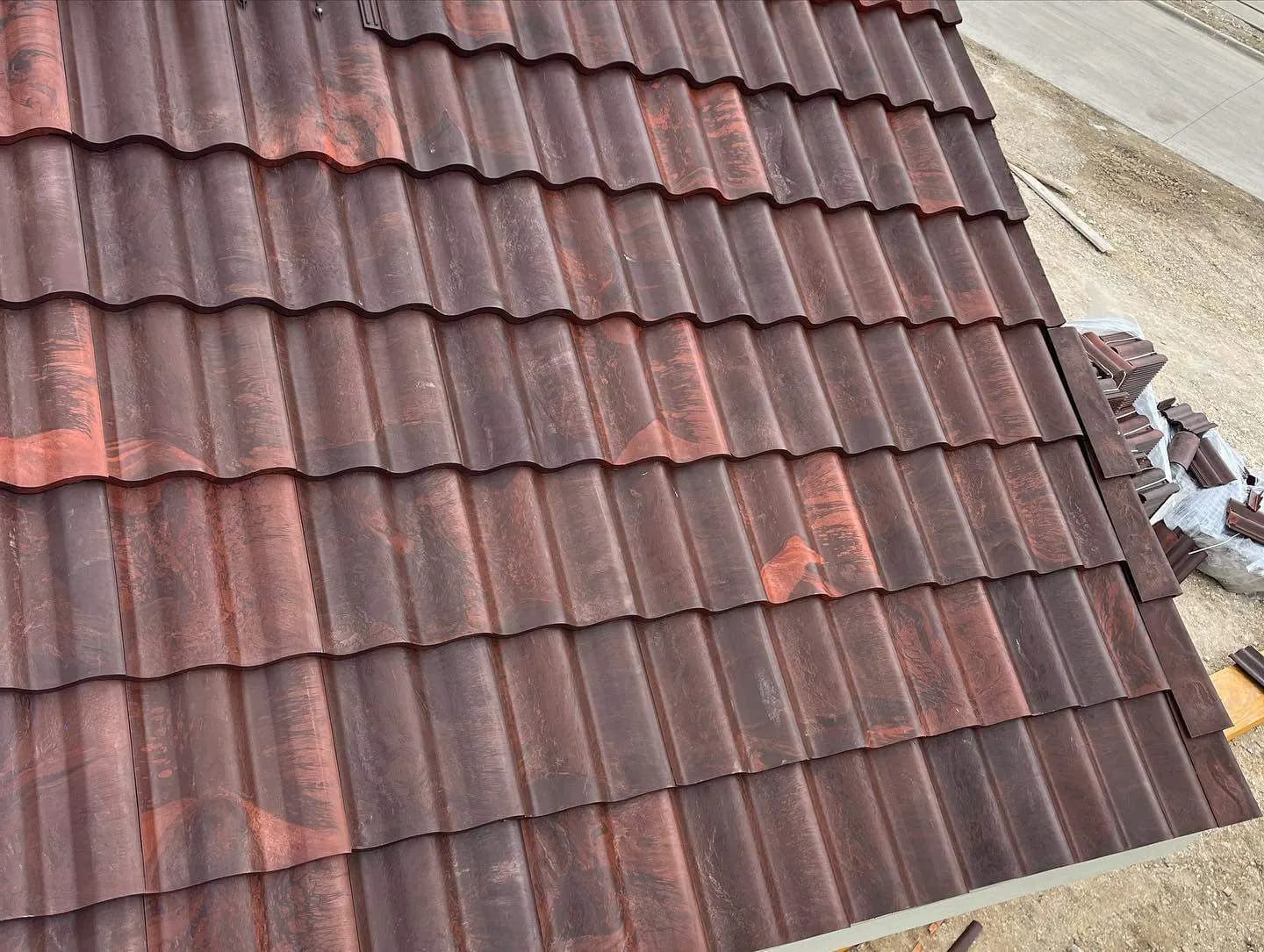
Grade 1 (Severe Weathering) Clay Tile
Why for St. Louis
ASTM C1167 Grade 1 tile is fired hard enough and absorbs little enough water to survive decades of St. Louis freeze-thaw cycling without spalling. Lower grades fail here; this spec is non-negotiable for new tile in Missouri.
Best For
All new installations, replacements, and repair stock
Considerations
Imported and bargain tile is not always honestly graded. We buy from manufacturers whose severe-weathering ratings are backed by testing and track record.
Salvaged Original Tile
Why for St. Louis
For St. Louis century homes with out-of-production profiles, salvage stock is usually the only way to make a repair disappear into the roof, and original hard-fired tile that has already survived 90 Missouri winters has proven itself.
Best For
Repairs and partial replacements on historic tile roofs
Considerations
Every salvaged tile gets inspected for cracks and spalling before installation. We reject soft or damaged stock.
High-Temperature Synthetic Underlayment and Ice-Protection Membrane
Why for St. Louis
The underlayment is the actual waterproofing under a tile roof, and it must survive decades of heat under the tile plus ice damming at the eaves. Modern high-temp synthetics and self-adhering membranes vastly outlast the original felt on St. Louis tile roofs.
Best For
Lift-and-relay projects and all new tile installations
Considerations
Underlayment life, not tile life, sets the maintenance clock on a tile roof. Choosing a premium membrane during relay work delays the next intervention by decades.
Copper Flashings and Valley Metal
Why for St. Louis
Flashings on a tile roof should last as long as the tile. Copper survives St. Louis thermal cycling and ice without relying on sealants, and soldered joints stay watertight for generations.
Best For
Valleys, chimneys, walls, and penetrations on tile roofs
Considerations
Copper patinas over time and can stain light masonry below; we detail runoff paths to prevent it.
Snow Retention for Tile Profiles
Why for St. Louis
Tile sheds snow in slides that damage gutters and endanger walkways. Profile-specific snow guards hold snow so it melts gradually.
Best For
Eaves above entries, walkways, and lower roofs
Considerations
Guards must match the tile profile and be fastened without cracking tile; generic clamp-on hardware made for metal roofs does not belong on clay.
Why St. Louis Homeowners Choose Lapeyre for Clay Tile
Most roofing companies in any market are shingle companies, and shingle habits break tile roofs. Tile work is specialty work, and it is what our tile crews do.
Master Craftsman-Led Tile Crews
Our slate and tile crews are led by a master craftsman whose portfolio includes university landmarks like SMU and Tulane and hundreds of specialty tile and slate roofs across the country. Profile identification, matching, and correct fastening are daily work for this team, not a first attempt.
Proven on Historic Roofs
Our own contracts include the Sylvain building in the French Quarter, a historic slate and copper restoration on one of the oldest buildings in New Orleans, plus multiple additional French Quarter slate roofs. The team behind that portfolio now serves St. Louis, and the discipline historic work demands carries straight into tile.
Discontinued Profile Matching
We identify out-of-production profiles, source through salvage and specialty networks, and place tile strategically so repairs disappear. When an exact match no longer exists, we tell you, and we document it for your insurance carrier.
Hail Claims Handled with Tile Literacy
Fractured tile is functional damage, and matching limitations on discontinued profiles are a legitimate scope consideration. We document both the way carriers need to see them and can meet your adjuster on the roof.
Repair and Relay Before Replace
Sound tile over failed underlayment needs a relay, not a tear-off. We protect the value sitting in your original tile instead of hauling it to a landfill and selling you something newer and worse.
A Full-Service Company Behind the Craft
GAF Master Elite, BBB A+, FORTIFIED roofing specialist, licensed in Missouri, with offices in the St. Louis metro. Specialty craftsmanship backed by real company accountability.
Choose repair limits before replacing a clay-tile roof
For a St. Louis clay-tile roof, record the profile and condition of field tiles and accessories before recommending tear-off. National Park Service preservation guidance addresses repair and matching of historic clay tile. Ask whether sound material can be retained and how broken ridge or hip pieces will be sourced.
A leak at a dormer or valley can require opening a limited area to renew the flashing or water barrier. The proposal should show the opened area, tile handling, temporary protection, and how the repair connects to retained materials. A general sealant allowance does not describe that work.
Confirm whether the property is in the City or another municipality before applying permit guidance. City of St. Louis criteria distinguish like-material roofing with limited sheathing work and identify separate historic considerations. Compare repair and replacement against the actual condition and approval scope, not a roof-age assumption.
Craftsmanship You Can Inspect
Tile rewards close inspection. These photos show the hips, ridges, copper work, and finish detail our crews hold themselves to on every roof.
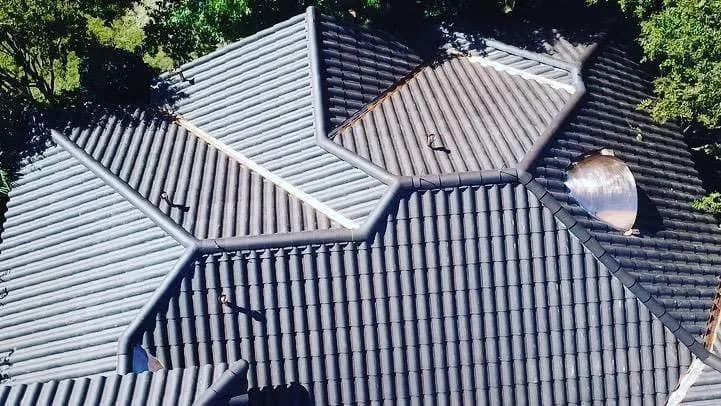

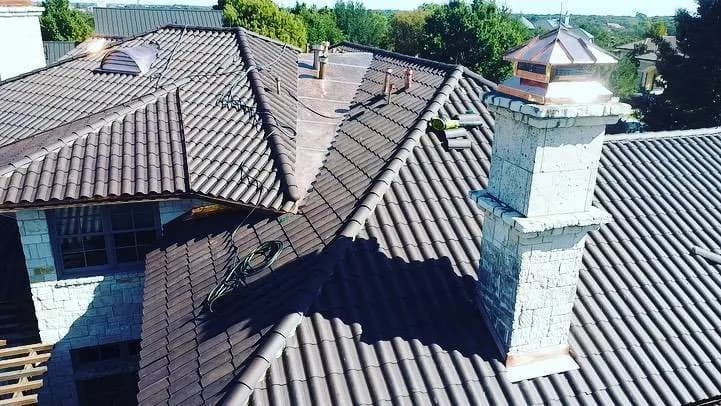
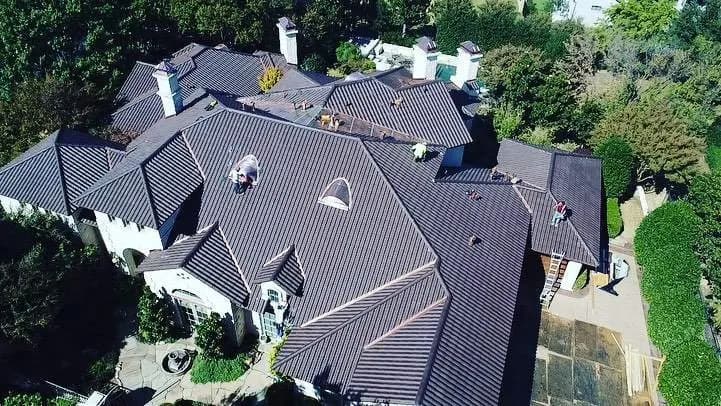
Gallery photography is from the portfolio of our slate and tile crew lead — a master craftsman with hundreds of specialty slate and tile roofs completed across the country.
Compare your options before signing
Compare roofing material priorities
Organize budget, maintenance, and material tradeoffs before a property-specific specification.
Read more about this roofing decision
Clay Tile Roof Cost 2026: Real Prices
Clay tile roofing costs $16-$50+ per sq ft installed. Compare Spanish tile, terracotta, and Ludowici prices, 75-100+ year lifespans, and real repair costs.
Ludowici Tile Cost & Profile Guide 2026
Ludowici terra cotta tile costs $25-$50+ per sq ft installed. This guide covers every profile, how to identify Ludowici tile, and matching discontinued patterns.
St. Louis Hail Damage: A Homeowner's Guide for 2026
A St. Louis hail-damage guide focused on safe documentation, roof-specific inspection evidence, repair options, policy questions, and named-product comparisons.
Missouri Roof Insurance Claims: St. Louis Guide
A St. Louis roof-claim guide focused on policy endorsements, notice, documentation, depreciation, scope differences, and actual homeowner costs.
FAQ
Frequently Asked Questions
What should be identified before repairing a clay-tile ridge?
Record the profile, dimensions, condition, and availability of compatible accessories. Define how surrounding tiles will be protected and the underlying detail restored.
Do City of St. Louis permit rules apply throughout the metro?
No. Confirm the actual municipality and historic status. City criteria should not be substituted for the rules governing a county municipality.
Who repairs clay tile roofs in St. Louis?
Lapeyre Roofing repairs, relays, and installs clay tile roofs across the St. Louis metro, with crews led by a master craftsman whose portfolio includes university landmarks like SMU and Tulane and hundreds of specialty tile roofs nationwide. Tile requires profile identification, matching, and fastening technique most shingle-focused companies do not practice. Call (314) 333-7565 for a free tile roof inspection.
Can you match the discontinued clay tiles on my house?
Usually, yes. We identify the profile and manufacturer, then source through salvage yards and specialty suppliers that stock out-of-production tile. Where an exact match no longer exists, we install near-matches on low-visibility slopes and relocate your original tiles to visible areas, so the repair disappears. For insurance claims, we document matching limitations, which can affect how much of the roof your carrier owes to replace.
Does insurance cover hail damage to a clay tile roof in St. Louis?
Generally yes, when hail fractures tiles: cracked pans, broken corners, and shattered covers are functional damage. The harder question on St. Louis tile roofs is matching, because most damaged profiles are discontinued. Many policies include matching provisions, and documentation of what can and cannot be matched often determines whether the claim scopes tile-by-tile repair, slope replacement, or more. We prepare that documentation and can meet your adjuster on-site.
How much does clay tile roof repair cost in St. Louis?
Individual tile replacement runs $250-$500 per tile installed when matching stock is available, with rare salvage profiles costing more. Typical repair visits run $750-$3,500 depending on scope and access, and hail-damage scopes commonly run $3,000-$20,000+ and are often insurance-covered. Lift-and-relay work (new underlayment under your original tile) runs roughly $12-$25 per square foot. We provide written estimates after a free inspection.
Can clay tile handle St. Louis freeze-thaw winters?
Yes, if it is the right tile. Grade 1 (severe weathering, ASTM C1167) clay tile absorbs so little water that freeze-thaw cycling does not harm it, which is why many St. Louis tile roofs are approaching 100 years. Low-fired or poorly graded tile spalls: the surface flakes and edges crumble winter by winter. We use only Grade 1 tile for repairs and installations in Missouri.
My tile roof leaks but the tiles look fine. What is going on?
The underlayment beneath the tile is almost certainly the problem. Tile sheds most water, but the underlayment is the actual waterproofing, and original felt on older St. Louis tile roofs is often 60-90 years old. The fix is lift-and-relay: remove the tile carefully, install modern high-temperature underlayment and copper flashings, and reinstall your original tile. It costs a fraction of replacement and preserves the roof.
Should I replace my old tile roof with shingles?
Usually not. Sound clay tile is a premium asset that no shingle can replicate in lifespan or character, and original tile roofs contribute real value on St. Louis century homes. If the tile is largely intact, repair or lift-and-relay is almost always the better investment. Replacement with new tile or another material makes sense mainly when the tile itself is widely spalled, brittle, or unsalvageable.
Can I walk on my clay tile roof?
You should not. Clay tile cracks under concentrated foot traffic, and much of the tile damage we repair in St. Louis was caused by trades walking the roof, not by weather. Tile can be walked only at specific load-bearing points on each profile, and even then carefully. If HVAC, chimney, painting, or gutter work needs roof access, have a tile contractor stage the access or inspect afterward.
How long does a clay tile roof last in St. Louis?
Grade 1 clay tile routinely lasts 75-100+ years here, and plenty of St. Louis tile roofs prove it. The layers beneath set the real schedule: original felt underlayment typically fails at 40-70 years, and flashings age out on a similar clock. Plan on one or two lift-and-relay renewals over the life of the tile, with the original tile going back on each time.
Do you install new clay tile roofs in St. Louis?
Yes. New clay tile installation runs $16-$50+ per square foot depending on profile, manufacturer, and roof complexity, with Grade 1 severe-weathering tile and structural verification included since clay tile weighs roughly 600-1,100 pounds per square. Barrel, flat, and interlocking profiles are all available, including hail-resilient options suited to the St. Louis market.
Contact information
Thank you for considering us for roofing needs. We will get back to you during normal business hours.


Send us a message