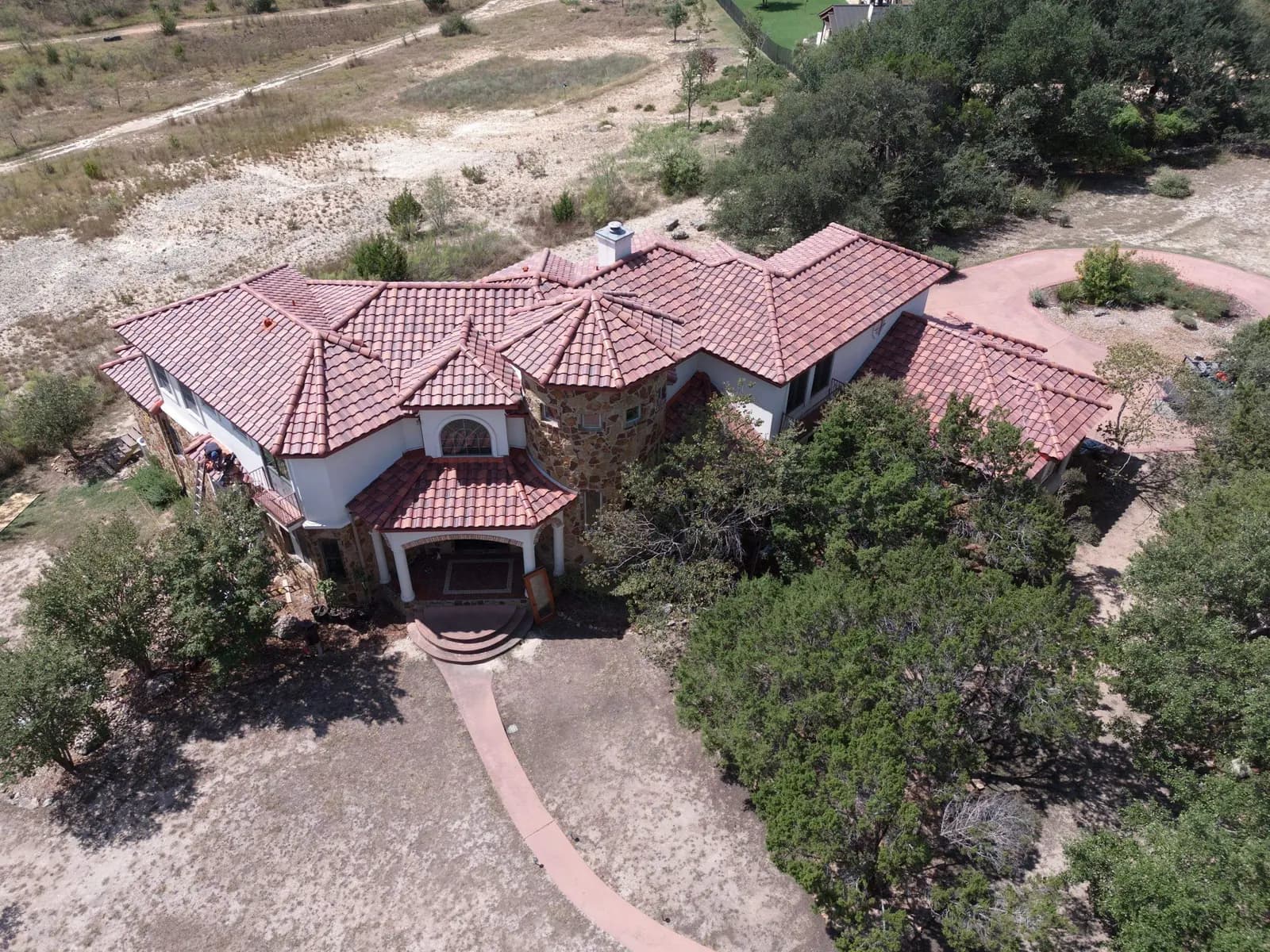
St. Louis Concrete Tile Roofing: Repair, Replacement & Installation
The Tile Look and Tile Lifespan at a Working Budget
Concrete tile delivers most of what people love about a tile roof, the profile, the mass, the 50-year service life, at a third to half the installed cost of premium clay. In St. Louis, that math has to survive two local realities: some of the biggest hail in the country and dozens of freeze-thaw cycles every winter. Both are solvable with the right tile spec, the right underlayment, and crews who actually know tile. Our tile crews are led by a master craftsman whose portfolio includes university landmarks like SMU and Tulane and hundreds of specialty tile and slate roofs across the country, and we repair existing concrete tile roofs with the same care we bring to new installations.
Prefer to book online? Schedule your free St. Louis estimate
Schedule Your FREE
Roof Inspection & Estimate
Request a written estimate
Where is your property?
We serve Texas, Louisiana & Missouri
What do you need?
Almost done!
How can we reach you?
By submitting, you consent to follow-up messages. Reply STOP to opt out.
Sources we use
Check the scope against current guidance
Official sources reviewed September 7, 2026, plus a planning tool for comparing the decisions in your estimate.
City of St. Louis
City residential permit criteria
Reviewed September 7, 2026. Distinguishes like-material roof work and sheathing extent; historic properties require separate attention. City guidance does not establish suburban requirements.
Read the official guidance →Tile Roofing Industry Alliance
Concrete and clay tile installation guidance
Reviewed September 7, 2026. System installation manuals and manufacturer-specific requirements for concrete and clay tile.
Read the official guidance →How much does a concrete tile roof cost in St. Louis?
Concrete tile roofing in St. Louis typically costs $8-$18 per square foot installed, so a 3,000 square foot roof runs roughly $24,000-$54,000 depending on profile, roof complexity, and structural requirements. That is well below clay tile ($16-$50+ per square foot) while delivering a comparable look and a 50+ year tile lifespan. Repairs run $250-$500 per tile installed for individual replacements, with typical repair visits at $600-$2,500. Underlayment replacement beneath existing tile (lift-and-relay) runs roughly $10-$18 per square foot. Structural verification is included on installations, since concrete tile weighs 800-1,100 pounds per square.
- New concrete tile installation: $8-$18 per square foot installed
- Individual tile replacement: $250-$500 per tile installed
- Typical repair visits: $600-$2,500
- Lift-and-relay (new underlayment under existing tile): roughly $10-$18 per square foot
- Tile lifespan 50+ years; underlayment typically 25-40 years
- Class 4 impact-rated profiles available for the St. Louis hail market
How Concrete Tile Performs in the St. Louis Climate
Hail, Freeze-Thaw, and What Concrete Tile Needs to Succeed Here
Concrete tile is a proven material in cold, storm-prone climates, but it behaves differently from clay, and St. Louis exposes those differences. The tile spec, the underlayment, and the installation details decide whether a concrete tile roof here is a 50-year asset or a recurring headache.
Hail Impact and Insurance Assessment
Impact: St. Louis hail cracks and shatters concrete tiles at impact points, and it also chips corners and scuffs surface color coats. Carriers pay for fractured tile as functional damage, but surface chipping and coating scuffs often get contested as cosmetic. On a market with this much hail activity, concrete tile owners end up in that argument more than anyone.
Our Solution: We document fractured versus surface-damaged tiles separately, slope by slope, so the functional damage is undeniable and the scope is defensible. For replacements and new installations, we offer Class 4 impact-rated concrete tile profiles that shrug off most St. Louis hail.
Freeze-Thaw and Water Absorption
Impact: Concrete absorbs more water than hard-fired clay, which makes freeze-thaw durability a manufacturing question. Quality concrete tile made for cold climates handles Missouri winters for decades; bargain tile can spall, flake, and crack as absorbed moisture freezes. Saturated tile is also heavier and slower to dry under snow.
Our Solution: We install concrete tile tested for freeze-thaw durability (ASTM C1492) from manufacturers with cold-climate track records, and during repairs we check existing tile for spalling so you know whether damage is storm-related or a tile-quality problem.
Surface Color Coat Weathering
Impact: Most concrete tile carries a pigmented surface layer or slurry coat that weathers over decades: color softens, and lime efflorescence can leave temporary white blooms. This is normal aging, not failure, but it complicates matching when new tiles go in next to 25-year-old ones.
Our Solution: We match replacement tiles as closely as production allows and place them where weathering differences are least visible. Efflorescence we identify honestly as cosmetic; it typically weathers away and does not warrant tile replacement or coatings.
Snow Load, Ice Dams, and the Underlayment Clock
Impact: Ice damming at eaves drives meltwater beneath the tile field, where the underlayment does the real waterproofing. Concrete tile roofs from the 1990s and 2000s in West County are now reaching the age where original underlayment fails while the tile above remains perfectly sound.
Our Solution: We evaluate underlayment age and condition on every inspection, retrofit ice-protection membrane at eaves during repair work, and perform lift-and-relay when the underlayment is done: your existing tile comes off, modern membrane goes on, and the same tile goes back.
Structural Weight in a Snow Climate
Impact: Concrete tile weighs 800-1,100 pounds per square before snow load. Homes designed for tile carry it easily; homes framed for shingles need engineering review before a tile conversion, especially with Missouri snow on top.
Our Solution: Every installation proposal includes structural verification. Where full-weight tile is not practical, lightweight concrete tile profiles bring the load down substantially while keeping the tile aesthetic.
Where Concrete Tile Makes Sense Across St. Louis
Concrete tile shows up across the metro in two distinct waves: existing installations from the 1990s-2010s now needing service, and new projects where owners want tile without clay pricing.
Chesterfield, Wildwood, and Town and Country
Custom and semi-custom homes from the 1990s-2010s, a meaningful number built with concrete tile, in some of the most hail-exposed territory in the metro.
This is the heart of St. Louis concrete tile service work: hail claims, individual tile replacement, and first-generation underlayment now reaching end of life. Lift-and-relay is frequently the right scope.
Frontenac, Ladue, and Creve Coeur
Estate properties mixing clay tile, slate, and concrete tile, with high replacement values and active storm history.
Concrete tile here often imitates clay profiles, and correct identification matters because repair stock, fastening, and claim values differ. We identify what is actually on the roof before anyone writes a scope.
St. Charles, O'Fallon, and Wentzville
Newer construction west of the Missouri River, largely shingle-roofed, with owners weighing longer-lived options after repeated hail claims.
After a second or third shingle claim, Class 4 concrete tile becomes a rational upgrade: one structural review and one premium install can end the replacement cycle. We run the structural and cost math honestly.
Webster Groves, Kirkwood, and Des Peres
Mature neighborhoods with mixed housing stock, mature trees, and occasional concrete tile installations among predominantly shingle and slate roofs.
Tree debris accelerates valley and gutter wear on tile roofs, and shaded slopes hold moisture longer, making tile quality and underlayment condition the watch items. Repairs must respect neighboring historic materials.
South County and Oakville
Established suburban neighborhoods with practical-minded owners, mostly shingle stock, some tile conversions on larger homes.
Concrete tile conversions here hinge on framing capacity. Lightweight concrete profiles frequently resolve marginal structures without steel or sistering work.
Concrete Tile Roofing Costs in St. Louis (2026)
Concrete tile is the value play in tile roofing, and honest pricing keeps it that way. These are current ranges for the St. Louis market; we confirm scope and pricing after a free inspection.
Individual Tile Replacement
$250 - $500 per tile installed
Cracked or hail-fractured tiles replaced with matched stock. Most visits address several tiles plus adjacent details; discontinued profiles may require sourcing.
Concrete Tile Repair Visit (Typical Scope)
$600 - $2,500
Cracked tiles, slipped tiles, ridge and hip repairs, and minor flashing work. Steep or complex roofs trend toward the upper end.
Hail Damage Repair Scope
$2,500 - $15,000+
Tile-by-tile replacement of fractured tiles across affected slopes with carrier-ready documentation separating functional from cosmetic damage.
Lift-and-Relay (New Underlayment Under Existing Tile)
$10 - $18 per square foot
Existing tile removed in mapped sections, modern high-temperature underlayment and flashings installed, original tile relaid. The common fix for 25-40 year old concrete tile roofs with sound tile.
New Concrete Tile Installation (Standard Profiles)
$8 - $13 per square foot
Quality freeze-thaw rated tile in standard colors and profiles on straightforward rooflines. Structural verification included.
New Concrete Tile Installation (Premium and Class 4)
$13 - $18 per square foot
Class 4 impact-rated profiles, lightweight tile, premium color blends, and complex rooflines with upgraded flashing packages.
Factors Affecting Price
- 1Roof complexity, pitch, and access
- 2Structural verification and any reinforcement (concrete tile runs 800-1,100 lbs per square)
- 3Tile profile and impact rating (standard vs Class 4)
- 4Underlayment and flashing package (the components that set the maintenance clock)
- 5Profile availability for repairs on older or discontinued lines
- 6Insurance scope alignment on hail claims
These are typical 2026 ranges for the St. Louis market. Exact pricing depends on structure, roof complexity, and product selection. We provide a written, itemized estimate before any work begins.
How We Handle Concrete Tile Roofs in St. Louis
Whether it is a hail claim on a 2005 tile roof in Chesterfield or a new installation, the process is built around correct identification, honest scoping, and tile-literate execution.
Inspection and Tile Identification
We identify the manufacturer and profile where possible, assess tile condition (fractures, spalling, surface wear), and evaluate the underlayment, flashings, ridges, and fasteners that do the quiet work underneath.
Local Note: On West County roofs from the 1990s and 2000s, the underlayment age is usually the most important finding, not the tile.
Hail Documentation (When Applicable)
After storms we map fractured tiles per slope with close-up photos, separate functional fractures from cosmetic surface chips, and prepare documentation your adjuster can act on.
Local Note: The functional-versus-cosmetic line is where concrete tile claims in St. Louis are won or lost. Precise documentation keeps the conversation factual.
Scope and Written Estimate
You get an honest recommendation: targeted repair, lift-and-relay, or replacement, with the structural and budget math laid out. If ten replacement tiles solve it, that is what we scope.
Structural Verification (Installations)
For new tile installations and conversions from shingles, framing is verified for tile weight plus Missouri snow load before we commit you to anything. Lightweight profiles are proposed where full-weight tile is marginal.
Underlayment and Flashing Installation
High-temperature synthetic underlayment across the field, self-adhering ice-protection membrane at eaves and valleys, and metal flashings sized to outlast the tile above them.
Local Note: Ice-protection at the eaves is not optional in St. Louis; ice damming is a when, not an if, over a 50-year tile lifespan.
Tile Installation and Detail Work
Tiles are fastened per manufacturer specification for wind and snow zones, ridges and hips are mechanically fastened or bedded per spec, and field cutting at valleys and penetrations is done cleanly so water paths stay open.
Final Inspection and Documentation
We verify the field and details, clean up completely, register applicable manufacturer warranties, and hand you photo documentation plus maintenance guidance for the decades ahead.
Concrete Tile and Components for St. Louis Roofs
Concrete tile succeeds in St. Louis when the tile is cold-climate rated and the layers beneath are specified to match its lifespan. Here is what we use and why.
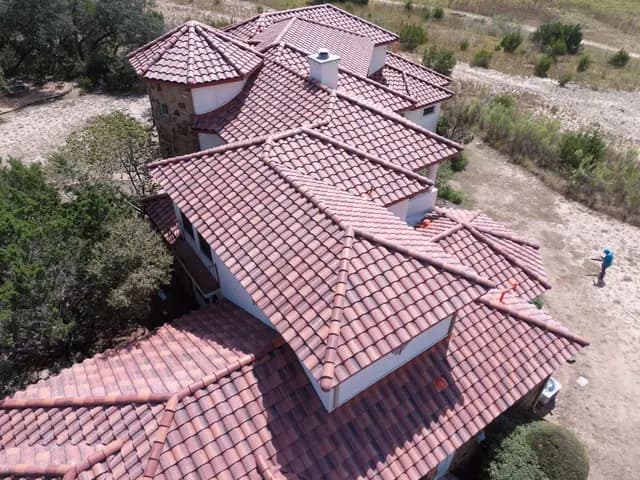
Freeze-Thaw Rated Concrete Tile (ASTM C1492)
Why for St. Louis
St. Louis crosses the freeze line dozens of times each winter. Concrete tile manufactured and tested for freeze-thaw durability holds together for 50+ years here; bargain tile without that pedigree can spall and flake within a decade.
Best For
All St. Louis installations and repair stock
Considerations
We source from manufacturers with documented cold-climate performance, not just a spec sheet.
Class 4 Impact-Rated Concrete Tile
Why for St. Louis
St. Louis is a top-tier hail market. Class 4 rated profiles (UL 2218) resist fracture from most hail this region produces, which means fewer claims, fewer repairs, and in many cases insurance premium credits.
Best For
New installations and replacements in hail-heavy West County and St. Charles County
Considerations
Ask your carrier about impact-resistance discounts; the premium over standard tile often pays back within a few years.
Lightweight Concrete Tile Profiles
Why for St. Louis
Many St. Louis homes framed for shingles cannot take 900+ pounds per square plus snow. Lightweight concrete tile brings the load down substantially, making tile conversions possible without structural steel.
Best For
Conversions from shingles where framing is marginal
Considerations
Lightweight tile trades some mass and sound-deadening for the reduced load; we discuss the differences honestly during design.
High-Temperature Underlayment with Eave Ice Protection
Why for St. Louis
The underlayment is the actual waterproofing under concrete tile, and it sets the maintenance clock. Modern high-temp synthetics with self-adhering membrane at eaves and valleys survive both St. Louis summers under tile and winter ice damming.
Best For
All installations and every lift-and-relay project
Considerations
Upgrading the membrane at install costs little; replacing it early costs a full lift-and-relay. Spend here.
Metal Flashings Sized to the Tile Lifespan
Why for St. Louis
A 50-year tile over 15-year flashings is a 15-year roof. We install painted steel or copper flashings at valleys, walls, and penetrations scaled to the tile above them, with copper where budgets allow.
Best For
Valleys, chimneys, sidewalls, and penetrations
Considerations
Flashing metal choice is a value decision we walk through per project; copper costs more up front and is usually cheapest per decade.
Why St. Louis Homeowners Choose Lapeyre for Concrete Tile
Concrete tile occupies a strange gap in most markets: too specialized for shingle crews, too common for boutique restoration outfits to bother with. We cover the gap with real tile crews and real company infrastructure.
Master Craftsman-Led Tile Crews
Our slate and tile crews are led by a master craftsman whose portfolio includes university landmarks like SMU and Tulane and hundreds of specialty tile and slate roofs across the country. Concrete tile gets the same correct fastening, staging, and detail work as the premium materials.
Hail Market Fluency
We work storm claims constantly in hail-prone markets and document concrete tile damage the way carriers need it: fractures separated from cosmetic chips, slope by slope, with photos that hold up. We can meet your adjuster on the roof.
Honest Repair-First Scoping
A cracked-tile repair is a repair, not a replacement pitch. And when your underlayment is done but your tile is not, we scope a lift-and-relay that reuses your tile rather than selling you a new roof you do not need.
Structural Diligence
Nobody should put 900 pounds per square on framing that has not been verified for it, in a snow climate, on a handshake. Structural review is built into every tile installation we propose.
The Whole-System Standard
We specify underlayment, ice protection, flashings, and fasteners to match the 50-year tile above them, because the cheapest components are what turn a tile roof into a callback machine.
Real Company Accountability
GAF Master Elite, BBB A+, FORTIFIED roofing specialist, licensed in Missouri, with offices in the St. Louis metro. We will be here when the roof is 30 years into its lifespan.
Compare concrete tile by assembly weight and repair access
A concrete-tile proposal should identify the manufacturer, profile, weight, and installation requirements. Use Tile Roofing Industry Alliance guidance alongside the selected product documentation. A roof designed for another covering needs a structural review before a heavier material is accepted as a simple replacement.
For repairs, separate broken tile from failures in underlayment, flashing, or attachment. Ask how tiles will be lifted and stored, whether matching accessories are available, and how the opened section will remain dry. Compare a local repair with replacement of a larger water-barrier section when the condition warrants it.
In the City of St. Louis, material changes and the extent of sheathing work affect the permit assessment; historic status requires a separate check. Confirm jurisdiction before ordering. Use the material selector for priorities, then compare complete installed scopes including access and structural implications rather than only tile purchase prices.
Compare your options before signing
Compare roofing material priorities
Organize budget, maintenance, and material tradeoffs before a property-specific specification.
Read more about this roofing decision
Clay Tile Roof Cost 2026: Real Prices
Clay tile roofing costs $16-$50+ per sq ft installed. Compare Spanish tile, terracotta, and Ludowici prices, 75-100+ year lifespans, and real repair costs.
St. Louis Hail Damage: A Homeowner's Guide for 2026
A St. Louis hail-damage guide focused on safe documentation, roof-specific inspection evidence, repair options, policy questions, and named-product comparisons.
Missouri Roof Insurance Claims: St. Louis Guide
A St. Louis roof-claim guide focused on policy endorsements, notice, documentation, depreciation, scope differences, and actual homeowner costs.
FAQ
Frequently Asked Questions
Can concrete tile be installed wherever shingles were installed?
Structural suitability, slope, attachment, and product requirements must be checked for the actual building. Do not assume an existing shingle roof establishes capacity for concrete tile.
What makes two concrete-tile quotes comparable?
The same product, measured area, underlayment, flashing, accessories, access, and any structural work. List retained components and concealed-damage allowances separately.
Who repairs concrete tile roofs in St. Louis?
Lapeyre Roofing repairs, relays, and installs concrete tile roofs across the St. Louis metro, with tile crews led by a master craftsman whose portfolio includes university landmarks like SMU and Tulane and hundreds of specialty tile roofs nationwide. Concrete tile requires matched stock, correct fastening, and careful roof access that shingle-focused companies rarely practice. Call (314) 333-7565 for a free inspection.
How much does a concrete tile roof cost in St. Louis?
New concrete tile installation runs $8-$18 per square foot installed in the St. Louis market: standard freeze-thaw rated profiles at $8-$13, and Class 4 impact-rated, lightweight, or premium-blend tile on complex roofs at $13-$18. A typical 3,000 square foot roof lands between $24,000 and $54,000, including structural verification. That is roughly a third to half the cost of comparable clay tile.
Does hail damage concrete tile roofs, and will insurance pay?
Large St. Louis hail can fracture concrete tile outright, and carriers generally pay for fractured tile as functional damage. Surface chips and color-coat scuffs are often contested as cosmetic. The claim outcome usually depends on documentation that clearly separates the two, slope by slope, with close-up photos. We prepare exactly that documentation and can meet your adjuster on the roof.
Is concrete tile durable enough for St. Louis freeze-thaw winters?
Yes, when the tile is manufactured for it. Freeze-thaw rated concrete tile (tested under ASTM C1492) performs for 50+ years in climates colder than Missouri. Bargain tile without cold-climate testing can spall and flake as absorbed moisture freezes. We install only freeze-thaw rated tile from manufacturers with documented cold-climate performance, and we check existing roofs for spalling during every inspection.
How is concrete tile different from clay tile for a St. Louis home?
Concrete tile costs $8-$18 per square foot installed versus $16-$50+ for clay, and quality concrete tile lasts 50+ years versus 75-100+ for Grade 1 clay. Concrete absorbs more water, so freeze-thaw rating matters more, and its surface color weathers over decades while fired clay color is permanent. For most budgets, concrete tile is the practical way to get tile performance; for century homes and premium projects, clay earns its price.
Can my house support a concrete tile roof?
Only a structural review can say for certain. Concrete tile weighs 800-1,100 pounds per square, plus Missouri snow load, and homes framed for asphalt shingles were not designed for that. Many can be reinforced affordably, and lightweight concrete tile profiles cut the load substantially, often resolving marginal framing without steel. We include structural verification with every concrete tile installation proposal.
My concrete tile roof is 25 years old and leaking. Do I need a new roof?
Probably not. Concrete tile at 25-40 years is usually sound while the original underlayment beneath it has failed, and the underlayment is the actual waterproofing. The fix is lift-and-relay: remove the tile in mapped sections, install modern high-temperature underlayment with ice protection at the eaves, and reinstall your existing tile. It runs roughly $10-$18 per square foot, far less than replacement.
How much do concrete tile repairs cost in St. Louis?
Individual tile replacement runs $250-$500 per tile installed, and typical repair visits run $600-$2,500 covering cracked tiles, ridge and hip work, and minor flashing repairs. Hail-damage scopes commonly run $2,500-$15,000+ and are often insurance-covered when tiles are fractured. Discontinued profiles may add sourcing cost, which we quote transparently before work begins.
What are the white streaks or fading on my concrete tiles?
White blooms are efflorescence: lime within the concrete carried to the surface by moisture. It is cosmetic, normal on newer concrete tile, and typically weathers away on its own; it does not require coatings or replacement. Gradual color softening over decades is also normal surface weathering. Neither affects the tile structurally, and we will tell you plainly when a roof issue is cosmetic rather than functional.
Is Class 4 concrete tile worth it in St. Louis?
For most owners, yes. St. Louis is one of the most hail-active metros in the country, and Class 4 impact-rated tile (UL 2218) resists fracture from most hail the region produces, meaning fewer claims and repairs over a 50-year lifespan. Many Missouri insurers also offer premium discounts for Class 4 roofs, which can recover the upgrade cost within several years. Ask your carrier; we provide the product documentation.
Contact information
Thank you for considering us for roofing needs. We will get back to you during normal business hours.


Send us a message