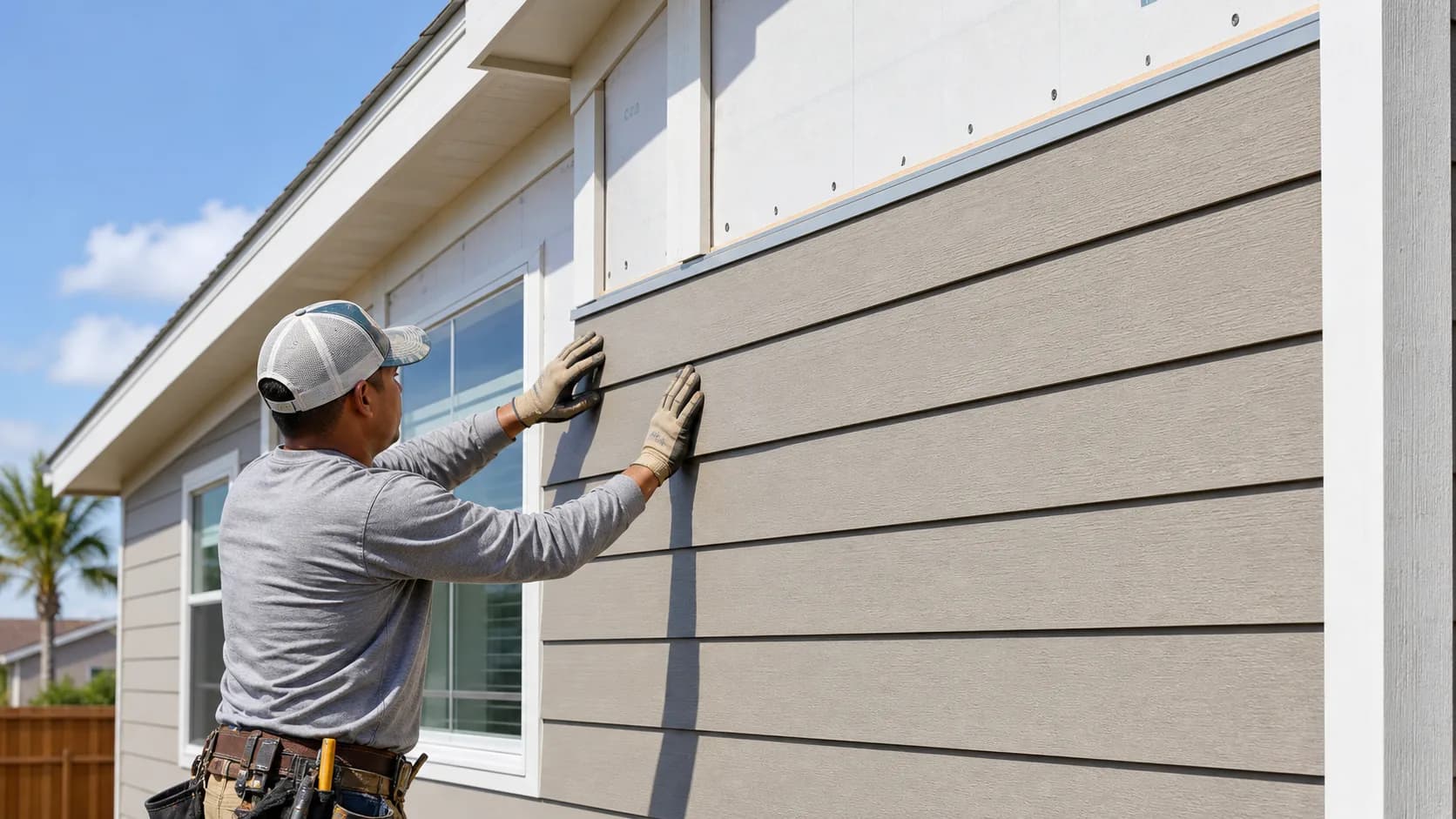
St. Louis Siding Installation
Hardie HZ5 + LP SmartSide for the Hail Belt and Freeze-Thaw Climate
St. Louis sits in one of the most active hail corridors in the United States, with freeze-thaw cycles 60-100 times per year stressing every caulk joint and butt joint. We install James Hardie HZ5 fiber cement (the cold-climate formulation engineered for zones 1-5), LP SmartSide engineered wood with its 1.75-inch hail damage warranty, and avoid lower-grade vinyl which becomes brittle in cold-weather hail.
Prefer to book online? Schedule your free St. Louis estimate
Schedule Your FREE
Roof Inspection & Estimate
Request a written estimate
Where is your property?
We serve Texas, Louisiana & Missouri
What do you need?
Almost done!
How can we reach you?
By submitting, you consent to follow-up messages. Reply STOP to opt out.
What siding holds up best to St. Louis hail?
Fiber cement (James Hardie HZ5, the cold-climate formulation) and engineered wood (LP SmartSide with its explicit 1.75-inch hail damage warranty) are the two best choices for St. Louis hail belt conditions. Vinyl underperforms in cold-weather hail — it becomes brittle below 50°F and cracks on impact. Insulated vinyl performs noticeably better than standard vinyl. We do not install Hardie HZ10 in St. Louis (that is the hot/humid formulation for southern markets) — HZ5 is engineered specifically for freeze-thaw and lower water absorption in cold climates.
- Hardie HZ5 is the climate-matched product for St. Louis (NOT HZ10)
- LP SmartSide carries 1.75-inch hail damage warranty
- Cold-weather hail breaks vinyl below 50°F
- Class 4 hail-rated options where available
- Missouri does NOT have a state FORTIFIED grant program
How St. Louis Conditions Drive Siding Selection
Hail Belt + Freeze-Thaw, Not Hurricane
St. Louis siding challenges are hail impact, freeze-thaw stress at caulk and butt joints, ice damming where siding meets eaves, and snow-load splashback at grade. Hurricane wind and salt corrosion are not factors.
Hail Impact (Spring and Summer Storms)
Impact: St. Louis sits squarely in "Hail Alley" — Missouri consistently ranks among the top states for severe hail reports per the NOAA Storm Prediction Center. Vinyl cracks on impact in cold weather. Lower-grade fiber cement can chip. Wood-substrate siding without proper finish takes mat damage.
Our Solution: Hardie HZ5 fiber cement performs well against hail when properly fastened. LP SmartSide carries the explicit 1.75-inch hail damage warranty. Class 4 impact-rated systems available where the homeowner prioritizes hail performance.
Freeze-Thaw Cycles at Caulk Joints
Impact: St. Louis sees 60-100 freeze-thaw cycles per year. Standard acrylic latex caulks fail at expansion-prone joints (window heads, butt joints, transition trim). Once caulk fails, water finds the WRB and works inward; subsequent freezes drive the damage deeper.
Our Solution: Elastomeric, manufacturer-approved sealants only where the spec calls for them. Proper expansion gaps per Hardie technical bulletins. Avoid over-caulking — it traps moisture which then expands when frozen.
Ice Damming Where Siding Meets Eave
Impact: Inadequate attic insulation and ventilation drive ice dam formation. Where the dam meets the wall, water can be forced behind the siding under capillary action, freezing and thawing through winter and accelerating substrate damage.
Our Solution: Kickout flashing at every roof-to-wall transition (often missing on older homes), proper drip edge integration, ice/water shield extending up from the eave. We coordinate with roof scope when both are part of the project.
Snow-Load Splashback at Grade
Impact: Snow piled against the lower courses of siding for weeks at a time keeps moisture against the substrate and accelerates freeze-thaw damage. Wood-substrate siding without termite-resistant treatment is at risk.
Our Solution: Hardie technical spec calls for clearance from grade (6 inches minimum from earth, 2 inches from hard surfaces). We hold the clearance and coordinate with site grading where adjustments are needed.
No Hurricane, No Salt Air, No FORTIFIED Grant
Impact: St. Louis does not face hurricane wind, gulf-coast salt corrosion, or FORTIFIED grant program eligibility. Missouri does not have a state FORTIFIED grant program (unlike Louisiana with LDI Fortify Homes).
Our Solution: We focus the spec on hail, freeze-thaw, and ice dam mitigation. We do not include hurricane DP rating talk or FORTIFIED Wall grant content in St. Louis project scopes.
St. Louis Siding Considerations by Area
Architecture, age, and exposure vary across the metro:
Central West End + Forest Park-Adjacent
Historic homes with brick primary cladding and limited siding sections. Detail and trim work significant.
Often more detail and trim work than wholesale siding replacement. Hardie HardiePlank Smooth or Beaded for matched profiles. Premium painted finishes.
Webster Groves + Kirkwood
Older homes from various eras with original wood siding aging out, mature canopy.
Restoration vs replacement conversation common. Hardie HZ5 with matched profiles where wholesale replacement is appropriate. Class 4 hail-rated upgrade discussions.
St. Louis County Suburbs (Chesterfield, Ballwin, Wildwood)
Newer-build subdivisions from 1980s-2010s with original builder-grade vinyl or hardboard composite aging out.
Replacement projects frequently reveal sheathing damage from years of failed flashings. Hardie HZ5 or LP SmartSide upgrade is typical. Hail-priority homeowners often choose LP for the named warranty.
South County + Affton + Mehlville
Mix of post-war ranches and newer infill construction. Variable canopy.
Standard residential spec. Insulated vinyl as a budget option that improves hail and thermal performance over standard vinyl.
St. Louis Siding Cost Ranges
St. Louis siding pricing depends on material, house size, and Class 4 hail-rated upgrades. We work in installed-cost ranges:
Premium vinyl, whole-house
Budget tier
VSI-certified premium grade. Heat distortion not a Missouri concern; hail performance still a concern below 50°F.
Insulated vinyl
Modest premium over standard
Adds R-value and significantly improves cold-weather hail performance.
LP SmartSide
Mid tier
Engineered wood with SmartGuard treatment; 5/50/15 warranty plus 1.75-inch hail damage coverage.
Hardie ColorPlus HZ5
Premium tier
Cold-climate formulation; 30-year non-prorated substrate warranty. Excellent hail performance.
Class 4 hail-rated upgrade
Add to base
Where available. Some insurance carriers offer wind/hail discount for Class 4 cladding.
Factors Affecting Price
- 1Wall area and story count
- 2Sheathing condition revealed at tear-off
- 3Class 4 hail-rated upgrade
- 4Trim profile complexity
- 5Removal and disposal of existing siding
Ranges represent typical St. Louis contractor pricing for residential siding as of mid-2026. Class 4 hail-rated systems and historic restoration work run higher than baseline.
Our St. Louis Siding Install Process
St. Louis install priorities: hail-resistant material selection, freeze-thaw-rated sealant detail, ice dam mitigation at roof-to-wall transitions.
Site Walk and Bid
On-site measurement, photo documentation, kickout flashing inspection at every roof-to-wall transition (frequently missing on older homes).
Local Note: In St. Louis we always check kickout flashing at the eave-to-wall transition — missing kickout drives most "mystery leaks" we see during winter freeze-thaw.
Tear-Off and Sheathing Inspection
Existing siding removed in panels. OSB or plywood sheathing inspected for water damage from years of failed flashings or ice damming.
Weather-Resistive Barrier (WRB)
Continuous housewrap or self-adhered membrane installed shingled correctly so water sheds outward at every horizontal lap.
Ice-Dam-Aware Flashing
Pan flashing at every window sill, head flashing above every opening, kickout flashing at every roof-to-wall transition (essential in ice-dam climate), drip caps over horizontal trim.
Trim Installation
Hardie or LP trim profiles installed first.
Siding Installation per HZ5 Spec
Hardie HZ5: blind-nailed per technical bulletin, expansion gaps maintained. LP SmartSide: standard wood-style fastening per LP install instructions.
Elastomeric Sealant at Freeze-Thaw Joints
Manufacturer-approved elastomeric sealant only where the spec calls for it. Standard latex caulks fail in St. Louis freeze-thaw cycles.
Punch-List, Walk, Warranty
Final walk-through, photo documentation, manufacturer warranty registration.
Climate-Matched Siding for St. Louis
St. Louis falls in Hardie's HZ5 zone — the formulation engineered for cold climates with reduced water absorption and freeze-thaw resistance. We do not install HZ10 in St. Louis (that is the hot/humid formulation for southern markets).
James Hardie HardiePlank HZ5 (ColorPlus)
Why for St. Louis
Engineered specifically for cold-climate zones 1-5. Reduced water absorption rate, more strength in freezing climates, drip-edge profile for improved water management. ColorPlus baked-on finish holds pigment.
Best For
Premium budgets, hail-priority homeowners, freeze-thaw resistance, factory-finished color longevity.
Considerations
Heavier than vinyl or engineered wood. Specialty cutting blades and dust collection. Fastener spec is non-negotiable for warranty.
LP SmartSide (ExpertFinish)
Why for St. Louis
Engineered wood with SmartGuard treatment for fungal decay and termite resistance (less critical in MO than southern markets but still useful). Carries the explicit 1.75-inch hail damage warranty.
Best For
Hail-priority homeowners, faster install, lighter weight for upper-story access.
Considerations
Slightly lower long-term substrate warranty than Hardie (50 years prorated vs Hardie 30 years non-prorated).
Insulated Vinyl (Premium Grade Only)
Why for St. Louis
Foam-backed panels improve cold-weather impact resistance compared to standard vinyl, add modest R-value, reduce oil-canning. ASTM D3679 / VSI-certified.
Best For
Budget tier where fiber cement is out of scope. Better hail performance than standard vinyl.
Considerations
Standard vinyl below premium grade is not recommended in St. Louis cold-weather hail environment. Color match on partial replacements is unreliable.
Why Hire Lapeyre for St. Louis Siding
St. Louis siding work is hail-driven and freeze-thaw-driven. Coming from roofing in our recently-launched St. Louis market, we bring the hail-claim and ice-dam-mitigation experience directly to siding.
Hail-Aware Material Selection
Hardie HZ5 (cold-climate formulation, not HZ10) and LP SmartSide with named hail warranty. We do not push vinyl in St. Louis hail environment.
Freeze-Thaw-Aware Sealant Detail
Elastomeric manufacturer-approved sealants where spec calls for them, no standard latex caulks at expansion-prone joints.
Ice-Dam-Aware Flashing
Kickout flashing at every roof-to-wall transition. Drives most "mystery leaks" we see during winter freeze-thaw on older homes.
Insurance-Claim Documentation
After hail events, slope-by-slope and panel-by-panel documentation. Hidden vinyl bruising and wind-creased fiber cement frequently missed by adjusters.
No FORTIFIED Grant Talk
Missouri does not have a state FORTIFIED grant program. We do not include LDI Fortify Homes content (LA-only) or fabricated MO grants in the scope.
How We Approach Siding in St. Louis
St. Louis is the hail capital of our service area. NOAA Storm Prediction Center data consistently ranks Missouri among the top states for severe hail reports, and the metro sees multiple significant hail events most years. That dominates our St. Louis siding spec: Hardie HZ5 fiber cement (cold-climate formulation, never HZ10) for the freeze-thaw resistance and hail performance, or LP SmartSide engineered wood for homeowners who want the explicit 1.75-inch hail damage warranty in writing. We avoid standard-grade vinyl in St. Louis because it cracks on impact in cold weather — and most St. Louis hail events happen in spring when temperatures are still in the 40s and 50s. The freeze-thaw cycle count (60-100 per year) drives sealant selection: standard latex caulks fail at expansion-prone joints, so we use elastomeric, manufacturer-approved sealants only where the spec calls for them. The hail-claim documentation playbook we have built in St. Louis since launching the market translates directly to siding scope — slope-by-slope, panel-by-panel, with the same supplement strategy when initial adjuster estimates miss damage.
Read more about this roofing decision
Siding Cost in St. Louis, MO: 2026 Guide
St. Louis siding cost is driven by the hail belt reality and freeze-thaw climate. Hardie HZ5 (cold-climate formulation), LP SmartSide hail warranty, and Class 4 upgrades all factor into the spec. Here is what STL homeowners actually pay in 2026.
James Hardie vs LP SmartSide: Installer Guide
Hardie and LP both make excellent siding. The right choice depends on hail-warranty priority, install logistics, warranty structure, and a few specific climate considerations. Honest comparison from installers.
Siding Insurance Claims: Storm Damage Guide
Siding storm damage is one of the most under-claimed line items on residential policies. Here is the documentation playbook that gets adjusters to scope what is actually damaged — adapted from years of roofing-claim work.
FAQ
Frequently Asked Questions
Should I use Hardie HZ5 or HZ10 in St. Louis?
HZ5. James Hardie engineers HZ5 for cold-climate zones 1-5, which includes St. Louis. HZ5 has reduced water absorption, more strength in freezing temperatures, and a drip-edge profile for improved water management. HZ10 is the hot/humid formulation for southern zones 6-10 (think Houston or New Orleans) and would be a climate mismatch in St. Louis.
Does LP SmartSide really warranty hail damage?
Yes. LP SmartSide carries an explicit hail damage warranty for hail up to 1.75 inches in diameter when the siding is properly installed and maintained. This is one of the few siding warranties that names a specific hail size, and it is meaningful in St. Louis hail belt conditions where multiple hail events per year are common.
Is vinyl siding a bad choice for St. Louis?
Standard-grade vinyl is generally not the right call in St. Louis because it becomes brittle below 50°F and cracks on impact. Most St. Louis hail events happen in spring when temperatures are still in the 40s and 50s. Insulated vinyl (foam-backed) performs noticeably better against cold-weather hail and is a defensible budget choice. Premium-grade vinyl at 0.048 inches or thicker holds up to wind well, but hail performance remains the concern.
Will my insurance cover siding hail damage?
Hail and wind-driven debris are typically named perils on Missouri homeowners policies. Adjusters routinely miss hidden vinyl bruising, wind-creased fiber cement, and back-side water intrusion. We document slope-by-slope and panel-by-panel and supplement when initial estimates miss damage — same playbook we use for roof claims in St. Louis.
Does Missouri have a FORTIFIED grant program?
No. The Louisiana Fortify Homes Program (LDI) offers up to $10,000 for FORTIFIED Roof in Louisiana. Alabama has a similar Strengthen Alabama Homes program. Missouri does not currently have a state-funded FORTIFIED grant program. The IBHS FORTIFIED standard itself is national and applies anywhere, but the grant programs are state-specific.
What is Class 4 impact-rated siding?
Class 4 is the highest impact rating in the four-tier UL 2218 / FM 4473 system. Some siding manufacturers offer Class 4 impact-rated products. Some Missouri insurance carriers offer wind/hail discounts for Class 4 cladding. We discuss the cost-benefit on a per-home basis when the homeowner prioritizes hail performance.
How do freeze-thaw cycles affect siding?
St. Louis sees 60-100 freeze-thaw cycles per year. Water that finds its way behind siding (typically through failed caulk or flashing) freezes and expands, then thaws and refreezes — driving the damage deeper through the substrate. Standard acrylic latex caulks fail at expansion-prone joints over multiple winters. We use elastomeric, manufacturer-approved sealants only where the spec calls for them, and we maintain proper expansion gaps per Hardie technical bulletins.
What about ice dams and siding?
Where ice dams form at the eave, water can be forced behind the siding under capillary action. The fix is upstream: kickout flashing at every roof-to-wall transition (frequently missing on older homes), proper drip edge integration, and adequate attic insulation and ventilation to prevent ice dam formation. We coordinate with roof scope when both are part of the project.
How long does a St. Louis re-side take?
For a typical 2,500 square foot St. Louis home with no major sheathing damage, 5 to 10 working days. Spring hail-season weather can add scheduling unpredictability — we plan around storm forecasts when conditions warrant. Winter installs are possible with weather watching, but we avoid sub-freezing temperatures for sealant work.
Can I get partial siding replacement after hail damage?
Yes, but we are honest about color-match limitations before we start. UV fade and weathering are uneven, especially on south and west elevations. A new panel rarely blends perfectly with siding that has been in service for several years. In hail insurance claims, this is typically a covered "matching" issue under standard policy language, and we present it that way to the adjuster.
Contact information
Thank you for considering us for roofing needs. We will get back to you during normal business hours.


Send us a message