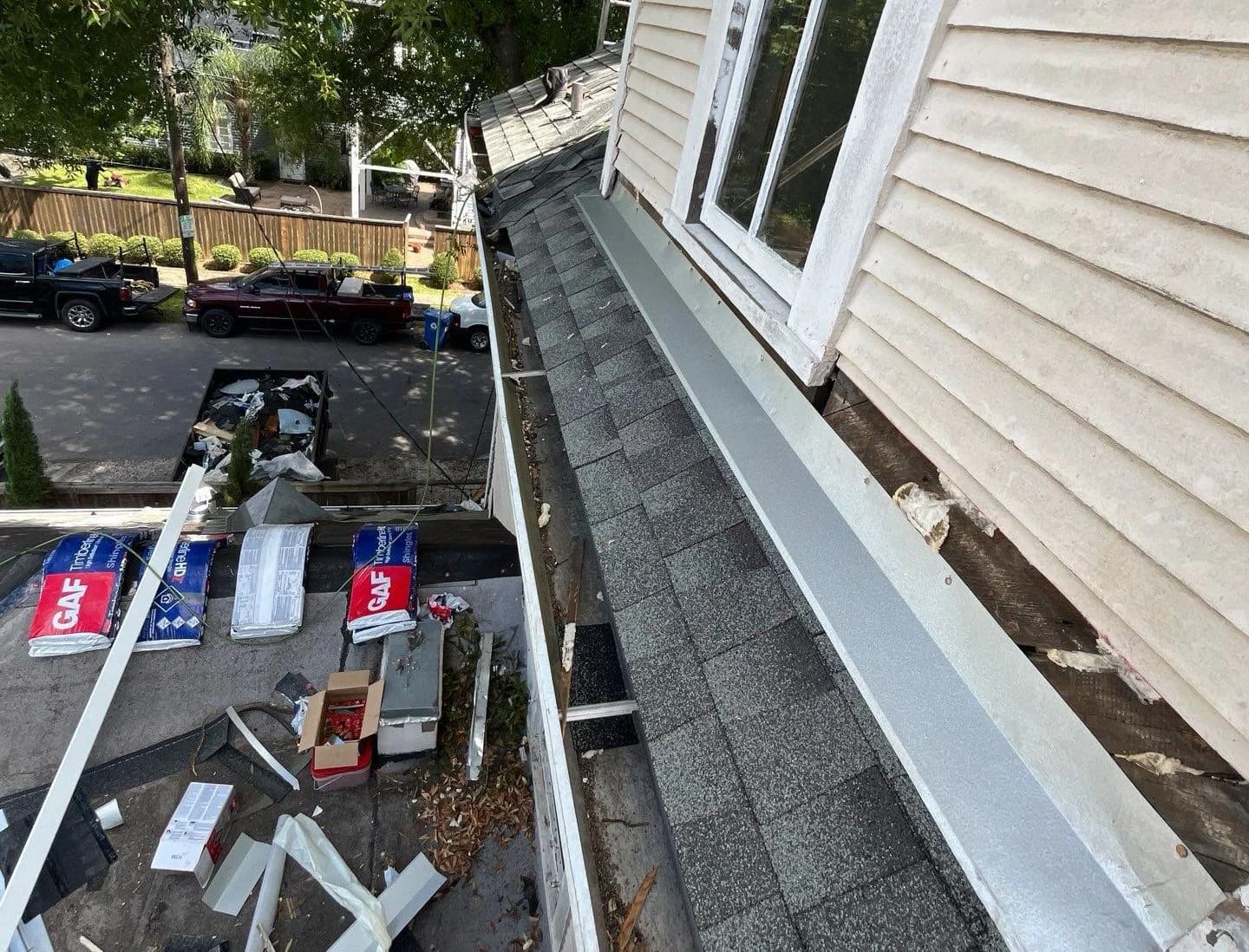
Four major gutter guard categories (micromesh, reverse-curve, screen, foam) handle four different debris patterns. Here is which guard actually works for your trees and climate.
Gutter guards reduce maintenance, but no guard eliminates it. The four major categories — micromesh, reverse-curve, screen, and foam — each handle different debris patterns. Choosing the right guard for your specific tree mix matters more than choosing the most-advertised brand.
TL;DR
- Micromesh (LeafFilter, MasterShield, Raptor) — best overall debris rejection. Filters fine debris like pine needles, oak pollen, shingle granules. Higher cost. LeafFilter uses 275-micron stainless steel mesh and offers a lifetime transferable warranty including a no-clog guarantee.
- Reverse-curve / surface-tension (Gutter Helmet, LeafGuard) — handles large leaves well. Can struggle with pine needles, oak seed pods, and very heavy rainfall (water can shoot past the opening). Lifetime transferable warranties. LeafGuard integrates the guard into a one-piece seamless gutter.
- Screens (mesh or perforated metal) — budget option. Effective against large leaves, less effective against fine debris. Easier DIY install.
- Foam inserts — cheap and largely ineffective. We do not install them.
Micromesh
A fine stainless steel mesh stretched over the gutter opening, supported by an aluminum or stainless frame. Mesh openings typically run 200-275 microns — fine enough to filter shingle granules and pine pollen.
LeafFilter uses 275-micron surgical-grade stainless steel woven mesh. Lifetime transferable warranty covers both the product and the installation, with a no-clog guarantee. Cost runs around $16+ per linear foot installed (varies by market).
MasterShield from GAF is another professional-installed micromesh option with a lifetime warranty.
Raptor Gutter Guard is an aftermarket micromesh option at lower DIY-level cost without the professional installer warranty.
Strengths: highest debris rejection, particularly for fine debris. Pine needles, oak pollen, shingle granules, and seed pods all get filtered.
Weaknesses: higher cost. Surface sediment can accumulate over years requiring occasional rinsing. Some homeowners report water sheeting past the front edge during very heavy rain.
Reverse-Curve / Surface Tension
A solid cover with a curved front lip that uses water surface tension to follow the curve and into the gutter while leaves and debris fall off the front edge.
Gutter Helmet uses a reverse-curve design with horizontal stiffening ribs and a textured surface to slow water flow. Lifetime transferable warranty.
LeafGuard integrates the reverse-curve cover into a one-piece seamless gutter. The whole system is one continuous extrusion. Lifetime transferable warranty (different terms than LeafFilter).
Strengths: handles large leaves well, requires the least cleaning of any guard category in low-debris environments. Works well for homes with primarily large-leaf canopy and minimal fine debris.
Weaknesses: pine needles can get caught in the curve. Oak seed pods and Spanish moss can defeat the system. Very heavy rainfall can overwhelm the surface tension and let water shoot past the opening.
Screens (Mesh / Perforated Metal)
Coarse-mesh screens or perforated metal lids snap or screw onto the gutter top. The cheapest professional option.
Strengths: low cost, easy DIY install, effective against large leaves and twigs.
Weaknesses: fine debris settles on top and can blow into the gutter when dry. Less effective than micromesh in pine, oak pollen, and granule-shedding environments.
Reasonable choice on lower-budget jobs in low-debris environments.
Foam Inserts
Foam blocks dropped into the gutter trough. Cheap, DIY-friendly, and largely ineffective.
The problems with foam:
- Foam degrades over years
- Traps debris on top, creating a wet sponge in the gutter
- Accelerates aluminum corrosion at the gutter trough
- Holds water that breeds mosquitoes and freezes in cold climates
We do not install foam inserts. If a contractor is selling foam, you have the wrong contractor.
Side-by-Side Comparison
| Property | Micromesh | Reverse-Curve | Screen |
|---|---|---|---|
| Fine debris rejection | Excellent | Poor (pine needles, pollen) | Poor |
| Large-leaf rejection | Excellent | Excellent | Good |
| Heavy rainfall handling | Good (some sheeting) | Can overflow front edge | Excellent (water passes freely) |
| Snow / ice performance | Variable by brand | Variable by brand | Standard |
| Install cost | Highest | High | Lowest |
| Warranty | Lifetime transferable typical | Lifetime transferable typical | Limited typical |
| Maintenance | Annual rinse | Spot-check after storms | Annual cleanout |
Climate-Specific Picks
Austin (Live Oak, Cedar Elm)
Live oak pollen and acorns dominate the debris pattern. Cedar elm adds finer debris. Micromesh is the right call for most central and west Austin homes under significant canopy. Reverse-curve struggles with oak seed pods.
Houston (Pine, Oak, Spanish Moss)
Inner-loop Houston has significant pine and live oak. Pine needles defeat reverse-curve guards. Spanish moss can clog any guard. Micromesh is the default for Houston canopy areas.
New Orleans (Live Oak, Cypress, Spanish Moss)
Garden District, Uptown, and Mid-City have heavy live oak canopy with abundant Spanish moss. Micromesh handles all three problem debris types. Reverse-curve is rarely the right call in NOLA except for newer construction in lower-canopy neighborhoods.
St. Louis (Maple, Oak, Deciduous)
Fall leaf drop is the dominant cleaning event. Both micromesh and reverse-curve handle large-leaf canopy. Some micromesh systems advertise improved ice/snow performance — verify on actual product spec rather than marketing claim. Heat tape integration is a separate consideration for chronic-ice-dam homes.
How to Choose
- What is in your gutter today? Look at the debris. Pine needles, oak pollen, shingle granules, seed pods, Spanish moss — all of these defeat reverse-curve guards. Large oak/maple leaves and twigs work fine with reverse-curve.
- Live oak, cypress, or pine canopy? Micromesh.
- Maple, beech, deciduous large-leaf canopy with no pine? Reverse-curve or micromesh both work.
- Low-budget, low-debris, easy DIY? Coarse-mesh or perforated screen lids.
- Foam? No.
Frequently Asked Questions
Common questions
Frequently asked
It depends on the debris in your gutters. For homes with pine needles, oak pollen, shingle granules, or Spanish moss, micromesh (LeafFilter, MasterShield) is the best fit. For homes with primarily large maple, beech, or oak leaves and minimal fine debris, reverse-curve guards (Gutter Helmet, LeafGuard) work well. Choose based on actual debris pattern, not the most-advertised brand.

Founder of Lapeyre Roofing, continuing a family legacy in Louisiana since 1699. Licensed in Louisiana, GAF Certified, and FORTIFIED Roofing specialist serving Texas and Louisiana.