Call Now - Free Estimate
St. Louis roofline with storm clouds, hail damage assessment context

St. Louis Hail Damage: A Homeowner's Guide for 2026

11 min readApr 18, 2026

St. Louis homeowners face hail every year. Here's exactly what to look for after a storm, how to document damage, and how to decide between repair, replacement, or just monitoring.

If you own a home in the St. Louis metro, hail isn't a question of if. It's a question of how often and how bad. St. Louis sits inside one of the most active hail corridors in the United States, and most years bring multiple significant hailstorms somewhere in the metro.

After a storm, you'll see two reactions. Some homeowners ignore potential damage until they notice a leak months later, usually around the next big weather system. Others panic and file claims that don't make sense for their situation. Both are avoidable once you understand what hail actually does to a roof, how to spot it, and how to decide on the right next step.

This guide walks you through that process. It's written for St. Louis homeowners specifically, so the examples and numbers reflect what we see in this market.

Why St. Louis Is a Hail Target

The central United States sits in what meteorologists call "Hail Alley," the zone from Texas north through Nebraska and east to Ohio where severe hail events are most frequent. According to the NOAA Storm Prediction Center, Missouri consistently ranks among the top states for annual severe hail reports. St. Louis sits squarely in this zone, at the intersection of several weather patterns that make hail common:

  • Warm, moist Gulf air pushes north into the region during spring and summer
  • Cold, dry air from Canada descends to meet it
  • The resulting supercell thunderstorms produce strong updrafts that keep hailstones suspended long enough to grow large
  • The flat-to-rolling terrain of the metro doesn't disrupt storm systems the way mountains do

The practical result: significant hailstorms are a near-annual event somewhere in the St. Louis area. NOAA's Storm Events Database logs hundreds of severe hail reports (1-inch diameter or larger) across Missouri most years, with the St. Louis metro representing a disproportionate share. West County (Chesterfield, Ballwin, Wildwood) and St. Charles County have seen repeated major events. North County, Kirkwood, Webster Groves, and the central corridor also see frequent impacts.

Signs of Hail Damage on Your Roof

Hail damage falls into two categories: visible damage you can see from the ground, and invisible damage that requires close-up inspection. Both matter, and the invisible kind is often what actually warrants a claim.

Visible Damage (You Can Spot This)

  • Dents in gutters, downspouts, and fascia metal, often the clearest indicator that significant hail hit your property
  • Cracked or broken shingles. Look for missing pieces, especially along ridges and rake edges
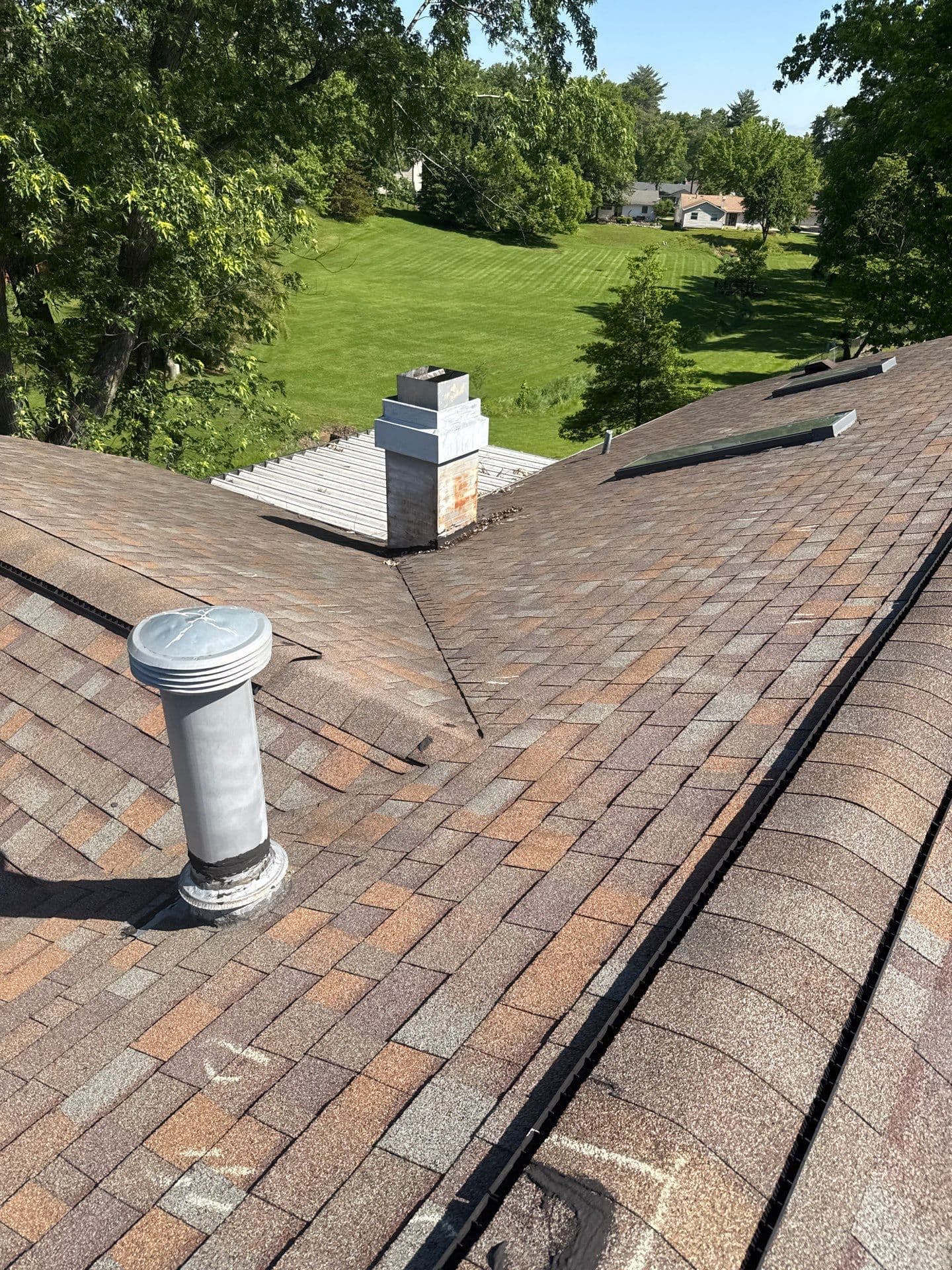
  • Dented or damaged roof vents. Turbine vents, pipe vents, and ridge vents often show hail impact
  • Damaged window screens or outdoor metal (grills, AC fins, patio furniture), which helps establish storm severity
  • Shingle granules in gutters. Excessive granule loss after a storm is a primary aging indicator

Invisible Damage (This Is Where Inspections Matter)

  • Bruised shingle mats. Hail can damage the shingle substrate without leaving a visible dent. Bruised shingles deteriorate faster and fail early in the next storm.
  • Broken seal strips. The adhesive that holds shingles down can be damaged by hail and heat cycling, which makes shingles vulnerable to wind lift.
  • Fractured underlayment. Rare but possible with severe hail.
  • Compromised flashings and sealants. Impact damage to chimney flashings, pipe boots, and skylight details can open water paths.

Ground-Level Checks You Can Do

After a storm, before you call anyone, walk your property (when it's safe to do so). Look for:

1. Gutter and Downspout Dents

Dents on gutters, downspouts, and downspout splash blocks tell you hail made contact. The size and density of those dents helps establish severity.

2. Granule Accumulation

Look in gutters, at downspout splash areas, and around the foundation. Excessive granule buildup after a storm indicates either significant hail impact or a roof that's near end-of-life (or both).

3. Outdoor Metal and Screens

Check HVAC fin damage, window screens, grill covers, and patio metal. These collateral targets help document storm impact and severity for an insurance claim.

4. Interior Ceilings and Attic

Look for new water stains, damp spots, or drips in the attic or on upper-floor ceilings. Active leaks after a storm warrant immediate professional response.

What You Should Not Do

  • Don't climb on your roof, especially after storms. Roofs are slippery, and hail damage can create soft spots.
  • Don't rely on "free inspections" from door-knocking contractors without checking credentials. Storm chasers target hail-struck neighborhoods.
  • Don't let anyone pressure you to sign a contract immediately. You have time to make an informed decision.

What a Professional Inspection Covers

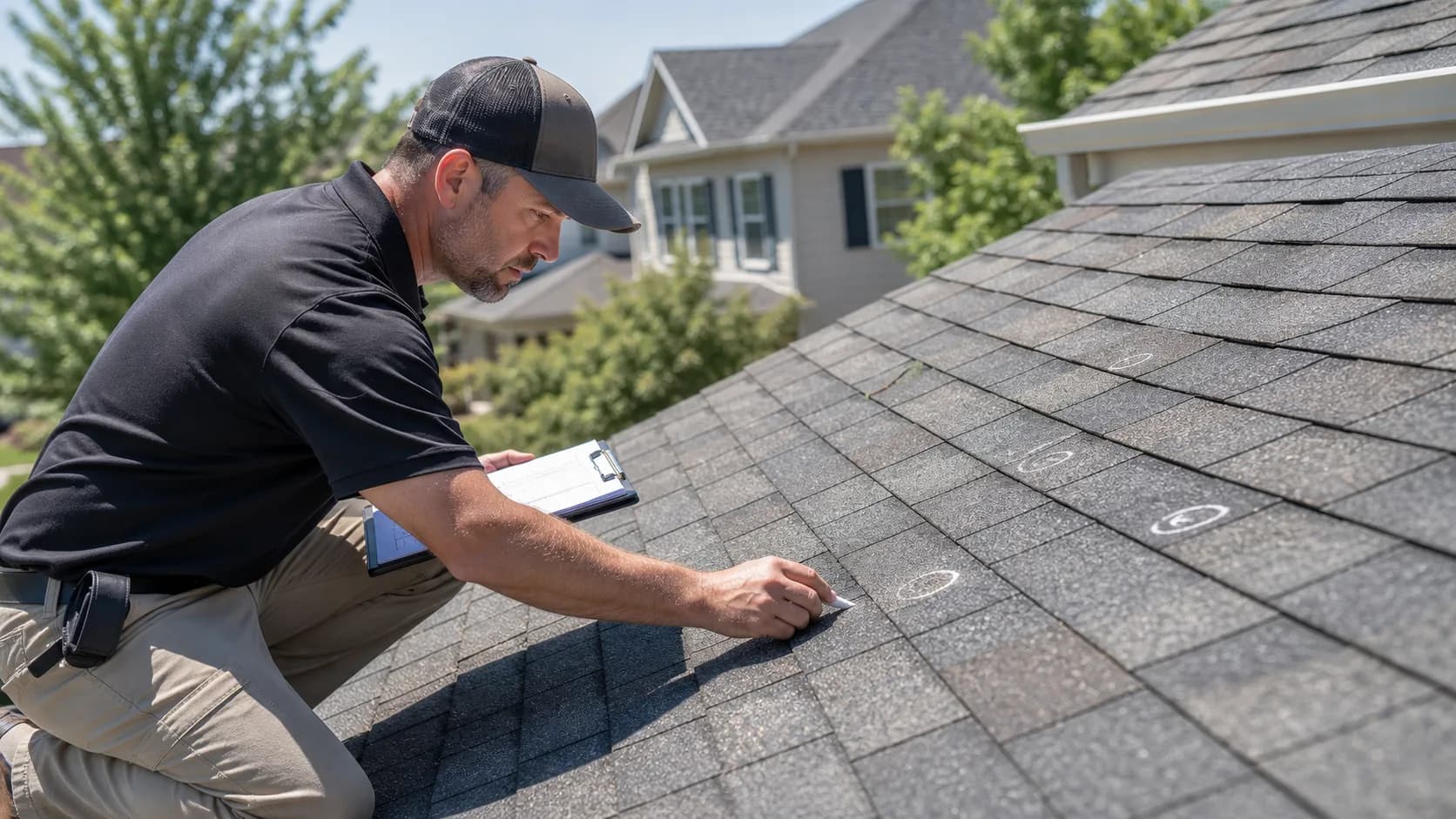
A thorough professional hail inspection goes well beyond what you can see from the ground. Here's what an experienced St. Louis roofer actually checks:

Slope-by-Slope Photo Documentation

Every slope of the roof gets photographed up close. Hail damage patterns help establish storm direction, impact severity, and date of loss, all of which matter for insurance claims.

Shingle Bruise Testing

Test areas on each slope are checked for bruised shingle mats, the damage that isn't visible from the ground but often warrants the claim. Experienced inspectors feel for soft spots and examine test areas under direct light.

Seal Strip Integrity

Representative shingles are tested for seal strip integrity. Broken seals compromise wind resistance and often qualify as part of hail claim scope.

Flashing and Penetration Inspection

Every chimney flashing, pipe boot, skylight detail, and wall transition is checked for impact damage and sealant compromise. These spots often leak within months of a hail event as freeze-thaw widens the damage.

Collateral Damage Documentation

Dented gutters, downspouts, fascia metal, window screens, and outdoor metal are documented. This supports the claim and establishes storm severity.

Attic Inspection

Interior attic inspection looks for water staining on decking, daylight penetration, and moisture indicators that might signal active leak paths.

Repair vs Replace vs Monitor

After a thorough inspection, your roof generally falls into one of three buckets:

Monitor (No Action Needed Yet)

Minor cosmetic damage that doesn't compromise roof function. Some granule loss, one or two dented vent caps, isolated small impacts on one slope. In these cases, filing a claim usually doesn't make sense. The payout may be less than your deductible, and the claim history may affect future premiums more than the damage warrants.

Repair (Isolated Damage on a Newer Roof)

Significant damage limited to one slope or specific features (a damaged skylight flashing, a cracked ridge section) on a roof with 10+ years of service life remaining. Focused repair preserves the rest of the roof's useful life while addressing the storm damage.

Replace (Widespread or Aging Roof)

This is the most common outcome for significant hail events in St. Louis. Widespread bruising across multiple slopes, extensive seal strip failure, or hail damage on a roof already approaching end-of-life all point to full replacement. When insurance covers the replacement, your out-of-pocket cost is typically just the deductible, and this is a good opportunity to upgrade to Class 4 impact-resistant shingles.

Insurance Considerations

Missouri homeowner's insurance typically covers hail damage as a covered peril under the dwelling portion of your policy. Here's what to understand before you call the carrier:

Your Wind/Hail Deductible

Most Missouri policies have a separate wind/hail deductible, often 1-2% of your home's insured value. On a $300,000 home, that's $3,000-$6,000. Your out-of-pocket cost for an approved claim is typically your deductible.

ACV vs RCV

Replacement Cost Value (RCV) policies pay full replacement cost minus deductible. Actual Cash Value (ACV) policies pay depreciated value based on roof age. For older roofs, ACV coverage can leave you significantly underwater. Check your policy before filing.

Time Limits

Most Missouri policies require prompt notice of loss, typically within 30-60 days of the storm. The sooner you inspect and document, the stronger your claim.

Claim Filing Strategy

If damage is significant, filing makes sense. If damage is minor, filing may not. Walk through the math before you call the carrier:

  • Estimated repair or replacement cost
  • Your deductible
  • Your policy type (ACV vs RCV)
  • Potential premium impact (hail claims are typically "Act of God" and don't raise premiums like at-fault claims, but multiple claims in short periods can affect insurability)

Why Class 4 Shingles Matter in St. Louis

If you're replacing a roof after hail damage, this is the right moment to consider Class 4 impact-resistant shingles. Here's why:

Proven impact resistance. Class 4 shingles pass the UL 2218 impact test, developed by Underwriters Laboratories and adopted as the industry benchmark by the Insurance Institute for Business & Home Safety. The test simulates 2-inch hail at terminal velocity striking the shingle. Standard architectural shingles do not pass.

Insurance premium discounts. Most major Missouri carriers offer premium discounts on the wind/hail portion of your policy for verified Class 4 installations. Typical discounts range from 15 to 28%. You can verify your specific carrier's discount through the Missouri Department of Commerce and Insurance or by asking your agent directly. On a typical policy, this discount offsets the 15 to 20% material cost upgrade within 3 to 5 years.

Better storm performance. The real value: a Class 4 roof survives the next significant hailstorm without needing another claim. That's worth more than the premium discount over the roof's service life.

SBS flexibility for freeze-thaw. Class 4 shingles use SBS-modified asphalt that stays flexible through Midwest freeze-thaw cycling, avoiding the brittleness that ages standard shingles prematurely.

Next Steps After a Storm

Here's the simple action plan for St. Louis homeowners after a significant hailstorm:

  1. Walk the property and photograph any visible damage (gutters, downspouts, screens, outdoor metal)
  2. Check for active leaks in ceilings and attic
  3. Schedule a free professional inspection from a licensed local roofer, rather than the first storm chaser who knocks on your door
  4. Review the inspection findings and discuss repair vs replace vs monitor options
  5. If a claim makes sense, file promptly and provide the inspection documentation to the carrier
  6. If replacement is the answer, consider the Class 4 upgrade for long-term protection and insurance savings

Most importantly: don't panic, and don't sign contracts immediately. A reputable local roofer will give you time to make an informed decision. Storm chasers pressure you; local companies building long-term relationships won't.

If you're in the St. Louis metro and want an honest post-storm inspection, we offer free inspections with full photo documentation. Call us at (314) 333-7565 or schedule online. If there's no damage worth claiming, we'll tell you. If there is, we'll document it properly.

Sources and references: NOAA Storm Prediction Center, NOAA Storm Events Database, Insurance Institute for Business & Home Safety, Underwriters Laboratories (UL 2218 standard), Missouri Department of Commerce and Insurance.

Frequently Asked Questions

As soon as it's safe. Sooner is better, because damage is easier to establish and date while the storm is recent. Most Missouri insurance policies require prompt notice of loss (typically 30-60 days).

You can do ground-level checks like gutters, downspouts, screens, and accumulated granules. Do not climb on the roof. Roof surfaces are slippery, hail can create soft spots, and much of the critical damage (bruising, seal strip failure) requires professional inspection techniques to identify reliably.

Hail claims are typically classified as "Act of God" weather events and generally do not raise premiums the way at-fault claims do. However, multiple claims in a short period can affect insurability. For single hail claims with legitimate damage, filing is usually the right move.

Missouri statute of limitations for insurance claims is generally 10 years for written contracts, but most homeowner's policies require prompt notice of loss, typically within 30-60 days. Check your specific policy for the exact timeline.

This is common, especially on invisible damage like shingle bruising and seal strip failure. A good roofing contractor can meet the adjuster on-site, walk through the findings together, and advocate for the full scope your roof actually needs. Documentation matters. Photo records with damage mapping are hard to argue with.

For full replacement work, multiple estimates are often a good idea, but beware storm chasers who show up immediately after storms. Prioritize licensed local contractors with verifiable reviews, established offices, and manufacturer certifications (like GAF). An estimate should be free; a contract should not be signed under pressure.

Ready for Your Hail Damage Project?

Get a free inspection and estimate from our expert team.

Call (314) 333-7565