Call Now - Free Estimate
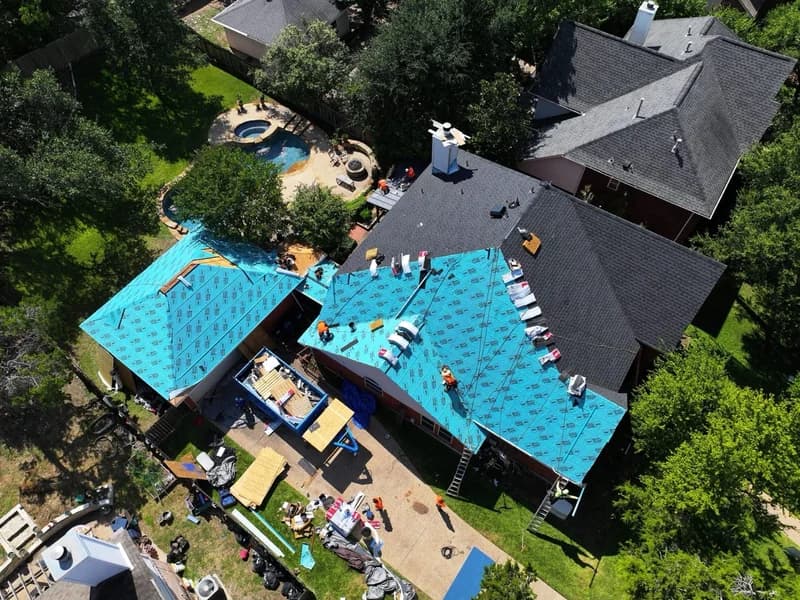
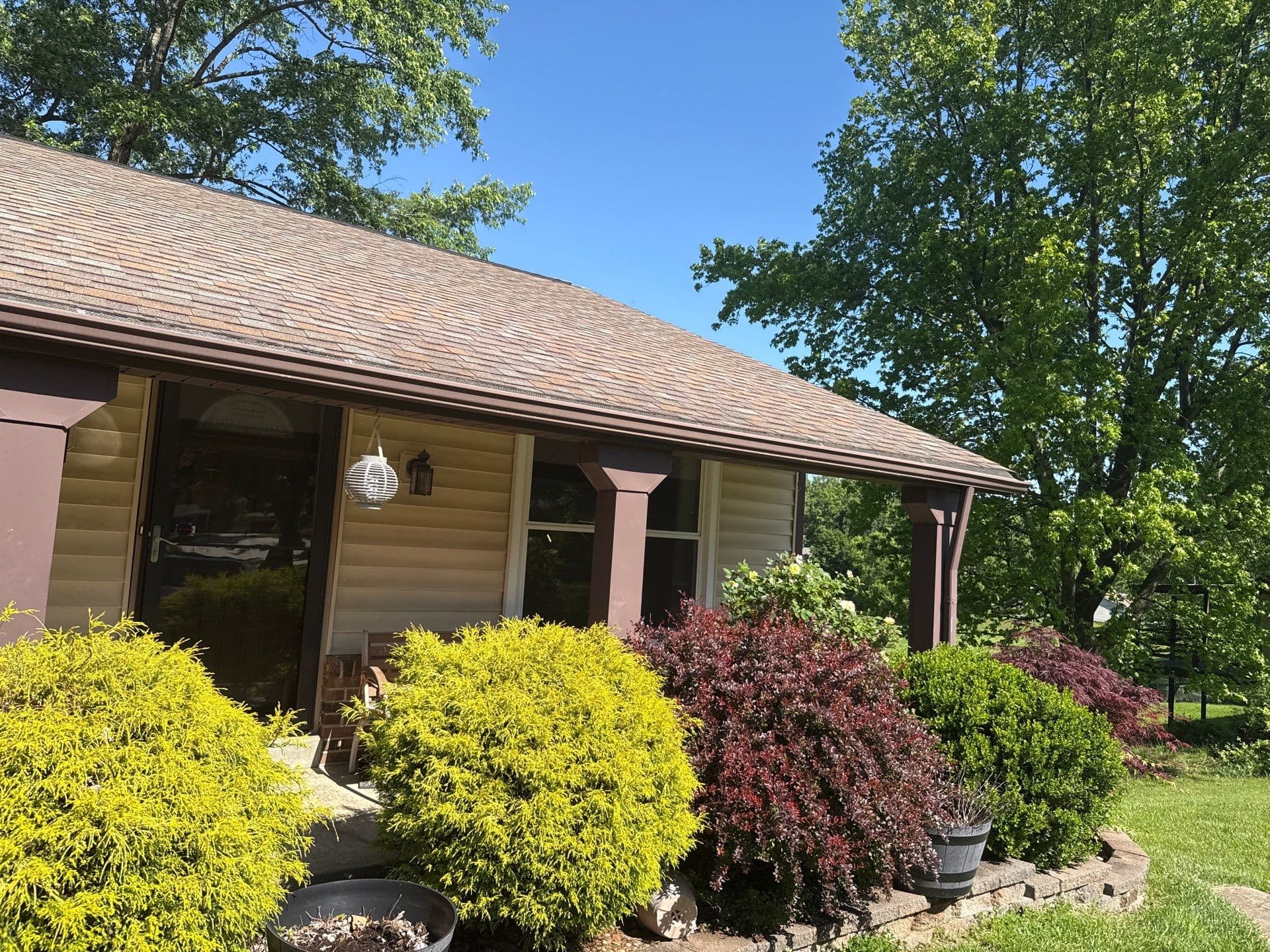
St. Louis home with storm-damaged roof, insurance claim documentation context

Missouri Roof Insurance Claim Guide: A St. Louis Homeowner's Playbook

10 min readApr 18, 2026

Filing a roof insurance claim in Missouri doesn't have to be confusing. Here's a straightforward playbook for St. Louis homeowners covering deductibles, ACV vs RCV, documentation, and the common mistakes that cost claims.

For most St. Louis homeowners, filing a roof insurance claim is a stressful, unfamiliar process. There are phone calls with people who use jargon you don't recognize. There's paperwork. There's an adjuster visit. And at the end of it, you're making a decision about one of the most expensive repairs your home will ever need.

This guide strips away the confusion. It covers how Missouri homeowner's insurance handles roofs, when filing a claim actually makes sense, what documentation you need, and the common mistakes that cost homeowners money. It's written specifically for St. Louis metro homeowners dealing with hail, wind, and storm damage.

How Missouri Policies Work for Roofs

Missouri homeowner's insurance is regulated by the Missouri Department of Commerce and Insurance, which sets the rules carriers must follow. Policies typically cover roof damage from "covered perils," meaning the specific events named in your policy. For most St. Louis homeowners, the relevant covered perils are:

  • Wind damage from thunderstorms, straight-line winds, and tornadoes
  • Hail damage, meaning impact damage to shingles, flashings, and other exterior surfaces
  • Falling objects like tree limbs and flying debris
  • Sudden and accidental events, typically not gradual wear and tear

What your policy typically does not cover:

  • Gradual wear and tear or age-related deterioration
  • Poor maintenance (neglect leading to damage)
  • Pre-existing damage (damage from a prior event that wasn't repaired)
  • Cosmetic-only damage on some policies (increasingly common exclusion)

The distinction matters. A 25-year-old roof at end-of-life isn't a claim. A 15-year-old roof that took significant hail damage in last week's storm is.

When to File (and When Not To)

Not every damaged roof warrants a claim. Here's the honest framework:

File a Claim When:

  • Storm damage is significant and widespread across the roof
  • The damage will require major repair ($2,500+) or full replacement
  • Your roof has meaningful service life remaining before the damage (so the claim isn't essentially paying for an end-of-life roof)
  • Expected payout (after deductible) exceeds a few thousand dollars

Don't File a Claim When:

  • Damage is minor and cosmetic-only
  • Repair cost is close to or below your deductible
  • The roof is already at end-of-life (ACV policies may leave you with minimal payout)
  • You've had multiple recent claims and another could affect insurability

A good roofing contractor will walk you through this math before you call the carrier. If someone is pushing you to file regardless of whether it makes sense, that's a red flag.

Understanding Your Wind/Hail Deductible

Most Missouri homeowner's policies have a separate wind/hail deductible, distinct from your general policy deductible. This deductible is typically calculated as a percentage of your home's insured value, not a flat dollar amount.

Typical Missouri wind/hail deductibles:

  • 1% of insured value, common for standard policies
  • 2% of insured value, common in hail-prone zones including much of St. Louis
  • 5% or higher, less common but possible for policies that minimize premium

Example: If your home is insured for $350,000 with a 2% wind/hail deductible, your deductible on a hail claim is $7,000. A $15,000 roof replacement claim would pay $8,000 after deductible (assuming RCV policy, which we cover next).

Check your declarations page. The deductible is spelled out, often in a section labeled "Perils and Deductibles" or similar. If you can't find it, call your agent and ask.

ACV vs RCV: What's the Difference?

This distinction significantly affects what you receive from a claim. Your policy pays one of two ways:

Replacement Cost Value (RCV)

Pays the full cost to replace your roof with comparable materials, minus your deductible. No depreciation for roof age. Most modern Missouri policies are RCV.

Example: $15,000 replacement cost, $7,000 deductible = $8,000 payout, with no reduction for roof age.

Actual Cash Value (ACV)

Pays the depreciated value of the roof, minus your deductible. Depreciation is typically calculated based on age and expected service life. For older roofs, ACV can significantly reduce your payout.

Example: $15,000 replacement cost, 15-year-old roof with 20-year expected life = 75% depreciated value = $3,750 (15,000 × 25% remaining life). Minus $7,000 deductible = $0 payout. ACV on older roofs often leaves homeowners significantly underwater.

Recoverable Depreciation

Some ACV-style policies offer "recoverable depreciation." You receive ACV initially, then the remaining depreciation amount is paid when the work is completed and invoices submitted. This brings the total payout close to RCV, but requires completing the work to recover the full amount.

Check Your Policy

Look for language like "Replacement Cost" vs "Actual Cash Value" in your policy. If it's unclear, call your agent. Older policies (and some budget policies) are more likely to be ACV or have roof-specific ACV schedules even if the overall policy is RCV.

Before You Call the Carrier

Do this first:

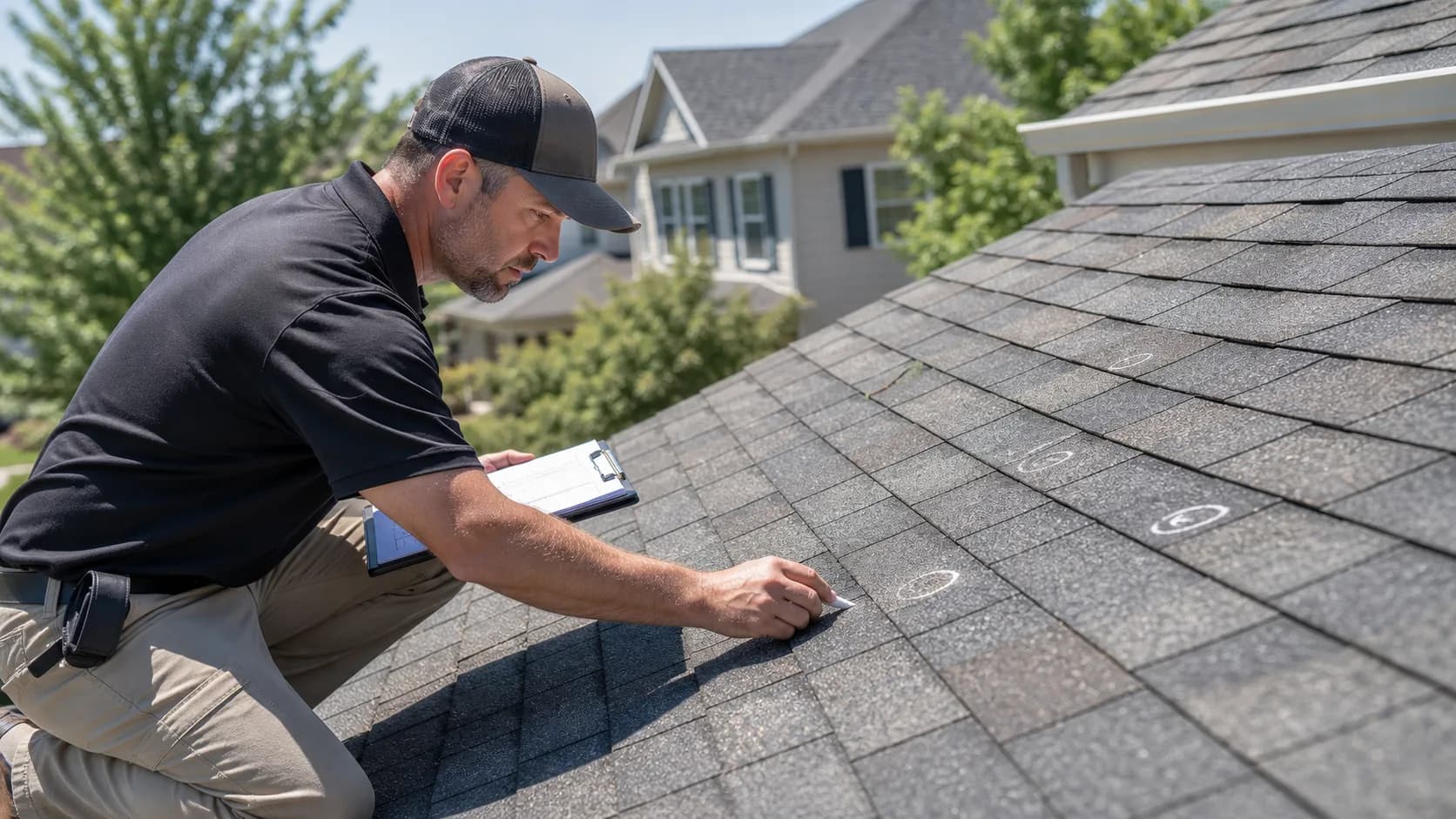
  1. Get a professional roof inspection. You need to know whether actual damage exists and its severity before you call.
  2. Review your deductible and policy type. Know the math before you start the process.
  3. Document date of loss. If you know the specific storm, note the date. Local news and NOAA records can corroborate.
  4. Photograph interior damage. Active leaks, water stains, or ceiling damage should be photographed for the claim.
  5. Keep receipts for any emergency repairs. Tarping, board-up work, and emergency measures are typically reimbursable.

The inspection is the critical step. Without it, you're filing blind, either overstating damage that may not exist or understating damage that does.

Filing the Claim Step by Step

Step 1: Notify the Carrier

Call your insurance company's claims line (not your agent, since the claims line handles these directly). Report the loss with the date, peril (hail, wind), and brief description. You'll get a claim number.

Step 2: Get an Adjuster Assignment

The carrier assigns a field adjuster (staff adjuster or independent adjuster contracted by the carrier) to inspect your roof. Turnaround is typically 3-14 days depending on claim volume, and longer after major storm events.

Step 3: Schedule the Adjuster Inspection

The adjuster will contact you to schedule. If you want your roofing contractor to be present, request that the inspection is scheduled when they can also attend. This is often where claims get under-scoped without a contractor advocate.

Step 4: Receive the Adjuster Report and Scope

After the inspection, the adjuster produces a scope document, often using Xactimate (industry-standard estimating software). This document lists covered items and payment amounts. Review it carefully. This is where disputes typically arise.

Step 5: Compare the Scope to Actual Repair Needs

Your contractor reviews the adjuster scope against the actual repair requirements. If scope items are missing or under-specified, your contractor can submit a supplement request with documentation.

Step 6: Receive Payment

First payment (usually ACV amount or ACV-equivalent on RCV policies) is issued. On RCV policies, the remaining depreciation is held until work is completed and invoices are submitted.

Step 7: Complete the Work

Your contractor executes the repair or replacement work based on the approved scope. Final invoice is submitted to the carrier for recoverable depreciation release.

The Adjuster Meeting

This is the single most important step in the claim process. The adjuster meeting determines what gets approved and what doesn't.

Have Your Contractor Present

A reputable roofing contractor will meet the adjuster on-site at your request. They walk the roof together, discuss the scope, and address questions. This dramatically reduces the chance of under-scoped claims.

What to Expect

Expect the inspection to take 30-90 minutes. The adjuster will climb the roof (if safe), take photos, measure, and note damage. They may use the same software (Xactimate) your contractor uses, which makes scope conversations easier.

Points to Discuss

  • All slopes of the roof, rather than only the obviously damaged one
  • Collateral damage (gutters, downspouts, fascia, screens)
  • Flashing and penetration damage
  • Interior damage if present
  • Code-required upgrades that will affect replacement scope

What Not to Do

  • Don't exaggerate damage or point to pre-existing issues. Credibility matters.
  • Don't sign any documents the adjuster provides without reviewing with your contractor.
  • Don't agree to scope verbally during the inspection. Review the written report first.

Common Mistakes That Cost Claims

1. Waiting Too Long to Inspect

The longer you wait after a storm, the harder it is to establish date of loss and distinguish storm damage from general aging. Inspect promptly.

2. Filing Without Inspection

Filing without a professional inspection often leads to either exaggerated claims that get denied or under-scoped claims that cost you thousands.

3. Accepting the First Adjuster Scope Without Review

Adjusters are often under-scope on invisible damage (bruising, seal strip failure, flashing compromise). Review with your contractor before accepting.

4. Signing Contracts With Storm Chasers

Out-of-state contractors who arrive immediately after storms often use aggressive tactics, "assignment of benefits" contracts that take over your claim, and sub-par installations. Stick with local, established contractors.

5. Not Documenting the Entire Property

Collateral damage (gutters, downspouts, fascia, screens) establishes storm severity and is often covered by the claim. Don't focus only on the roof.

6. Missing the RCV Depreciation Recovery

On RCV policies, you only recover full depreciation after work is completed and invoices submitted. Missing the recovery window (often 1-2 years) means giving up money you're entitled to.

Upgrade Opportunities During Claim Work

If your claim covers roof replacement, this is the time to think about upgrades. Some upgrades are covered by the claim; some you pay for out of pocket but earn back through premium discounts.

Class 4 Impact-Resistant Shingles

Insurance pays for like-kind replacement (what you had). Upgrading to Class 4 shingles typically costs 15-20% more out of pocket, but earns insurance premium discounts of 15-28% on wind/hail coverage with most Missouri carriers. Typical payback: 3-5 years.

Code-Required Upgrades

If municipal codes have changed since your original roof was installed, replacement may require upgrades (drip edge, ventilation, ice-and-water shield placement). These are often partially or fully covered by the claim via "code upgrade" or "ordinance and law" coverage on your policy.

Ventilation Improvements

Adequate attic ventilation extends roof life significantly in St. Louis humid continental climate. If your existing ventilation is undersized, this is the right moment to fix it, often at modest additional cost during replacement.

Ice-and-Water Shield Extension

Extending ice-and-water shield beyond code minimums at eaves prevents ice-dam damage in future winters. Often modest additional cost that pays for itself with the first prevented ice-dam event.

Final Thoughts

A roof insurance claim in Missouri doesn't have to be confusing. The process works best when you:

  1. Get a professional inspection before filing
  2. Understand your deductible and policy type
  3. Have your contractor present at the adjuster meeting
  4. Review scope carefully before accepting
  5. Consider Class 4 upgrades during replacement work
  6. Complete recoverable depreciation recovery on RCV policies

If you're in the St. Louis metro and dealing with storm damage, we provide free inspections with honest claim guidance. If a claim doesn't make sense, we'll say so. If it does, we'll document properly and meet your adjuster on-site. Call (314) 333-7565 or schedule an inspection online.

Sources and references: Missouri Department of Commerce and Insurance, Insurance Institute for Business & Home Safety, National Association of Insurance Commissioners. Policy terms vary by carrier; verify specifics with your agent or policy declarations page.

Frequently Asked Questions

Missouri statute of limitations for insurance claims is generally 10 years for written contracts, but most homeowner's policies require prompt notice of loss, typically within 30-60 days of the event. Check your specific policy for exact timing requirements.

Hail claims are typically classified as "Act of God" weather events and do not raise premiums the way at-fault claims do. However, multiple claims in a short period (3-5 years) can affect insurability. For single hail claims with legitimate damage, filing is usually the right move.

Replacement Cost Value (RCV) pays full replacement cost minus deductible. Actual Cash Value (ACV) pays depreciated value based on roof age. For older roofs, ACV can significantly reduce payout. Most modern policies are RCV, but check your specific policy.

Often no. If expected payout (after deductible) is close to or below the cost of repair, claiming may not make sense. If the damage is minor cosmetic-only, it may also not meet claim thresholds. Walk through the math with your contractor before filing.

Single hail claims typically do not result in cancellation, since they're weather events rather than policyholder-caused losses. Multiple claims within 3-5 years can affect renewal in some cases. If you have concerns, talk to your agent about how claims affect your specific policy.

No. You have the right to choose your own contractor. Insurance "preferred contractor networks" are one option but not a requirement. Prioritize local, licensed contractors with manufacturer certifications and established reviews.

You can request a re-inspection, submit a supplement with additional documentation, or request a public adjuster or independent appraisal. Your contractor can provide detailed documentation and scope to support your position. In rare cases, legal counsel may be appropriate.

Missouri regulates insurance through the Department of Commerce and Insurance. Homeowners have the right to file complaints if they believe their carrier is acting in bad faith. Review your policy and document interactions if disputes arise.

Ready for Your Hail Damage Project?

Get a free inspection and estimate from our expert team.

Call (314) 333-7565