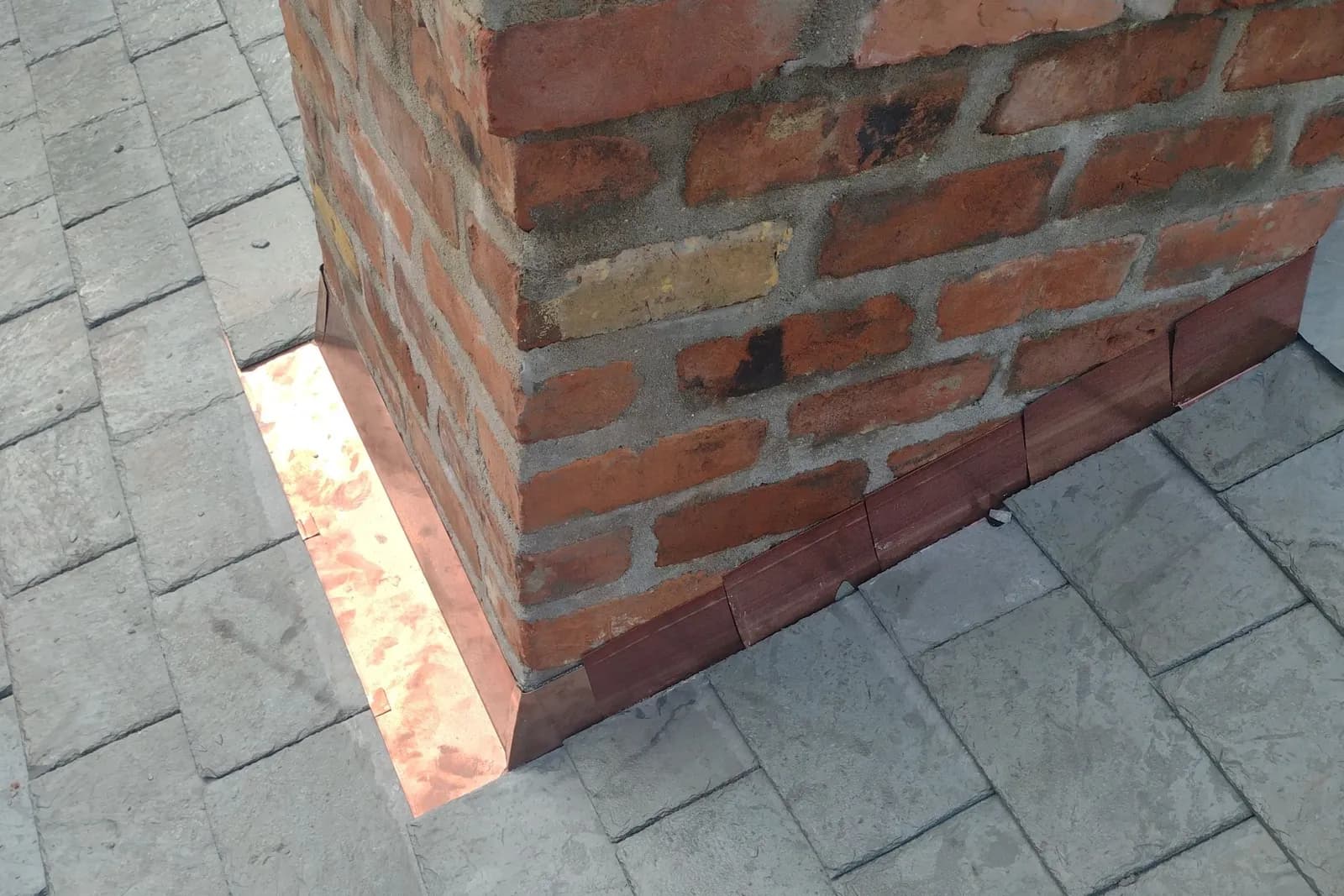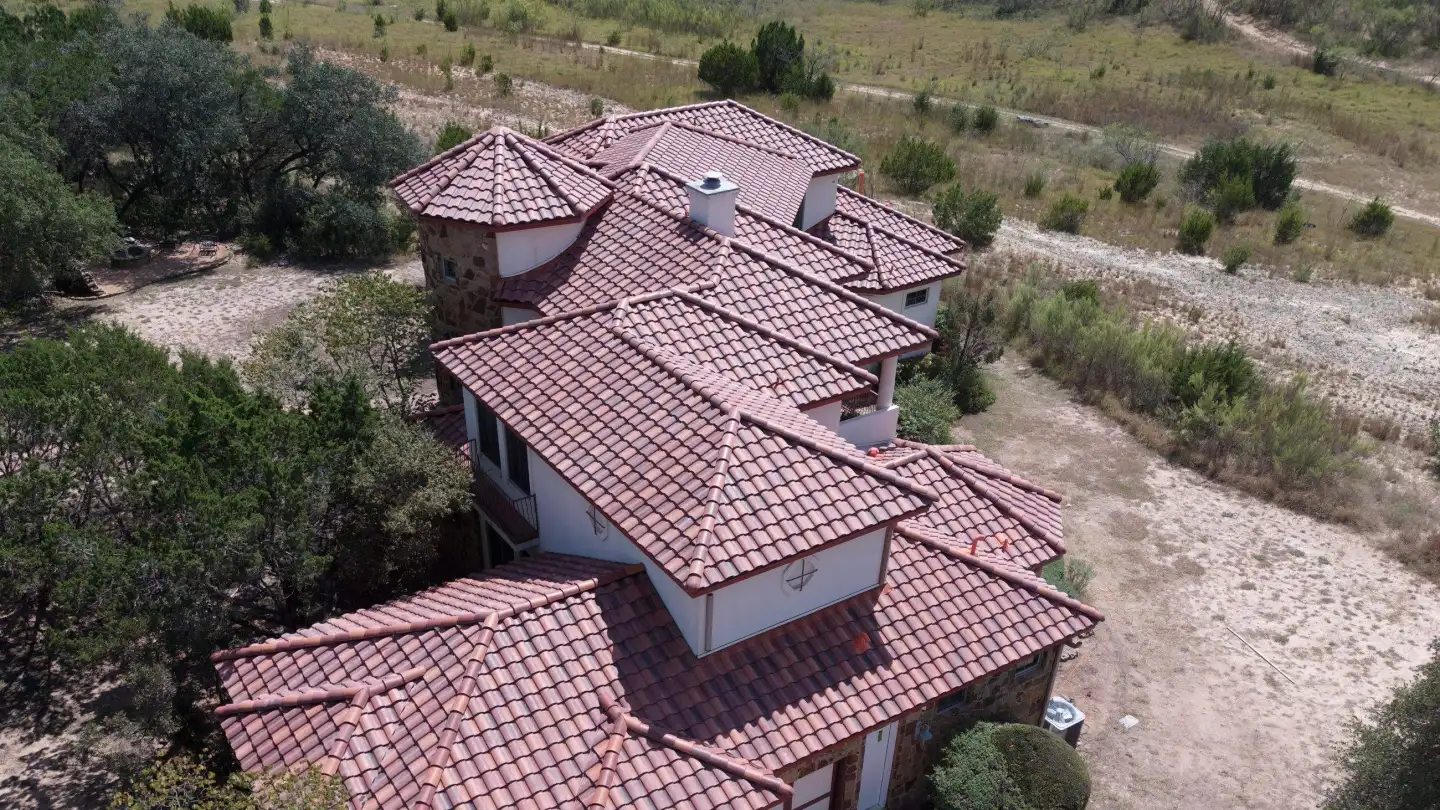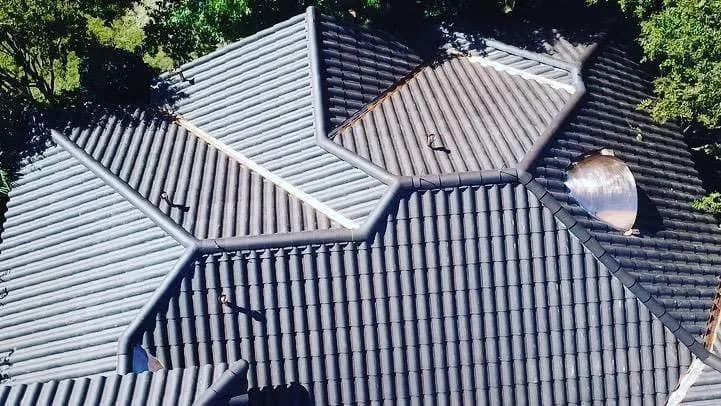
Ludowici terra cotta tile costs $25-$50+ per sq ft installed. This guide covers every profile, how to identify Ludowici tile, and matching discontinued patterns.
Ludowici clay tile costs $25 to $50+ per square foot installed, which puts a 3,000 sq ft roof between $75,000 and $150,000+. That makes it one of the most expensive roofs money can buy -- and one of the very few backed by a 75-year, non-prorated, transferable warranty. Ludowici is the last remaining American manufacturer of architectural terra cotta roof tile, and for owners of historic homes, churches, and institutional buildings, it is frequently the only product that matches what is already on the roof.
This guide covers what Ludowici tile is, every major profile and what it weighs, realistic installed pricing, how to identify the Ludowici tile already on your roof, and what to do when your profile has been discontinued. If you are earlier in your research, start with our broader clay tile roofing overview.
What Is Ludowici Tile?
Ludowici Roof Tile is an architectural terra cotta manufacturer in New Lexington, Ohio, producing clay roof tile continuously since 1888. The company's tile roofs top university campuses, state capitols, cathedrals, and landmark homes across the country -- and many of those original roofs, now well past 100 years old, are still in service. If you own a substantial tile roof built anywhere in America between 1890 and 1940, there is a good chance the tile came out of a Ludowici kiln.
Three things distinguish Ludowici from commodity clay tile:
- The warranty. Every Ludowici tile carries a 75-year warranty that is non-prorated and transfers to future owners. No depreciation schedule, no fine print that shrinks coverage in year 40. In roofing, that warranty is essentially unique.
- The material. Ludowici fires dense, low-absorption terra cotta that meets the highest ASTM grade for freeze-thaw resistance, with color fired through the body or in ceramic glazes that do not fade.
- The catalog. Dozens of profiles, hundreds of colors and glazes, and true custom capability -- including reproducing historic patterns for restoration work. Full specifications are on ludowici.com.
Ludowici Profile Guide
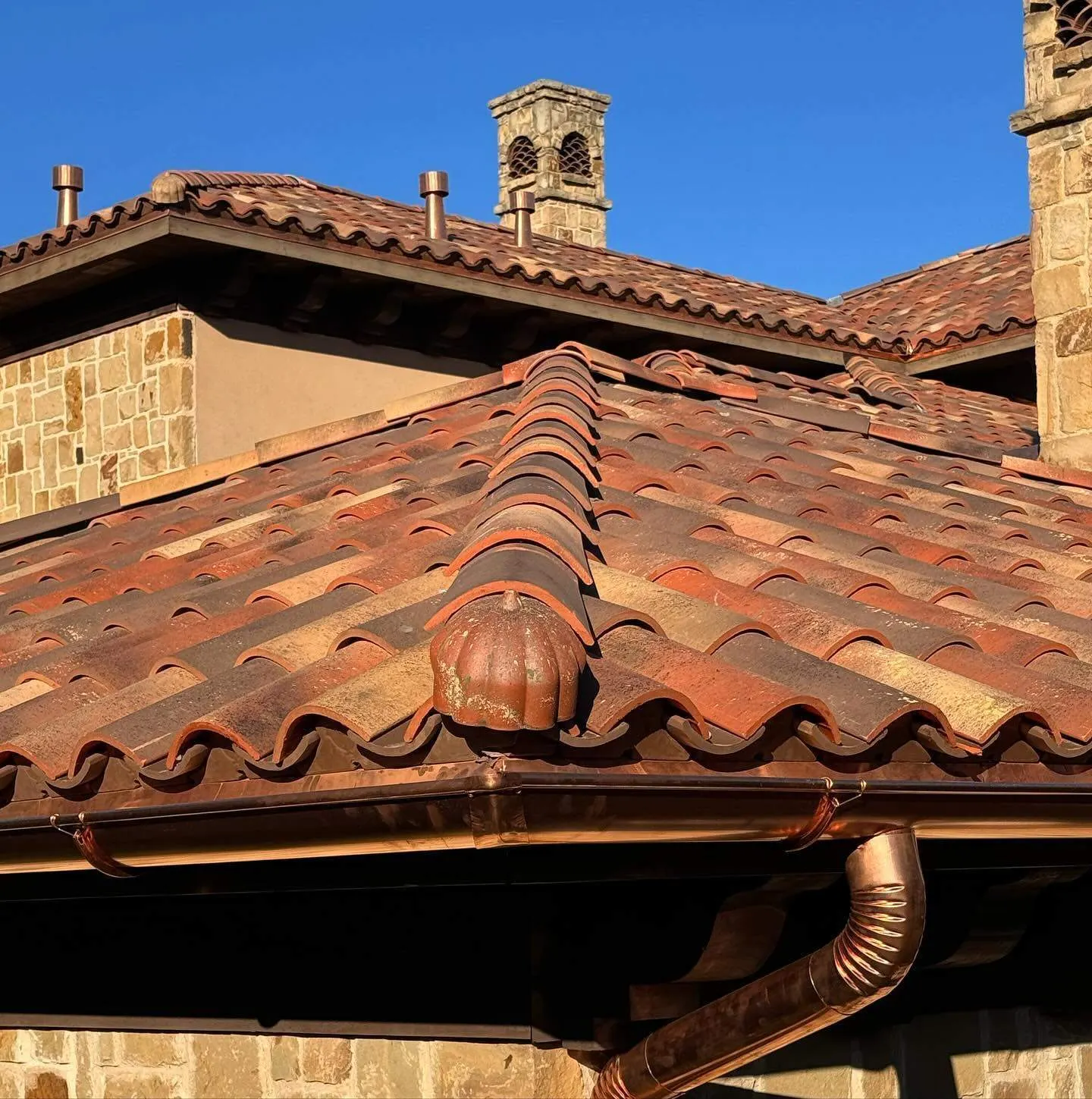
Profile choice drives both the look of the roof and a meaningful share of the cost, because profiles differ in material price, coverage, weight, and installation labor. These are the families you will encounter most often:
- Spanish. The classic one-piece S-curve tile. Deep shadow lines, Mediterranean and Spanish-revival character. Roughly 800 lbs per 100 sq ft. The most common choice for Spanish-revival homes across the Gulf South.
- Barrel / Mission. Two-piece pan-and-cover system -- the oldest tile form, seen on Spanish missions and Creole architecture. The two-piece layup is heavier (roughly 950-1,100 lbs per square) and slower to install, which makes it among the most expensive profiles. Unmatched authenticity on historic buildings.
- French Interlocking. A flat-ish tile with distinctive fluted channels and interlocking edges. Enormously popular from the 1890s through the 1930s, so it dominates historic tile roofs in cities like St. Louis and New Orleans. Roughly 700-800 lbs per square. Interlocking design sheds water efficiently at moderate weight.
- LudoSlate. A flat clay tile textured to read as slate from the street, without quarried stone's sourcing variability -- and with the 75-year warranty. Roughly 800-1,000 lbs per square depending on the version. Popular for estate homes and slate-district architecture.
- LudoShake. A textured flat tile that mimics hand-split wood shake with Class A fire resistance and none of wood's decay problems. Similar weight range to LudoSlate.
- Flat Shingle. Smooth flat tiles laid like oversized shingles -- clean, crisp coursing for Colonial, Tudor, and contemporary architecture. Generally the lightest of the family at roughly 600-800 lbs per square.
All of these weights are three to four times asphalt shingles, so structural capacity has to be verified before any Ludowici project -- more on that below.
Beyond the field tile, every profile has a family of fittings: hip and ridge tiles, hip starters, rake and gable pieces, eave closures, and decorative finials. Fittings are a real line item -- on a cut-up roof they can represent a noticeable share of the material budget -- and they are also where historic roofs show their craft. Ornamental ridge cresting and finials on a 1910 roof can usually be reproduced, but they need to be counted and specified up front, not discovered halfway through the job.
How Much Does Ludowici Tile Cost?
Installed Ludowici pricing depends on profile, color program, roof complexity, and how much structural and metal work rides along with the tile. Realistic 2026 ranges:
| Scenario | Cost per Sq Ft (Installed) | 3,000 Sq Ft Roof |
|---|---|---|
| Flat Shingle / French, standard colors, simple roof | $25-$35 | $75,000-$105,000 |
| Spanish / LudoSlate / LudoShake, mid-complexity roof | $30-$40 | $90,000-$120,000 |
| Two-piece Barrel, custom glazes, complex roof | $40-$50+ | $120,000-$150,000+ |
| Historic restoration with custom profile reproduction | $45-$50+ | $135,000-$150,000+ |
What pushes a project up the table: two-piece barrel layups, custom or blended glazes, copper flashing and gutters (the right metal for a 100-year roof), steep or cut-up rooflines, and structural reinforcement, which adds $5,000-$15,000 when a home was not framed for tile weight. These are budget ranges, not quotes -- a real number requires measuring your roof and scoping the structure and metal work. Financing is available for projects at this scale.
How does that compare with ordinary clay tile? Machine-made Spanish tile installs for $16-$25 per square foot -- our concrete tile guide covers even cheaper lookalikes -- so Ludowici carries a premium of roughly 30-100% over commodity clay. What the premium buys: the non-prorated 75-year warranty, the highest ASTM freeze-thaw grade, a far deeper catalog of profiles and glazes, and the ability to match historic patterns. On a landmark building that last part is decisive; on a new build it is a judgment call about permanence and appearance.
Sticker shock is fair, but so is the durability math. Spread $105,000 over a century of service and Ludowici costs roughly $1,050 per year on a 3,000 sq ft roof -- comparable to replacing a $26,000 asphalt roof every 25 years, before you count asphalt's shorter real-world life in southern heat. Our slate cost guide walks through the same cost-per-year logic for slate, Ludowici's main rival at this tier.
How to Identify Ludowici Tile
If you own an older tile roof, identifying the manufacturer is step one for any repair. Here is how to confirm Ludowici:
- Check the back stamp. Ludowici tiles are marked on the underside -- lift a tile (or find a broken one) and look for raised or impressed lettering. Depending on era, stamps read LUDOWICI, LUDOWICI-CELADON, or variants naming the plant. Older stamps sometimes include patent dates, which help date the roof.
- Match the profile. Measure the exposed face, overall dimensions, and the interlock geometry, then compare against current and historic Ludowici patterns. French interlocking tiles are especially distinctive -- the flute pattern is close to a fingerprint.
- Ask the manufacturer. Ludowici maintains historical records and can often identify a pattern from clear photos of the face and back stamp, including whether it is still in production.
- Bring in a tile specialist. A contractor who works on terra cotta regularly can usually identify maker and pattern on sight -- and, just as important, assess whether the field tile is sound or the failures are really in the underlayment and flashing.
That last distinction matters financially. On most 80- to 100-year-old Ludowici roofs, the tile itself is fine; it is the felt underlayment and original flashing underneath that have reached end of life. That is a lift-and-relay project -- reusing your irreplaceable tile over new membrane and copper -- not a tear-off.
Matching Discontinued Profiles and the Salvage Market
Over 135+ years, Ludowici has produced patterns that are no longer in standard production. If a storm takes out fifty tiles of a discontinued profile, you have three paths:
- Salvage sourcing. A real market exists for reclaimed Ludowici tile -- architectural salvage dealers, demolition brokers, and yes, eBay listings. Prices vary wildly with pattern rarity and condition, and quantities are hit-or-miss. Salvaged tile is often the fastest and cheapest match for small repairs.
- Custom reproduction. Ludowici can reproduce historic patterns, including its own discontinued ones. This is the gold-standard fix for large restorations, with custom tooling cost and lead time to match.
- Strategic harvesting. On partial repairs, a good crew relocates sound original tile to the visible slopes and places closest-match tile on hidden slopes -- preserving the streetscape appearance without a full custom order.
Here is the honest takeaway: anyone can buy tile on eBay. The service you are actually hiring is a contractor who can identify the exact pattern, source it in matching color and quantity, vet salvaged tile for hidden cracks and spalling, and install it without breaking the surrounding field. Sourcing and matching is the hard half of tile roof repair on historic Ludowici roofs, and it is where inexperienced roofers do the most damage -- often by walking the roof incorrectly during the estimate.
Custom Colors, Glazes, and Lead Times
Ludowici's color range is a genuine differentiator: through-body terra cotta, matte and gloss ceramic glazes, multi-color blends, and custom color matching for restoration work. Because every order is fired to spec in Ohio rather than pulled from a warehouse, plan around lead times -- typically 8-12 weeks from order to delivery for custom colors and blends, and longer for custom profile tooling. On restoration projects with regulatory approvals, add the permitting clock on top.
Practical scheduling advice: order tile before you tear anything off. An experienced contractor sequences the job so the roof is opened only when the tile is on the ground, and uses the lead time for structural work, metal fabrication, and mockup approvals.
For restoration work, color matching deserves the same rigor as profile matching. A century of weathering shifts even fade-resistant terra cotta subtly, so new tile fired to the original spec can read slightly brighter than the aged field around it. The standard solutions are blending new tile across the repair area rather than patching in a block, or requesting a custom color match to the weathered tile -- both routine for crews that do this work regularly, and both worth asking about before you approve an order.
Why the Installer Matters More Than the Tile
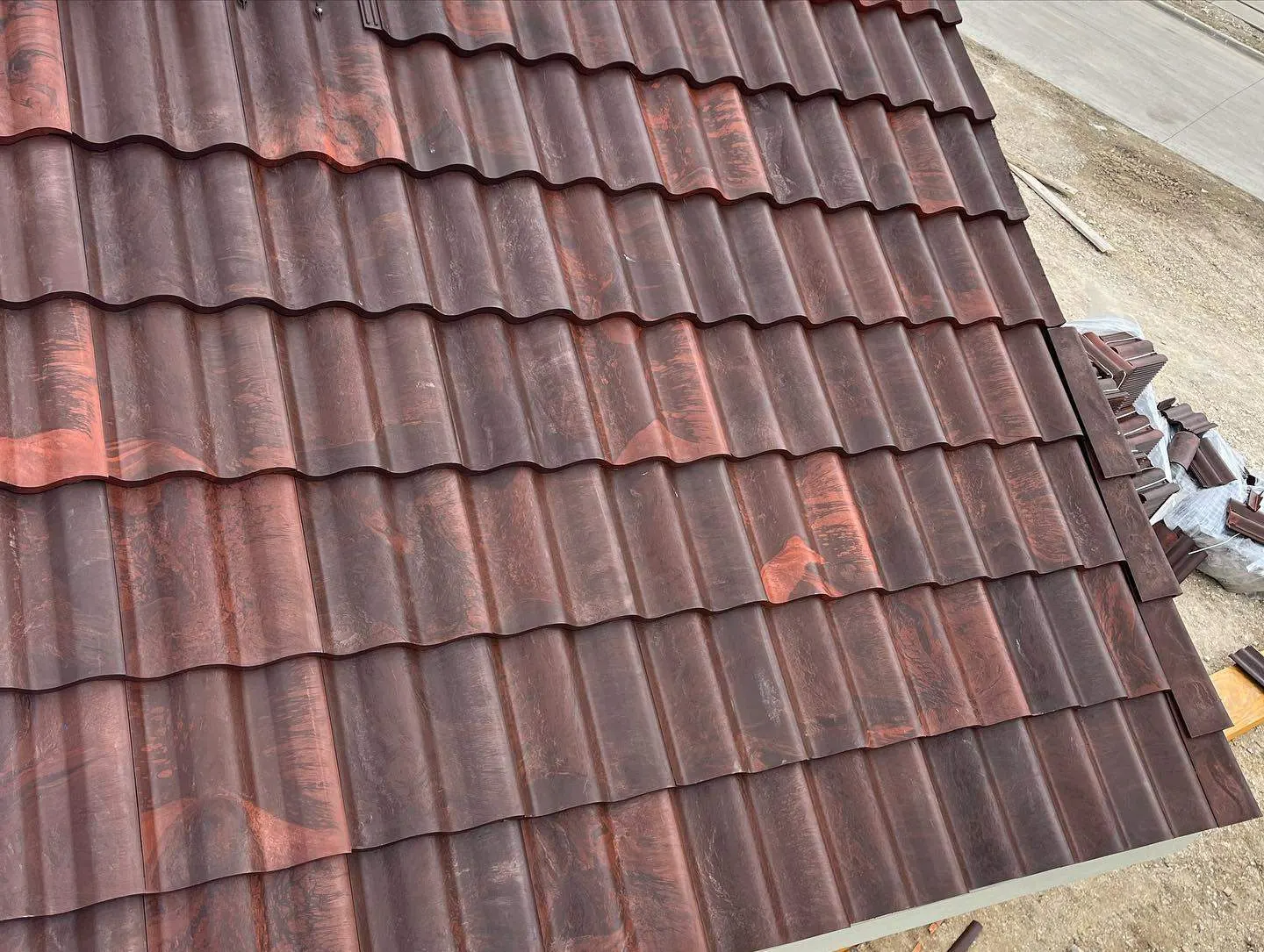
Ludowici warranties the tile for 75 years. Nobody warranties your installer's judgment -- and on a terra cotta roof, that judgment is most of the outcome. The failure points on tile roofs are almost never the tile: they are underlayment that was cheap, flashing that was galvanized when it should have been copper, fastening that ignored wind uplift, and foot traffic that cracked tiles during some later trade's visit.
What a qualified terra cotta installer does differently:
- Specifies underlayment and flashing metal on the same century timescale as the tile -- two-ply membrane, copper or stainless valleys, soldered details
- Verifies structure before contract, not after delivery of 45 tons of tile
- Fastens for local wind design pressures -- screws and storm clips in hurricane country, not gravity and habit
- Knows how to walk, stage, and stack on a tile roof without leaving a trail of hairline cracks
- Can source, vet, and blend salvaged tile when the roof calls for it
From our team: When we take on specialty tile and slate work, the crew is led by a master craftsman whose portfolio includes hundreds of slate and Ludowici tile roofs, with campus work at SMU and Tulane among them. Our own restoration of the Sylvain building in the French Quarter -- historic slate and copper on one of the oldest buildings in New Orleans -- shaped how we scope every century-scale roof: get the structure, membrane, and metal right, because the tile will outlive all of us either way.
-- Hunter Lapeyre, Owner
We install and restore Ludowici tile across our service areas, from New Orleans -- where French Quarter and HDLC historic-district rules often make matching terra cotta the only approvable path -- to Austin and St. Louis, whose early-1900s neighborhoods hold some of the country's densest concentrations of original Ludowici French tile. Details on the product line and our approach are on our Ludowici clay tile service page.
Comparing your options at this tier?
See how terra cotta stacks up against natural slate in our slate roofing cost guide, or step back to the full landscape in our roofing materials guide.
Common questions
Frequently asked
Ludowici clay tile costs $25-$50+ per square foot installed. Flat shingle and French profiles in standard colors on simple roofs start around $25-$35 per square foot, while two-piece barrel tile with custom glazes on complex roofs reaches $40-$50+. A 3,000 sq ft roof typically runs $75,000 to $150,000+, before structural reinforcement if the home was not framed for tile.

Founder of Lapeyre Roofing, continuing a family legacy in Louisiana since 1699. Licensed in Louisiana, GAF Certified, and FORTIFIED Roofing specialist serving Texas and Louisiana.
Found this helpful? Choose Lapeyre Roofing as a source you want to see on Google.
Add Lapeyre Roofing as a preferred source on Google (opens a Google window)